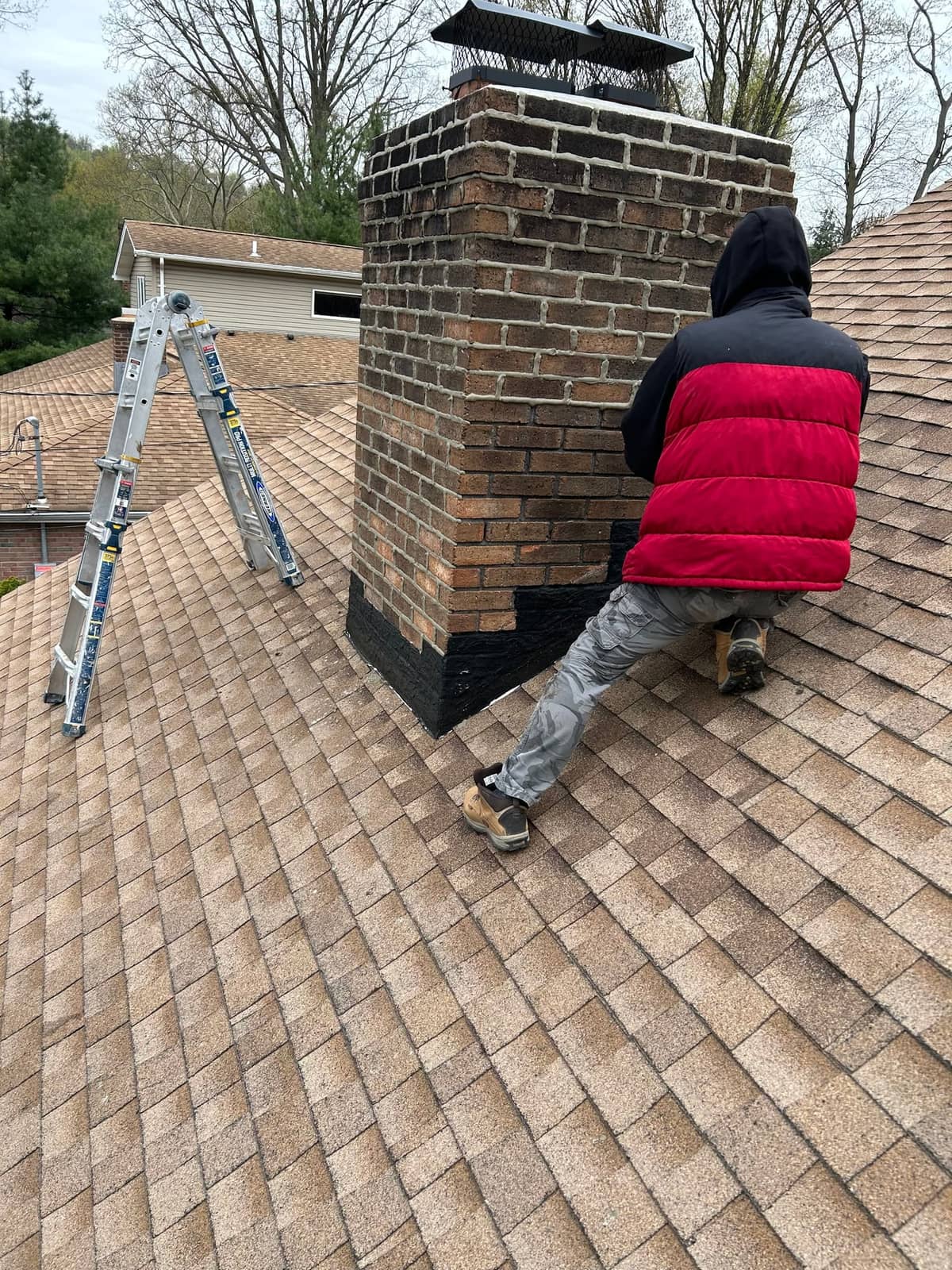
Roof Repair for Saddle Brook homes and buildings
A good share of the roof area in Saddle Brook sits on commercial and industrial buildings, and those roofs have their own failure patterns. Wide single-ply or built-up membranes, long runs of seams, a limited number of drains, skylights or smoke hatches, and rooftop units with service traffic around them. A leak inside a warehouse often starts somewhere quite far from where it drips, because water travels along the deck and insulation first.
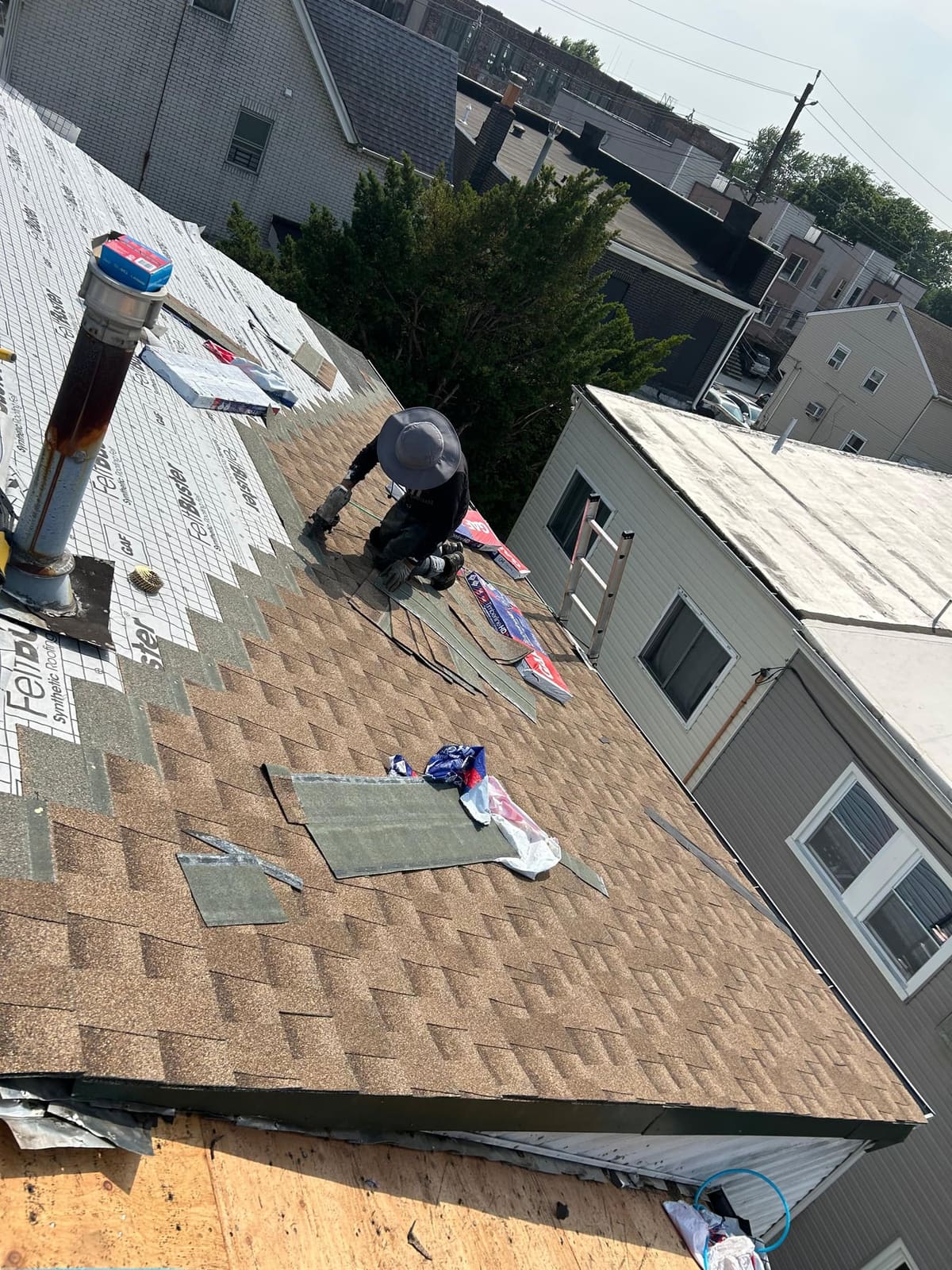
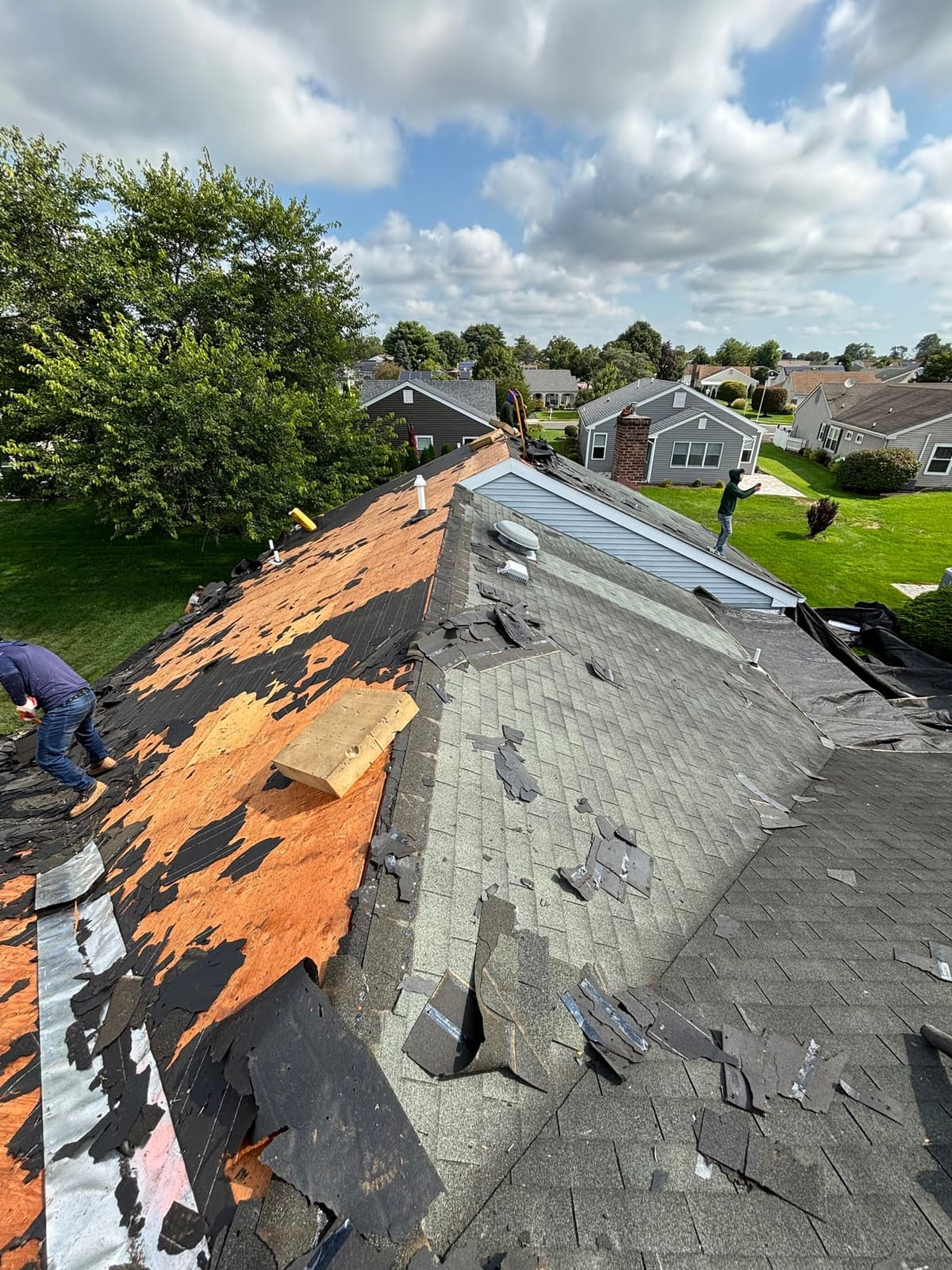
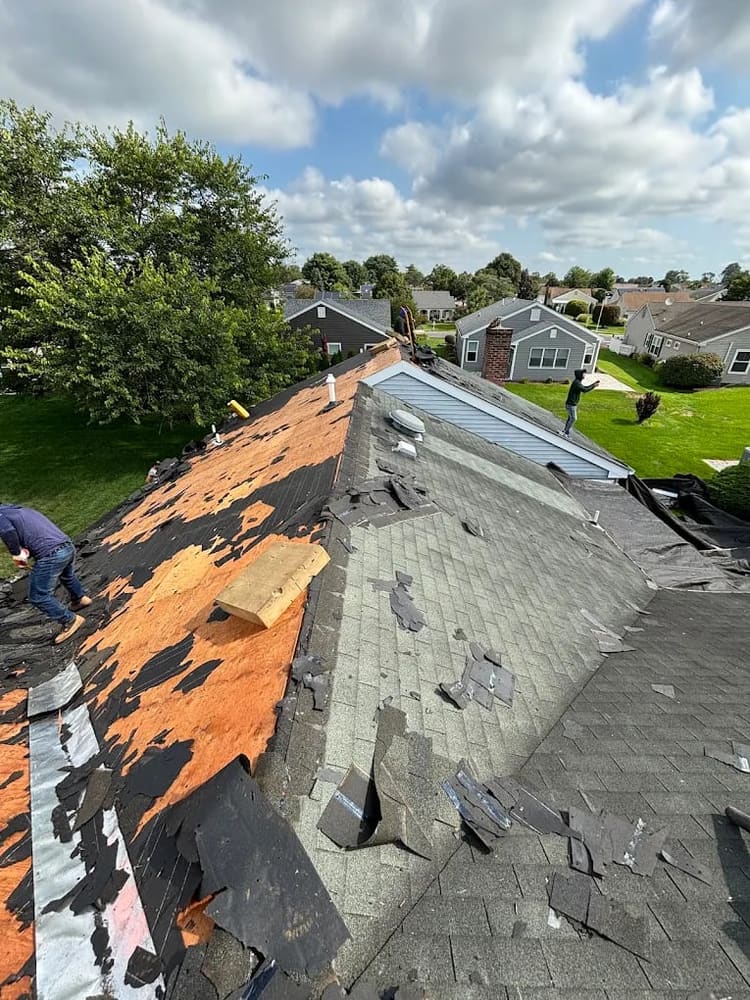
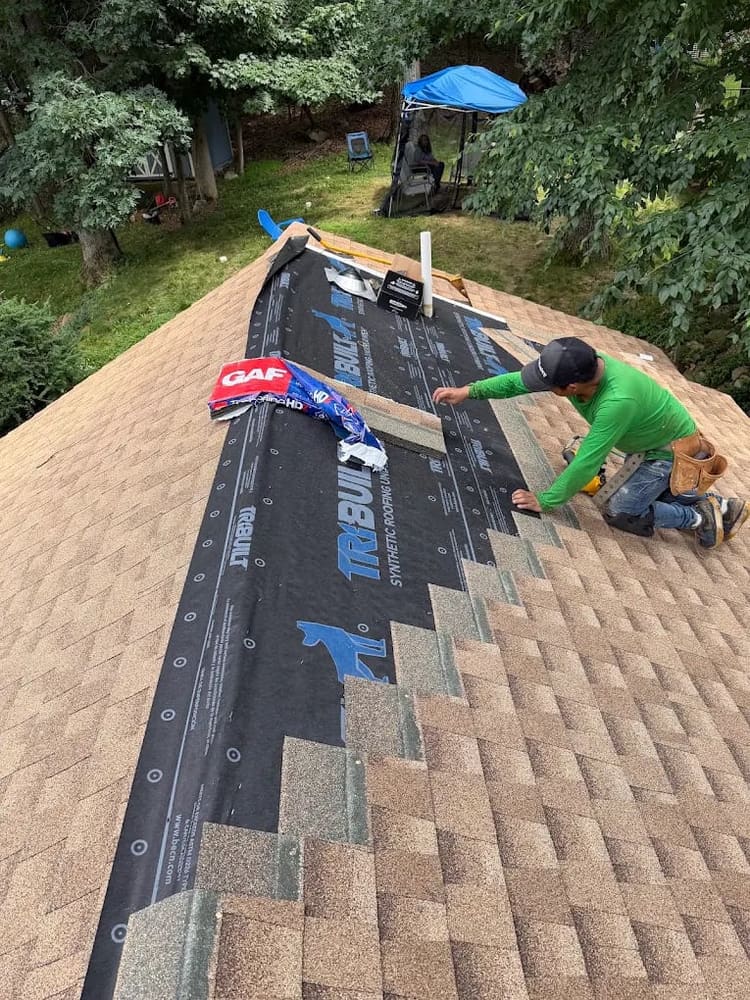
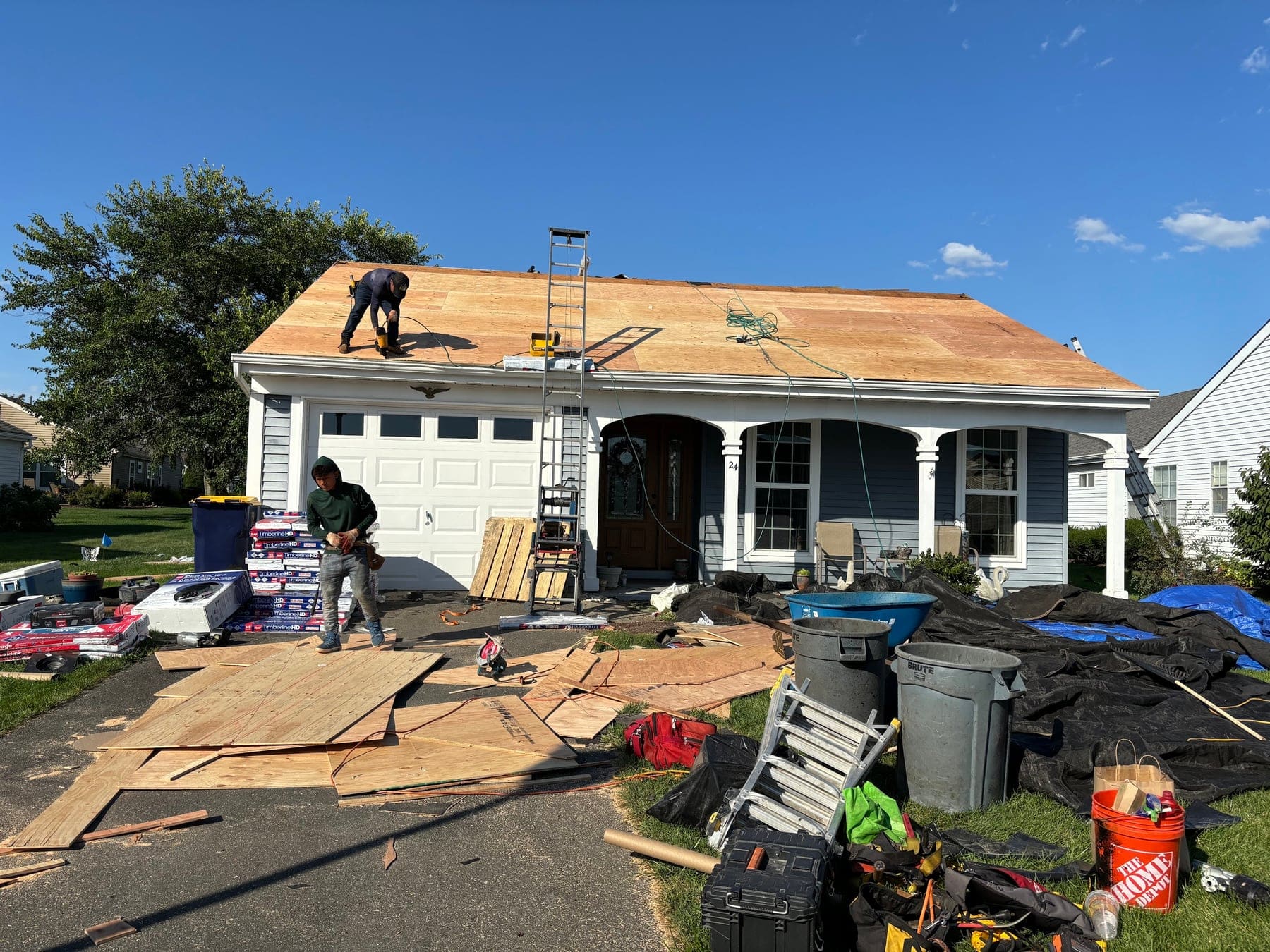
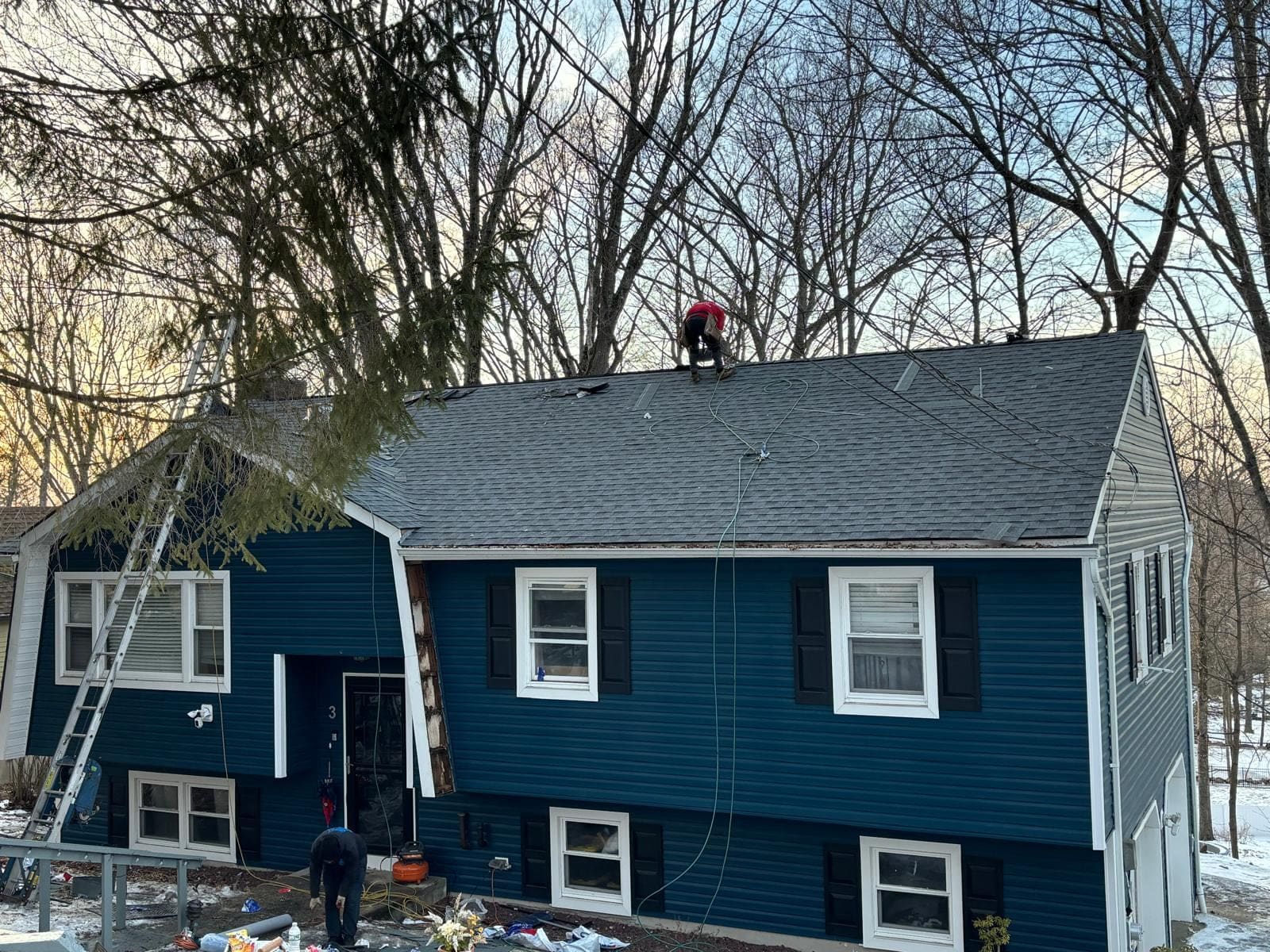
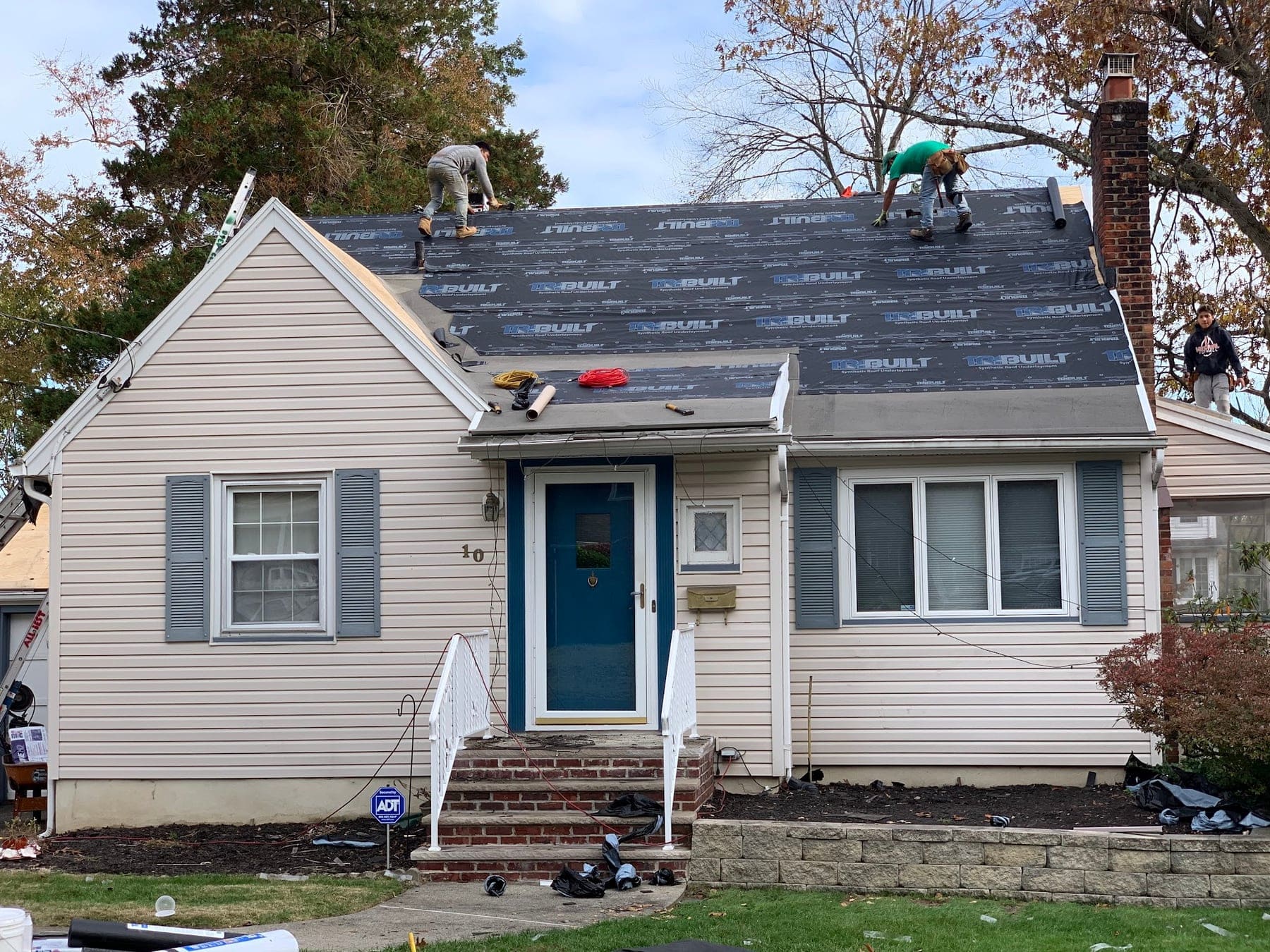
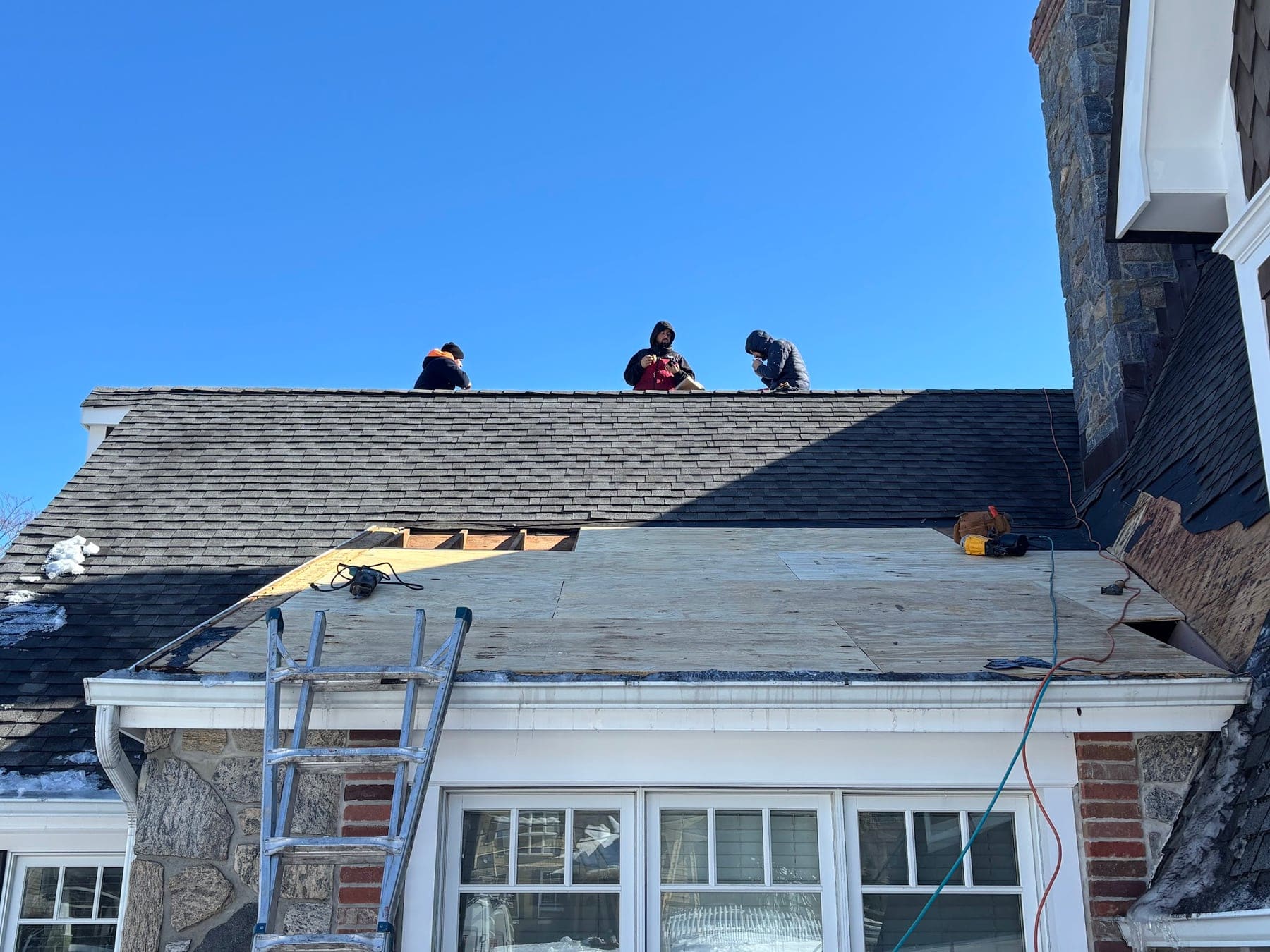
On the residential side, the township's capes, ranches and split-levels have simpler roofs. Typical repairs are wind-lifted shingles, cracked pipe boots, chimney flashing, dormer walls on expanded capes and the junctions where split-level roofs meet sidewalls.
We repair commercial and residential roofs, and when a leak traces to masonry, we handle the chimney or parapet as well.
Saddle Brook housing
Saddle Brook's residential neighbourhoods were built mostly in the decades after World War II: Cape Cods, ranches, split-levels and modest colonials on regular suburban lots, along with some two-family homes and garden apartments. Most homes have asphalt shingle roofs and a single brick chimney. Commercial and industrial areas near the highways include warehouses, light-manufacturing buildings, offices and retail with flat or low-slope roofs.
Weather & exposure
Land along the Saddle River on the township's eastern side is low and can flood in heavy storms. Large flat roofs on industrial buildings collect a lot of water in summer downpours and carry snow load in winter. Residential streets have mature trees, and the many post-war brick chimneys see regular freeze-thaw wear.
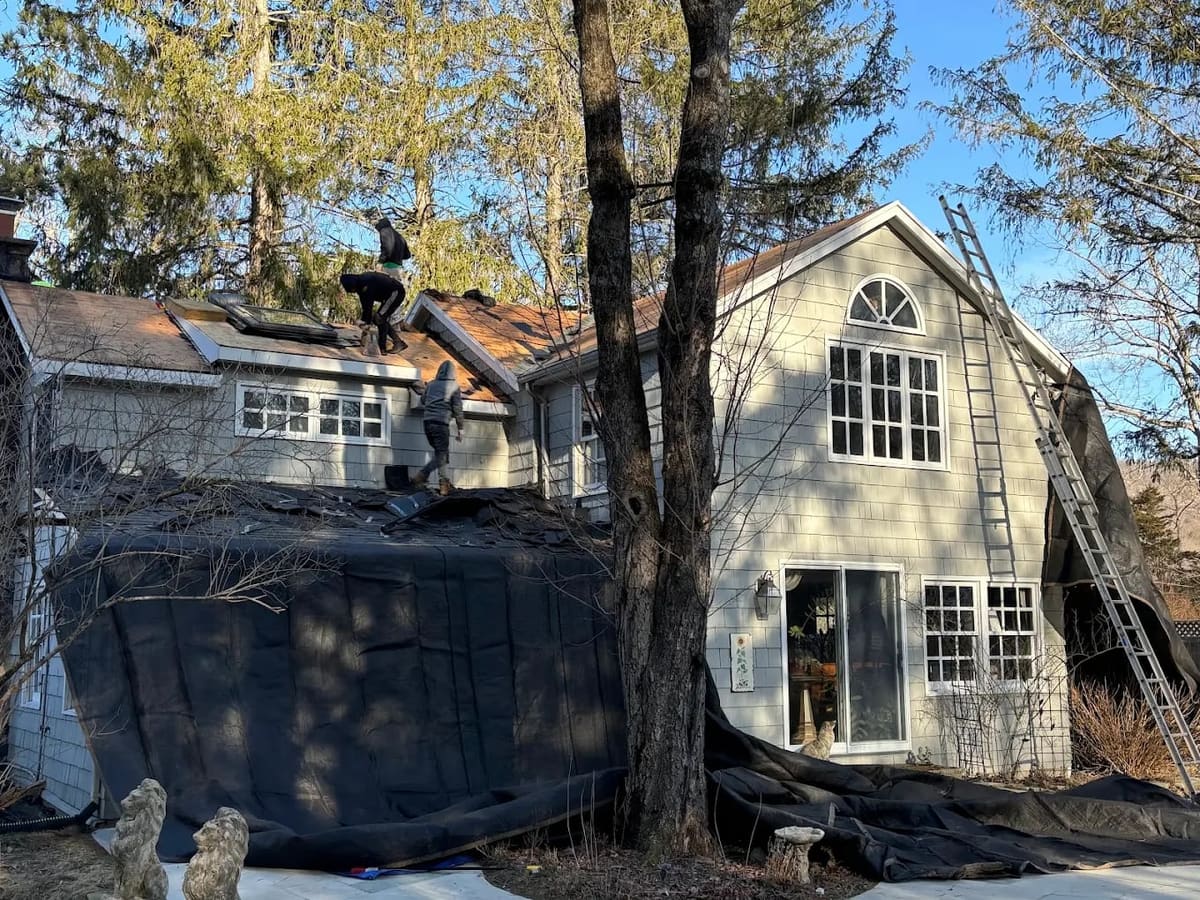
Repair or replace? What we tell Saddle Brook homeowners
For commercial and industrial roofs in Saddle Brook, targeted repairs keep a sound membrane working, and correcting the perimeter and drains often prevents the next leak. Widespread ponding, blistering or wet insulation point toward replacement. For homes, a localized repair makes sense if the shingles elsewhere are flexible and holding granules.
We document what we find with photos and provide a written estimate. After storms, we can help document damage for an insurance claim; the insurer decides what is covered.