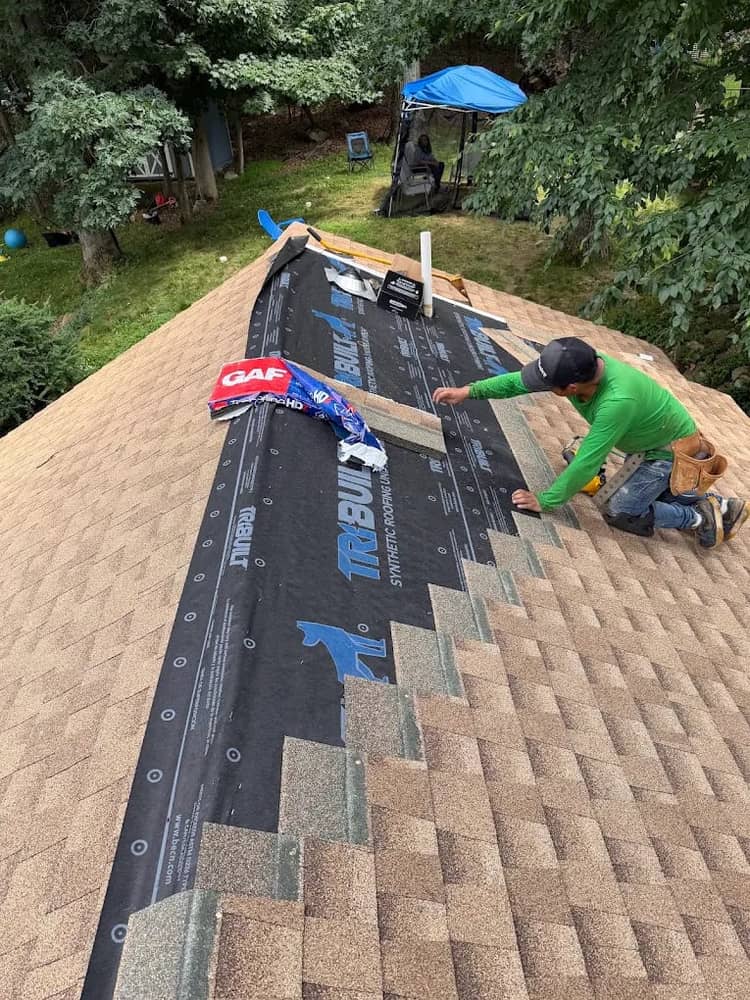
Roof Repair for Newark homes and buildings
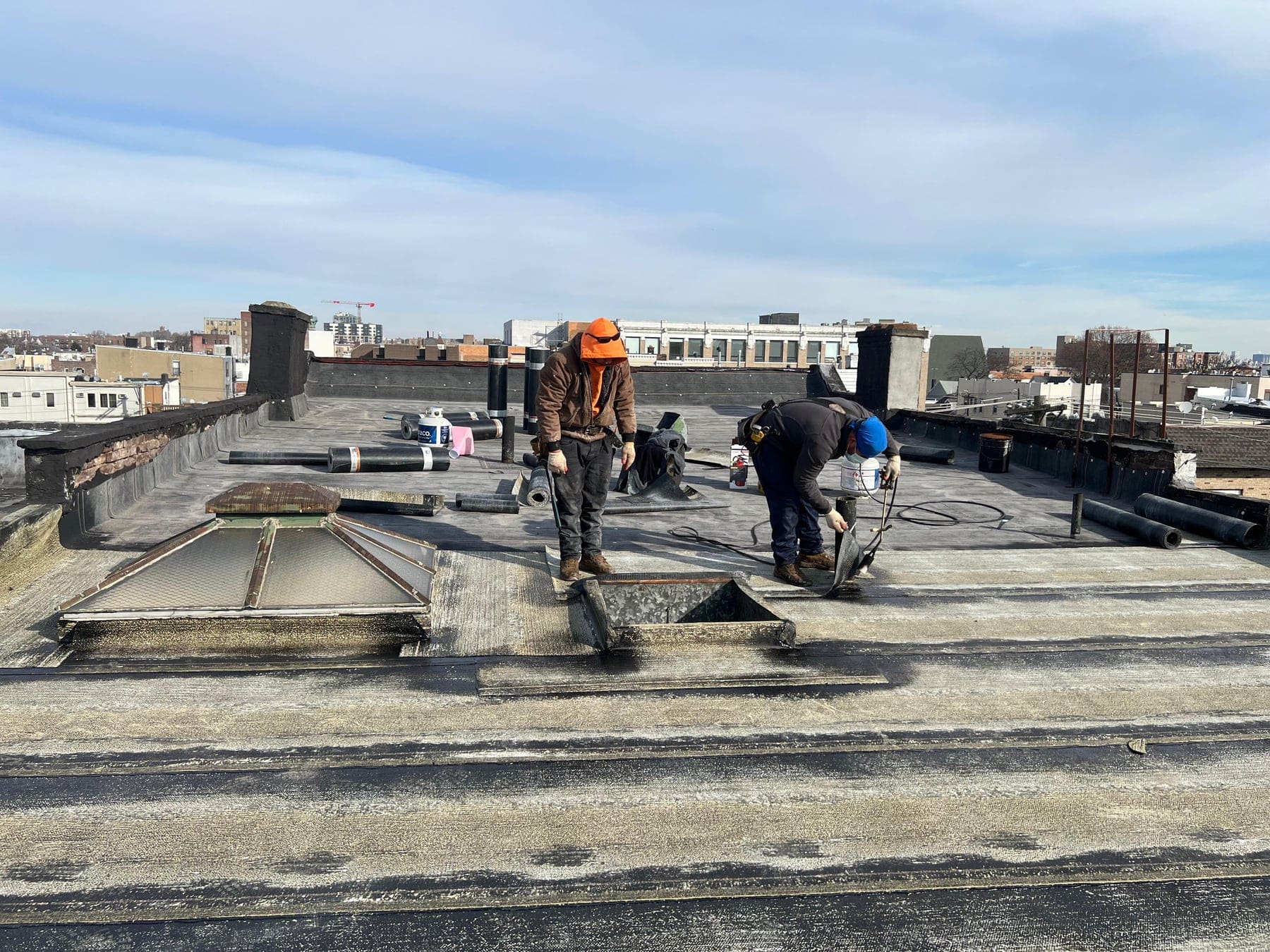
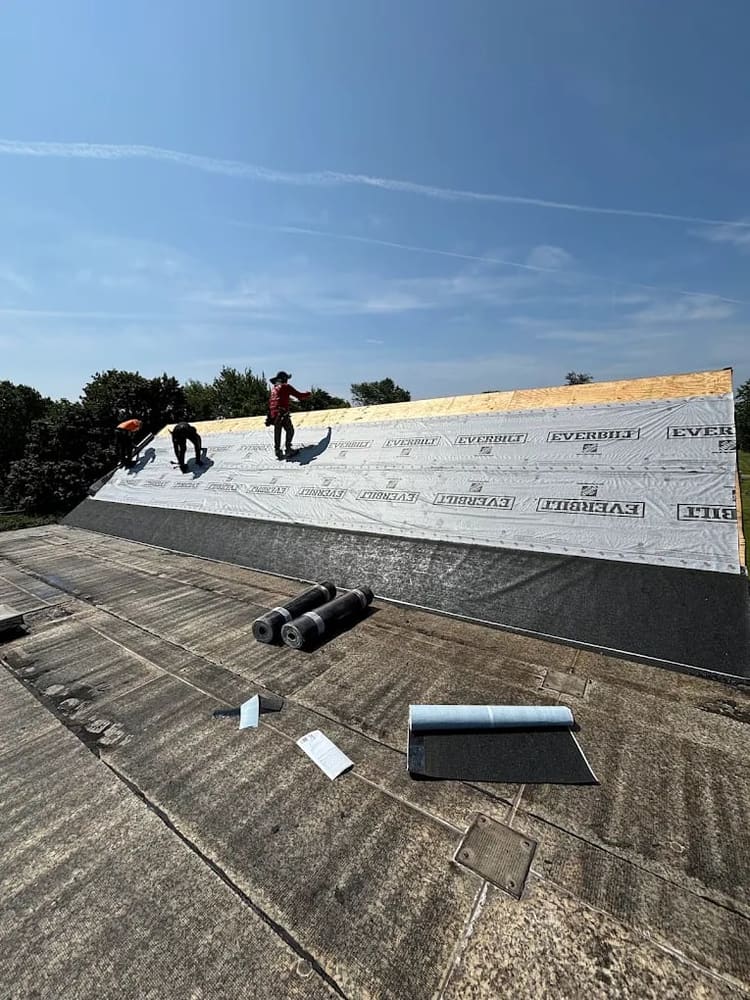
A large share of roof repairs in Newark are flat-roof repairs: open seams, blistered or alligatored surfaces, clogged drains, failed parapet flashing and rusted roof hatches on apartment and mixed-use buildings. On attached homes and two- and three-families, the trouble spots are usually the transition between a pitched front roof and a flat rear roof, and the joint where one house meets the next.
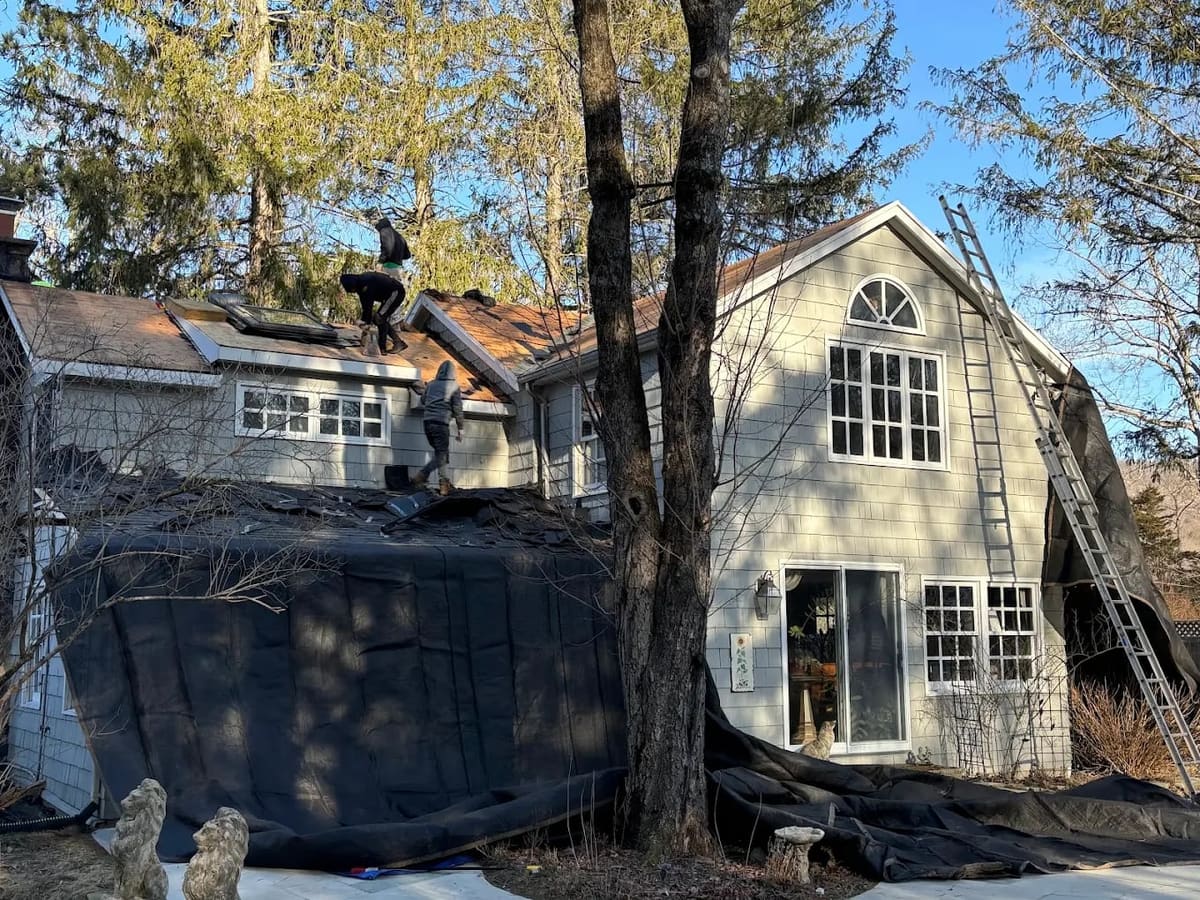
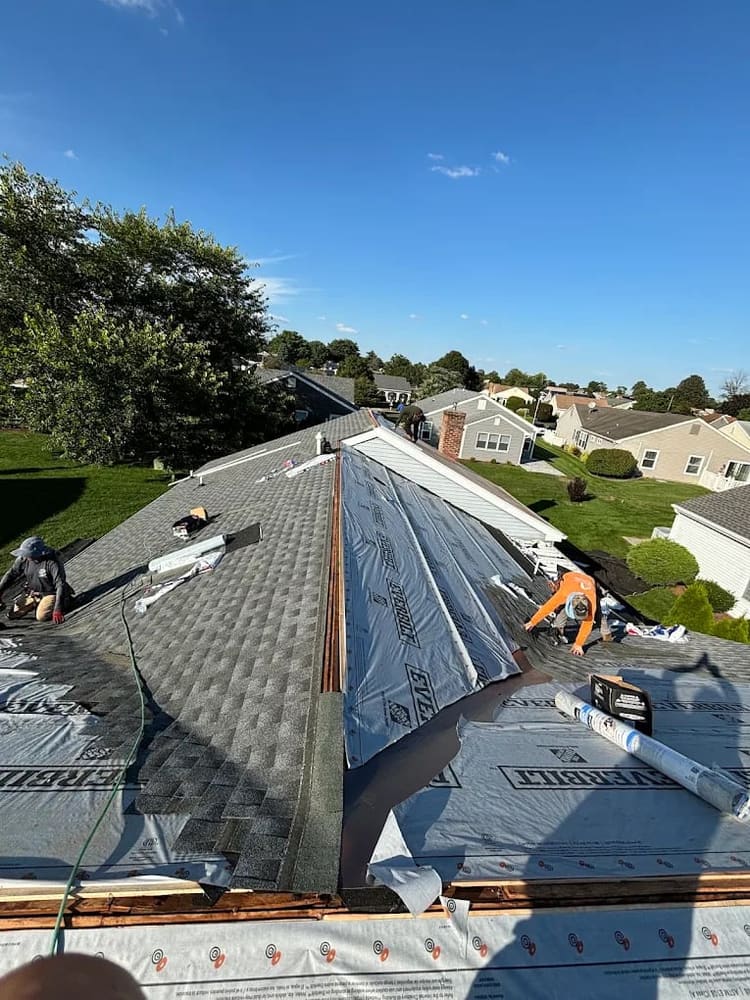
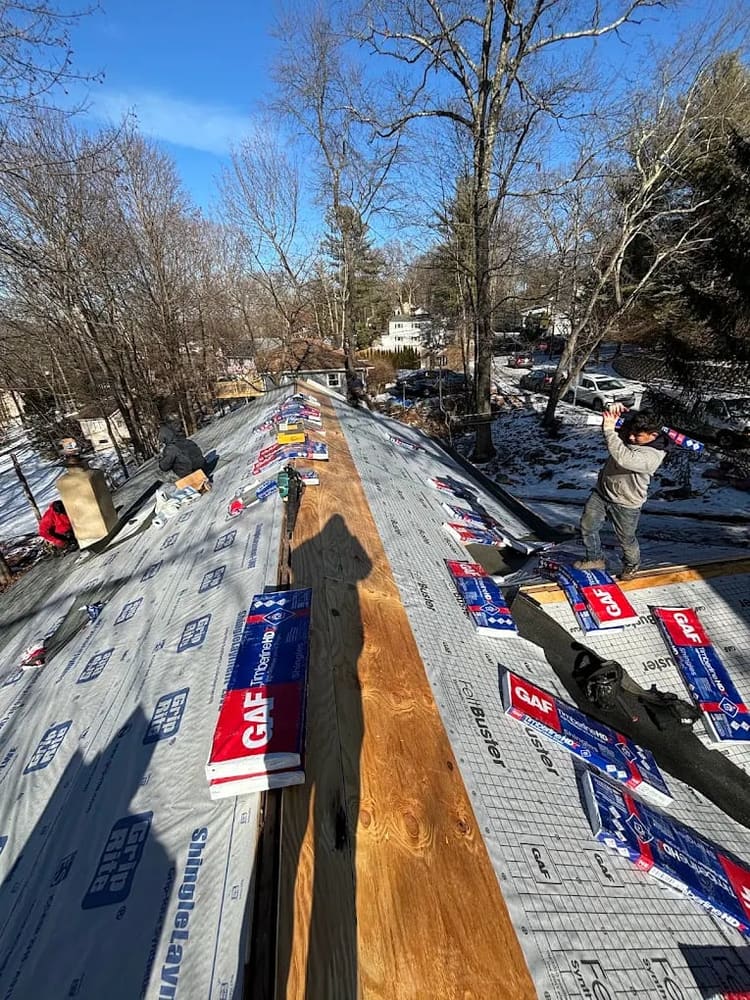
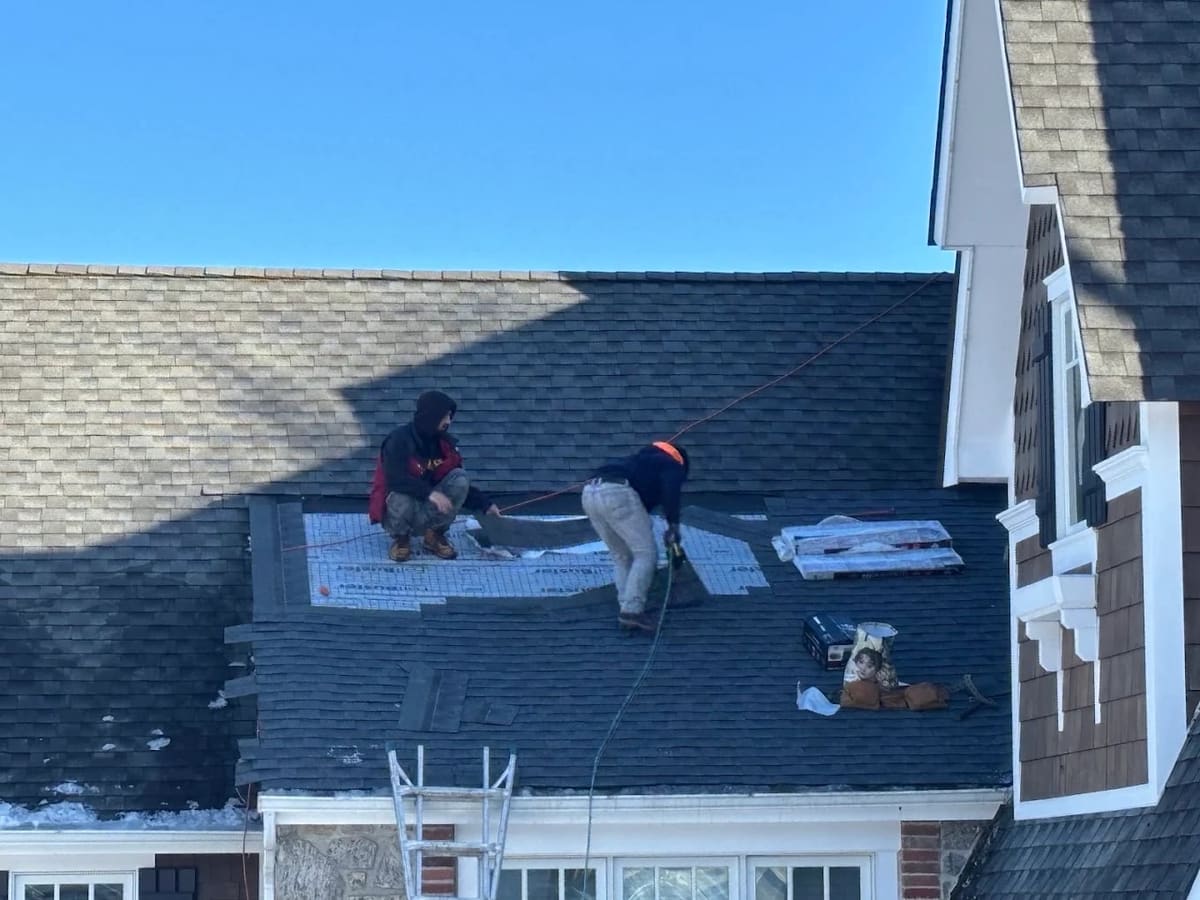
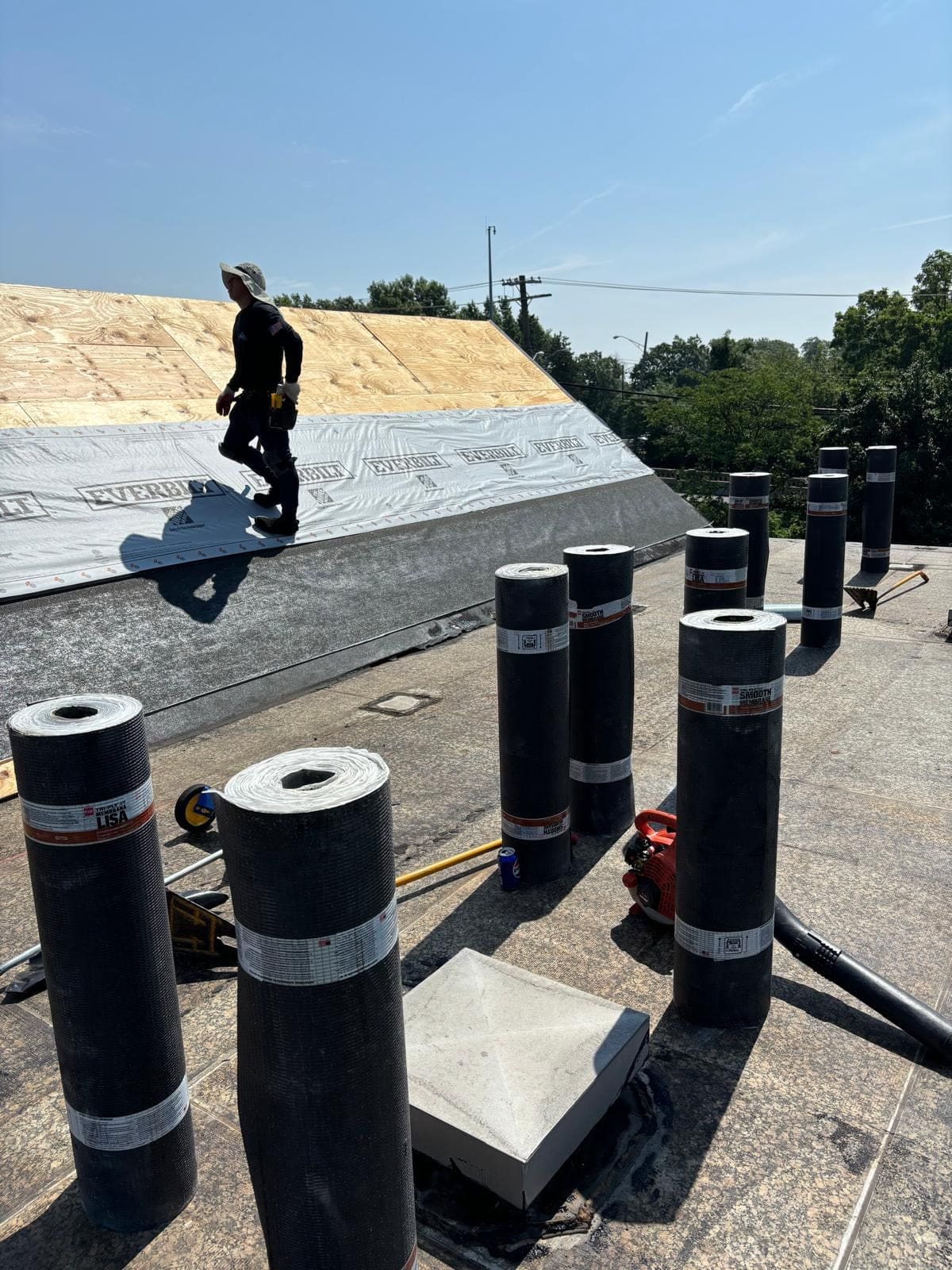
We repair single-ply membrane, modified bitumen and older built-up roofs, as well as the asphalt shingle sections on frame houses. For owners and property managers we document what we find with photos and a written scope, so it is clear what is failing, what is urgent and what can be planned for later.
On industrial and warehouse roofs near the port and rail corridors, repairs often involve large membrane areas, rooftop equipment curbs, skylights and roof hatches. We handle those repairs and give an honest assessment of whether the roof has reached the point where patching is no longer sensible.
Newark housing
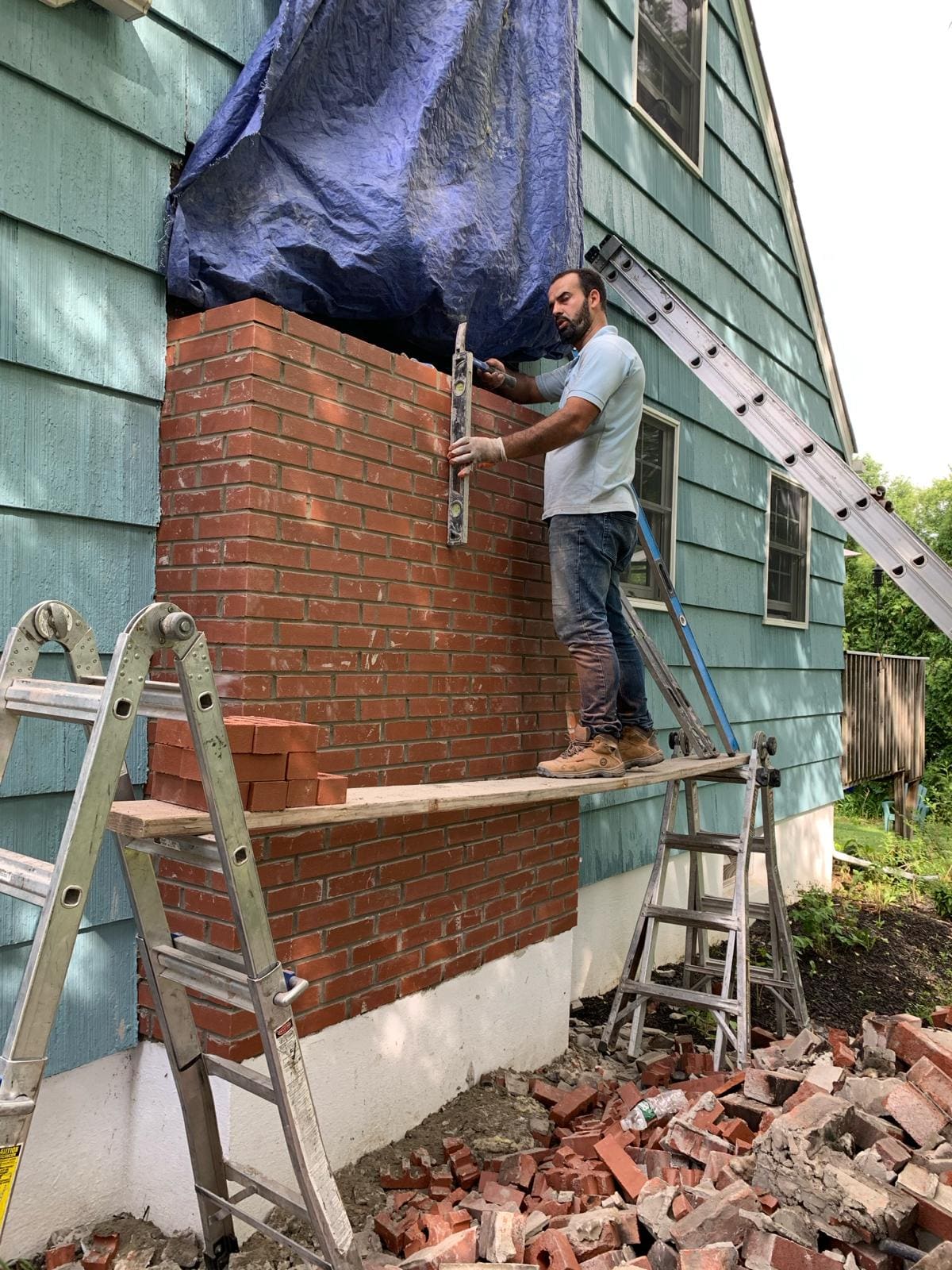
Much of Newark was built between the late 1800s and the mid-1900s. Neighborhoods such as the Ironbound are dense with attached houses and two- and three-family frame homes, many with a pitched front and a flat or low-slope rear roof. Brick apartment buildings, rowhouses and mixed-use buildings along the commercial avenues have flat roofs behind parapets, and older masonry chimneys serve boilers or sit unused. Downtown has larger commercial and institutional buildings, and the eastern side of the city holds large flat-roofed warehouses and industrial buildings.
Weather & exposure
Newark is low and largely flat, open to wind off Newark Bay and the Meadowlands on its eastern side. Tree canopy is thinner than in the suburbs, so roofs take full sun and heat, which ages membranes and asphalt faster. Flat roofs depend on drains and scuppers that clog with debris, and summer downpours test them hard. Freeze-thaw works on parapets, coping and old chimneys every winter, and nor'easters drive rain into walls and parapet joints.
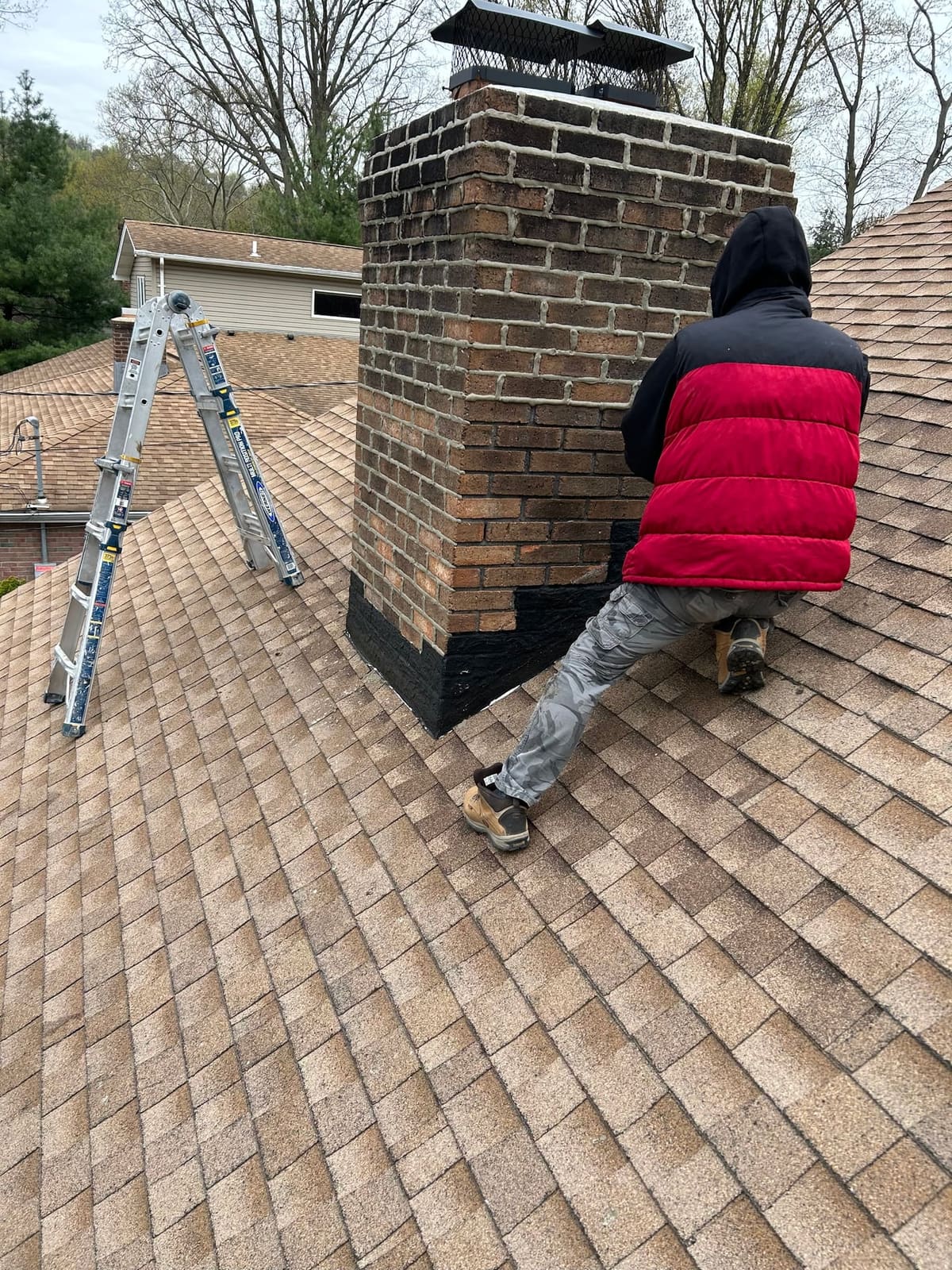
Repair or replace? What we tell Newark homeowners
On a flat roof with one or two problem areas and a sound membrane elsewhere, targeted repair is usually the right call. If the roof has been patched many times, the surface is cracked throughout or insulation under the membrane is wet, more patches only delay a replacement. We probe and photograph suspect areas so you can see the condition for yourself.
Landlords should deal with roof leaks quickly. Water on a top floor travels into walls, ceilings and units below, and the cost of interior repairs and tenant disruption quickly exceeds the cost of the roof work. After a storm, we can also document damage with photos and a written assessment to support an insurance claim.