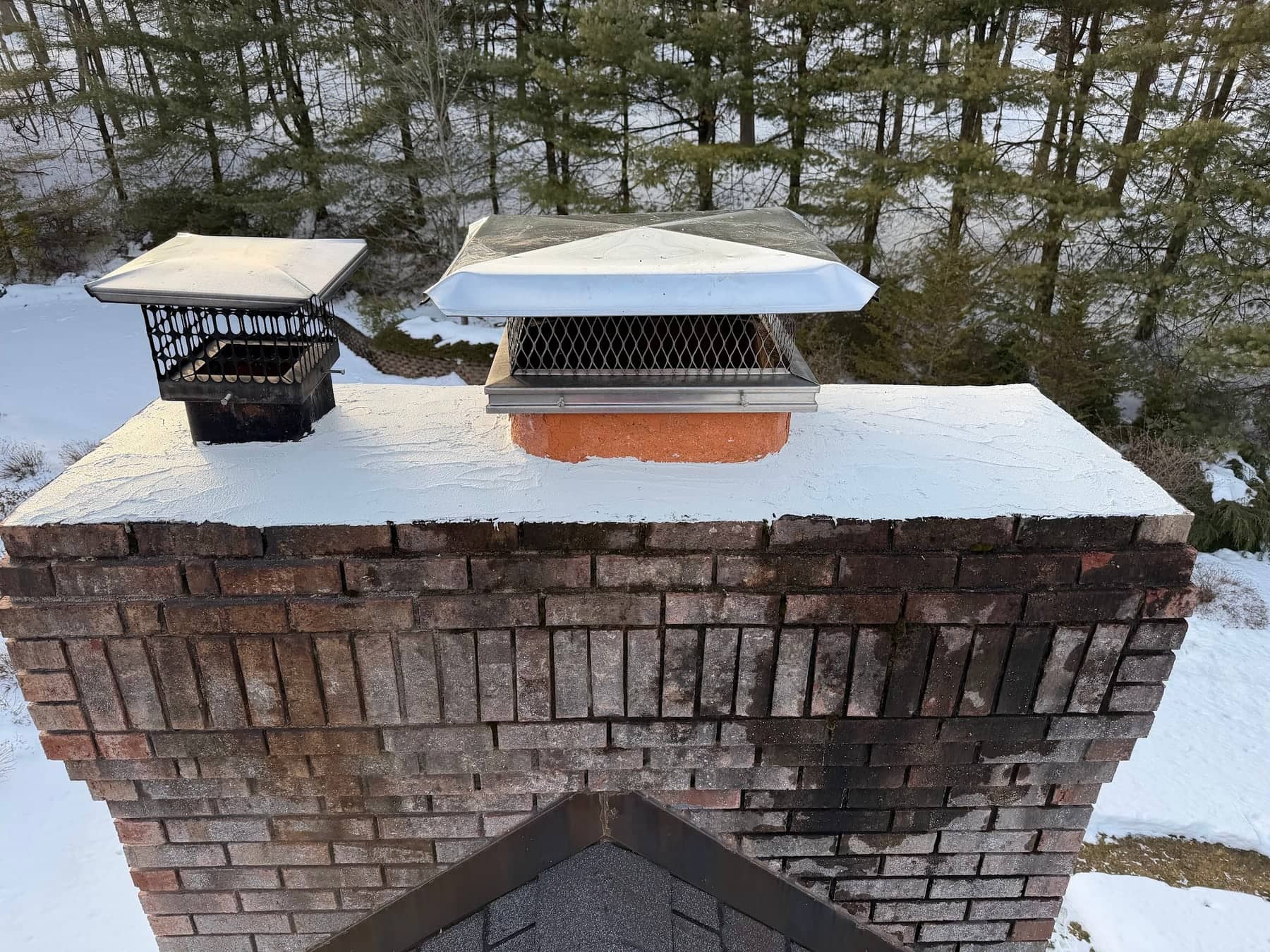
Chimney Repair for Kingwood chimneys
Kingwood chimneys stand in the open, and that shapes everything about them. Wind strips caps that are not fastened, drives rain into the masonry on the exposed face and pulls at flashing where the chimney meets the roof. Many homes burn wood through the winter, so flues build creosote, and older farmhouse chimneys add century-old mortar that freeze-thaw has been eroding for generations.
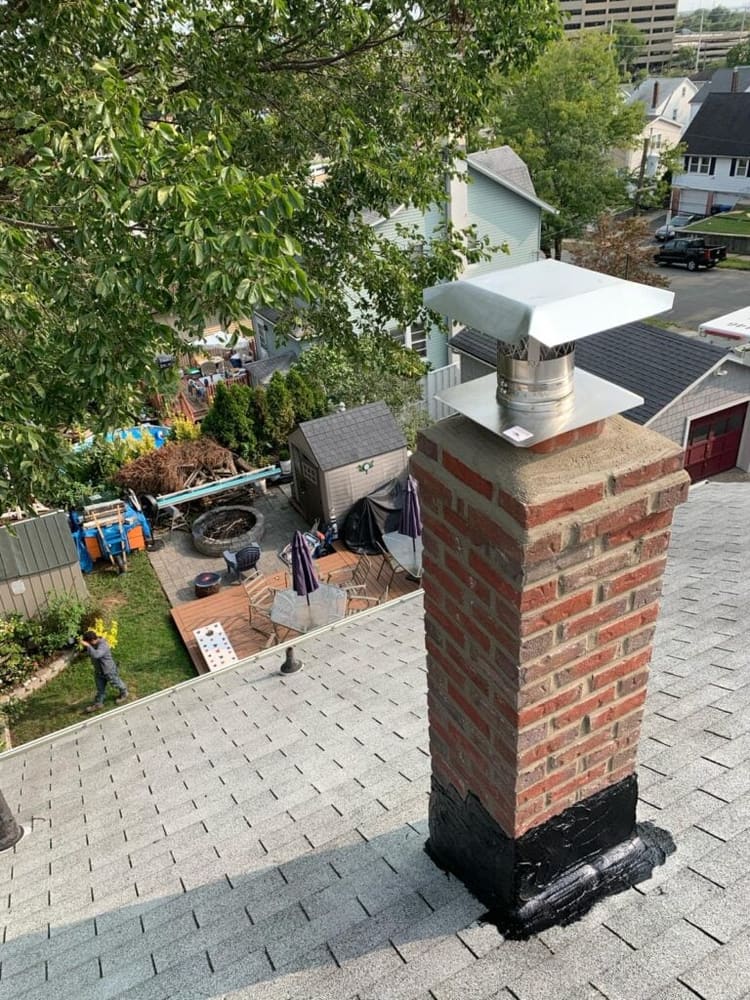
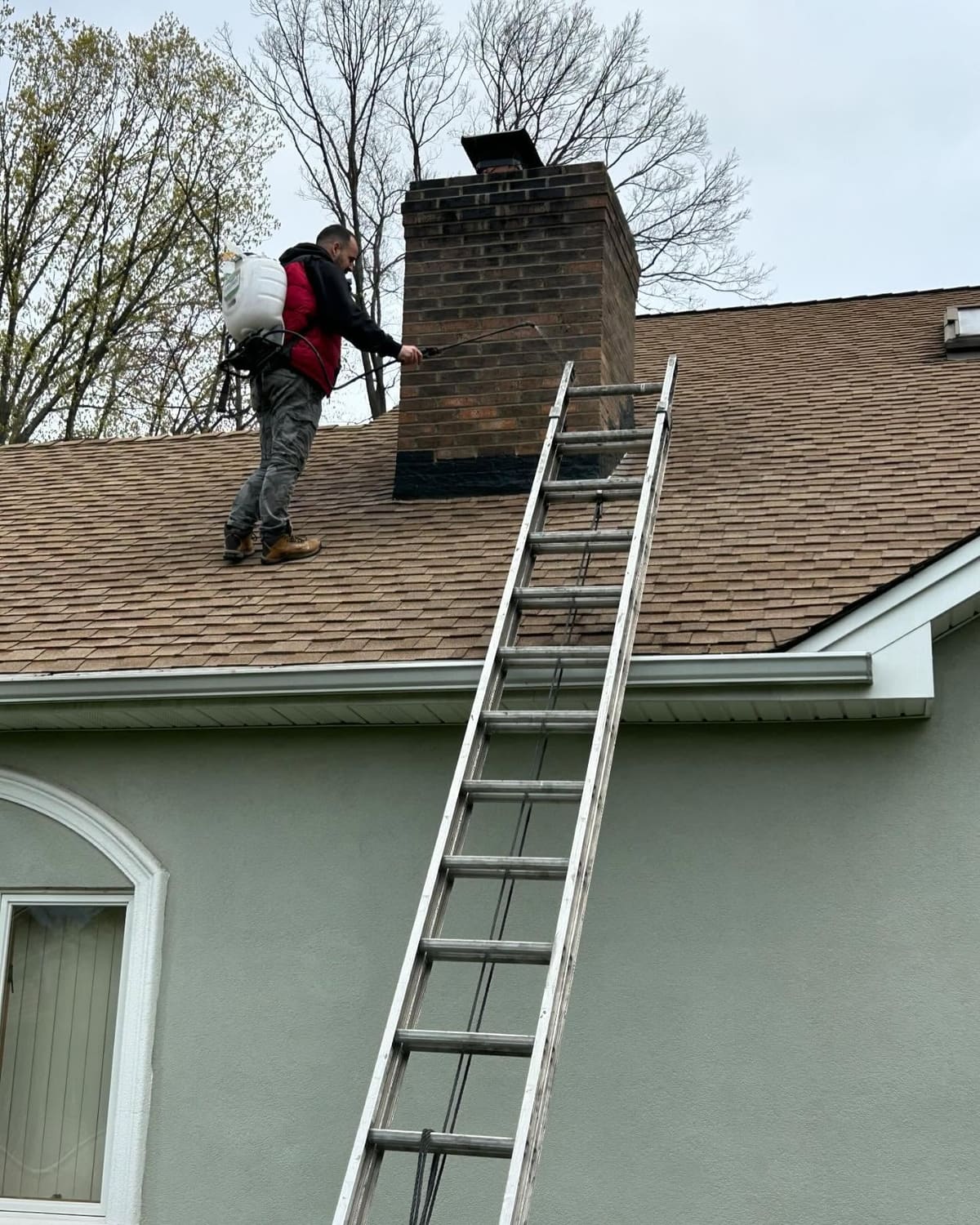
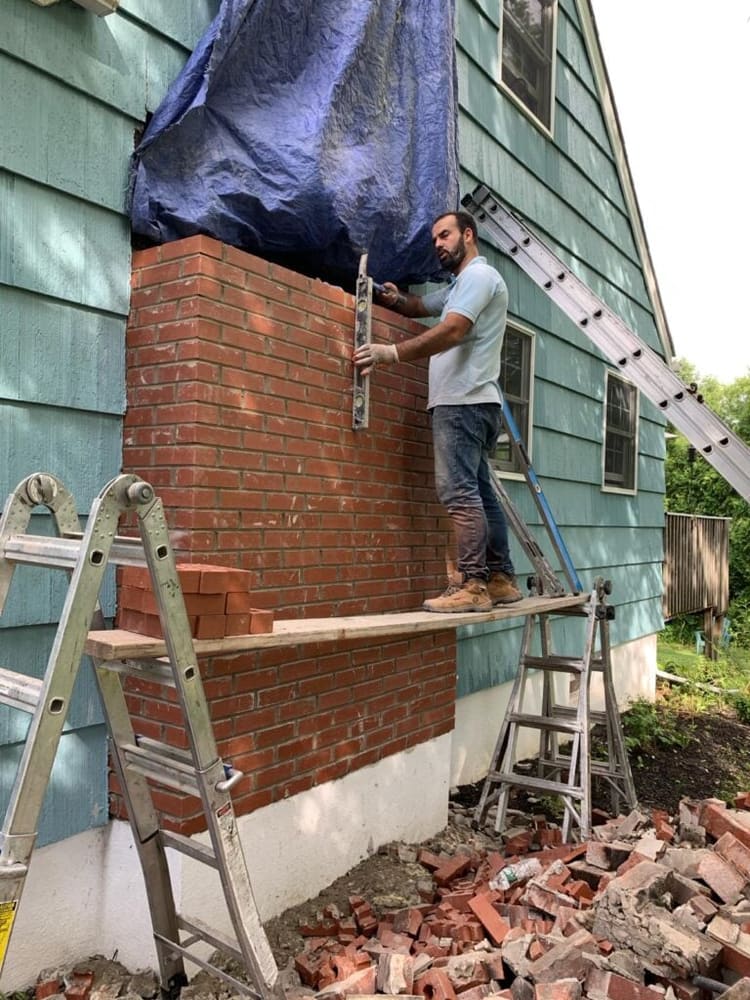
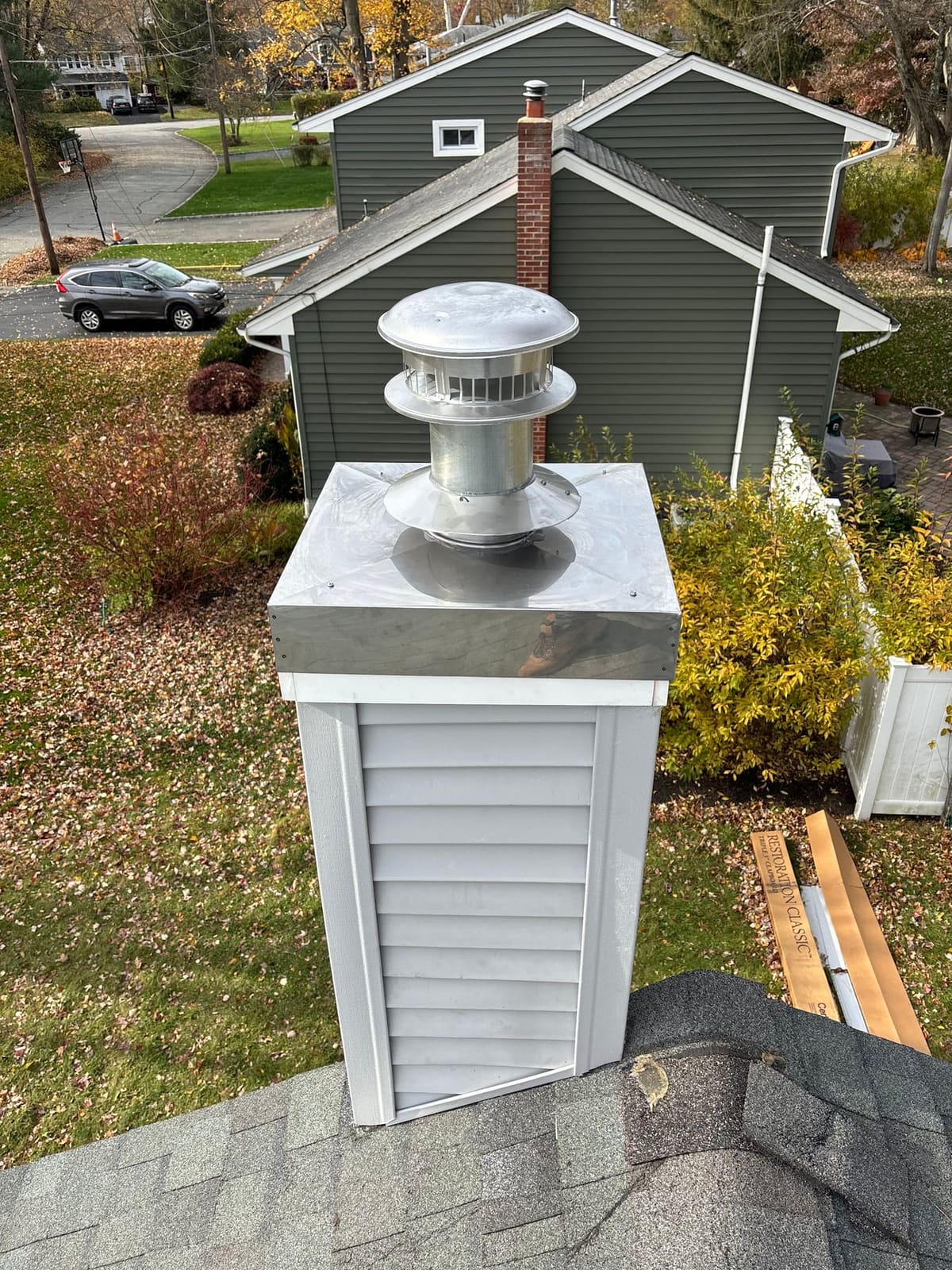
Asset Roofing & Chimney inspects, cleans, repairs, relines and rebuilds chimneys throughout Kingwood Township. We install caps fastened for exposure, rebuild crowns, repoint and waterproof masonry, replace chase covers, rebuild flashing and install stainless-steel liners for wood stoves, inserts and heating appliances. We are licensed and insured, and estimates are free.
Kingwood housing
Kingwood's housing is mostly detached homes on large rural lots. Older farmhouses with barns and outbuildings are scattered across the township, along with ranches, split-levels, capes and colonials built from the mid-1900s onward, many set well back from the road. Asphalt shingle is the standard on houses, with metal common on farm buildings. Wood stoves, fireplaces and propane or oil heat are typical.
Weather & exposure
Kingwood's upland is open and gently rolling, and in many places there is little between a house and the horizon. Wind hits roofs broadside, thunderstorms build over the fields with gusts and occasional hail, and snow drifts against the lee side of roofs and chimneys. Homes along the river slopes are more sheltered but contend with trees and damp.
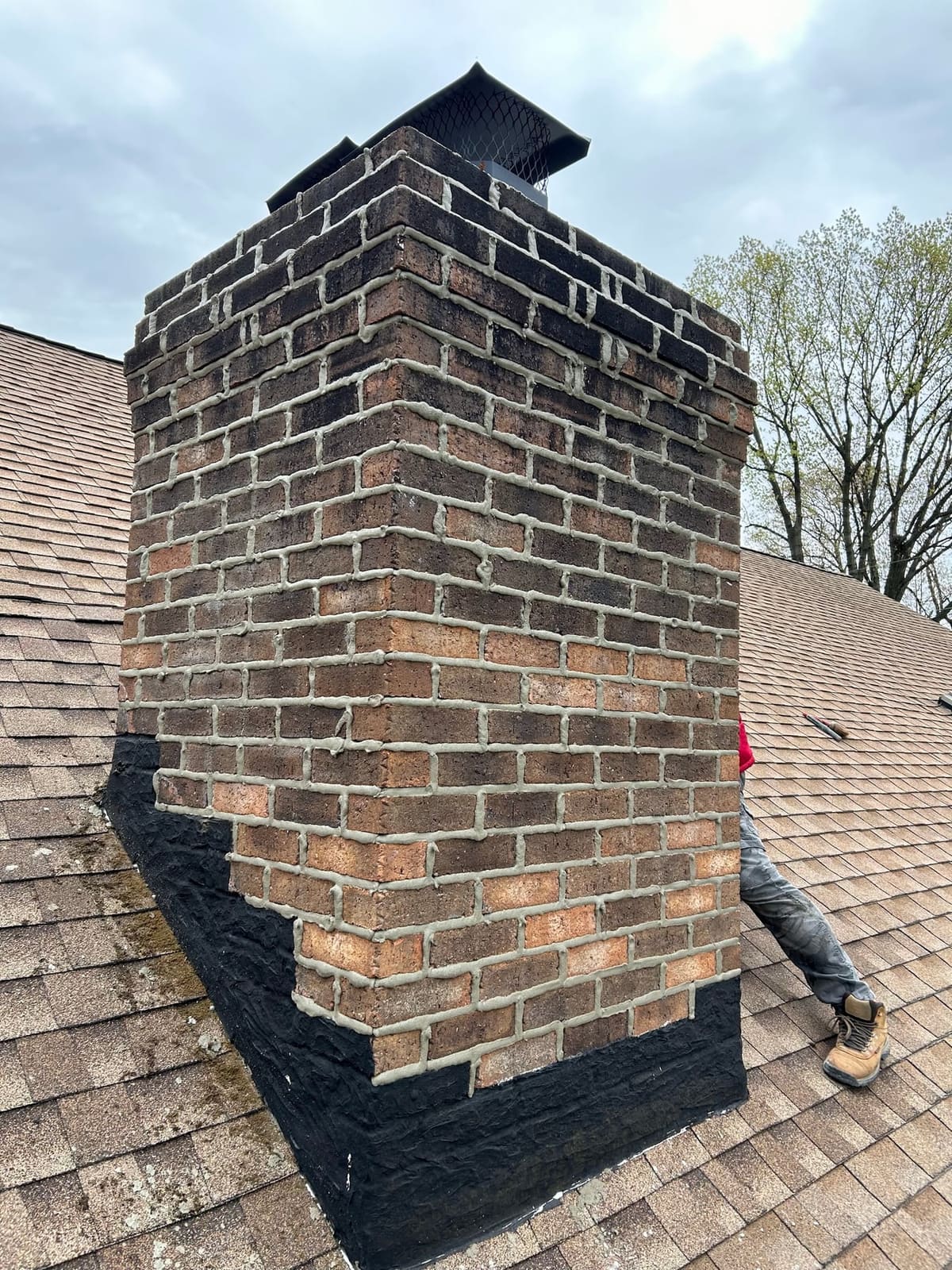
Repair, repoint or rebuild in Kingwood
On an exposed Kingwood chimney, the essentials are a cap mechanically fastened to the flue tile or crown, a crown with a proper overhang, sound mortar joints and a breathable water repellent on the masonry. We pay particular attention to the windward face and the flashing at the roofline, where wind and drifted snow do the most damage.
If you heat with wood, have the flue inspected and cleaned before every heating season, and make sure any stove or insert vents through a liner sized to its outlet. A properly lined flue drafts better, stays warmer and builds less creosote.