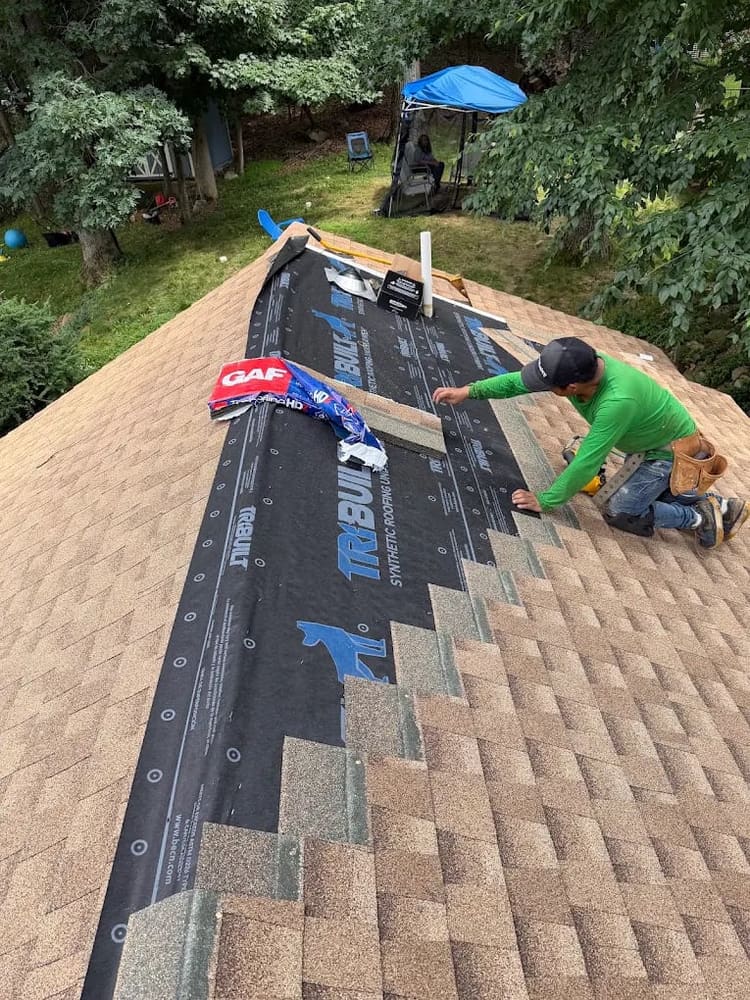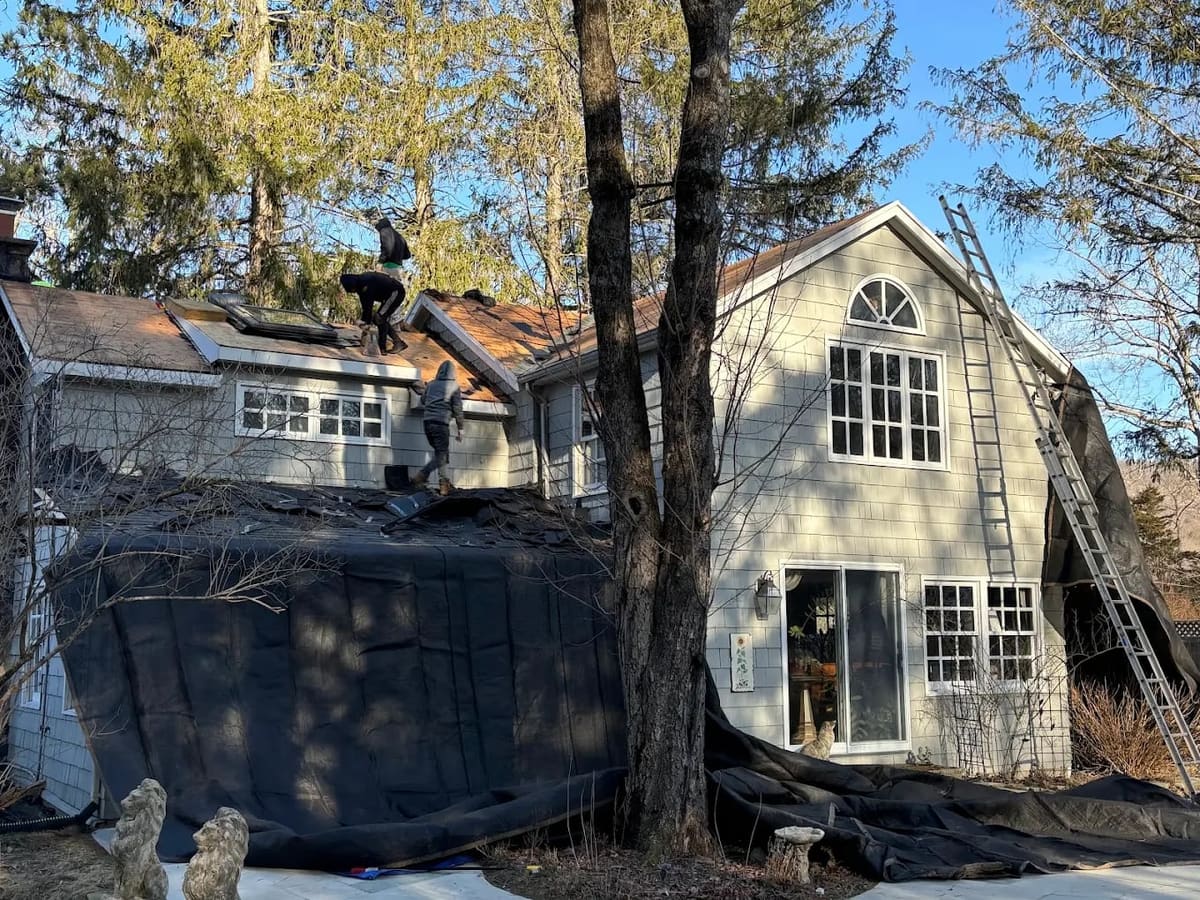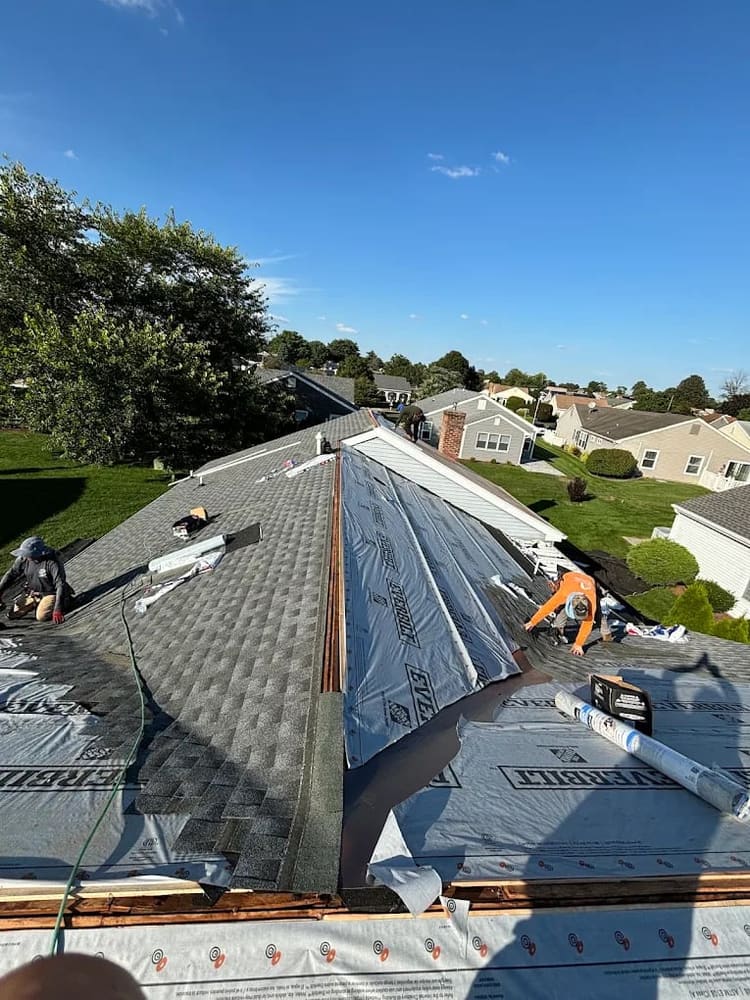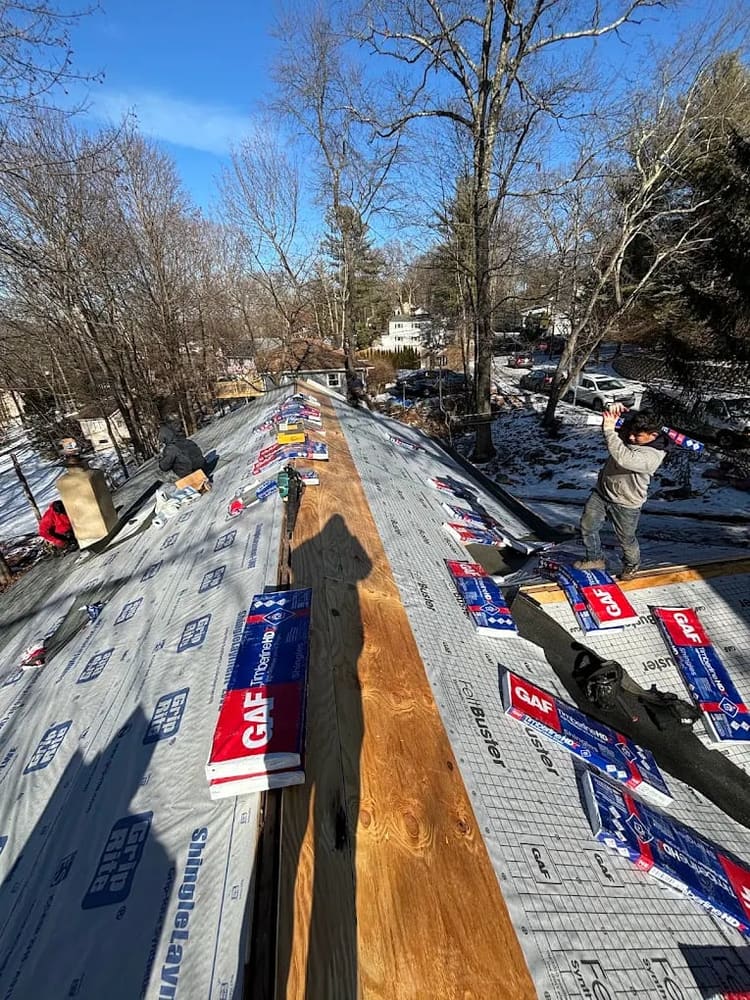
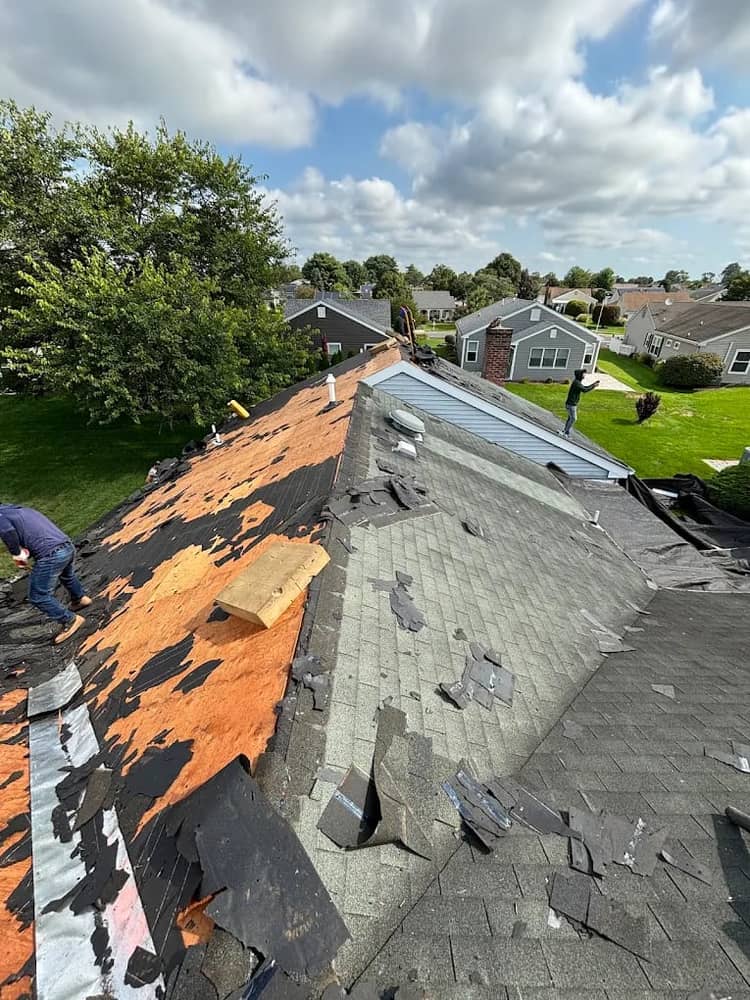
Roof Repair for Lambertville homes and buildings
Most Lambertville roof leaks come from the places where buildings meet. On rowhouses and twins, the joint between neighboring roofs, the flashing at a party-wall chimney and the tie-in where a low-slope rear addition meets the back wall of the main house are all common entry points. Flat and low-slope roofs over kitchens and additions develop ponding, open seams and failed flashing well before the pitched main roof wears out.
On the commercial streets, flat roofs behind parapets and cornices depend on drains and scuppers staying clear. We inspect from the roof and the inside, trace the water to its source and repair it with compatible materials, whether shingle, flashing or flat membrane. Asset Roofing & Chimney is licensed and insured, estimates are free, and we document storm damage for insurance claims.
Lambertville housing
Lambertville's housing is predominantly 1800s and early-1900s: brick and frame rowhouses, twins and narrow detached homes on small lots, many with low-slope or flat roofs over rear kitchens and additions. Chimneys are often built into party walls and shared between neighbors. The commercial streets have older buildings with flat roofs behind parapets or cornices. Asphalt shingle, flat membranes and some older metal and slate are all present.
Weather & exposure
The city sits on the Delaware floodplain, with the land rising to the east. Humidity off the river and canal keeps roofs and masonry damp, and freeze-thaw cycling is hard on old brick. Houses packed close together shade one another, and debris collects in the narrow gaps and valleys between buildings. Wind is moderated by the valley and the surrounding hills, but summer storms still bring heavy, fast rain that tests every gutter and drain.
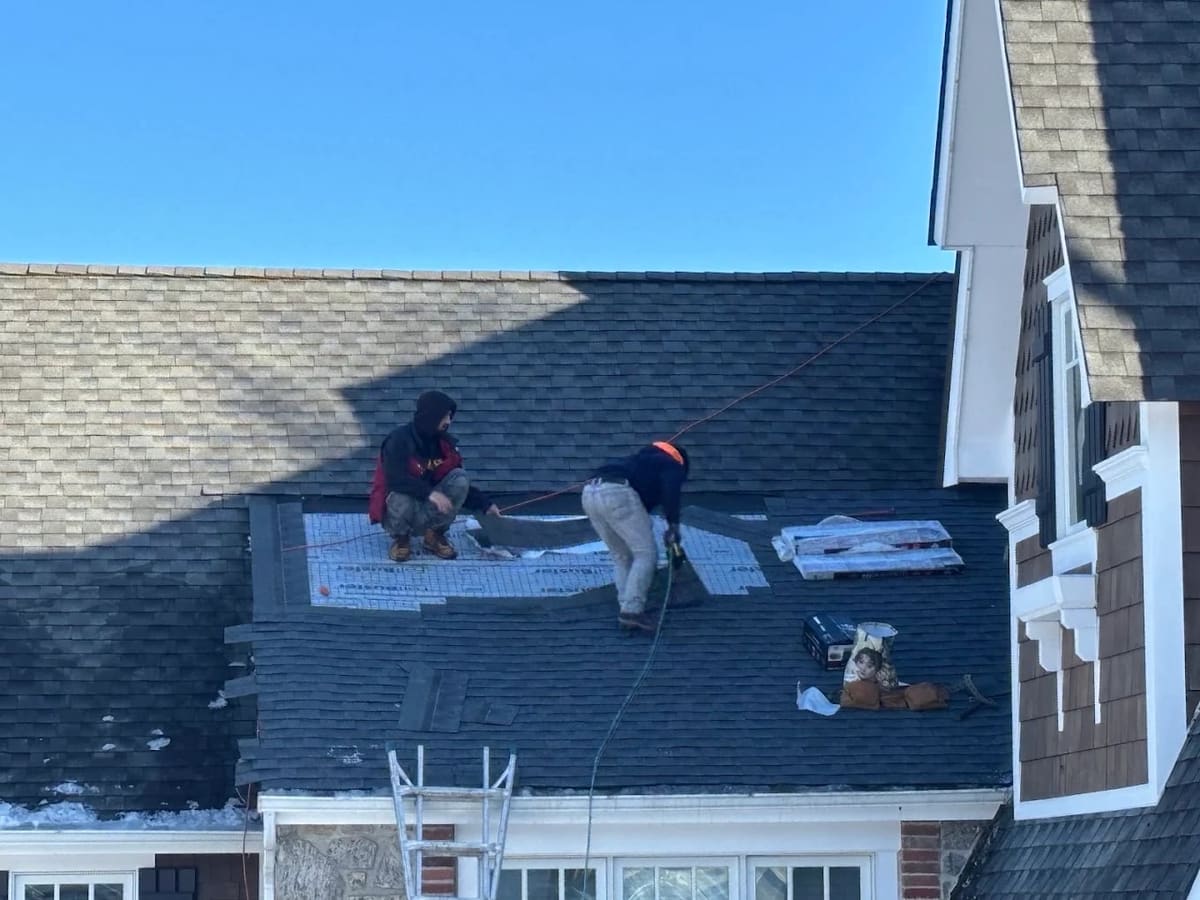
Repair or replace? What we tell Lambertville homeowners
On attached homes, a lasting repair sometimes needs a conversation with the neighbor, since the failing detail may straddle both roofs. We explain exactly where the problem is and what the repair involves so owners can coordinate. On low-slope rear roofs, a seam or flashing repair is often enough if the membrane is otherwise sound; if it has blistered, split or been patched repeatedly, replacing that section is the better value.
Commercial owners should have flat roofs and drains checked before winter and after leaf fall. Clearing a drain and sealing a seam costs far less than water damage to a shop or apartment below. If an older building has slate or metal on a visible section, we can assess it and advise you; our specialty is shingle and flat roofing.