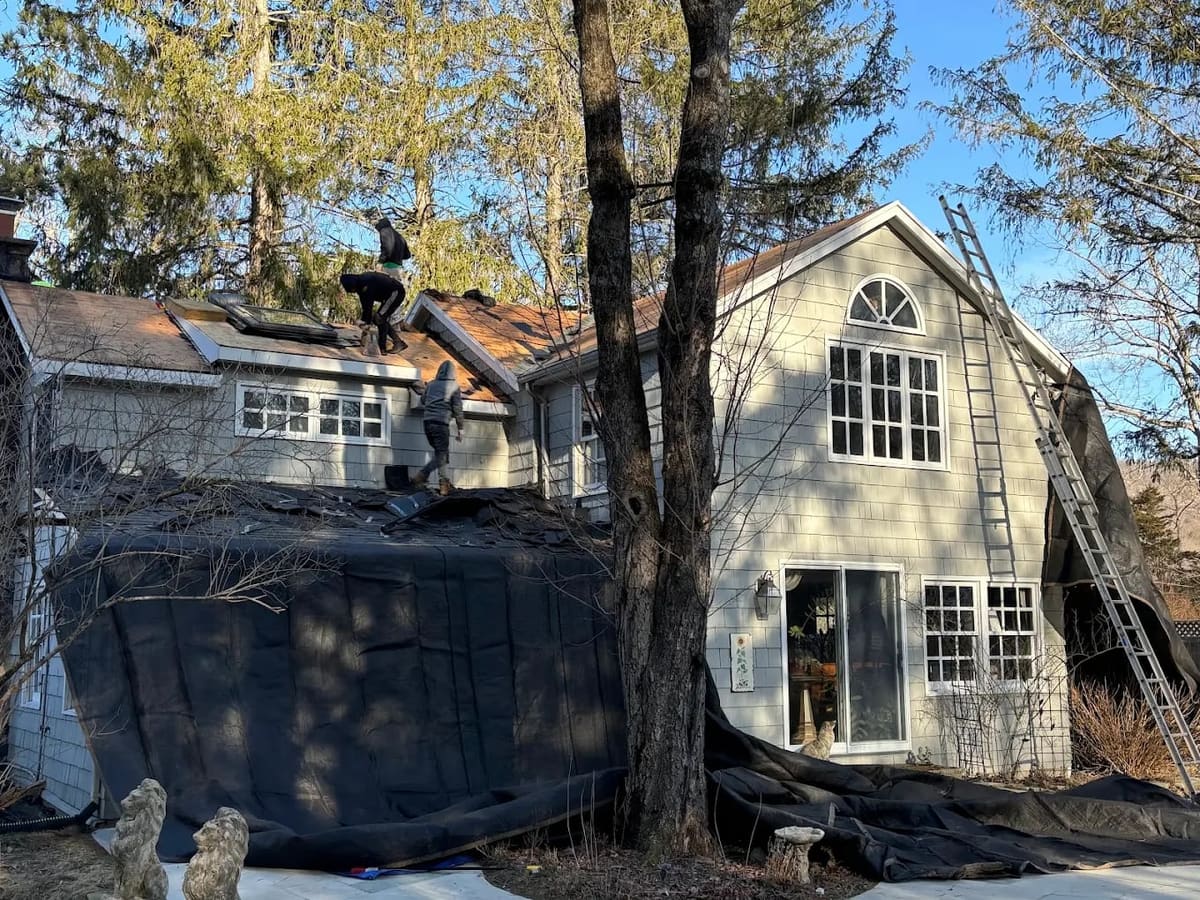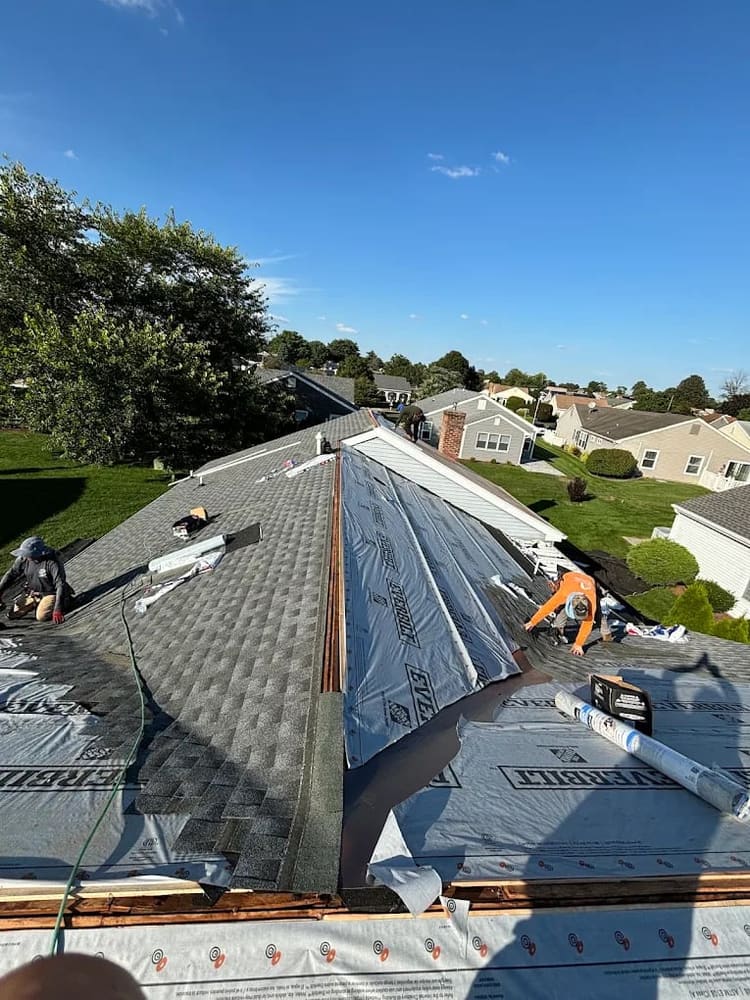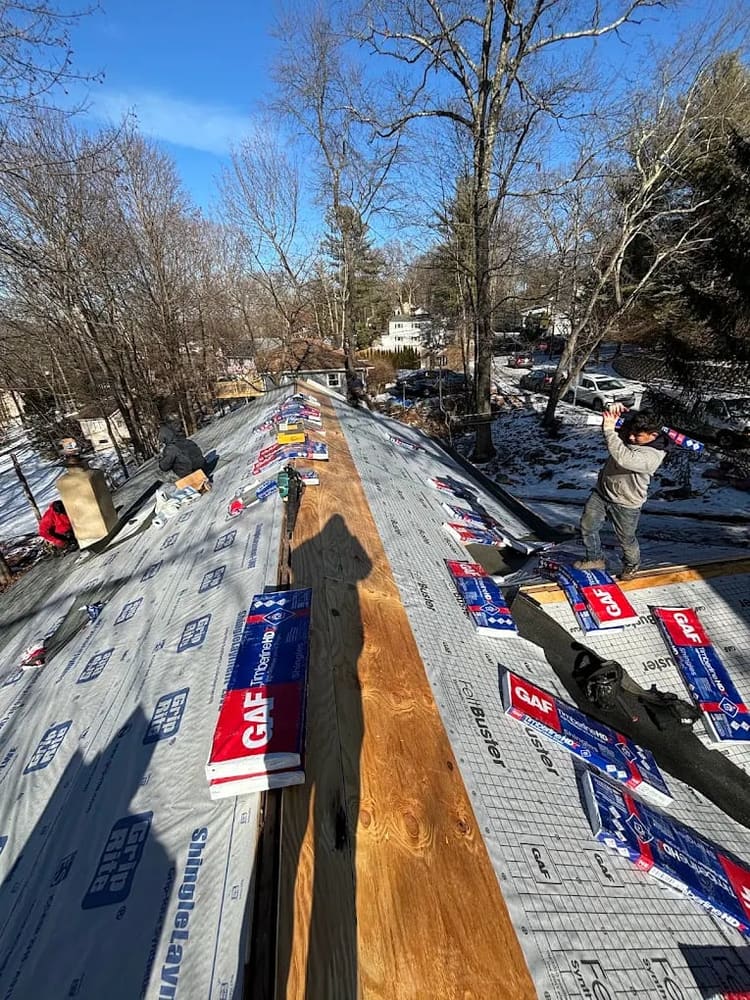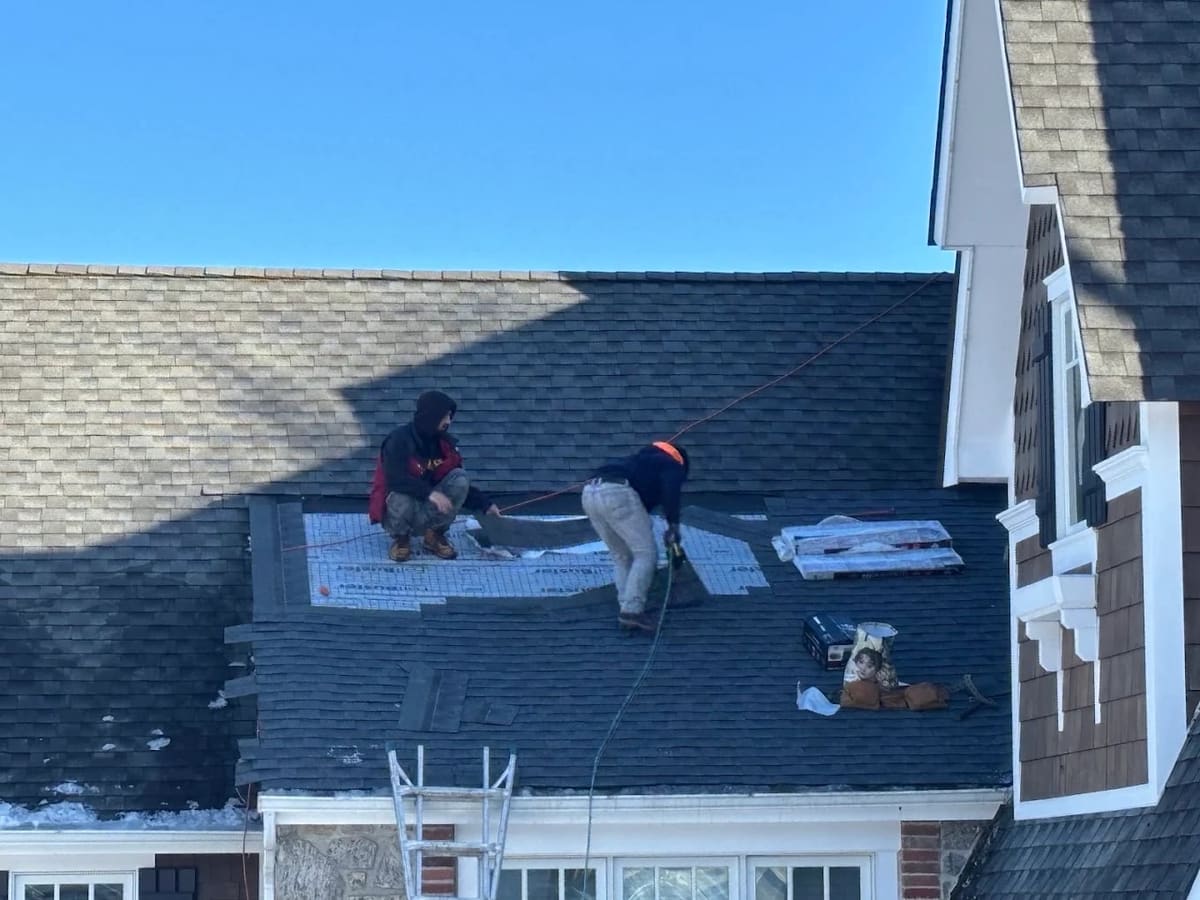
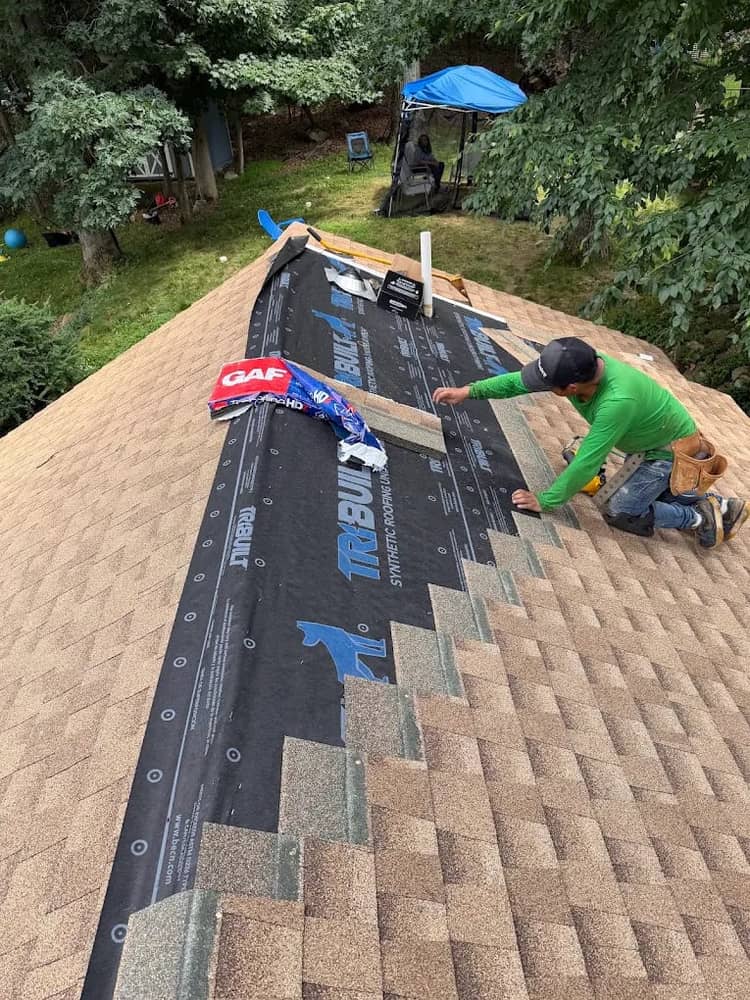
Roof Repair for Lebanon Township homes and buildings
In Lebanon Township, the trees decide most roof repairs. Leaves and needles pack valleys and gutters, moss and algae grow on shaded slopes, and limbs come down in summer storms and winter ice. Under all that, the roofs on homes from the 1960s through the 1990s are aging, and shingles that stay damp lose their life faster than those in full sun.
Snow and ice add the second layer. Ridge-top homes see snow cover that lasts, and ice dams form on homes where attic heat escapes. We inspect the roof, the gutters and the attic together, find the actual entry point and repair it with matching shingles, new flashing and membrane. Asset Roofing & Chimney is licensed and insured, estimates are free, and we document storm and tree damage for insurance claims.
Lebanon Township housing
Lebanon Township's housing is mostly detached homes on wooded lots, from older farmhouses in the stream valleys to capes, ranches, split-levels, contemporaries and colonials built from the 1960s through the 2000s on the hillsides. Many homes have wood stoves or fireplaces, skylights and decks. Asphalt shingle is by far the most common roof, with some metal on rural properties and outbuildings.
Weather & exposure
The township sits higher and is more heavily wooded than most of the county. Tall trees overhang many roofs, dropping leaves, needles and limbs, and keeping shingles shaded and damp. Snow arrives earlier and stays longer on the ridges, and ice storms coat trees and roofs alike. Wind is broken by the forest on most lots, but hilltop homes and cleared lots take it directly.
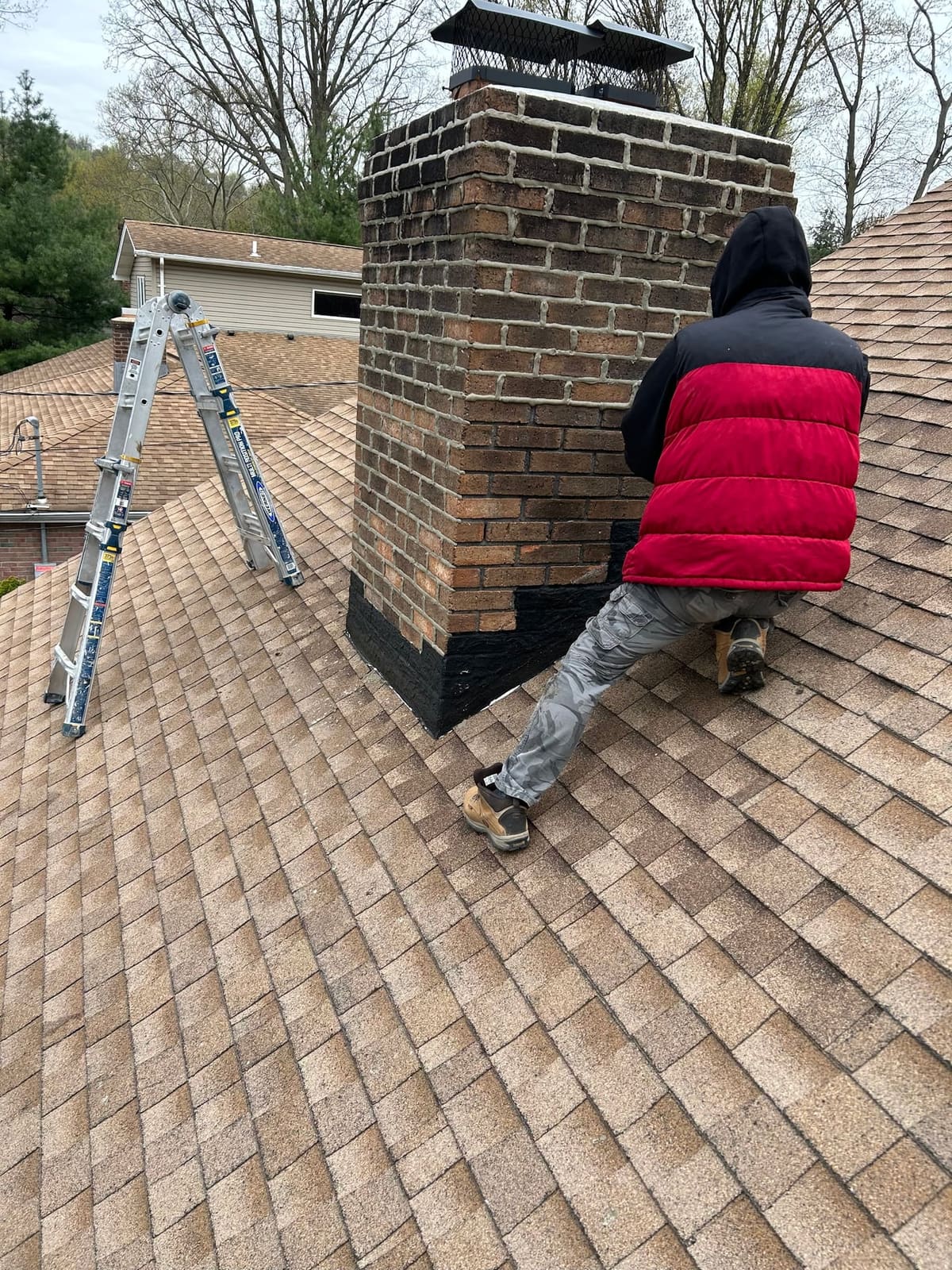
Repair or replace? What we tell Lebanon Township homeowners
Many Lebanon Township roof problems can be prevented with maintenance: trimming limbs away from the roof, clearing valleys and gutters after leaf and needle fall, and dealing with moss before it lifts the shingles. When a leak does occur and the shingles are still flexible, a targeted repair to the valley, flashing or damaged area is usually all that is needed.
After an ice storm or a tree strike, have the roof inspected even if no leak is visible. We repair the damage, check the surrounding shingles and flashing, and document everything with photos for an insurance claim if you are filing one. If years of shade and damp have softened shingles across a slope, we will say honestly that replacement is the better value.