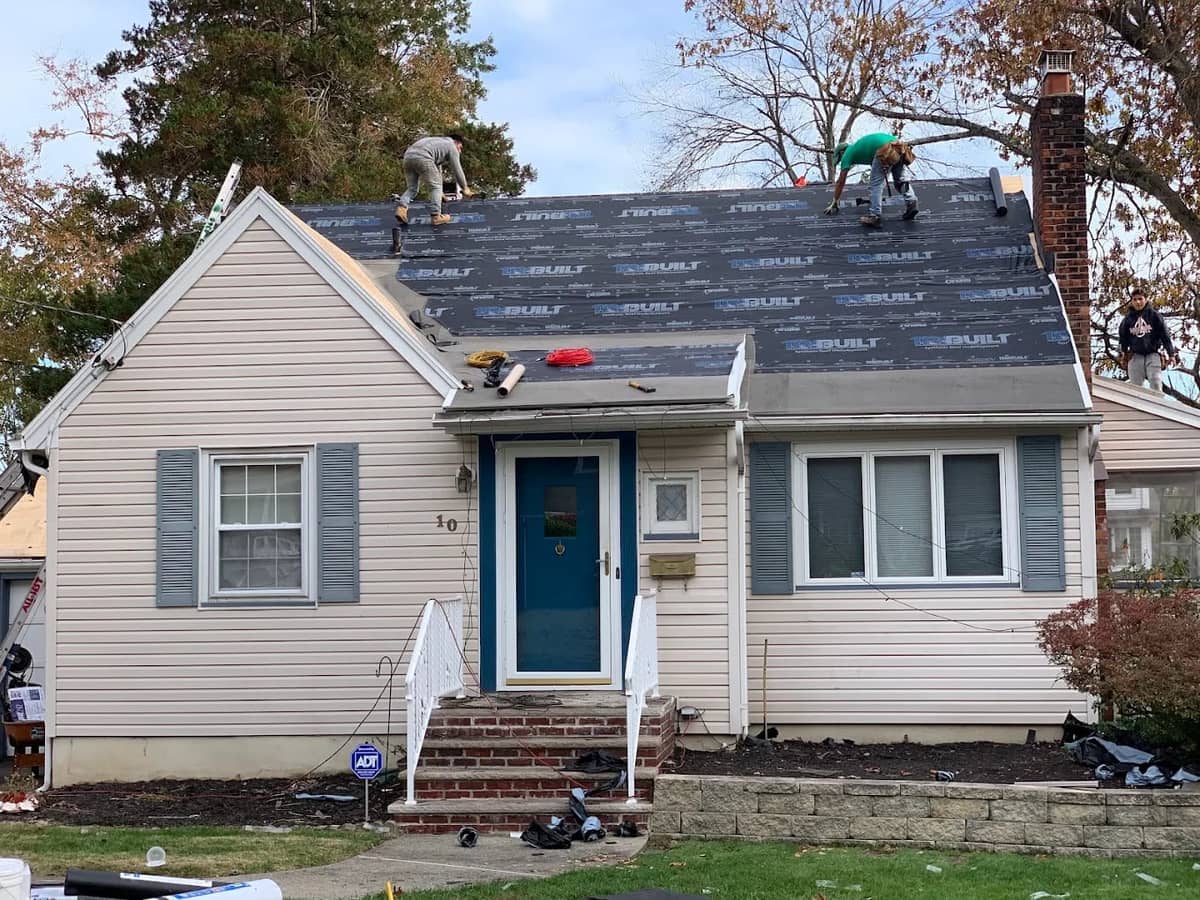
Roof Replacement for Randolph homes and buildings
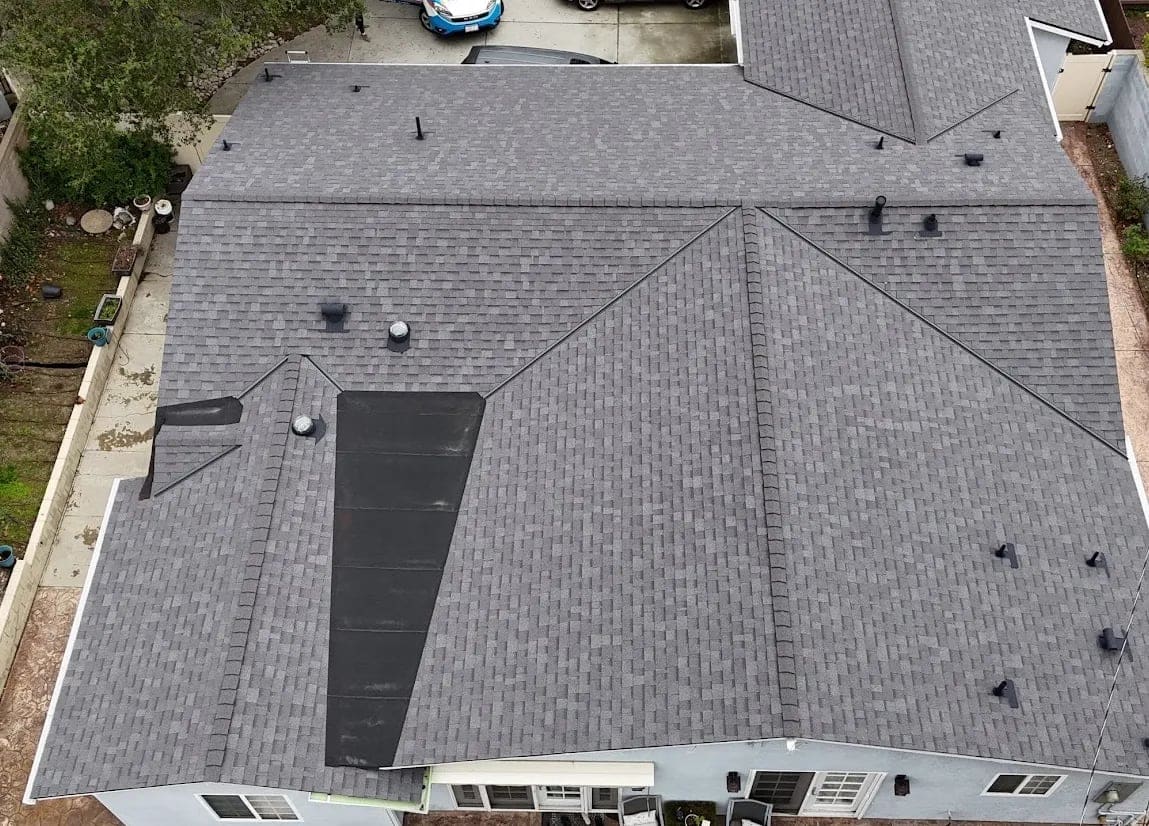
A Randolph roof earns its replacement sooner than a roof in the lowlands. Harsh winters, strong wind and heavy debris wear shingles faster, and many of the 1960s through 1980s homes in the township are now on their second or third roof. When shingles are brittle, missing granules across broad areas, or lifting at every edge, a full tear-off and new system is the practical answer.
For replacement here we favor architectural shingles rated for high wind, with six-nail fastening, a wide ice-and-water barrier along the eaves and in every valley, synthetic underlayment, and a continuous ridge vent paired with clear soffit intake. On larger 1990s colonials with complex rooflines, that ventilation plan is what keeps a new roof from icing up in the first winter.
Randolph housing
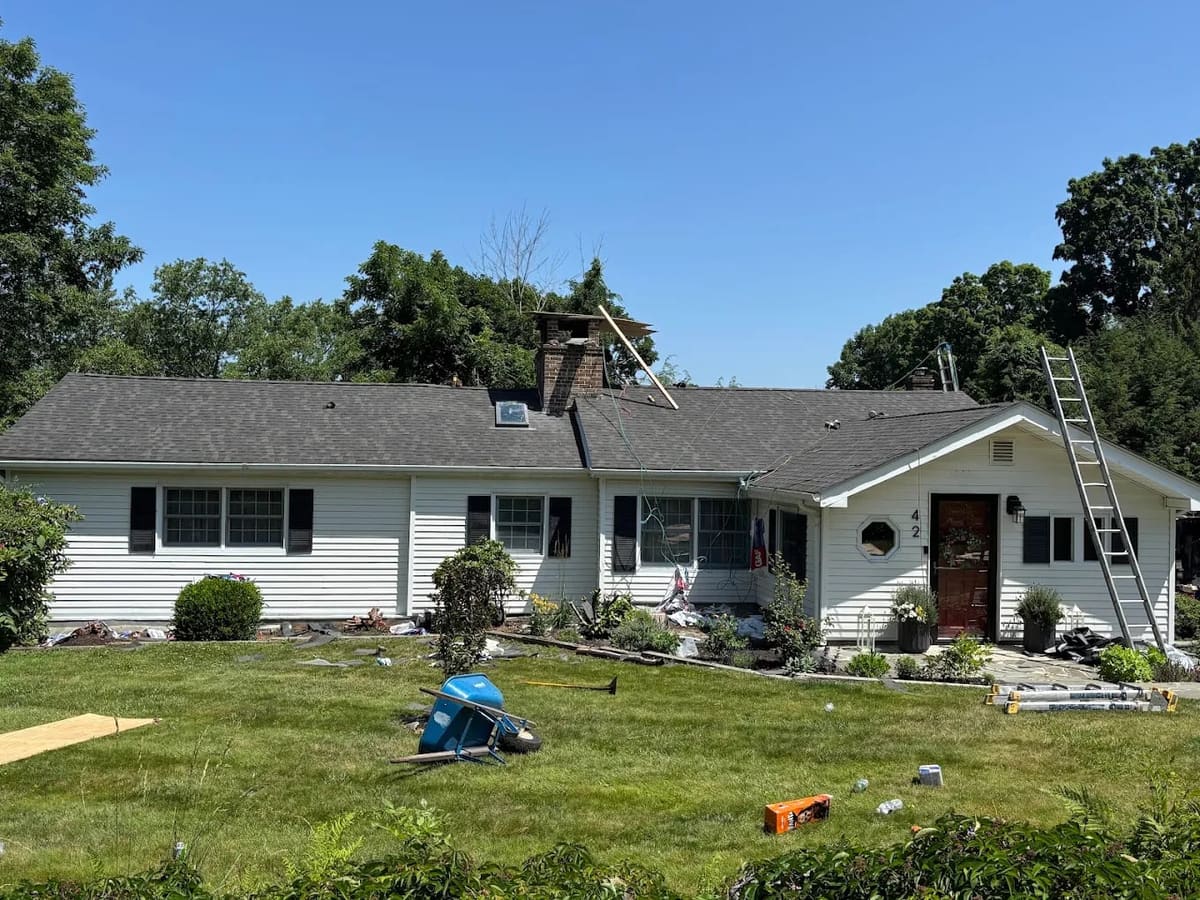
Randolph's housing is largely suburban colonial construction from the 1960s through the 1990s, set on half-acre and larger wooded lots. Earlier split-levels and ranches share the township with larger late-1980s and 1990s two-story homes that have multiple gables, attached garages and brick or sided fireplace chimneys. Asphalt shingle is nearly universal, and most roofs are on at least their second generation of shingles.
Weather & exposure
Randolph sits at higher elevation than the eastern part of the county, which means colder temperatures, deeper and longer-lasting snow, and more freeze-thaw cycles each winter. Ridge-top lots take the full force of wind from passing fronts. Dense oak and maple canopy drops heavy debris onto roofs and into gutters, and shaded north slopes stay wet enough for moss.
When replacement is the right call in Randolph
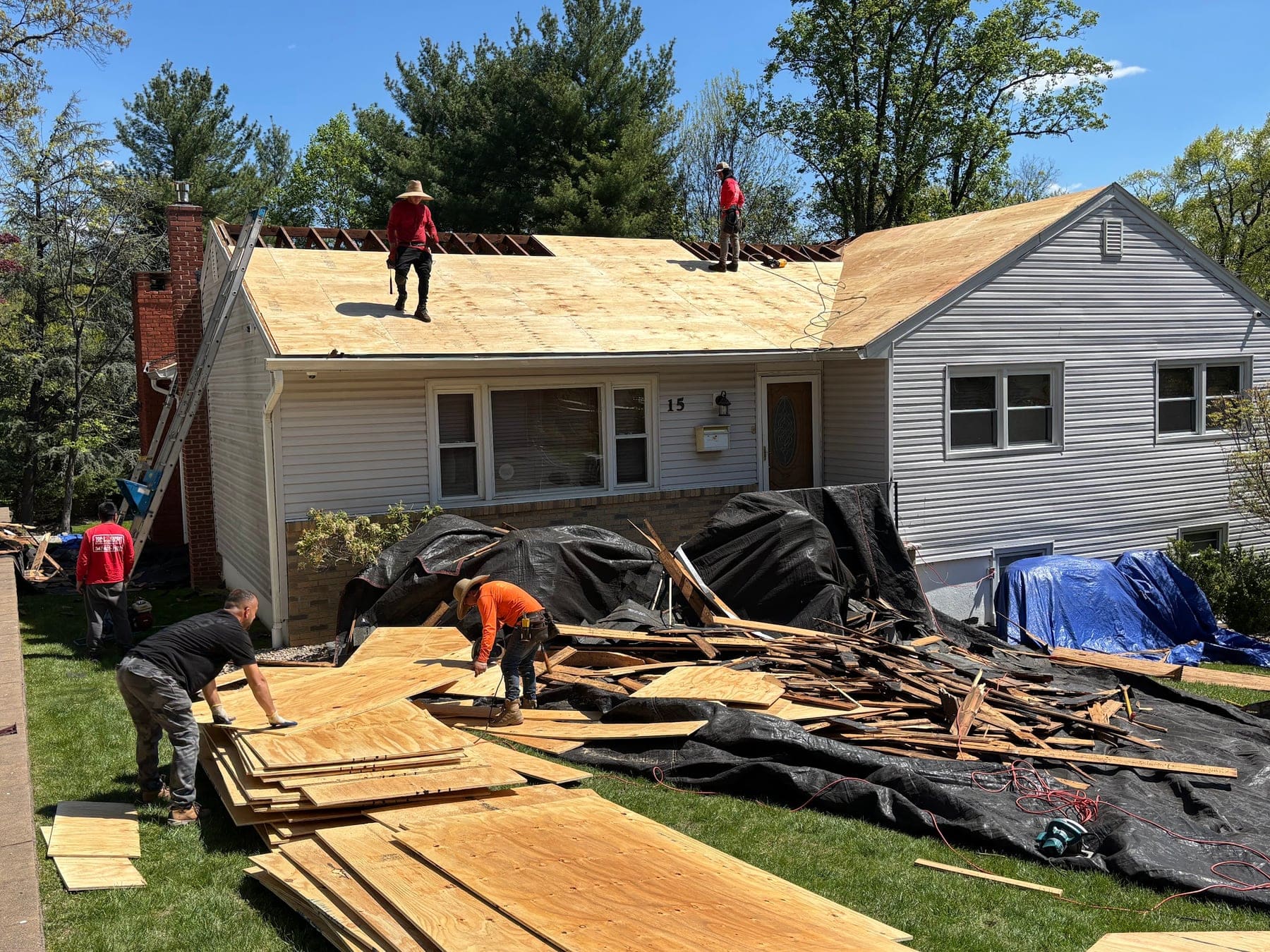
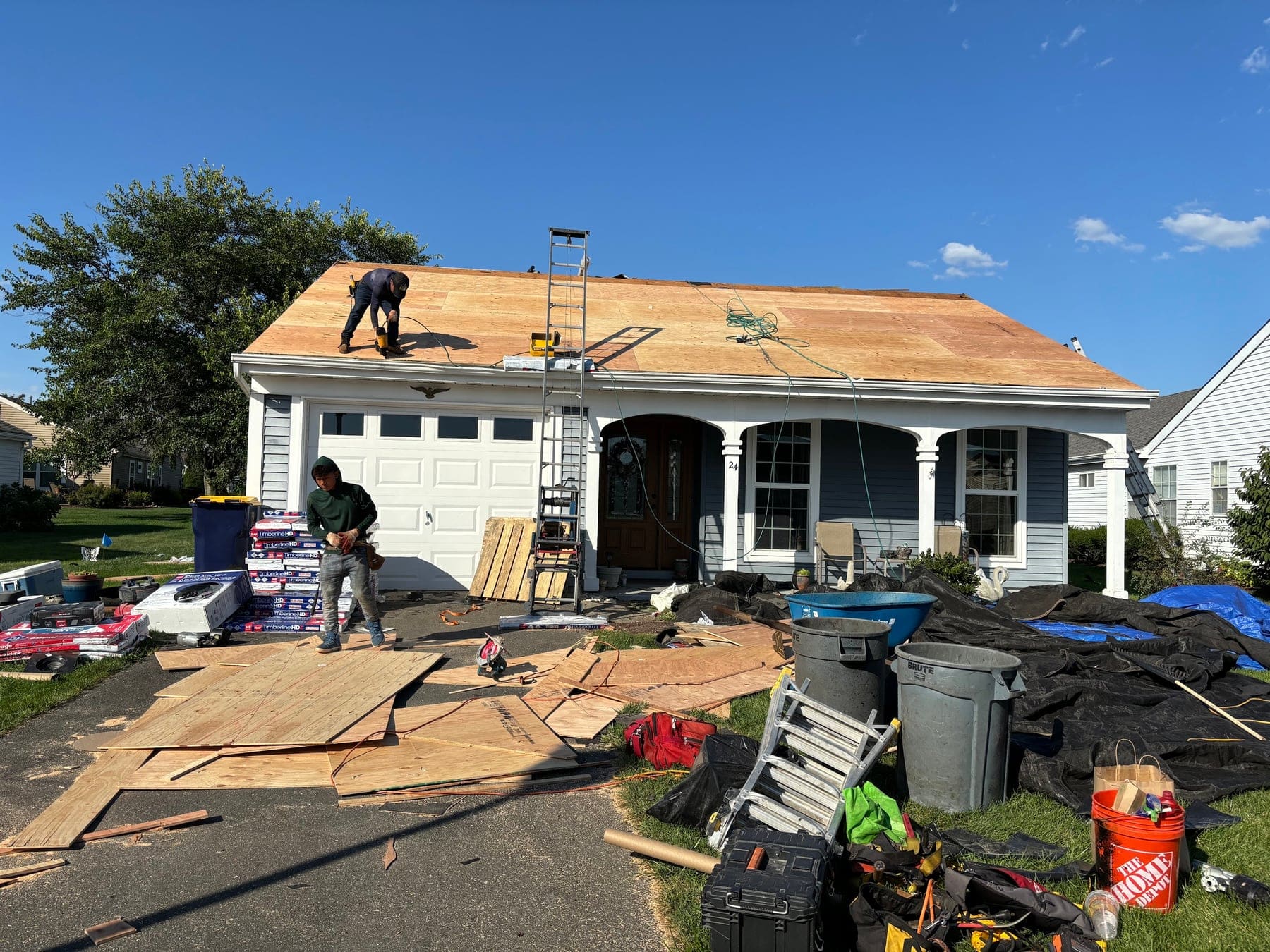
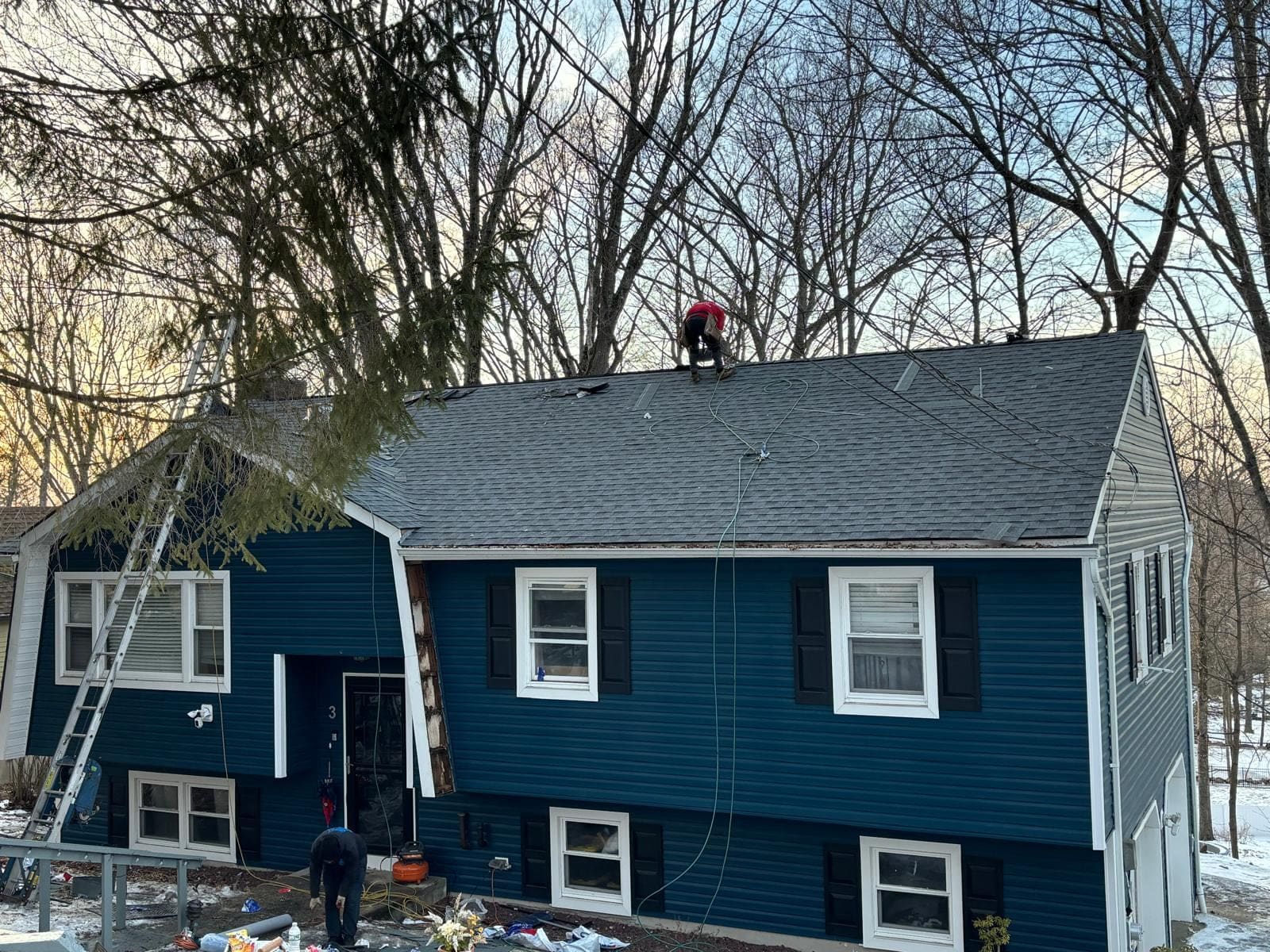
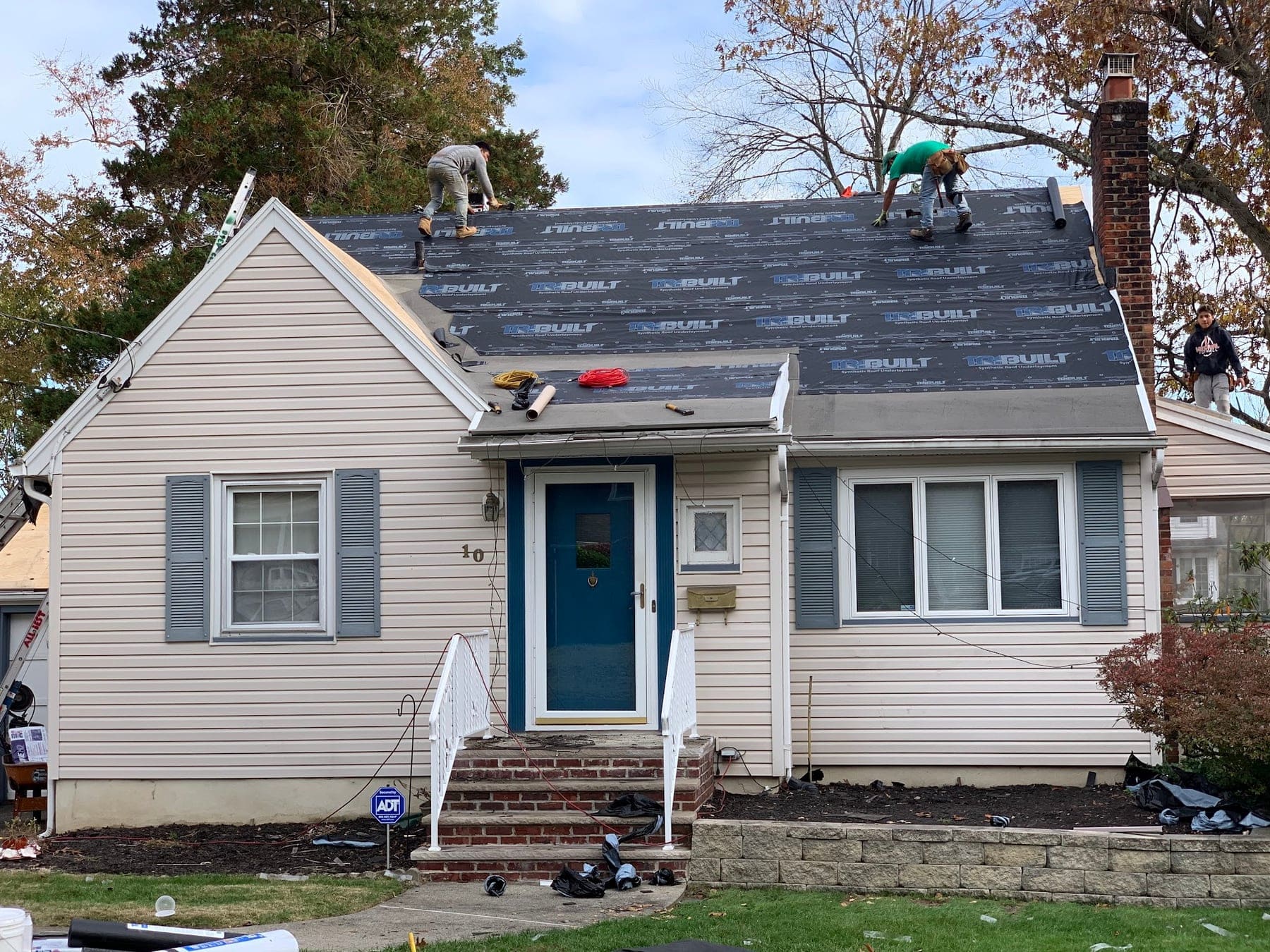
Replacement is the right move when repairs are becoming frequent, when shingles are failing in multiple areas rather than one, when the roof has two layers, or when the deck is showing damage from below. For a typical Randolph colonial the project takes one to three days depending on size and how much decking needs attention.
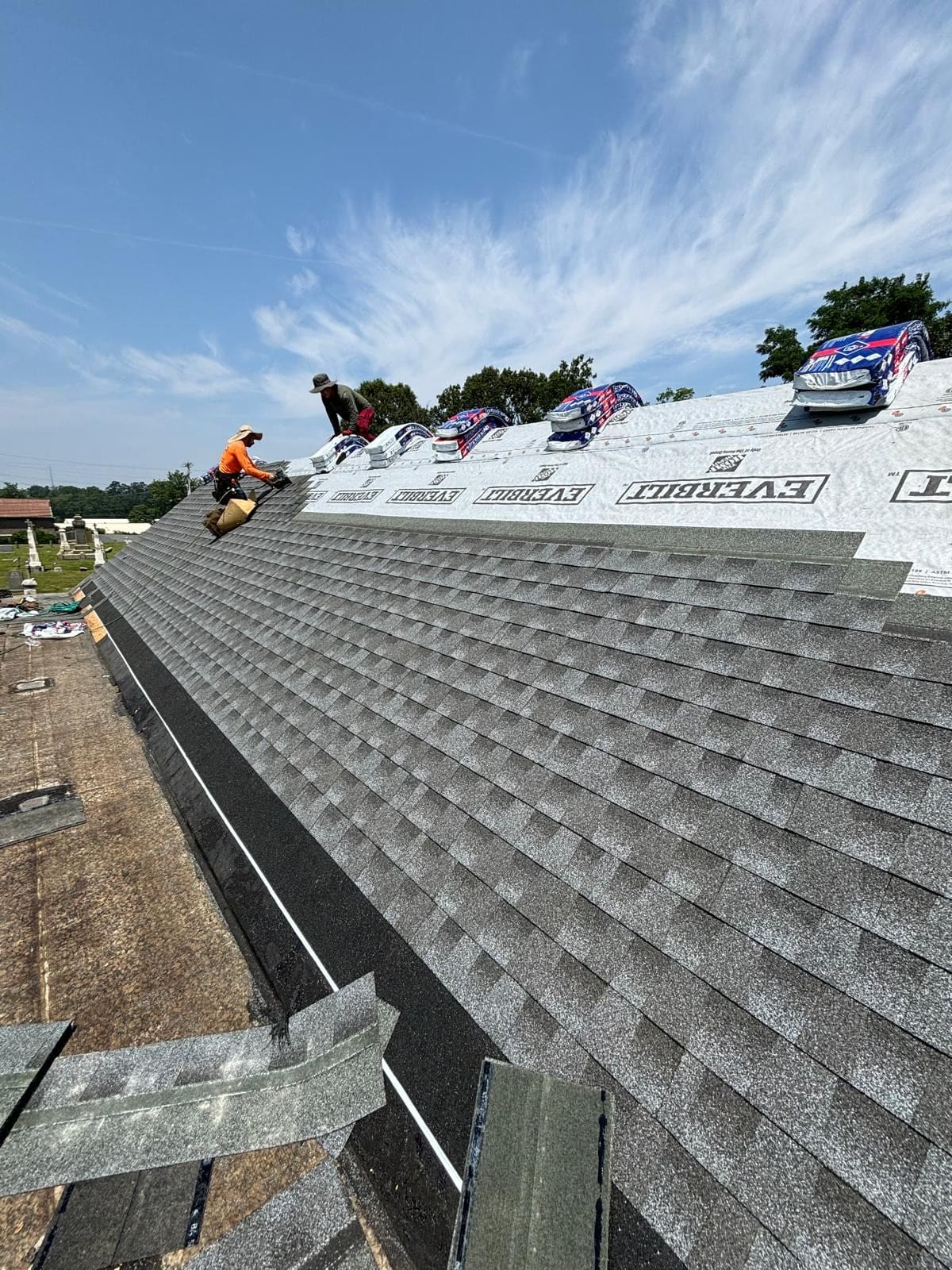
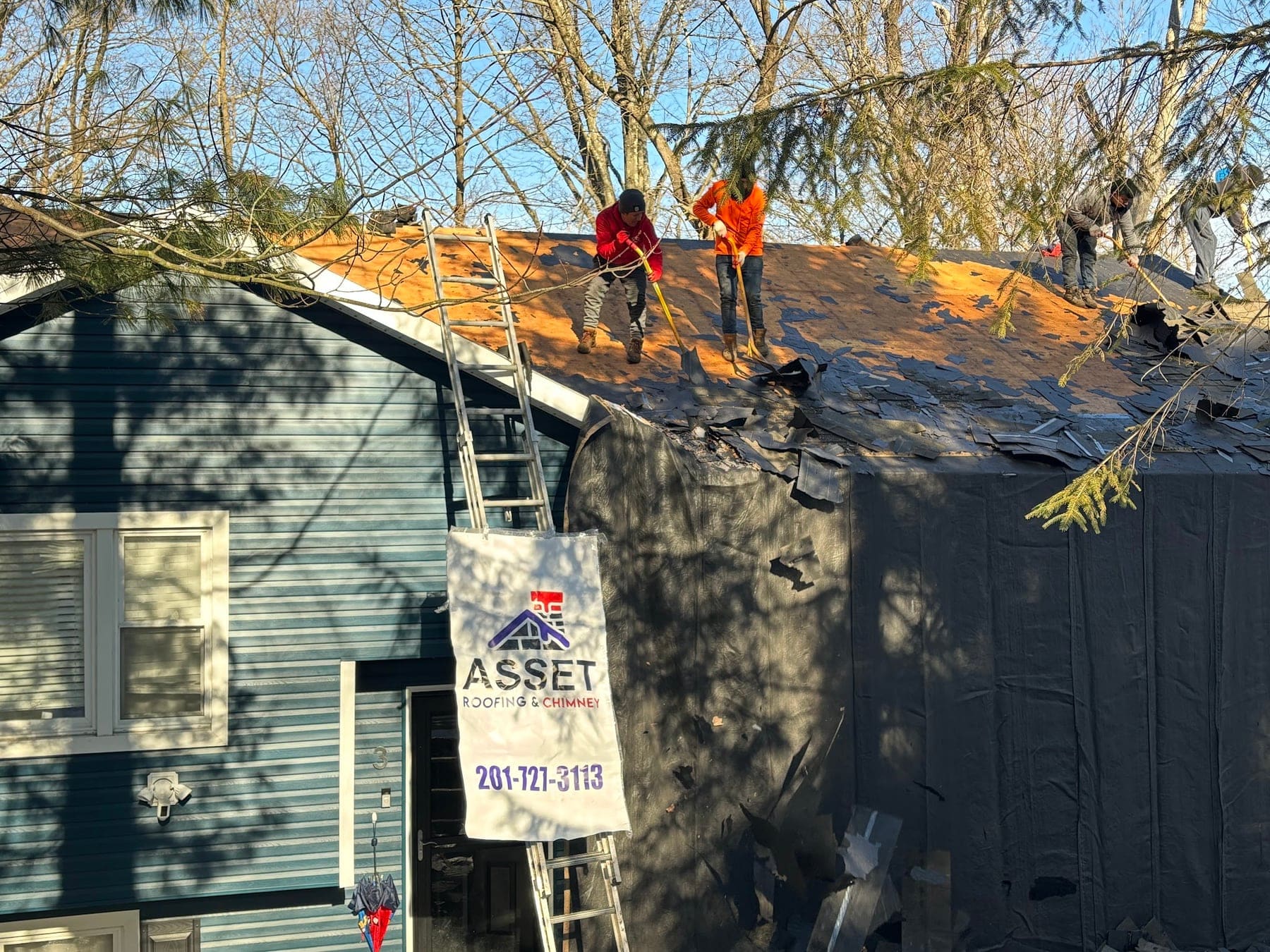
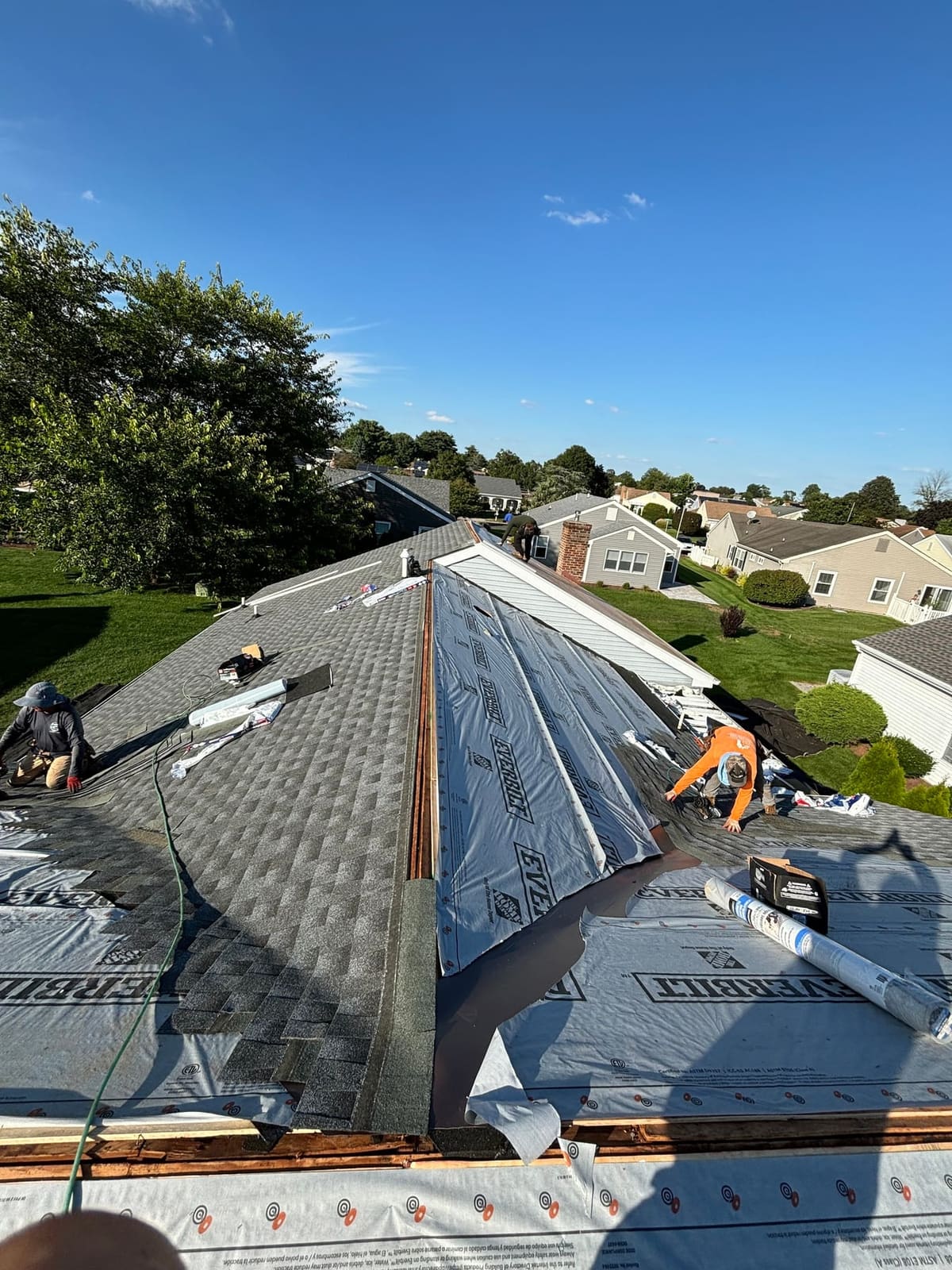
We tear off to the deck, replace damaged sheathing, install ice-and-water protection generously because of the local climate, lay synthetic underlayment, install new flashing at every wall and chimney, and finish with architectural shingles and ridge ventilation. Skylights that are more than a few years old are usually best replaced at the same time rather than reflashed.