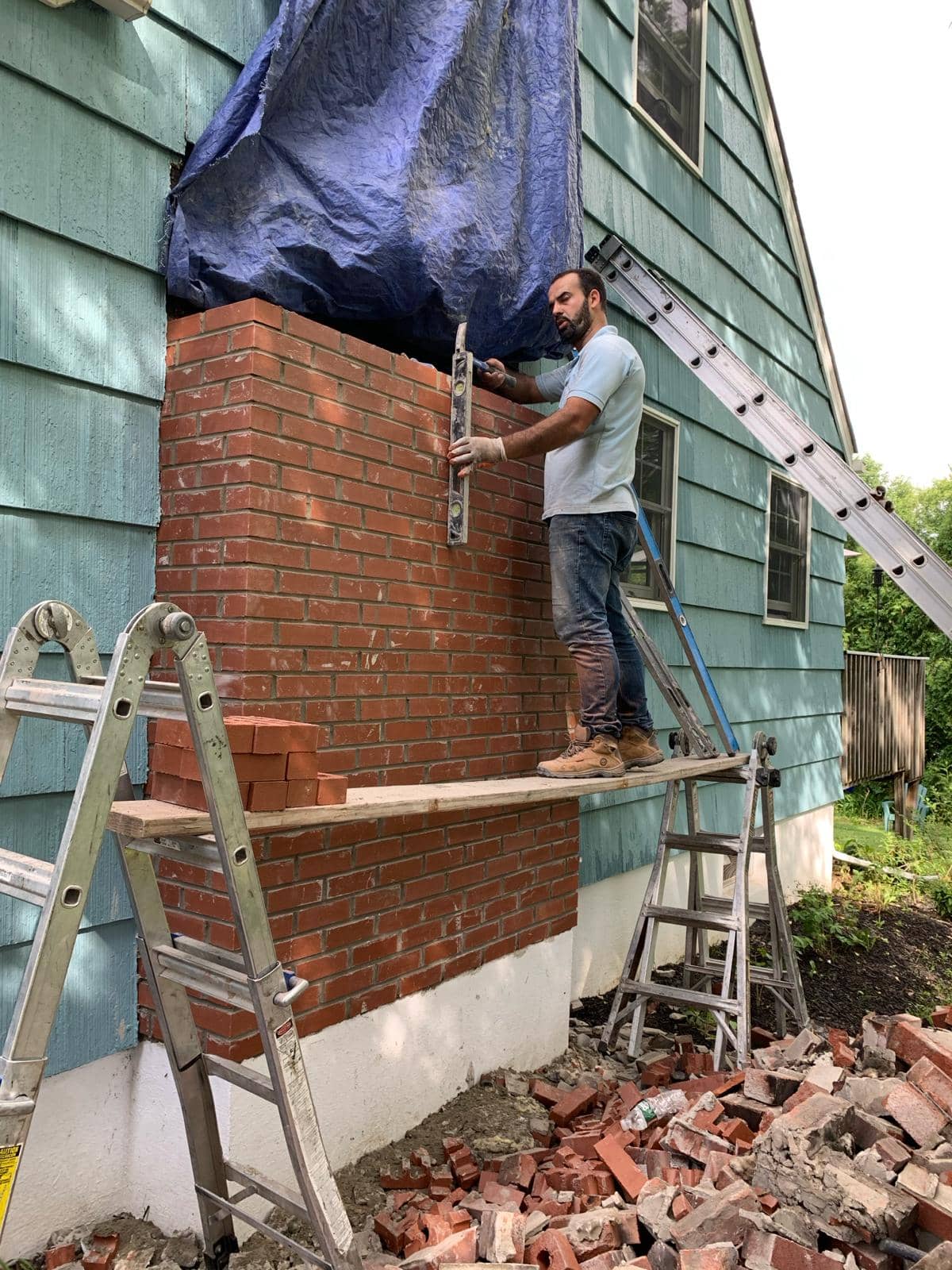
Chimney Repair for Somerville chimneys
Somerville's older homes have brick chimneys built with lime mortar around the turn of the last century, often serving a fireplace or two and a furnace. After well over a century of winters, the crowns have deteriorated, joints have opened on the top courses, brick has spalled on the weather side and the clay liners, where they exist, have cracked. Two-family conversions have frequently added appliance vents to flues that were not designed for them.
Asset Roofing & Chimney inspects, repoints, relines and rebuilds these chimneys, and repairs the flashing where they pass through steep roofs. Downtown commercial buildings add masonry chimneys and metal flues through flat roofs that depend on boots, curbs and counter-flashing at the parapet. Mid-century homes in the borough have simpler clay-lined brick chimneys that need the usual crown, cap and flashing attention.
Somerville housing
Somerville's housing is predominantly Victorian and early-1900s single-family construction: Queen Annes, foursquares, colonials and gable-front houses with steep roofs, dormers, front porches and brick chimneys, many of which have been converted to two-family use. Mid-century capes and ranches fill in around the edges, and newer apartment and condominium buildings have been added near downtown. Main Street carries an extended run of flat-roofed commercial buildings.
Weather & exposure
Somerville's mature street trees drop heavy leaf and branch loads onto roofs and into the gutters and built-in gutters of its older homes. Winters are colder than Bergen County with ice dams on homes with original attic insulation. The Raritan River lowlands at the edge of town add humidity and are known for flooding during major storms. Summer thunderstorms bring heavy rain that tests downtown flat-roof drainage.
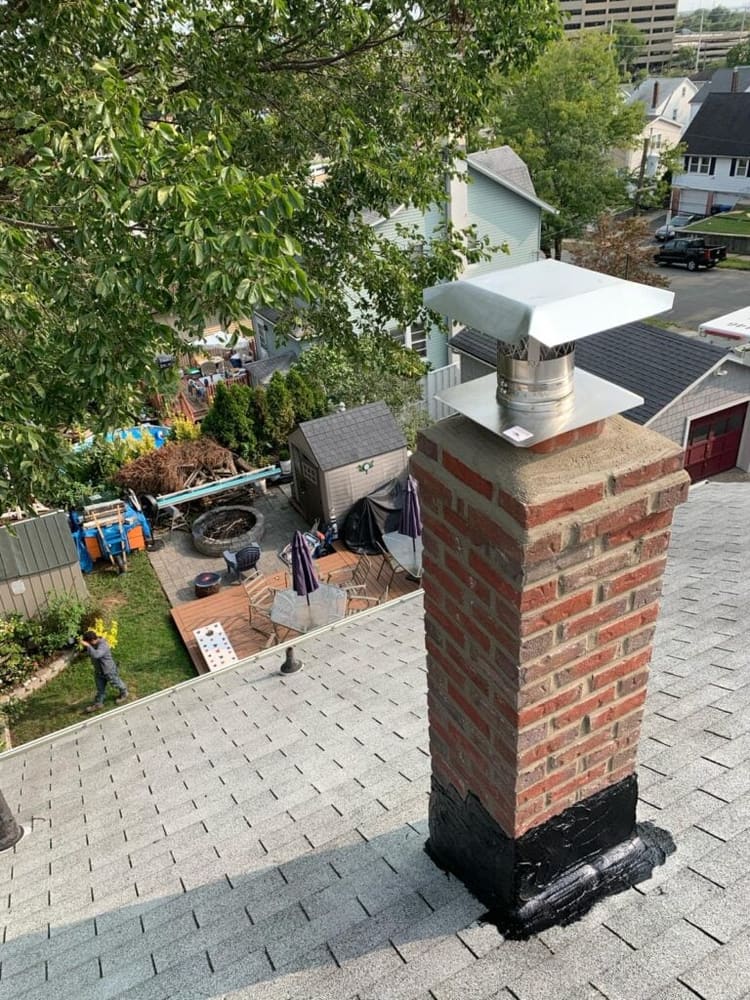
Repair, repoint or rebuild in Somerville
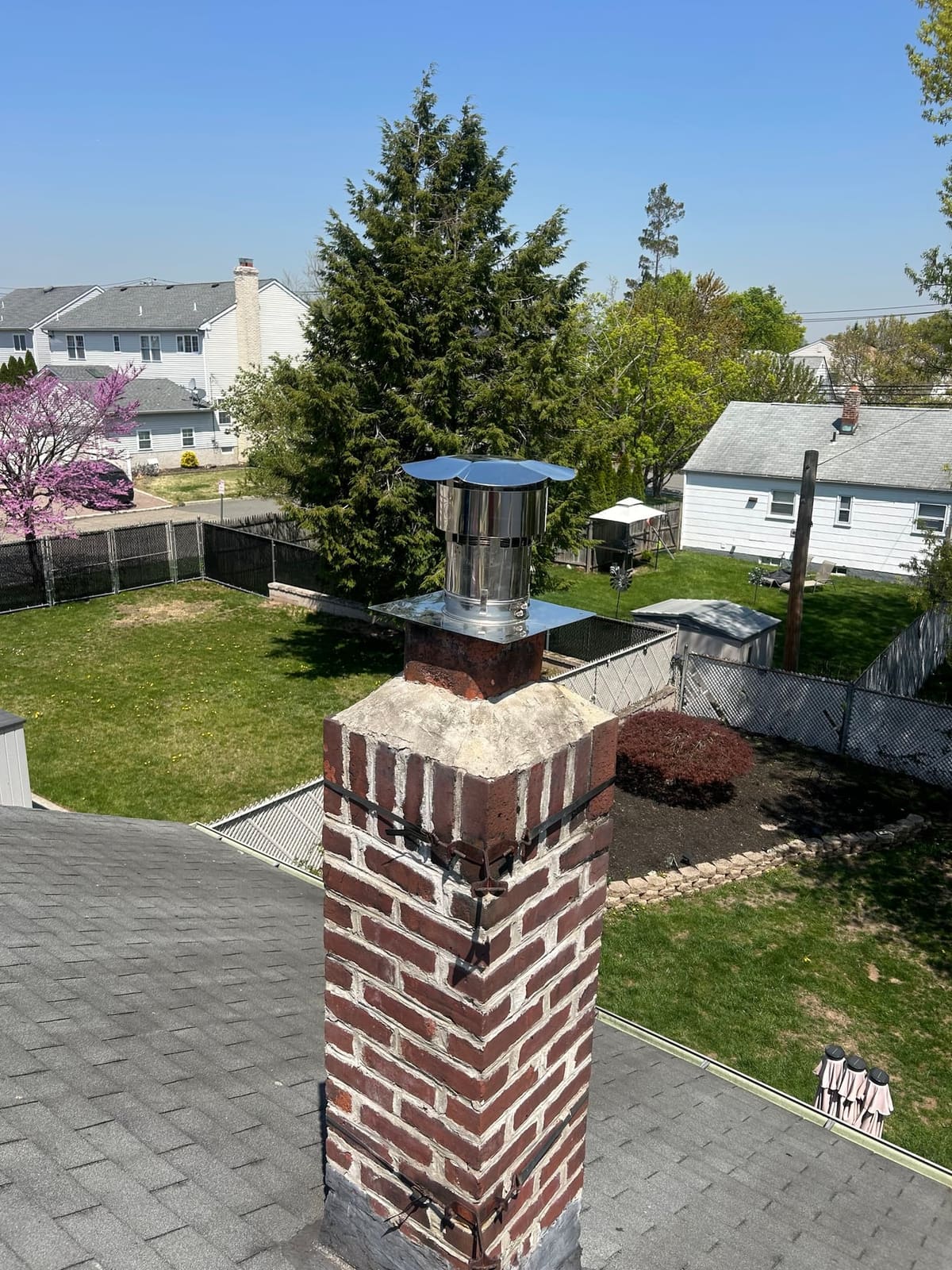
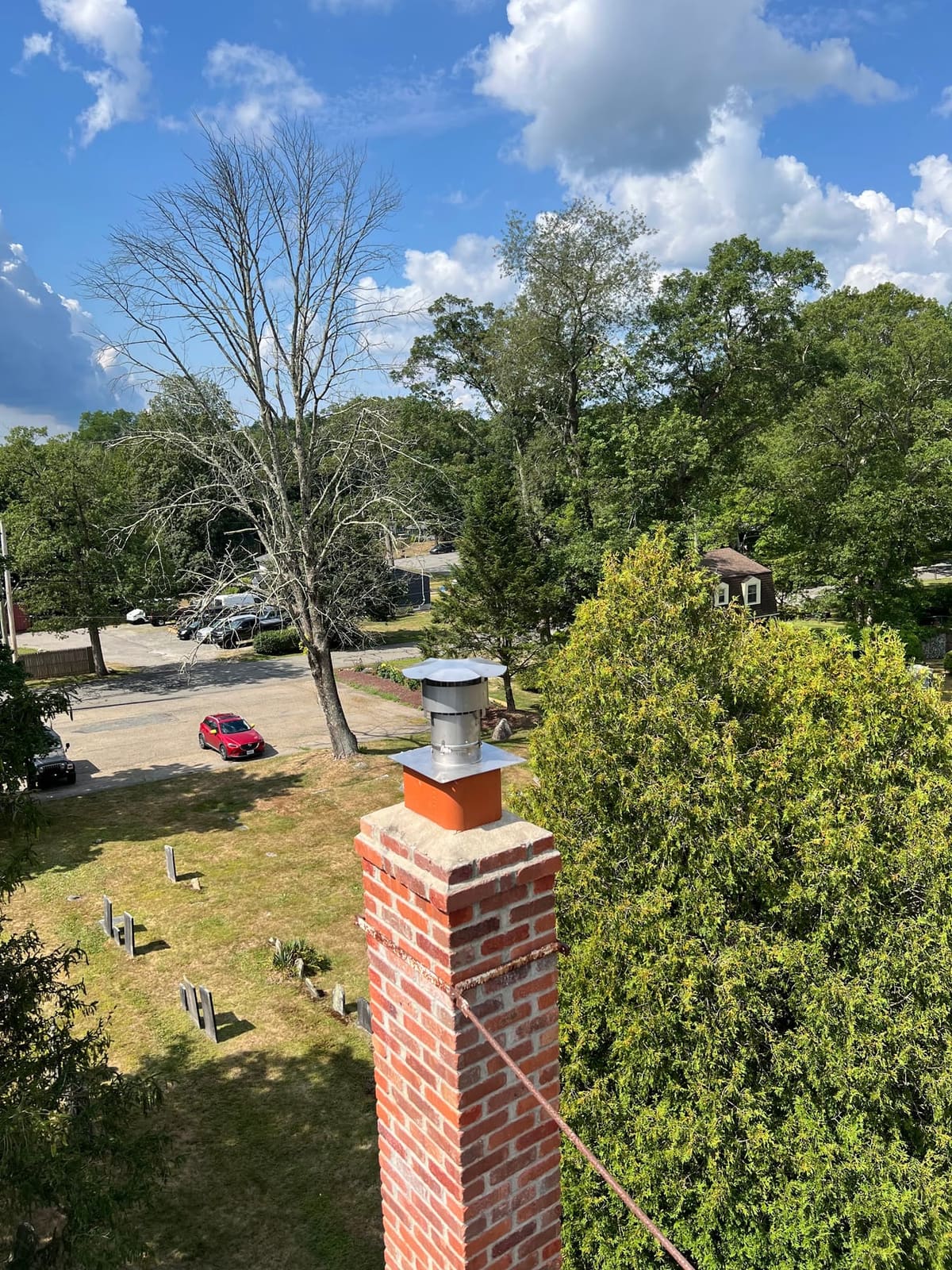
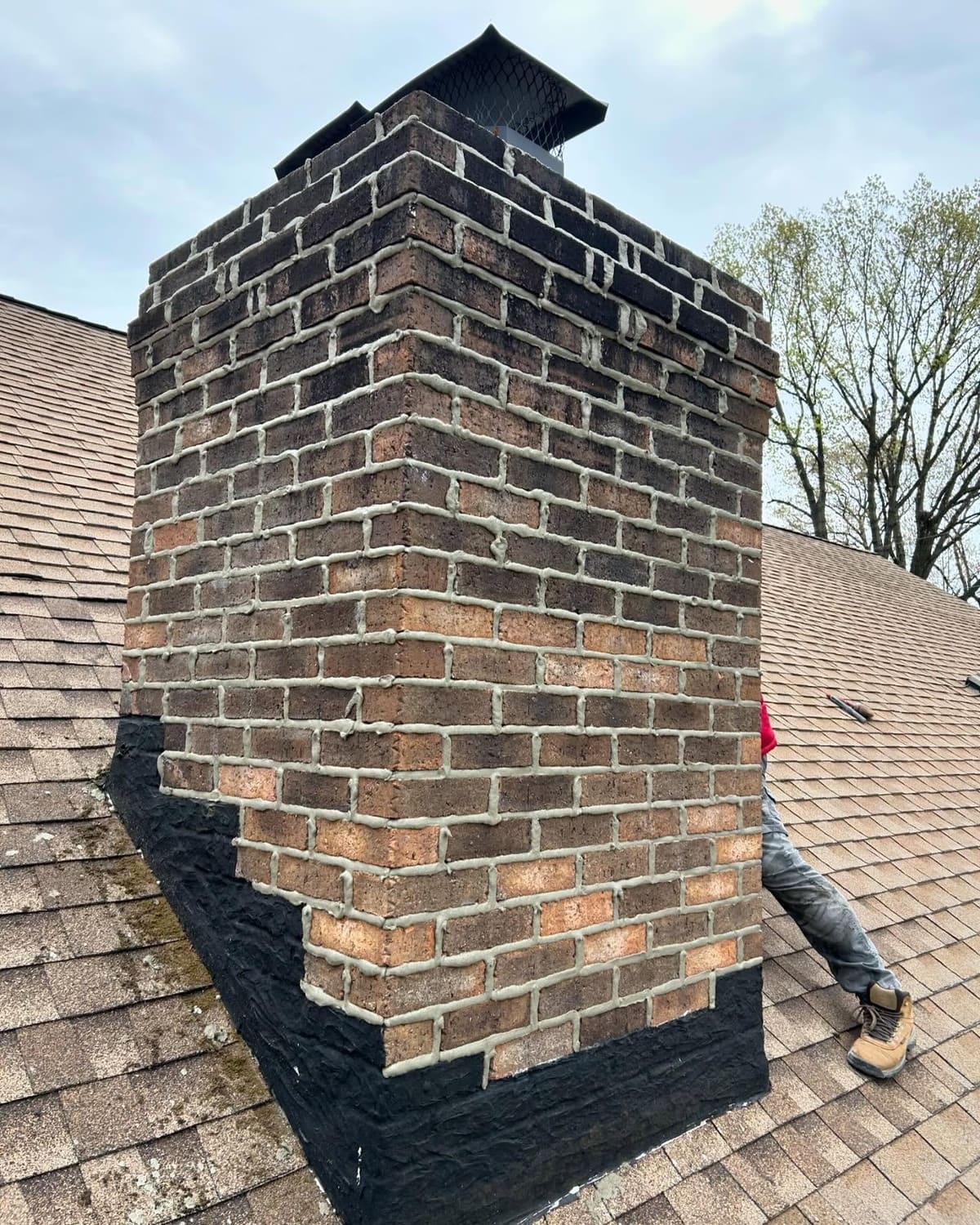
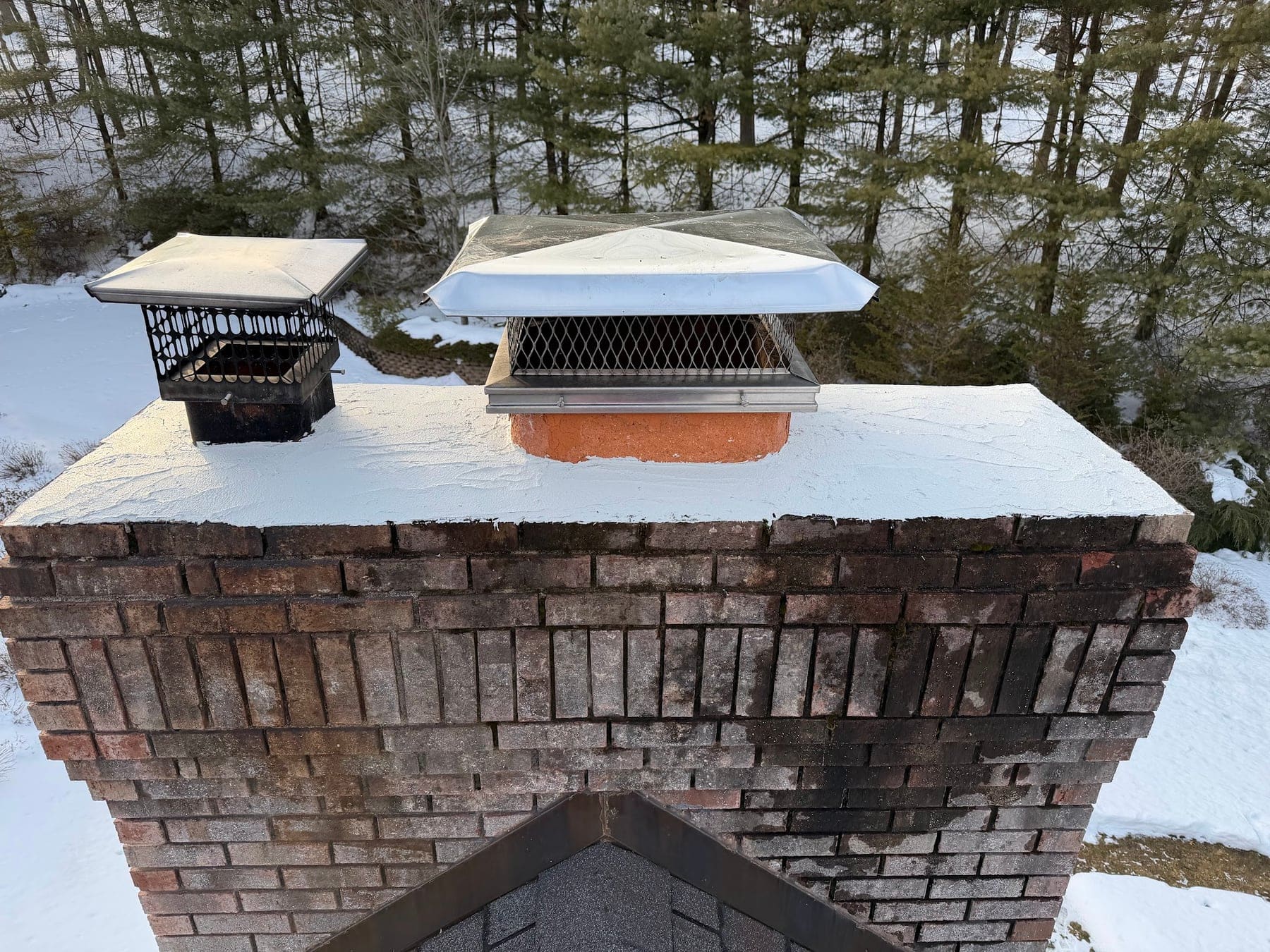
We inspect from the roof and from inside before recommending work. On a typical older Somerville chimney the scope is a new crown, repointing of the section above the roofline with compatible mortar, caps on each active flue, new flashing cut into the mortar joints and, where the flue is in use, a stainless steel liner sized for what it serves. A breathable water repellent afterward slows moisture absorption in porous old brick.
If the stack above the roof is loose, leaning or deeply spalled, a rebuild from the roofline up is more durable than repeated patching. We match brick and coursing as closely as available materials allow so the rebuilt section blends with the original from the street.