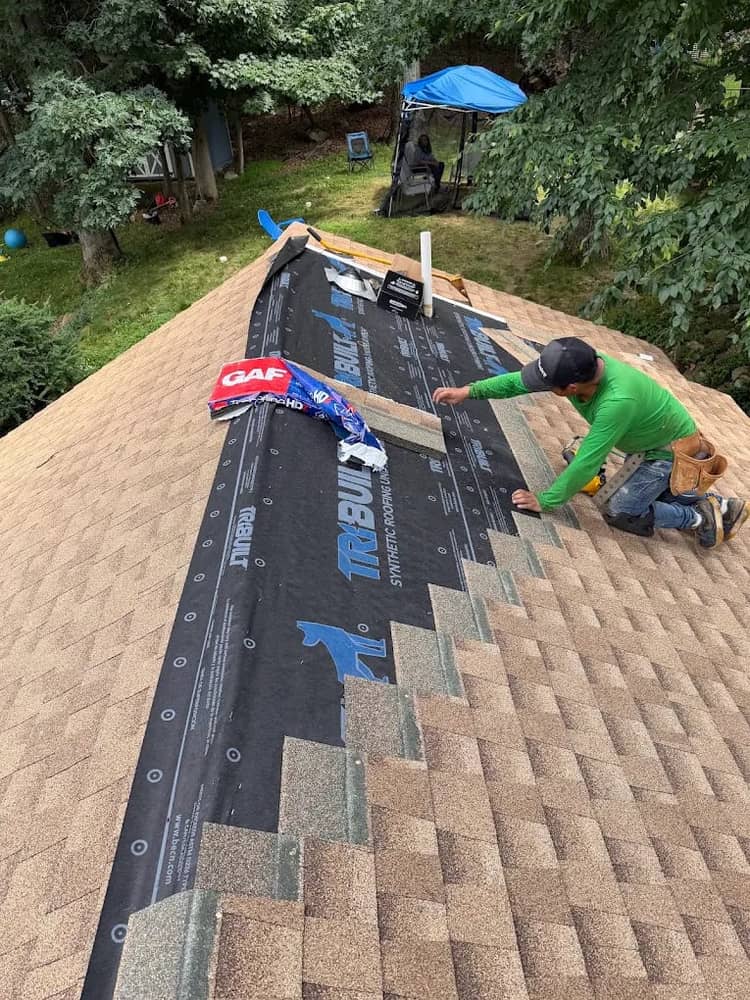
Roof Repair for Frankford homes and buildings
Wind is the first thing we think about on a Frankford roof. Farmhouses and newer homes on open land take gusts across the fields with nothing to slow them, and the damage shows up as lifted tabs along ridges and rakes, missing ridge cap and shingles creased back on the windward slope. Lake homes at Culver Lake and Lake Owassa get similar wind off the water plus moisture that keeps shaded slopes damp.
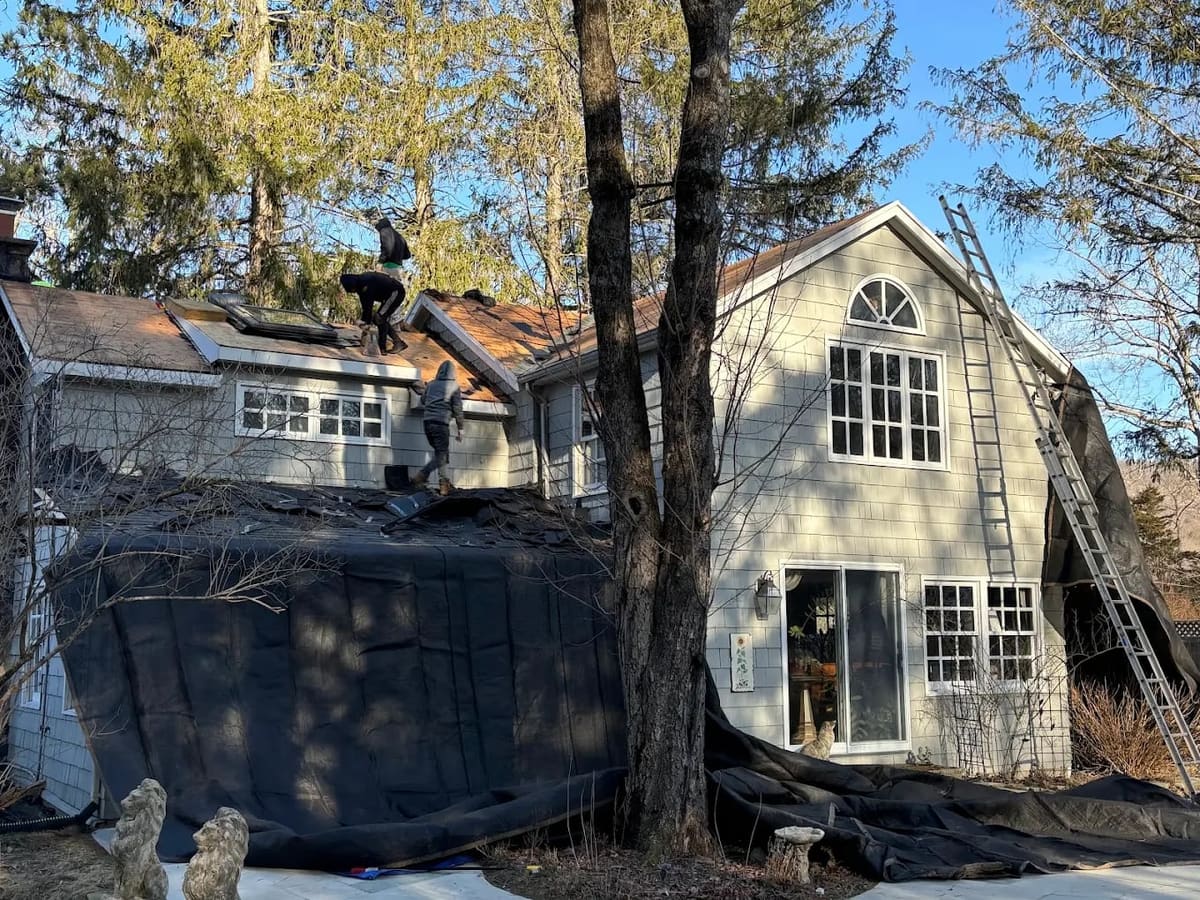
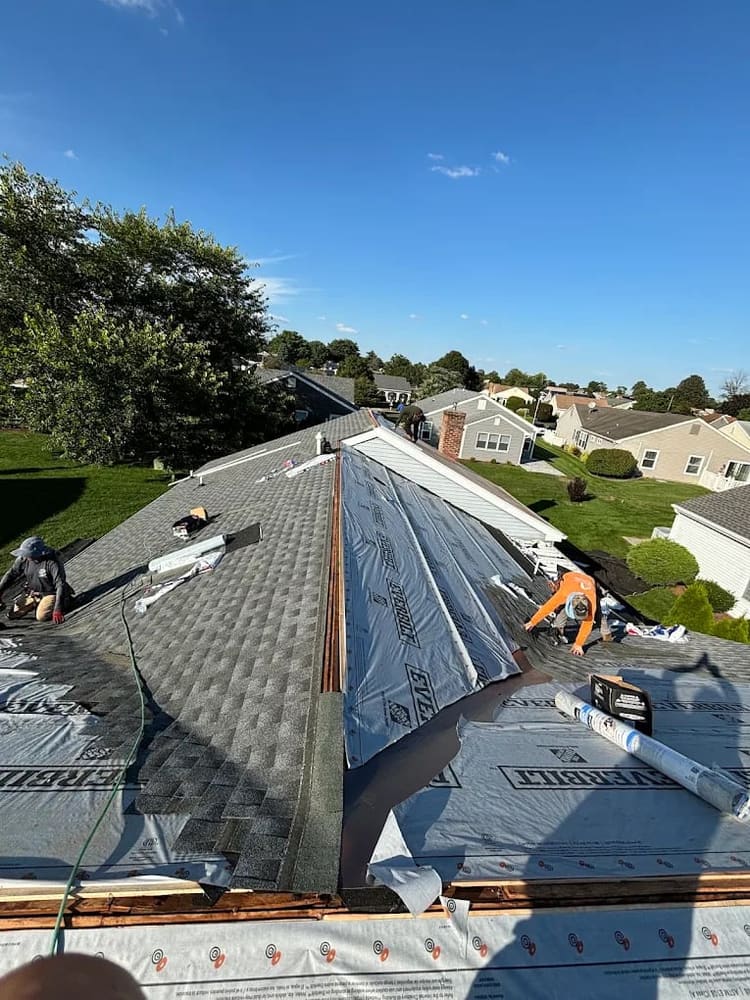
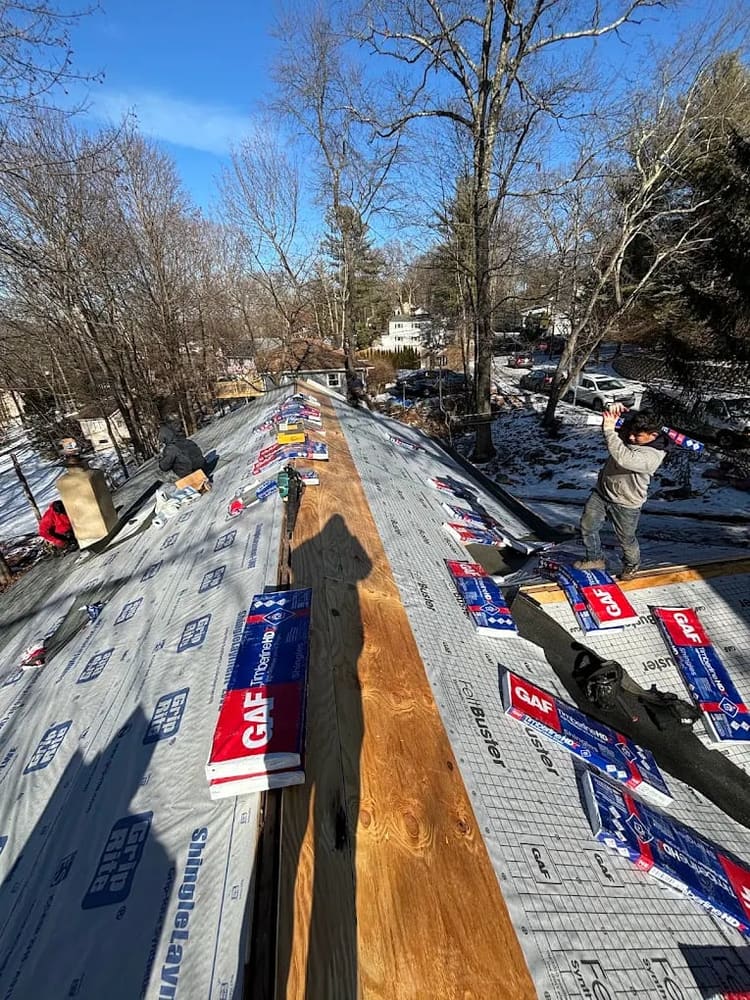
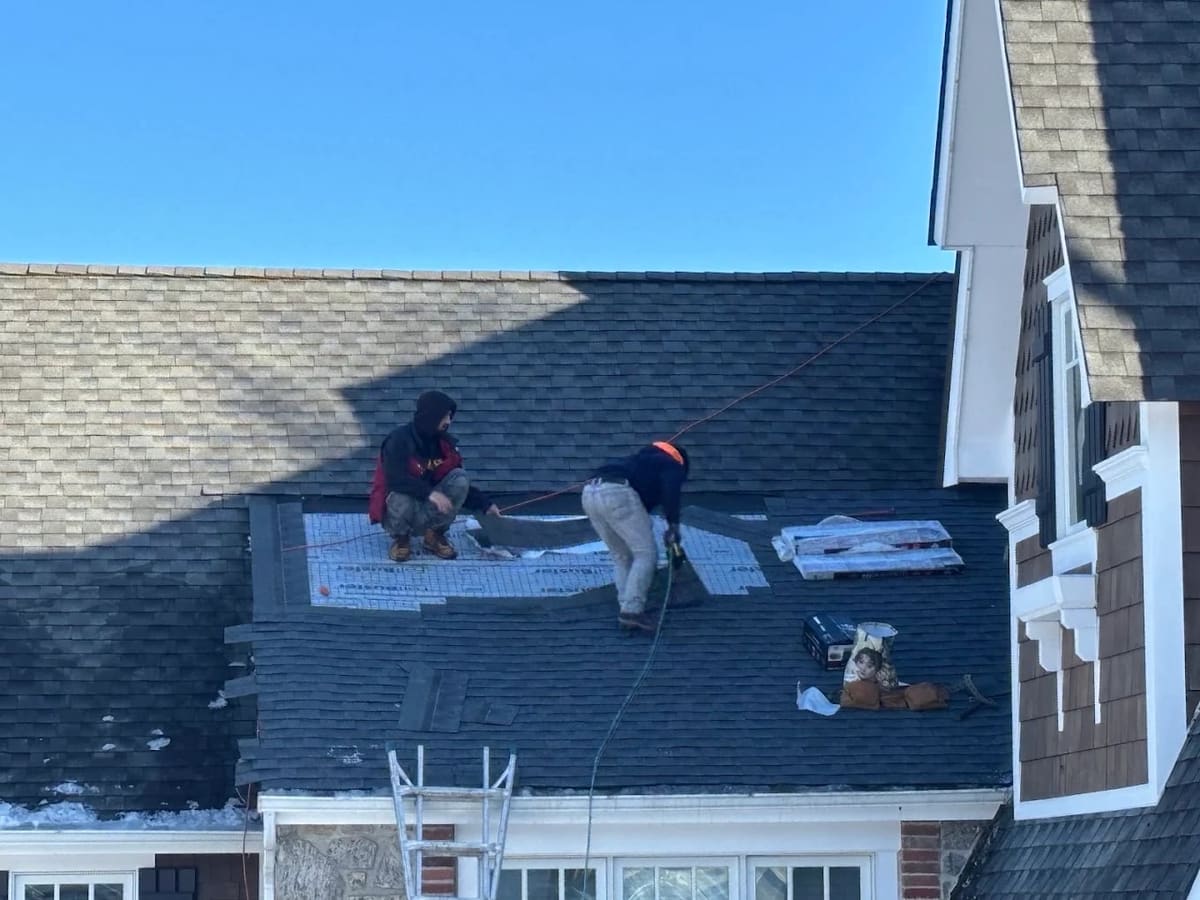
We locate where water is entering, which on a farmhouse with additions or a lake home with several roof sections is often not where the stain appears, and repair it with matching shingles, new flashing and membrane. We also look at the nailing around wind damage, since shingles that lifted once will lift again if they were not fastened properly.
Asset Roofing & Chimney is licensed and insured, estimates are free, and we document wind and storm damage for homeowners filing an insurance claim.
Frankford housing
Frankford's buildings include older farmhouses and farm outbuildings, lake homes at Culver Lake and Lake Owassa, many of them converted from seasonal use, and ranches, colonials and contemporaries built on larger rural lots from the 1960s onward. Asphalt shingle covers most houses; barns and outbuildings carry a mix of older roofing, and commercial and agricultural buildings along the main roads add low-slope and flat roofs.
Weather & exposure
Open farmland lets wind cross the township with little to stop it, and the land rises toward the Kittatinny Ridge in the west, where weather is harsher. Frankford gets the cold winters, deep snow and long freeze-thaw season typical of northwestern Sussex County. Lake homes add wind and humidity off the water.
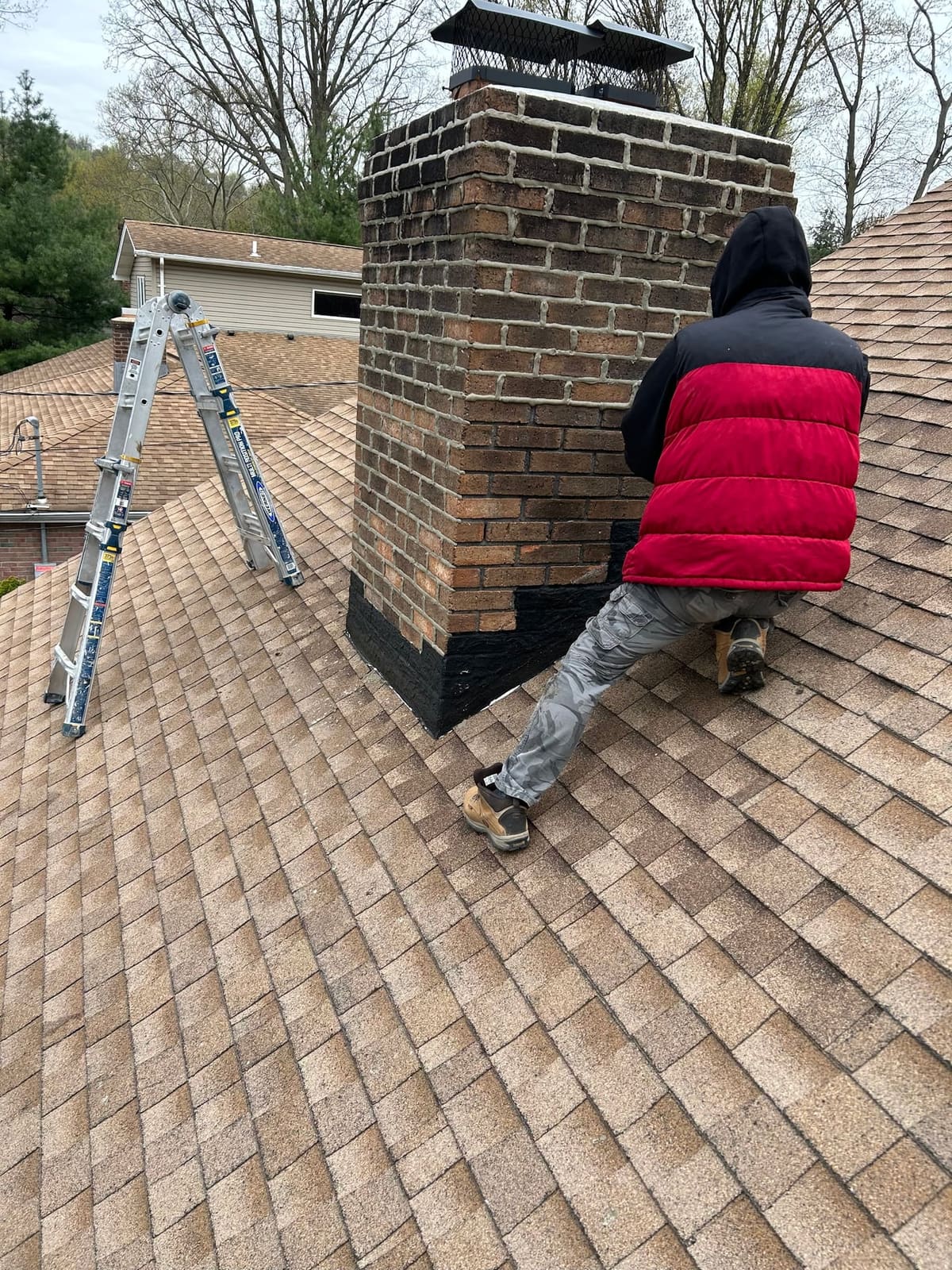
Repair or replace? What we tell Frankford homeowners
Wind damage on an otherwise sound roof is a classic repair job. If the shingles around the damage are brittle, or if the roof has lost tabs in several storms, the problem is the roof's age rather than any one storm, and replacement is the better value.
For farmhouses, we look at how each addition ties into the main roof, since a leak blamed on the old part of the house often starts at a later addition. We describe what we find with photos so you can see the actual problem.