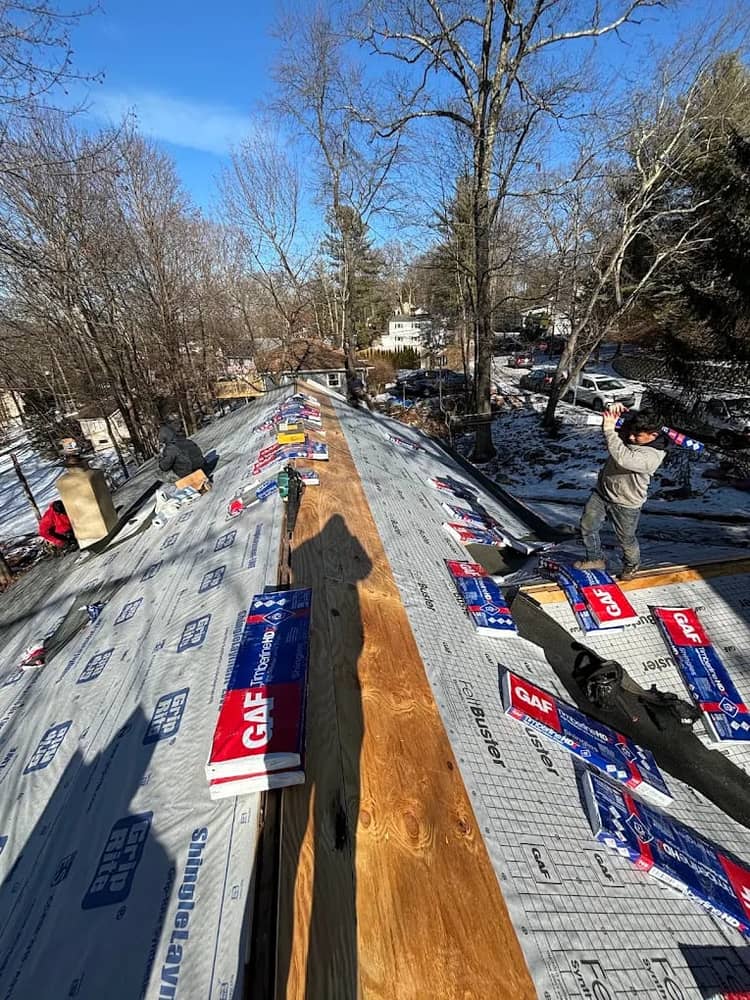
Roof Repair for Scotch Plains homes and buildings
Roof repair in Scotch Plains often comes down to trees. On the wooded hillside below the Watchung Reservation, roofs sit in shade most of the day, stay damp after rain, grow moss and collect a steady load of leaves, needles and twigs in valleys and behind chimneys. Storms bring down limbs. Many leaks trace back to debris or impact rather than simple age.
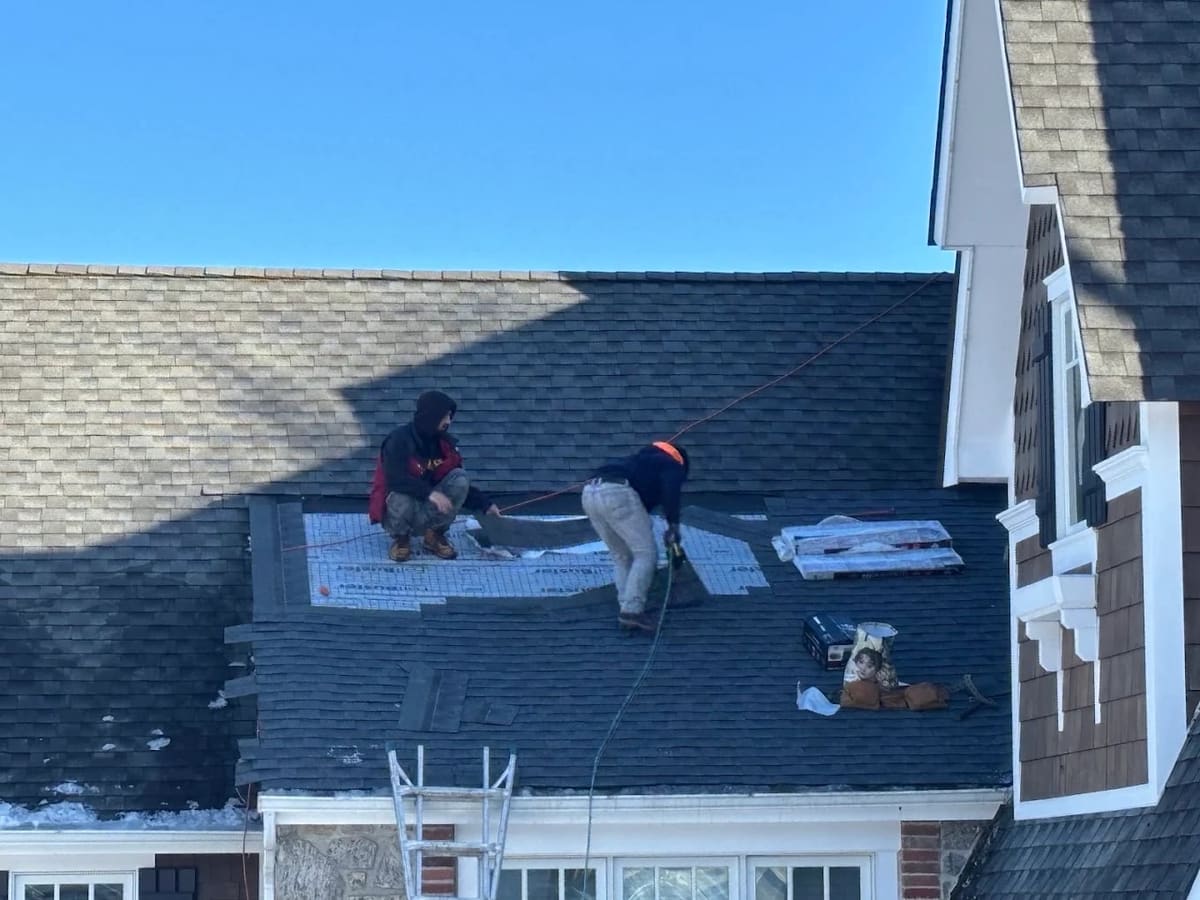
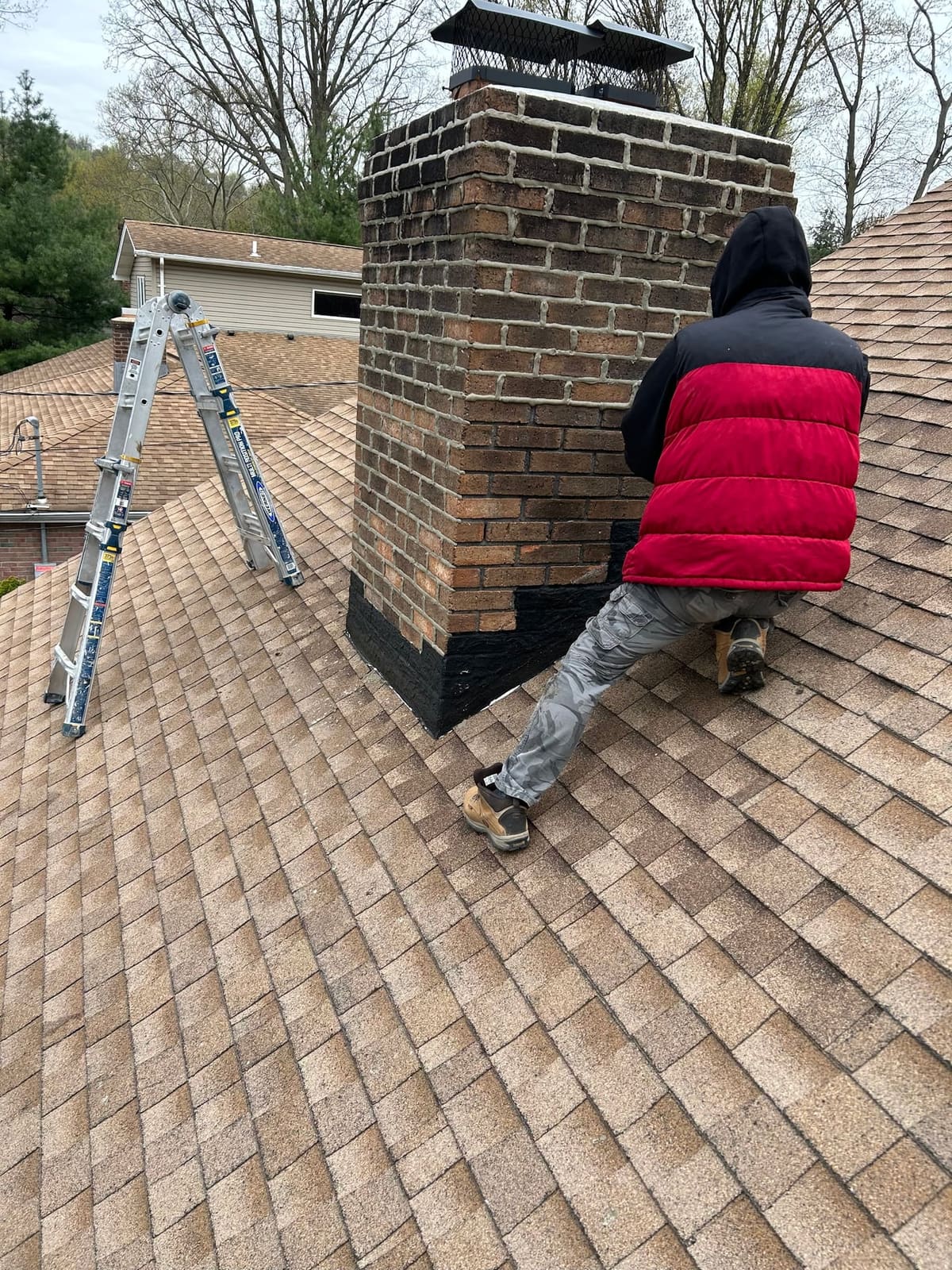
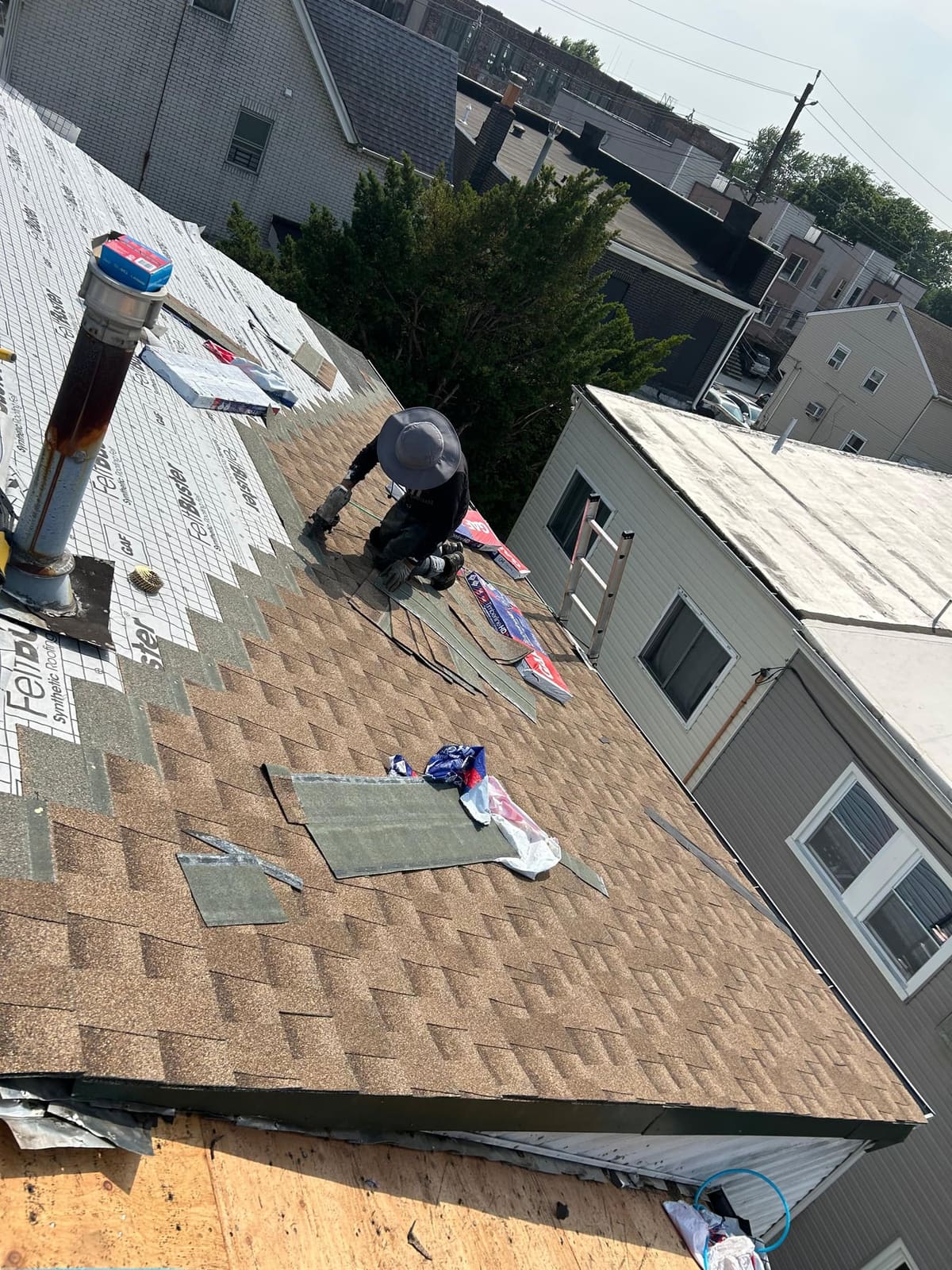
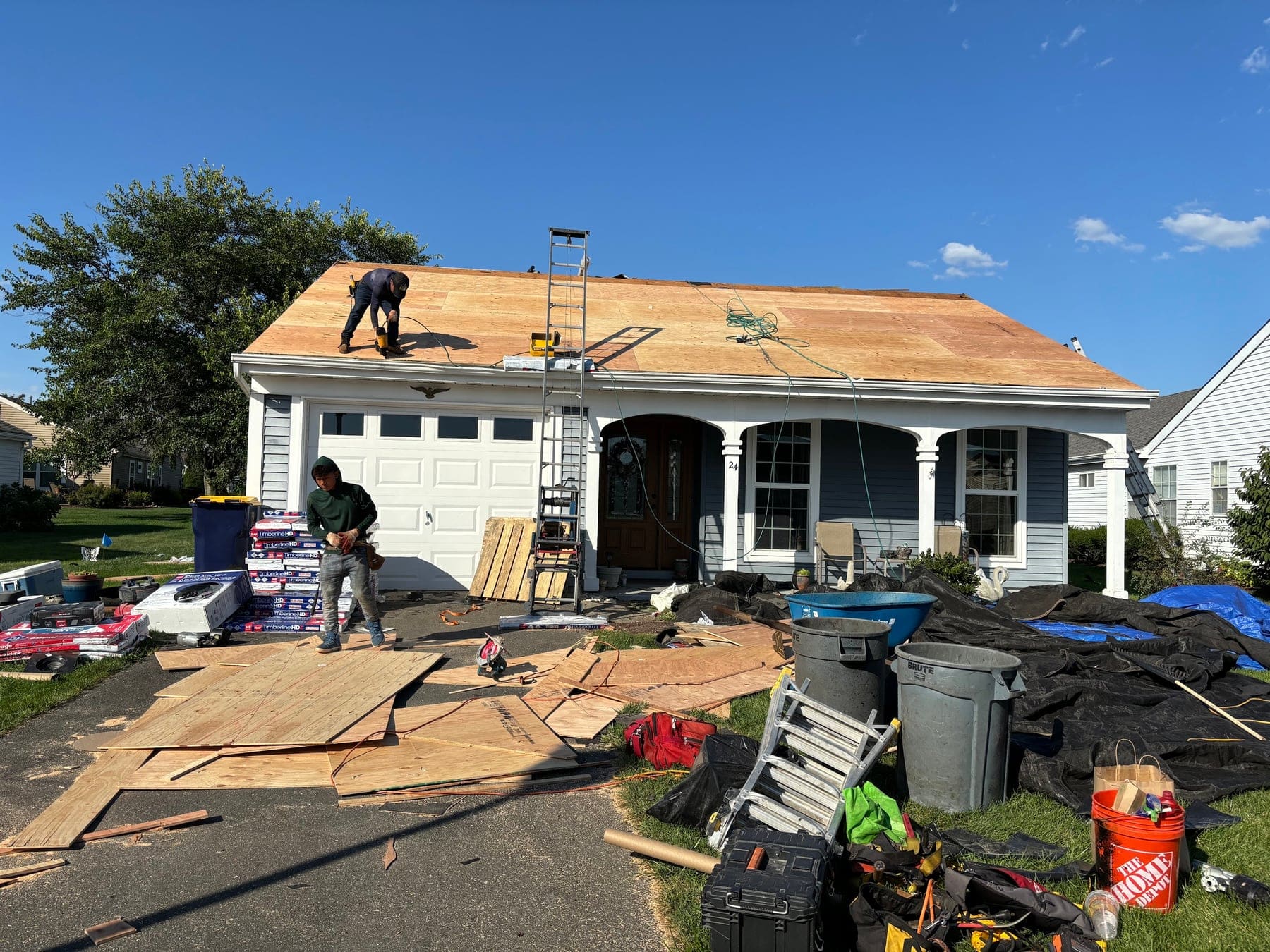
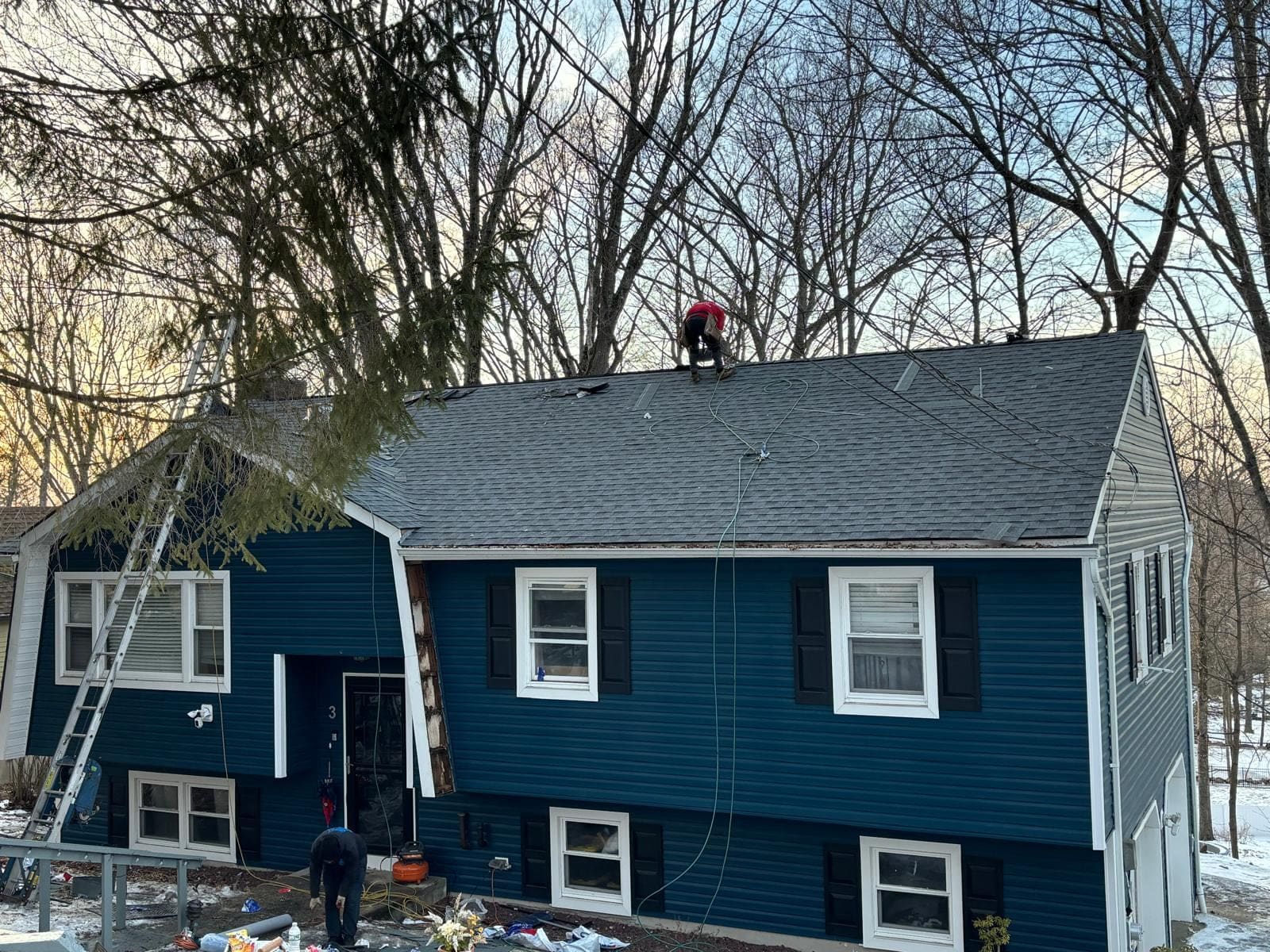
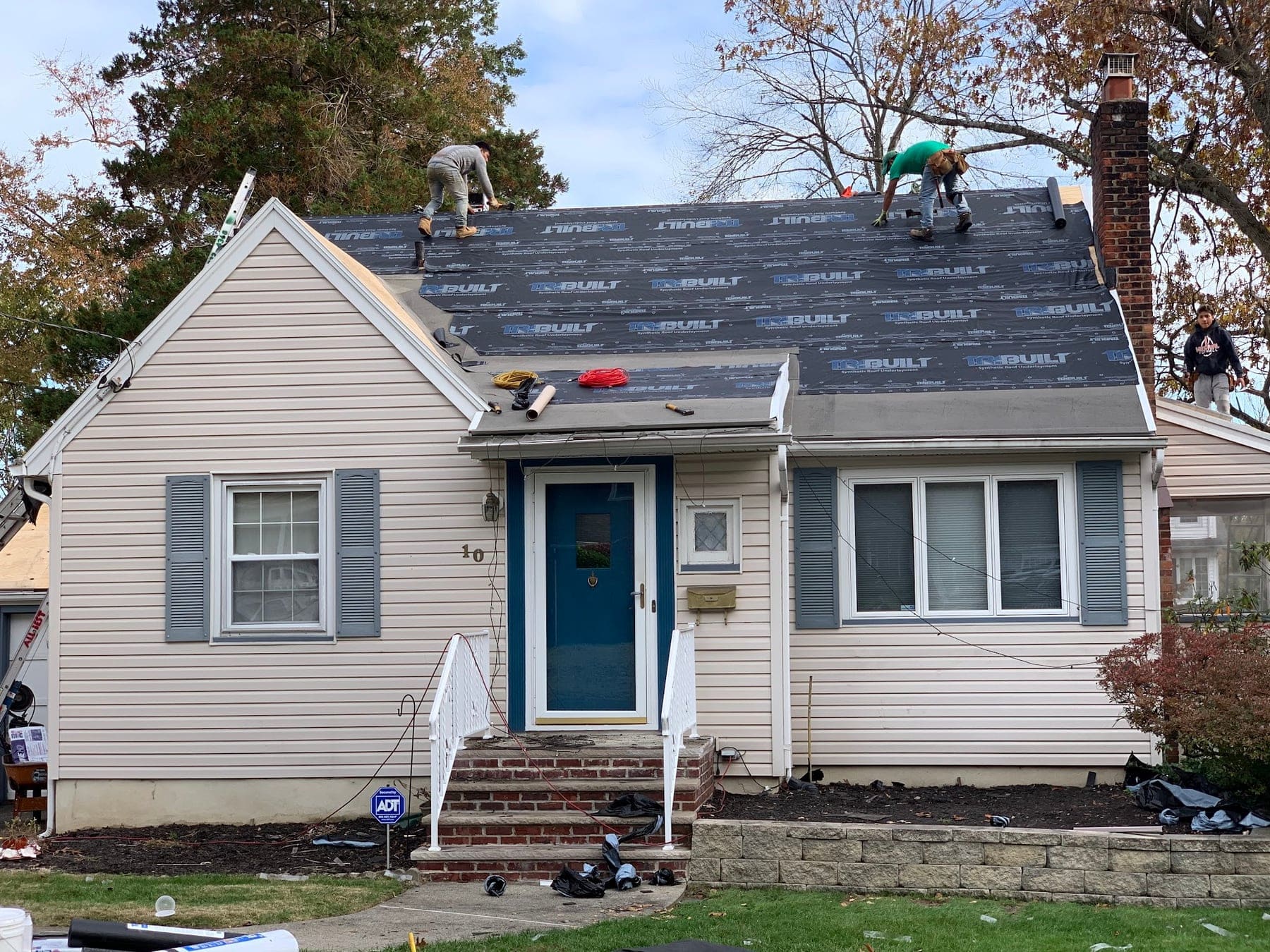
We repair asphalt shingle roofs, low-slope sections on contemporaries and additions, flat commercial roofs and the flashing at chimneys, skylights, sidewalls and vents. Split-levels in the lower parts of the township have their own pattern: short roof sections stepping into walls, each with sidewall flashing that can fail.
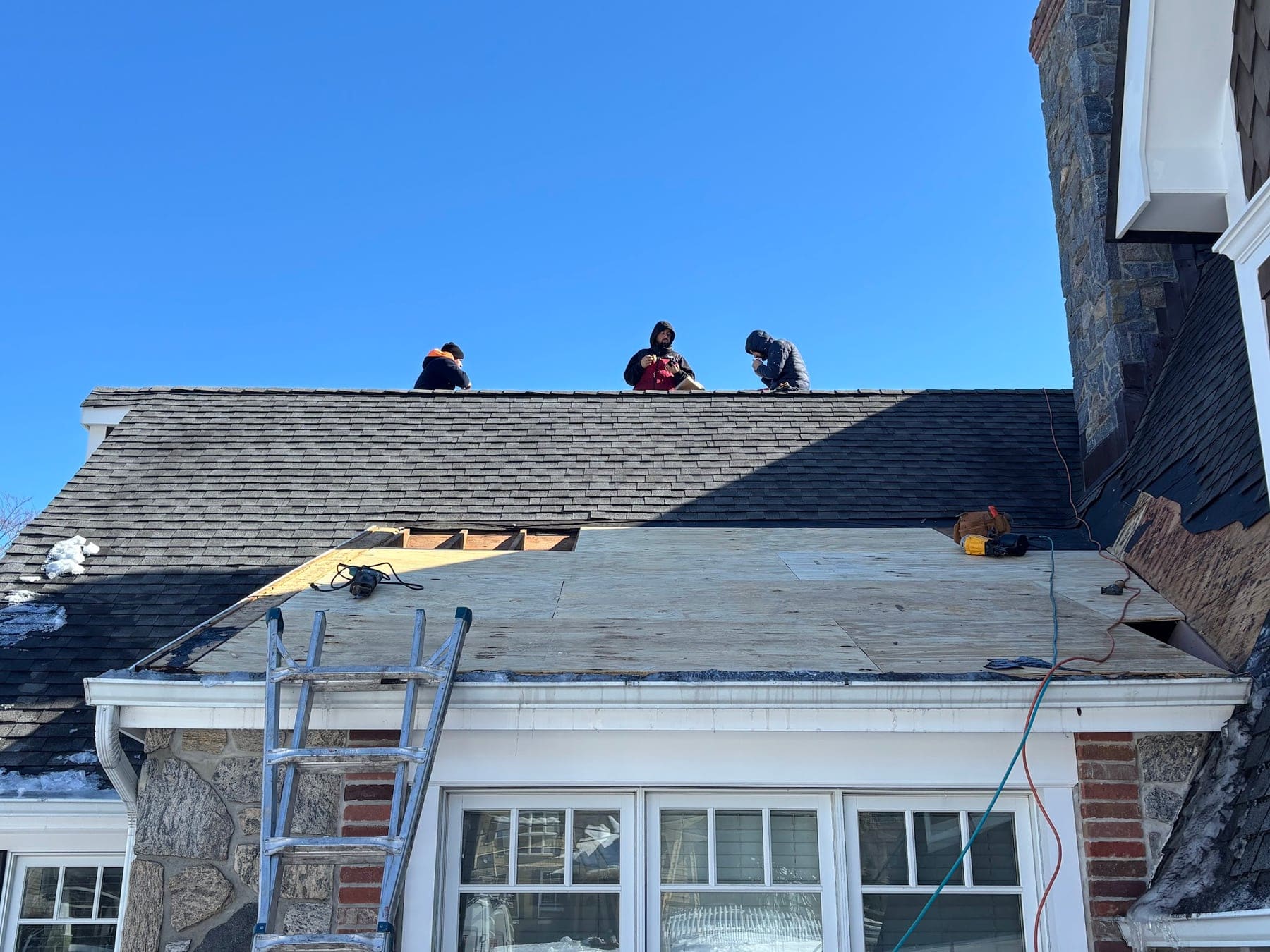
After a limb strike, we inspect the decking and rafters as well as the shingles, because a dent in the roof can hide a cracked rafter. We document storm damage with photos and a written assessment to support an insurance claim.
Scotch Plains housing
Scotch Plains spans a wide range of housing. The lower, flatter parts of the township have 1950s through 1970s split-levels, ranches, capes and colonials. The hillside along the Watchung ridge has larger homes, many from the 1960s onward, including contemporaries with low-slope sections, skylights and large fireplaces, on wooded and sloping lots. Some older homes stand near the historic village center, and commercial strips carry flat-roofed buildings.
Weather & exposure
The hillside homes sit under heavy deciduous and evergreen canopy, which brings deep shade, moss, constant leaf and needle debris and the risk of falling limbs in storms. The ridge face catches more wind than the lowlands. Shaded north slopes hold snow and form ice dams, and steep driveways and lots complicate access. Lower sections are more open but still well treed.
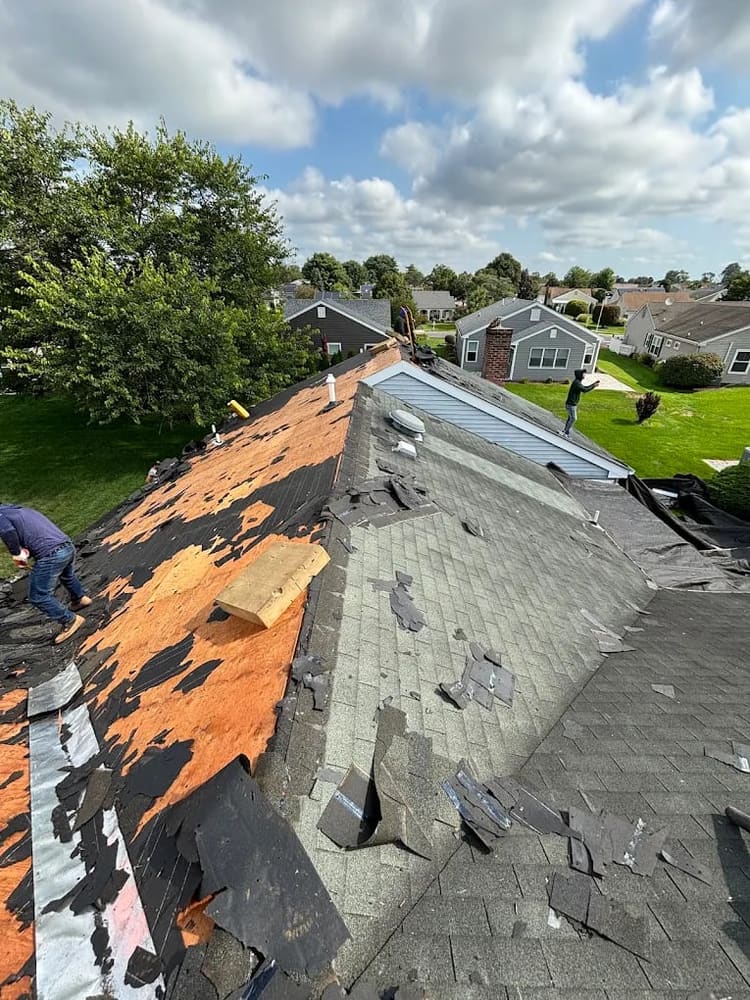
Repair or replace? What we tell Scotch Plains homeowners
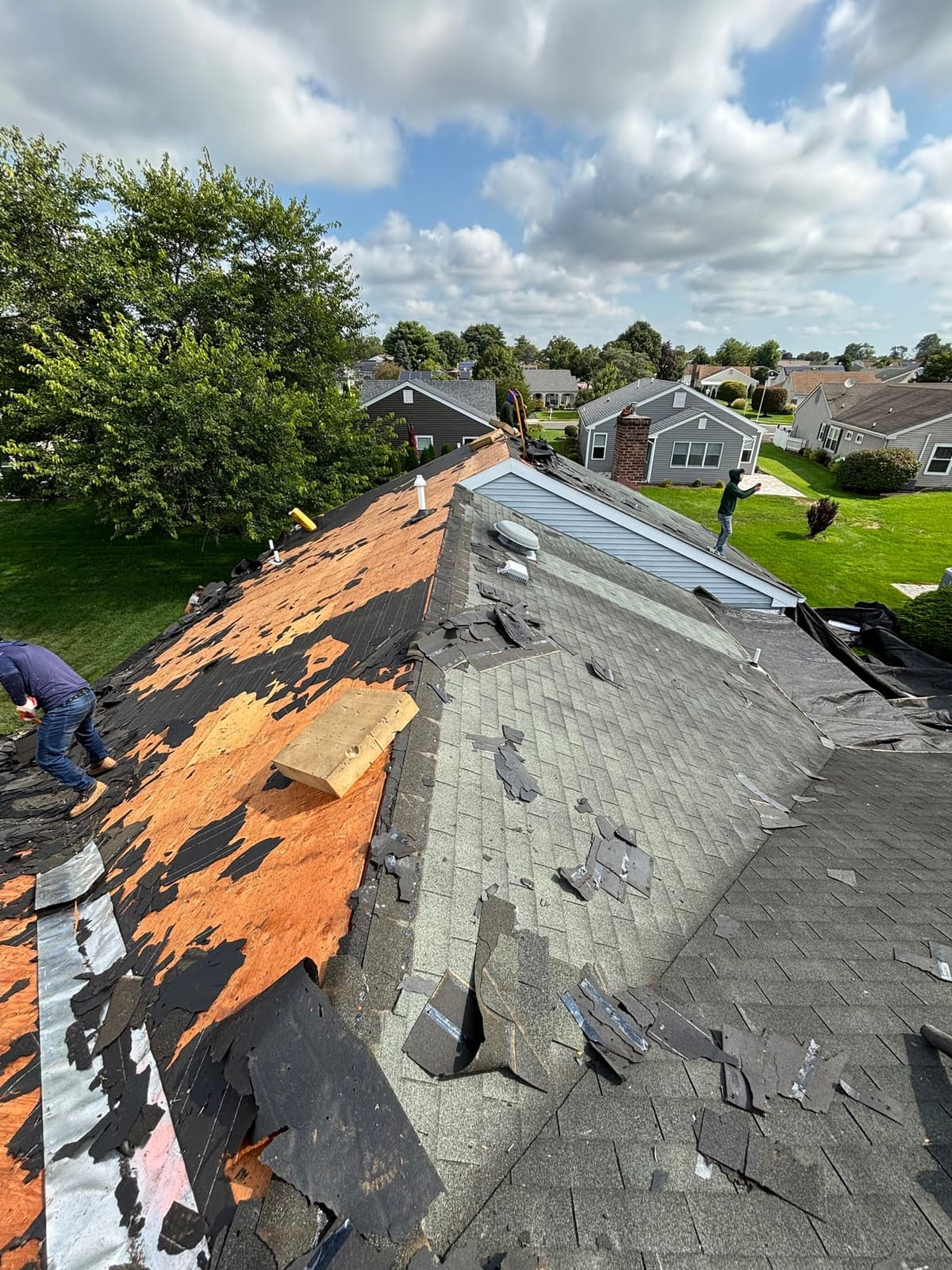
Repair is the right call when the roof is sound and the damage is local, such as a limb strike or a failed flashing detail. Ask for photos of the damage and the finished repair. On heavily shaded roofs where moss has worked under the shingles across large areas, replacement may be the better investment.
Keep valleys, gutters and the area behind chimneys clear, especially in autumn. Most debris-related leaks can be prevented with routine cleaning and trimming back of overhanging branches.