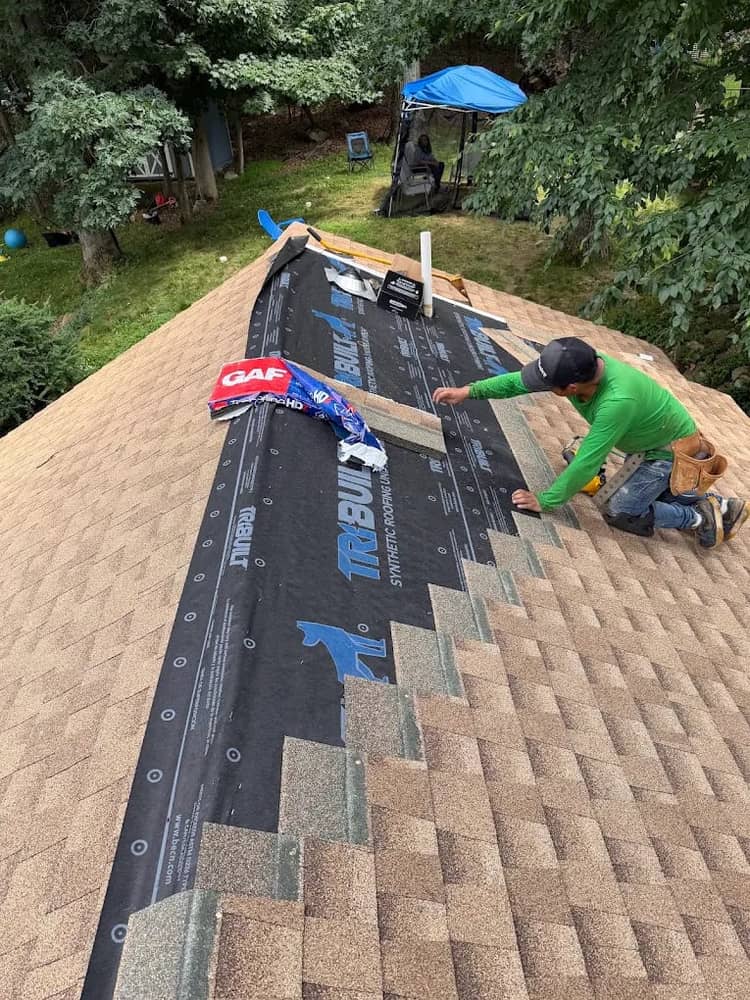
Roof Repair for Alpine homes and buildings
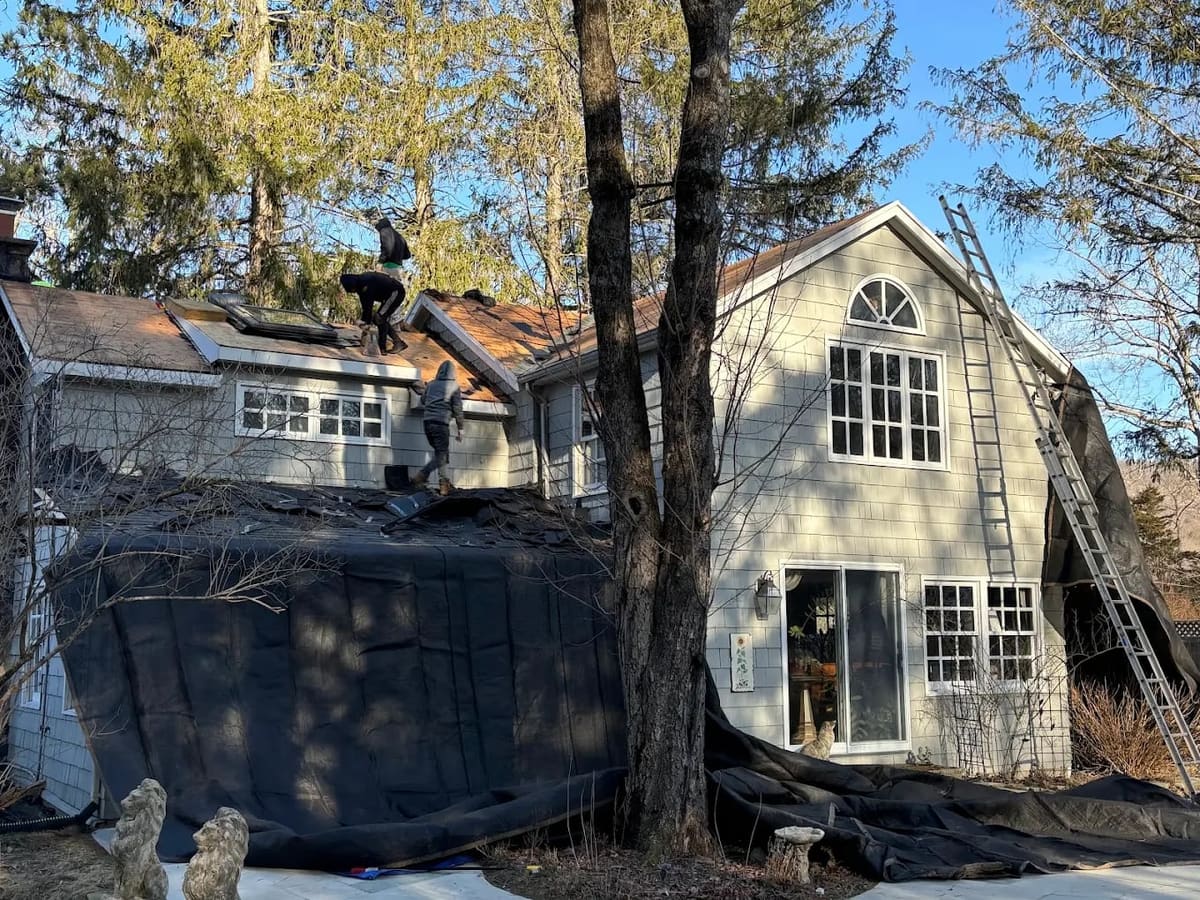
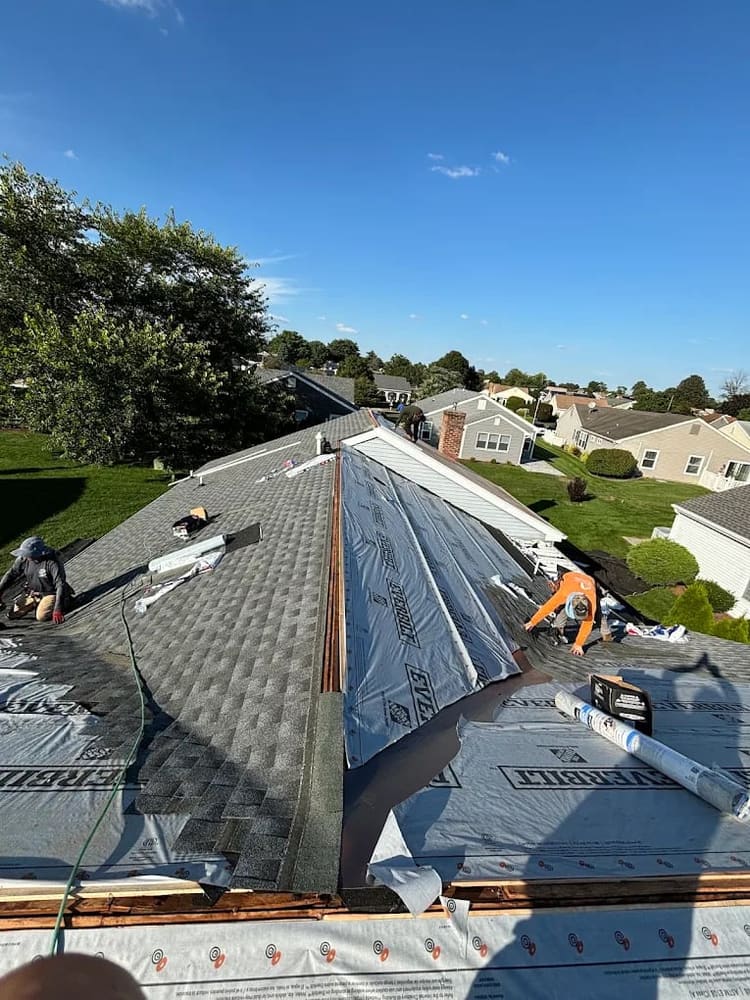
Roof repair on an Alpine home usually means working on a large roof with many details: long valleys, dormers, wall junctions, skylights, and several chimneys. On roofs this size, a leak almost always starts at one of those details rather than in the open field. Finding it requires a careful inspection of each transition, which is where our time goes.
Trees are the other constant. Wooded lots mean limbs on the roof after storms, gutters and valleys packed with leaves, and shaded slopes that grow moss. On homes near the cliff edge, wind off the Hudson adds lifted shingles and loosened ridge caps to the list.
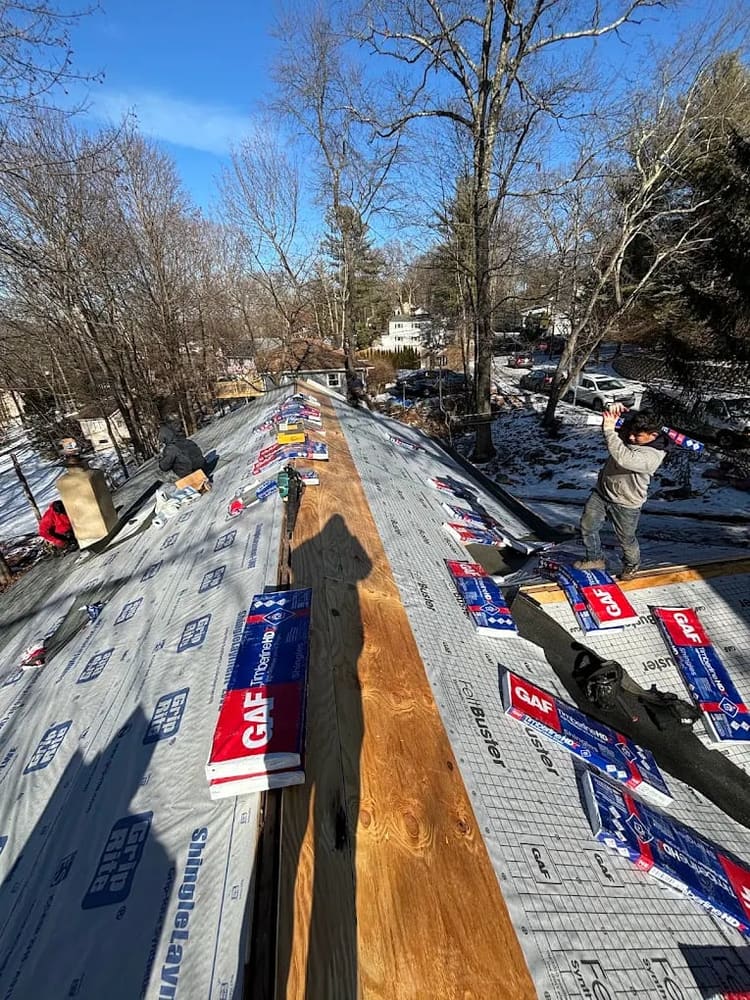
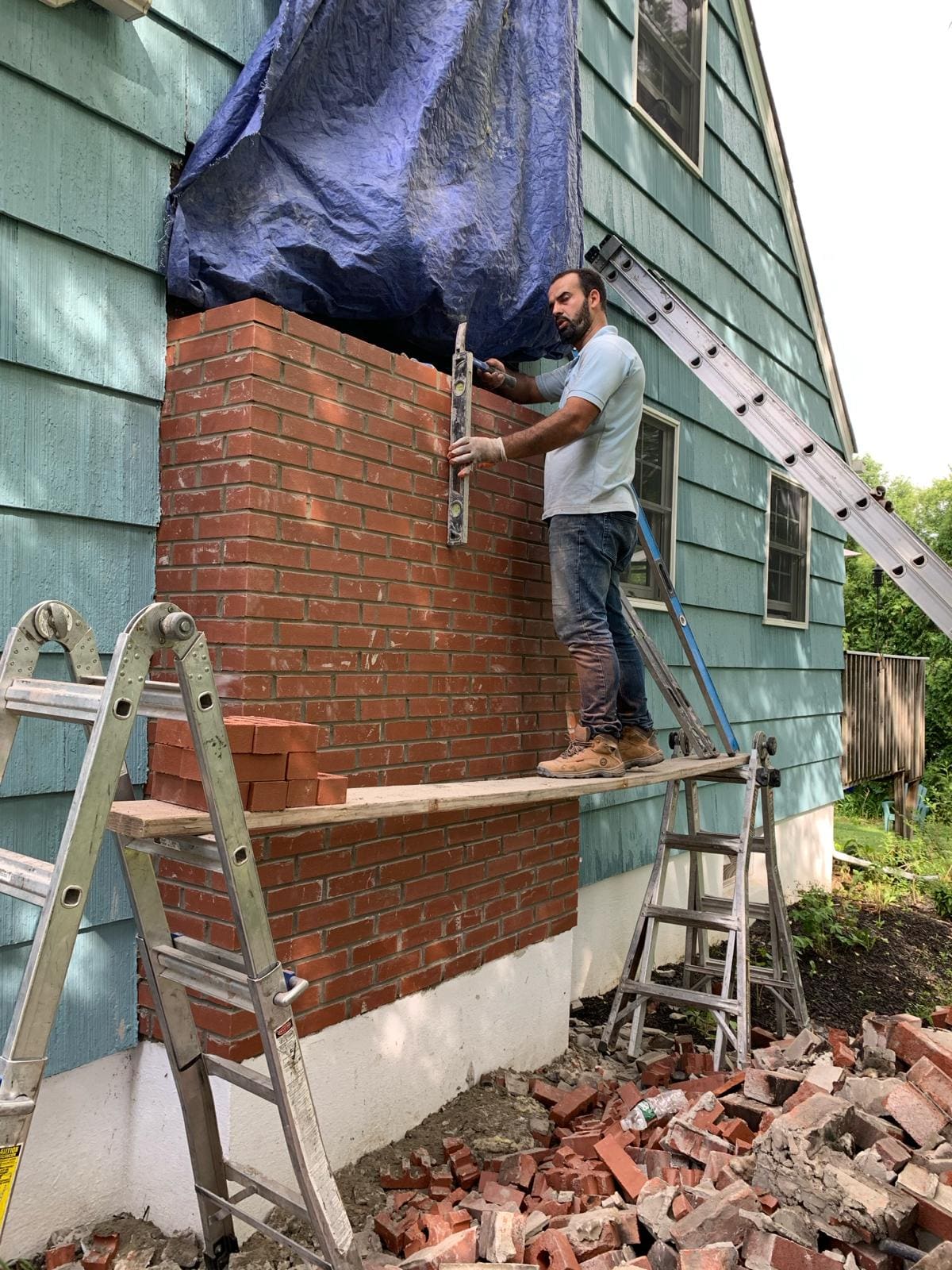
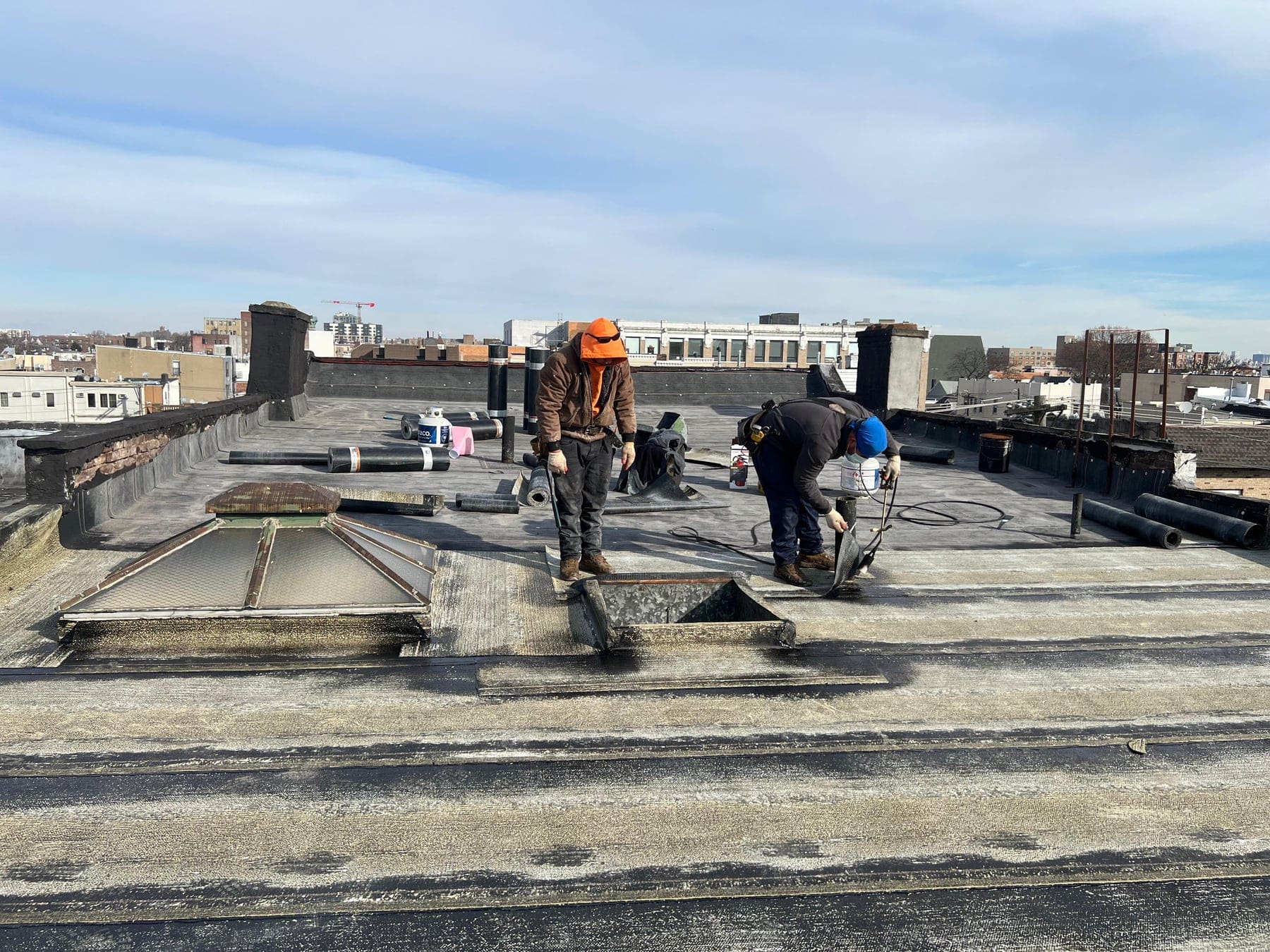
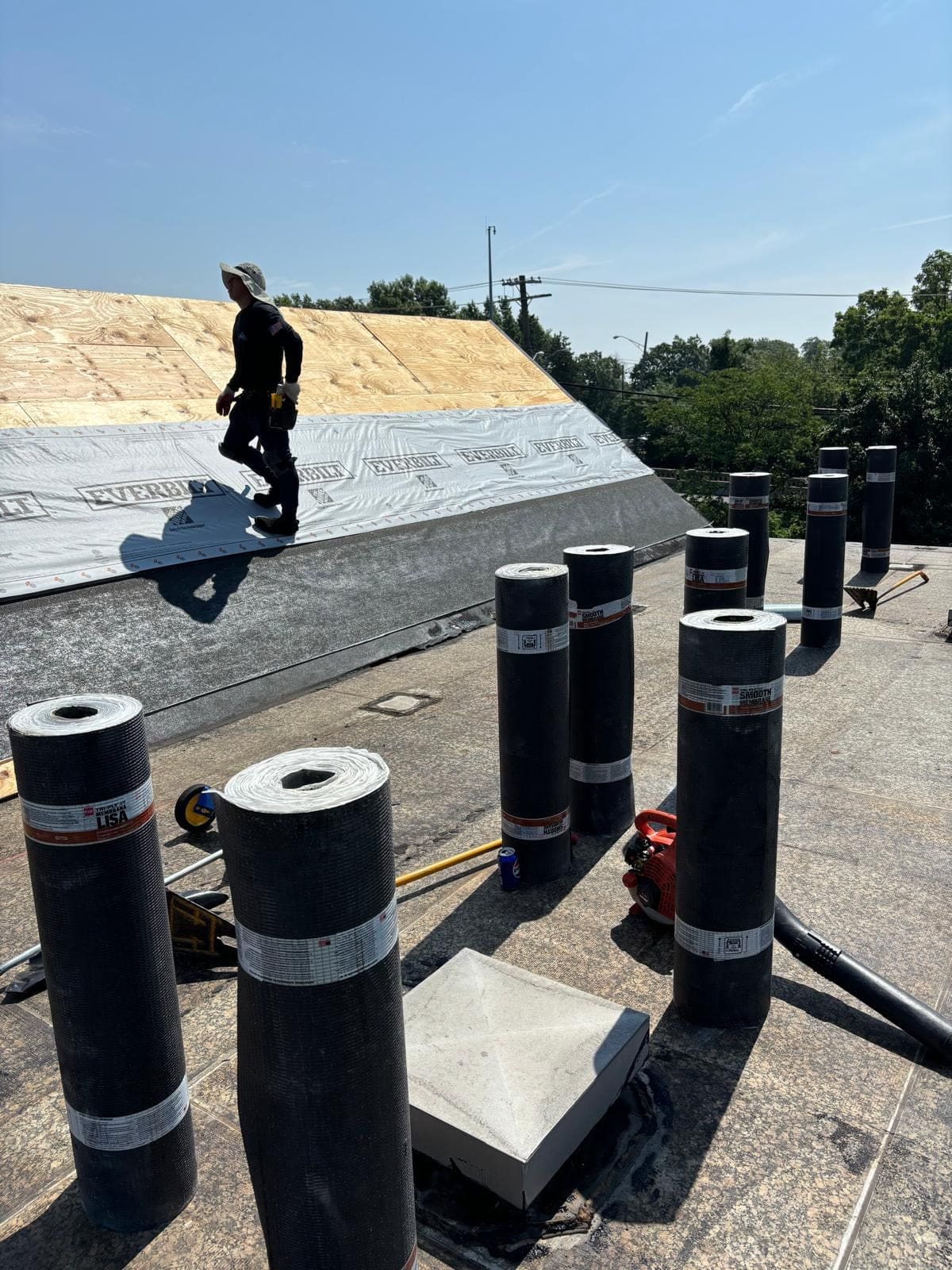
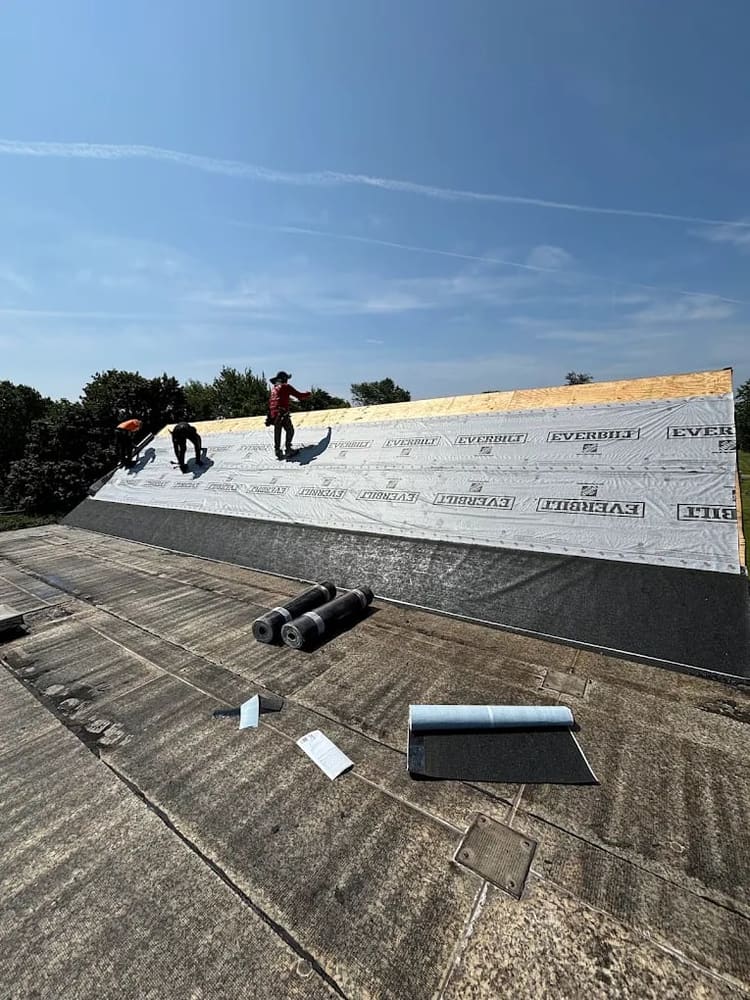
Our specialty is asphalt shingle and flat roofing, which covers a good share of Alpine homes as well as flat sections over additions and porches. For slate, tile, cedar or metal roofs, we can assess the roof and advise you honestly, and we can repair the flashing and chimney work that so often turns out to be the real source of a leak.
Alpine housing
Alpine is almost entirely single-family residential on large, wooded lots. The housing ranges from older country houses and mid-century homes to large custom houses and newer estates. Roofs tend to be large and complex, with many hips, valleys, dormers and turrets, and a significant share use premium materials such as slate, tile, cedar or standing-seam metal alongside architectural asphalt shingle. Many homes have multiple chimneys, often in brick or stone. Commercial buildings are few.
Weather & exposure
Alpine sits high on the Palisades ridge above the Hudson, and properties near the cliff take wind straight off the river during nor'easters and summer storms. Inland from the cliff, the borough is heavily wooded, so falling limbs, leaf-packed gutters and shaded, damp slopes are constant concerns. Long driveways and large lots also mean roofs are often surrounded by trees on every side, and winter freeze-thaw works on the tall chimneys these houses carry.
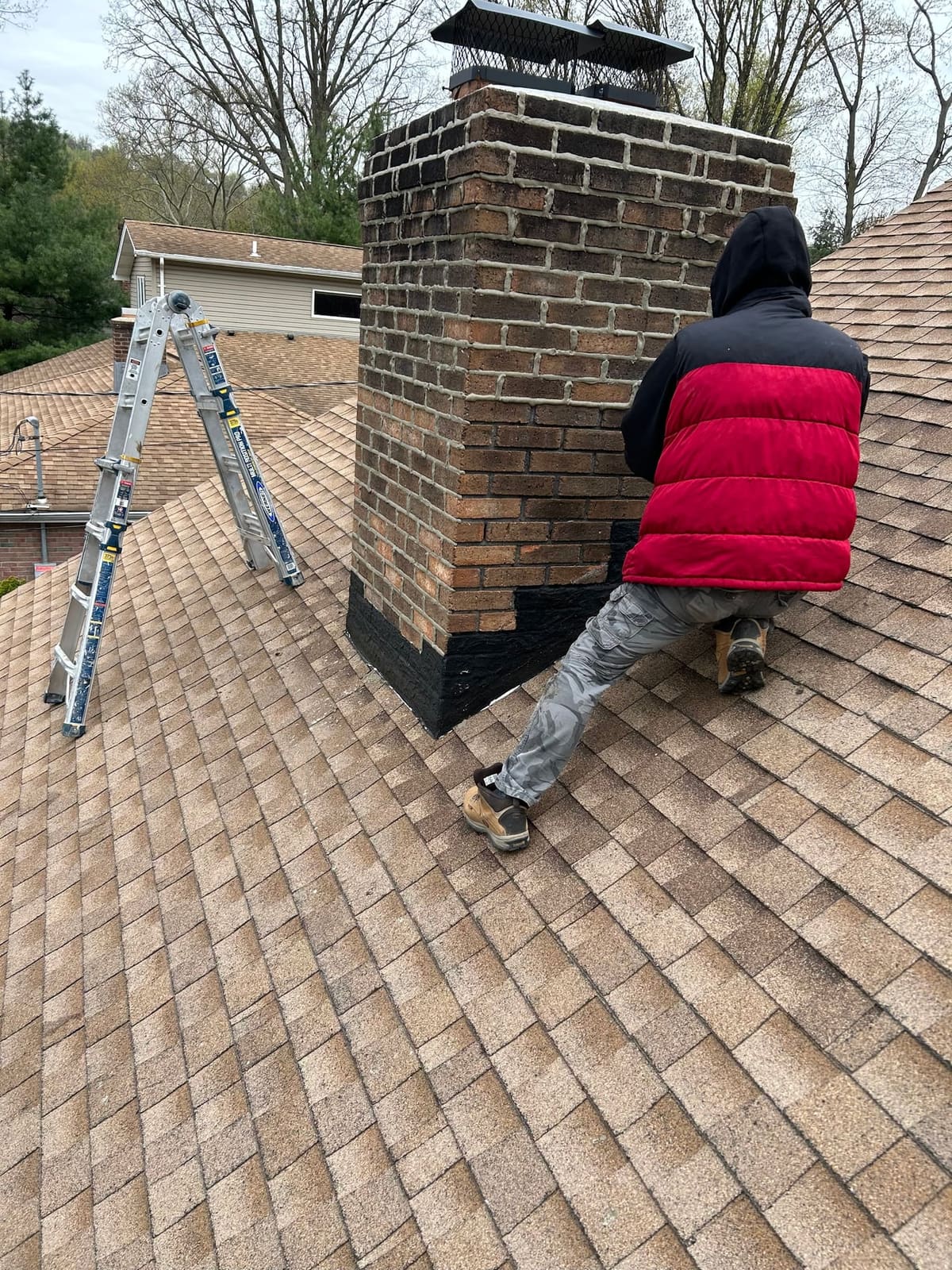
Repair or replace? What we tell Alpine homeowners
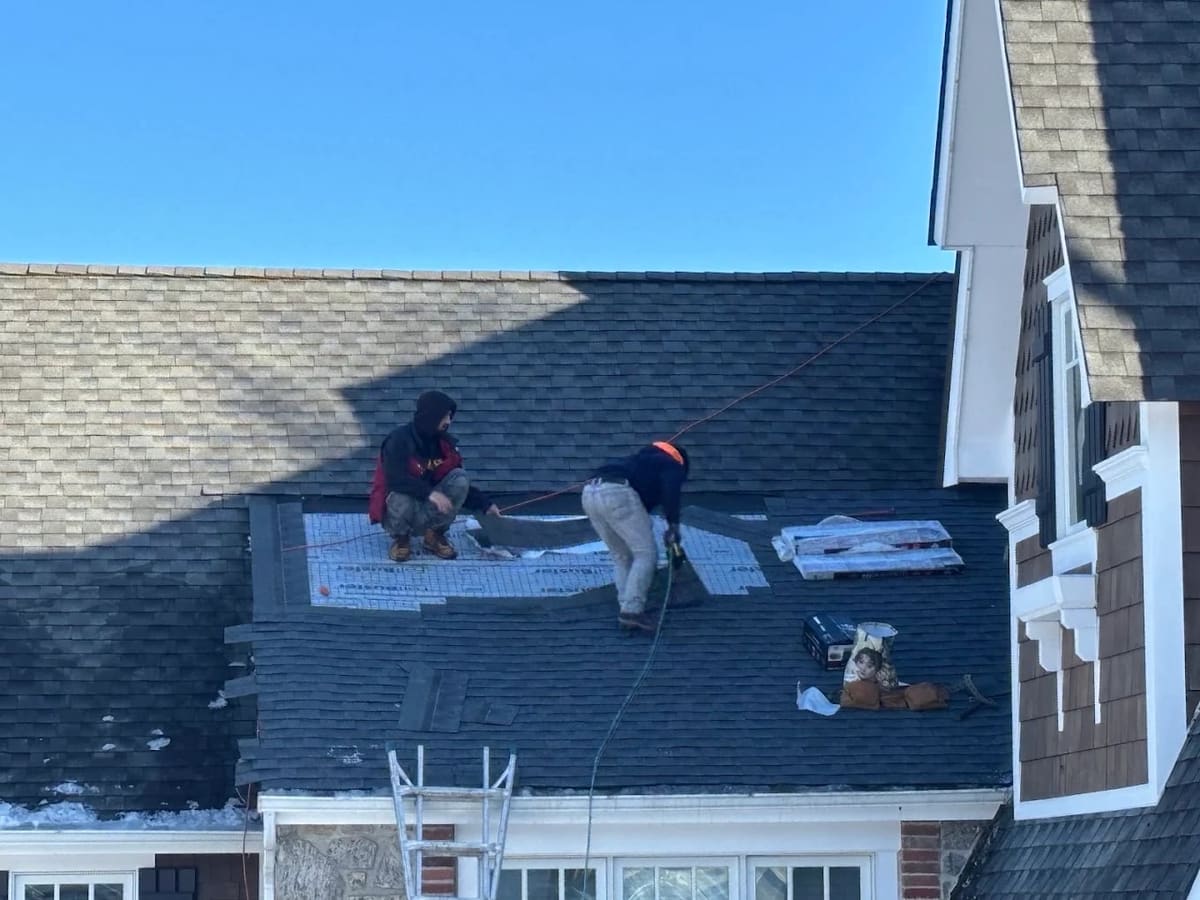
On an Alpine roof, repair is usually the right first step when the problem is a specific detail such as a valley, a flashing junction or a storm-damaged area. Large roofs are expensive to replace, and keeping them sound through maintenance of valleys, flashing and gutters makes sense. If an asphalt roof is brittle across most of its surface, we will say plainly that replacement is the better investment.
For premium materials, we assess the roof and advise honestly on what we can repair ourselves, such as flashing and chimney-related leaks, and when you should involve a specialist in that material. After storm damage, we can document the damage with photos and a written report to support an insurance claim.