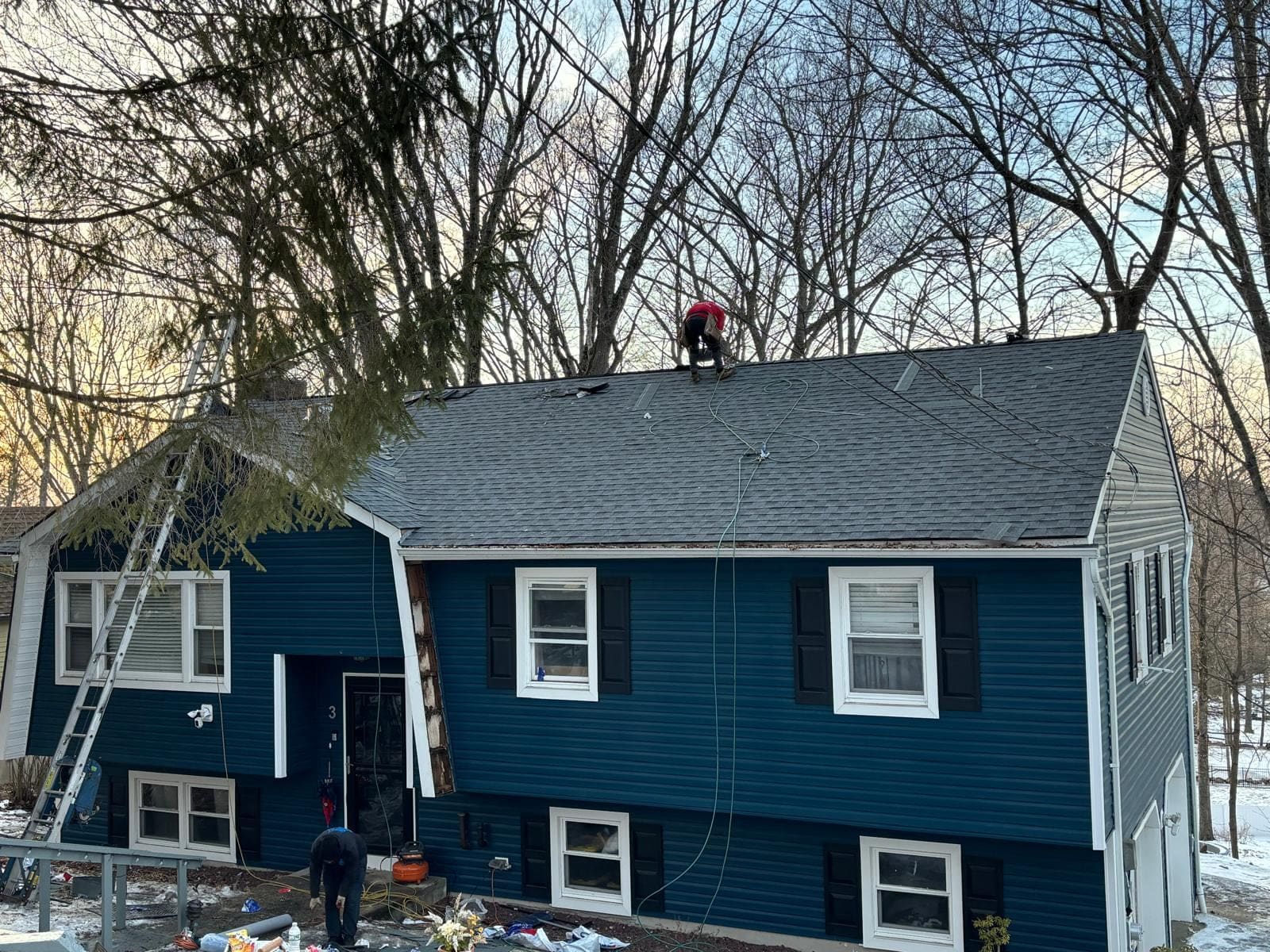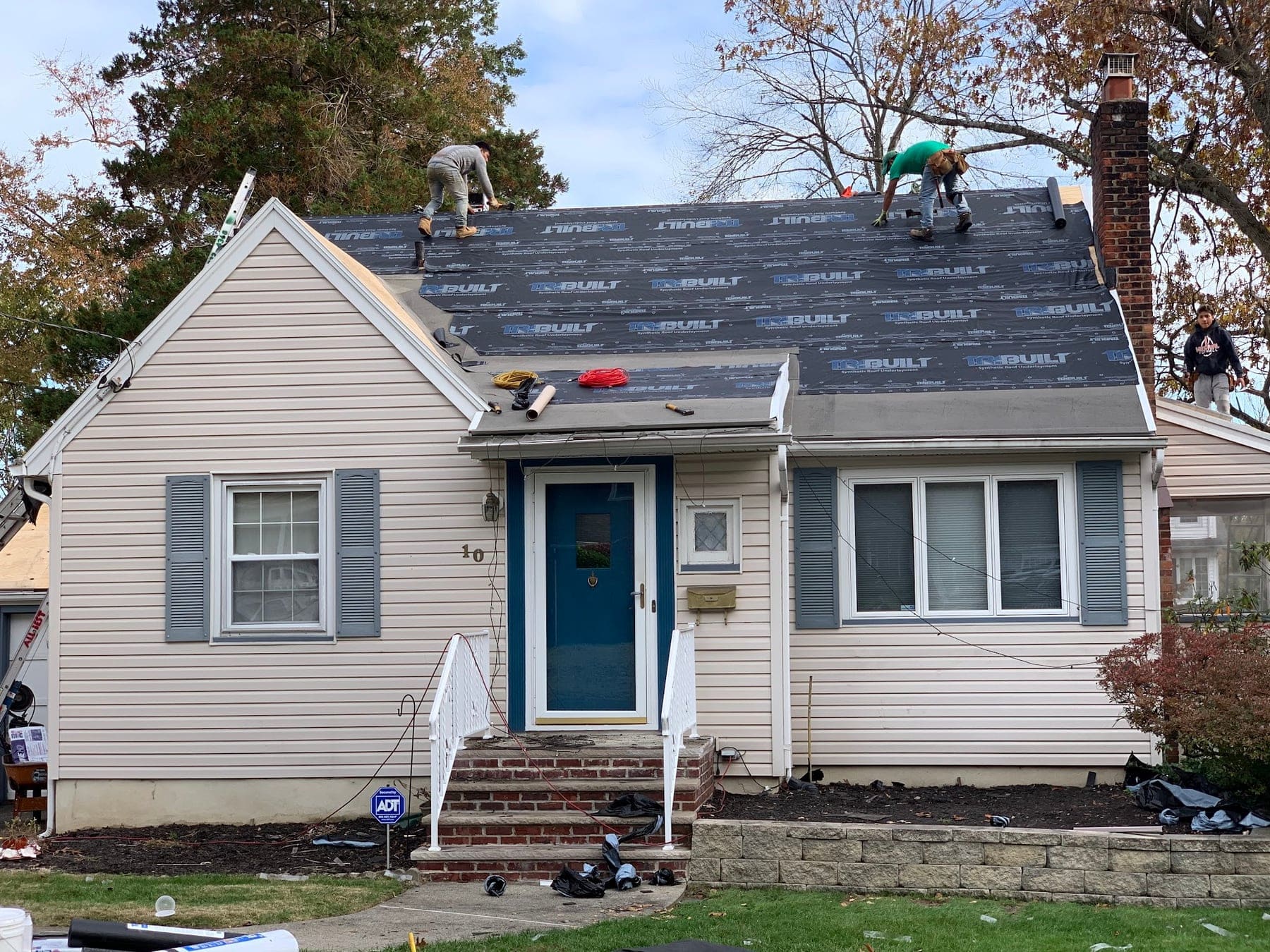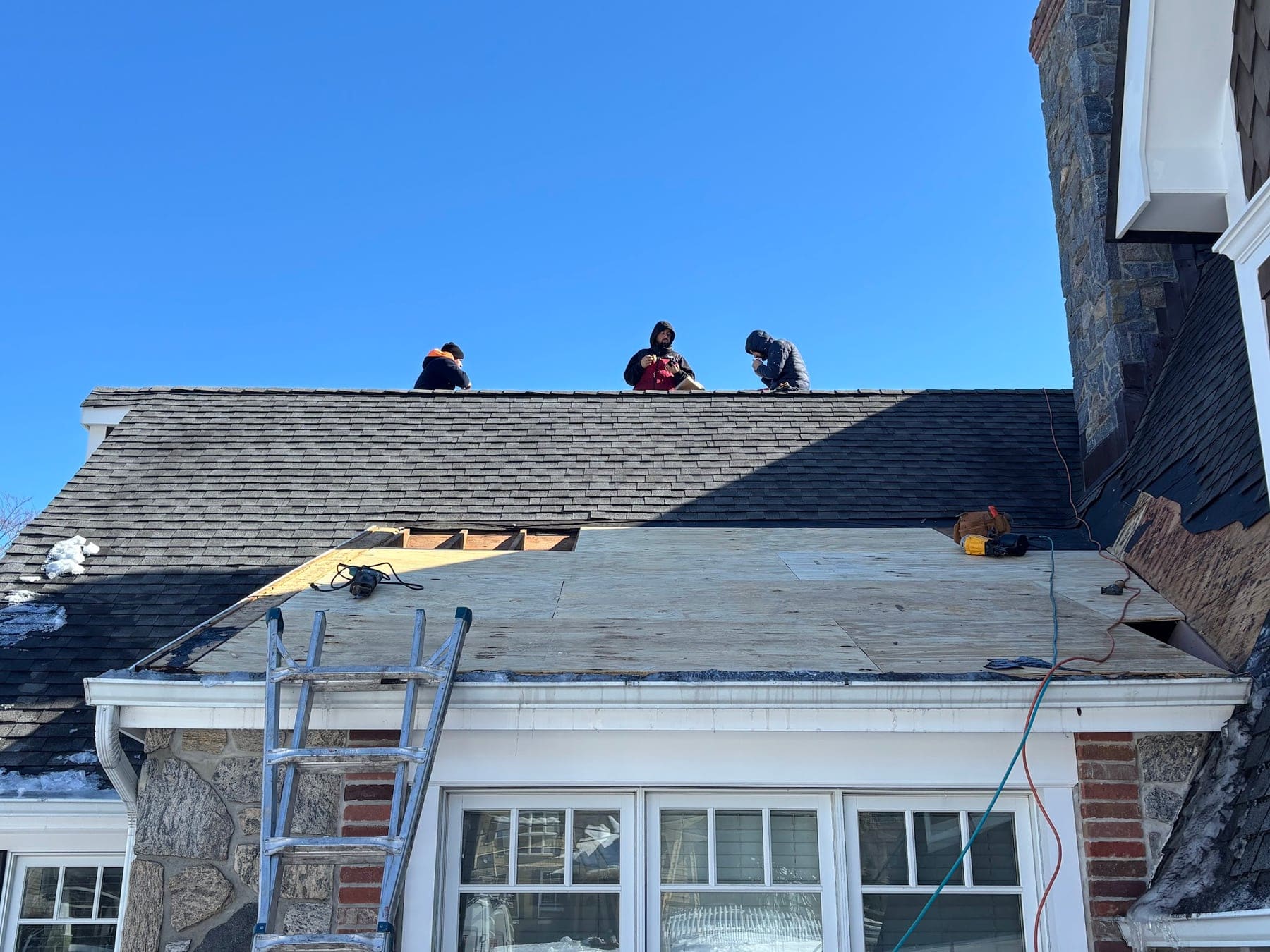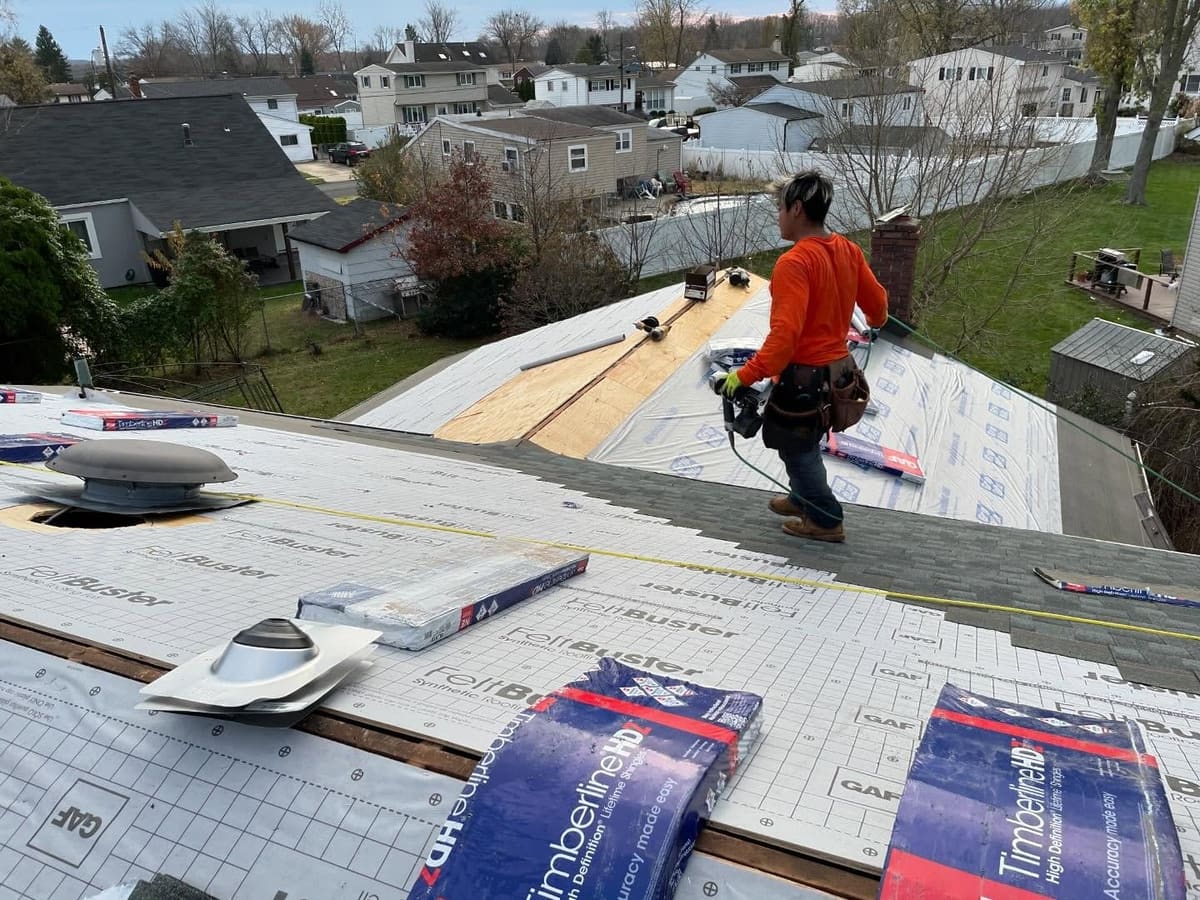
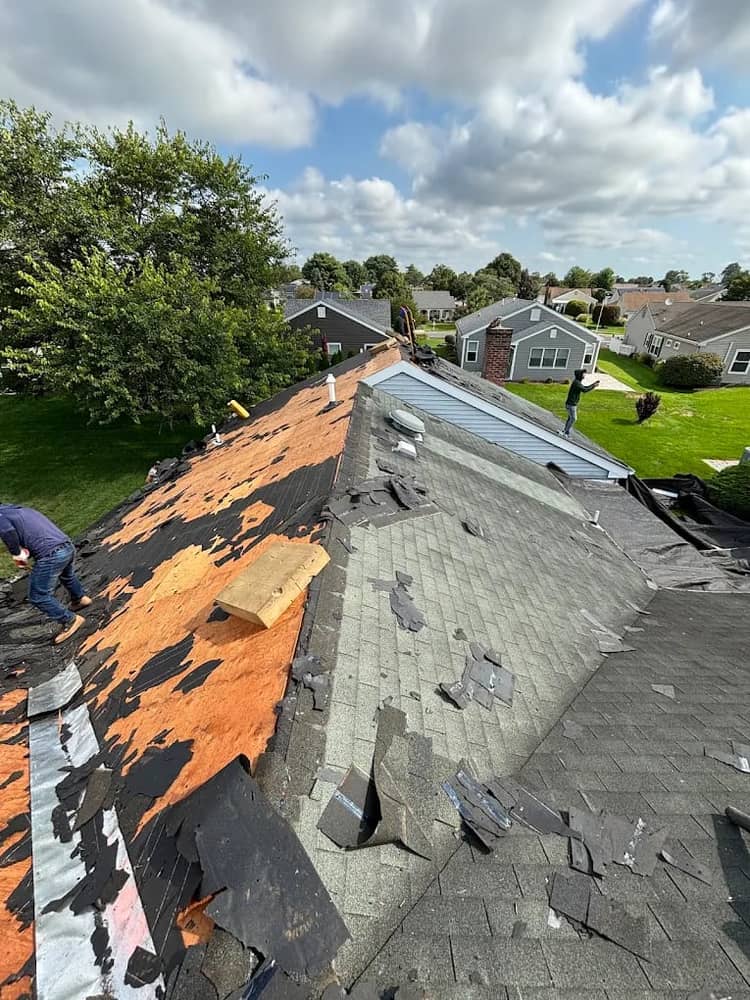
Roof Repair for Little Ferry homes and buildings
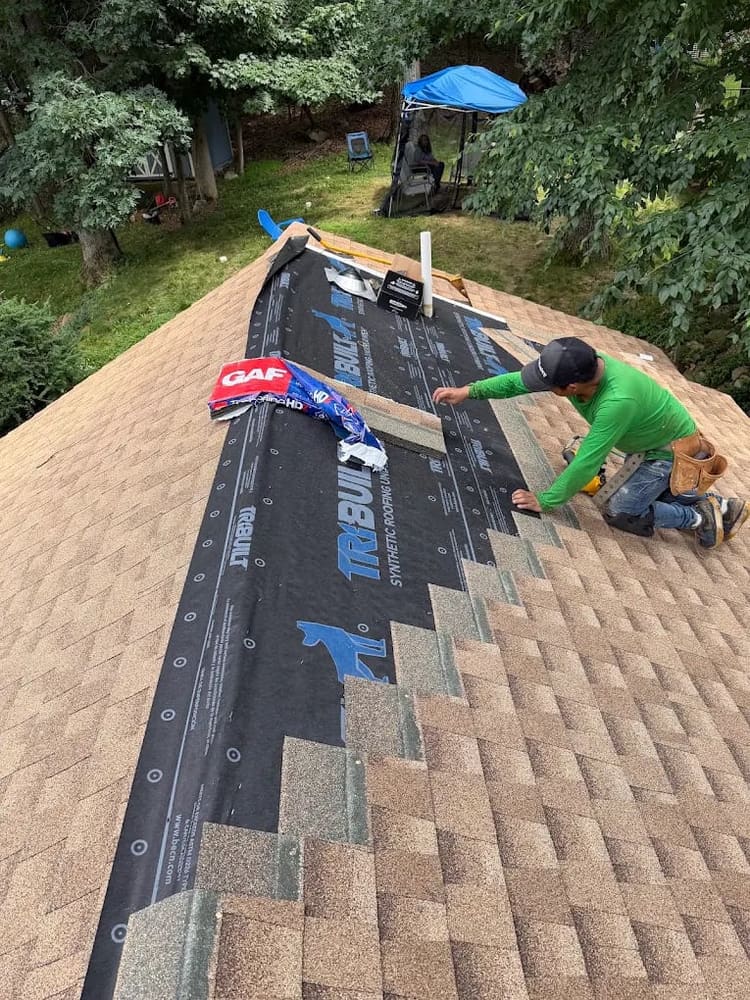
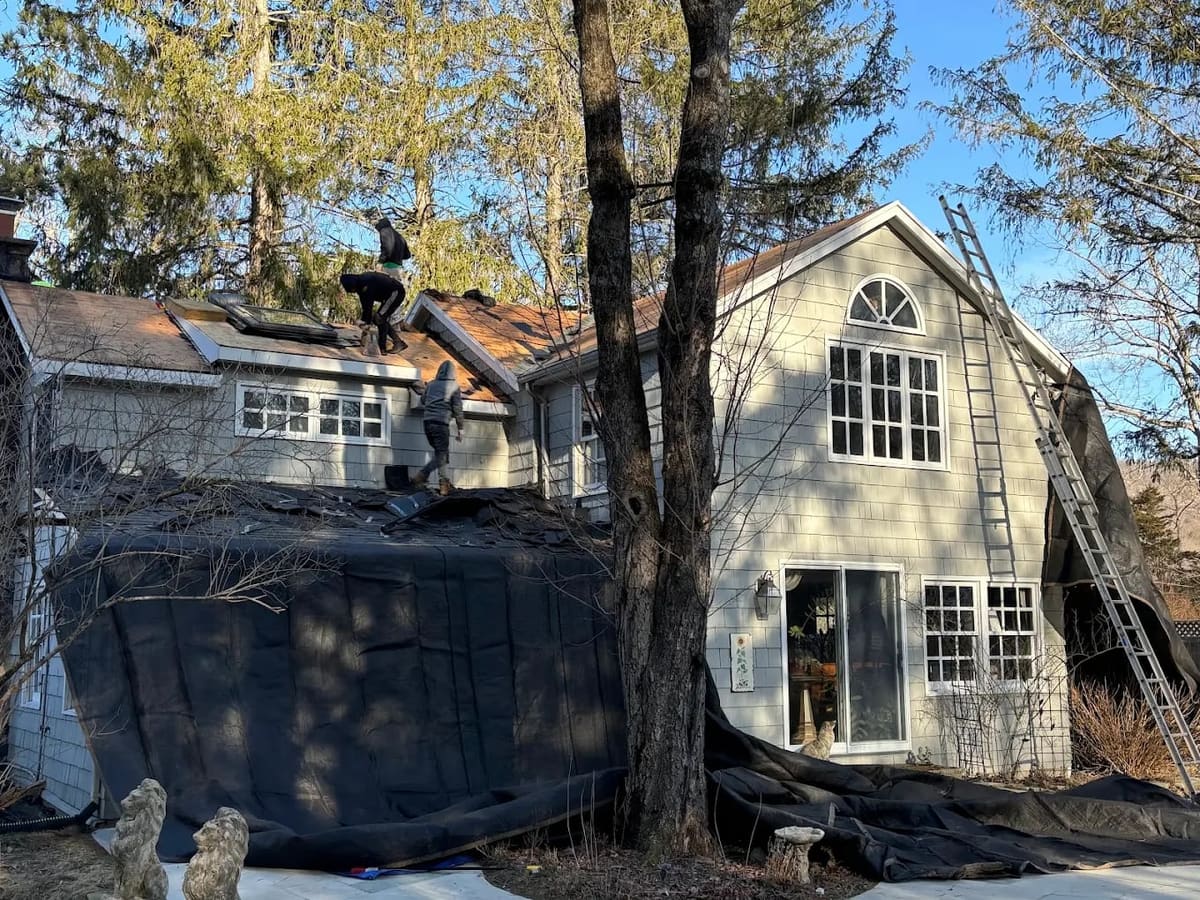
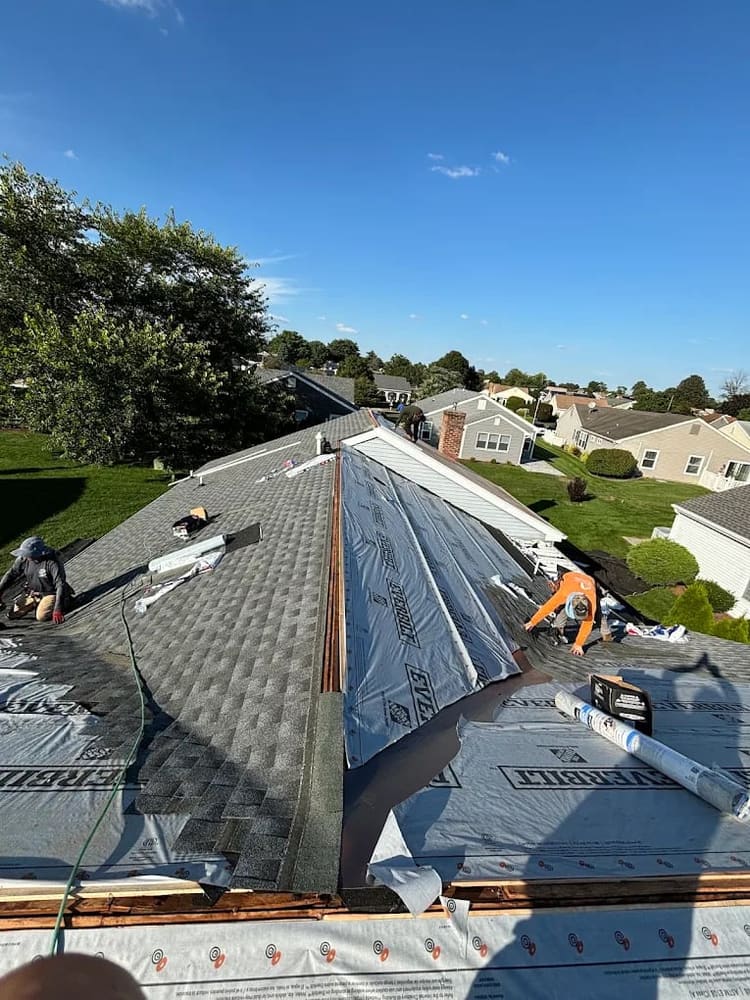
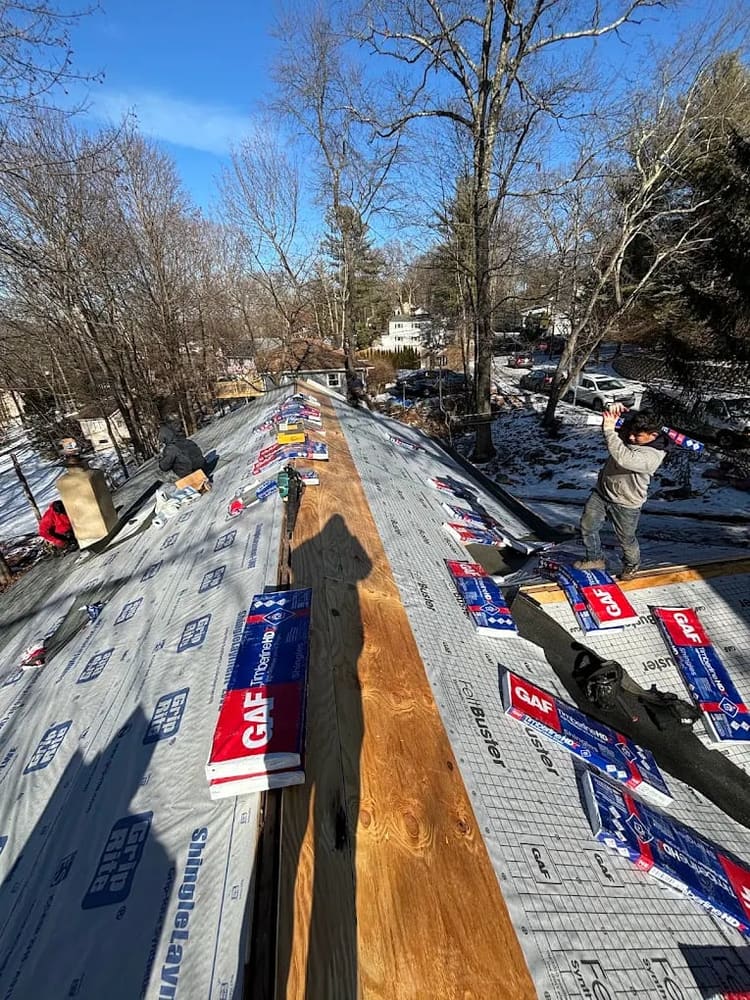
Roof repair in Little Ferry splits between small homes and large flat roofs. On capes, ranches and two-families, the common problems are wind-lifted shingles on the open side of the house, worn flashing at chimneys and dormers, and rotted fascia and soffits from humid air and overflowing gutters. On garden apartments and commercial buildings, it is flat-roof work: seams, drains, edge metal and equipment curbs.
Open exposure across the Meadowlands means wind-driven rain gets pushed into places it would not reach on a sheltered roof, such as under drip edges, behind loose fascia and through sidewall flashing. When we trace a leak here, we check the edges and walls as carefully as the field of the roof.
For warehouse and light industrial roofs, we repair membranes, drains and flashing and tell building owners plainly how much life the roof has left.
Little Ferry housing
Little Ferry has mostly smaller homes: post-war capes, ranches and two-family houses on modest lots, with some older homes near the river. Garden apartment complexes with low-slope roofs are a significant part of the housing. Along Route 46 and toward the Meadowlands, commercial, warehouse and light industrial buildings with large flat roofs make up much of the non-residential land.
Weather & exposure
The borough is flat, open and low. Wind crosses the Meadowlands and the river with little to block it, and storms push wind-driven rain against walls and roof edges. Low elevation means high ground moisture, damp crawlspaces and basements, and a real flood risk in major storms. Humid conditions near the marshes are hard on wood fascia, soffits and masonry.
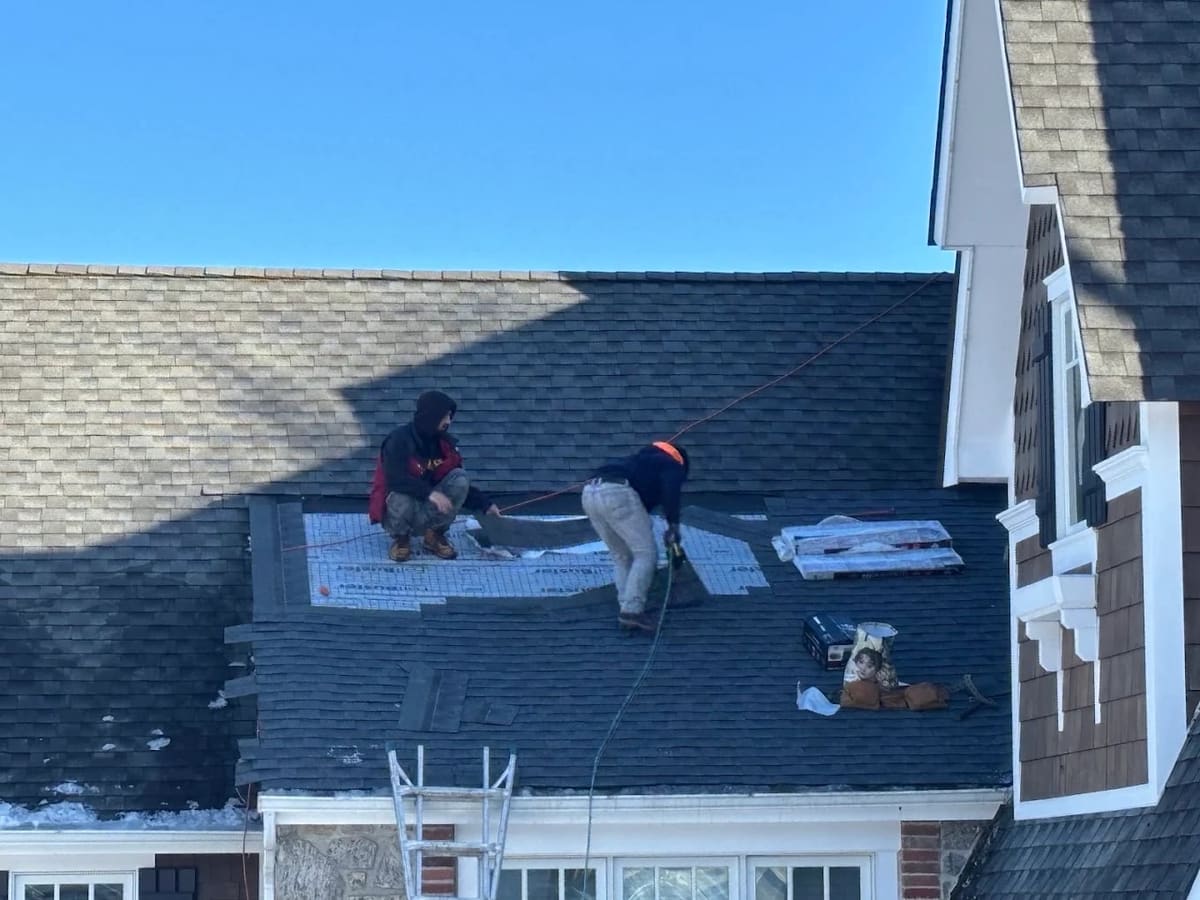
Repair or replace? What we tell Little Ferry homeowners
For homes in Little Ferry, wind damage on one slope or a failed edge detail is a repair if the shingles are still flexible. If the roof loses shingles every storm or is brittle throughout, replacement is the lasting answer, and we will say so.
For flat commercial roofs, sectional repairs work when the membrane is pliable and the deck is dry. Widespread ponding or wet insulation points toward replacement. After storms, we can document damage for insurance claims. Estimates are free.