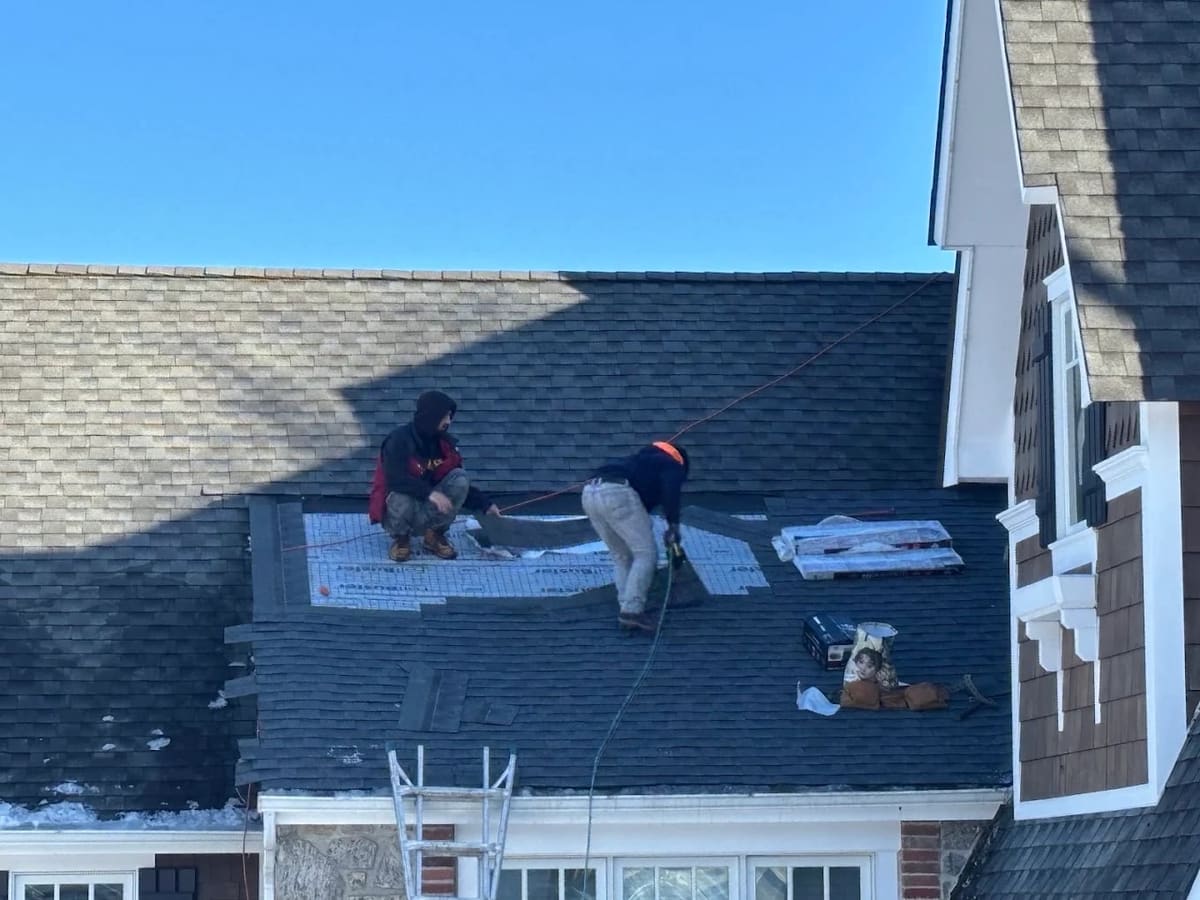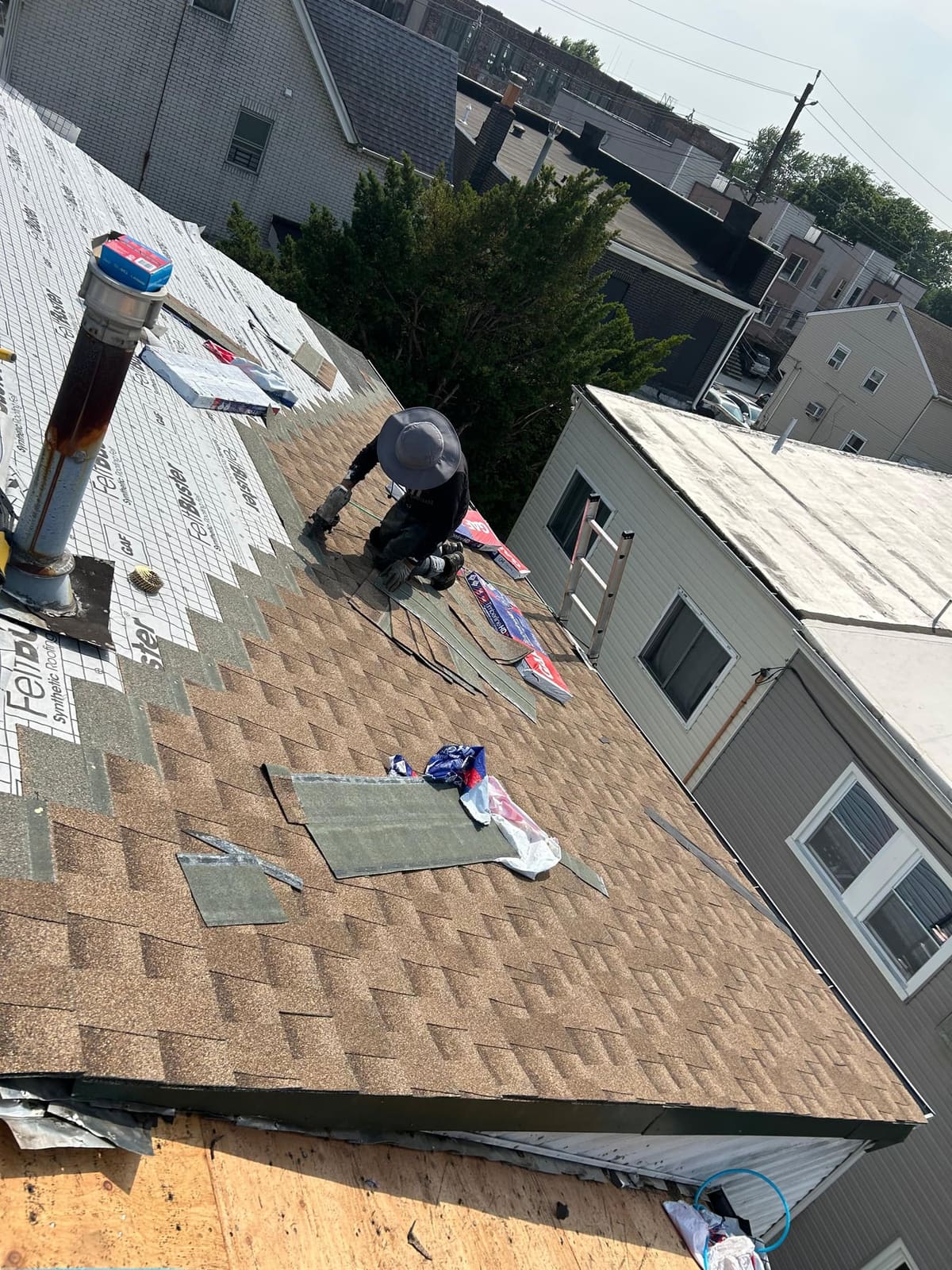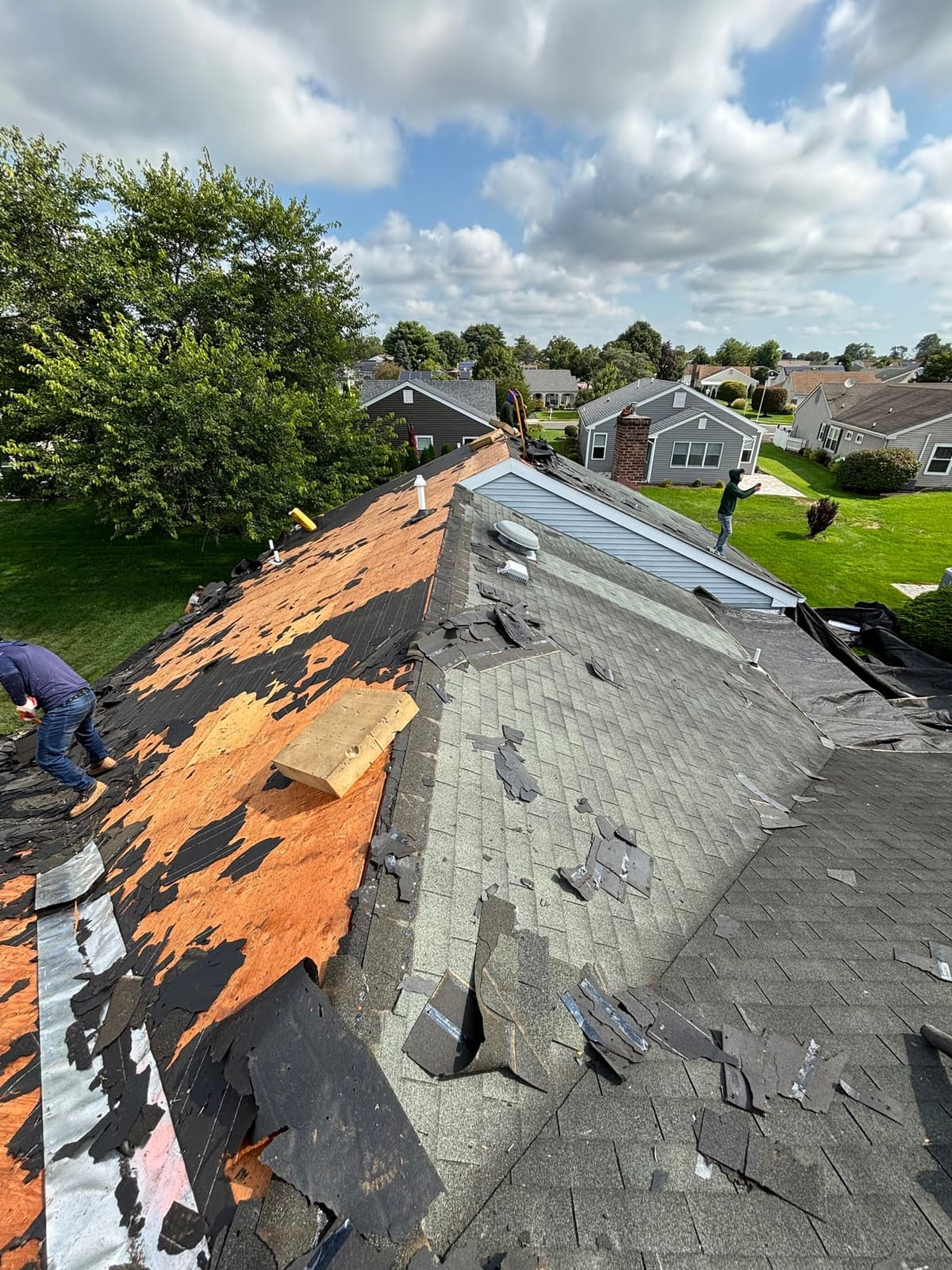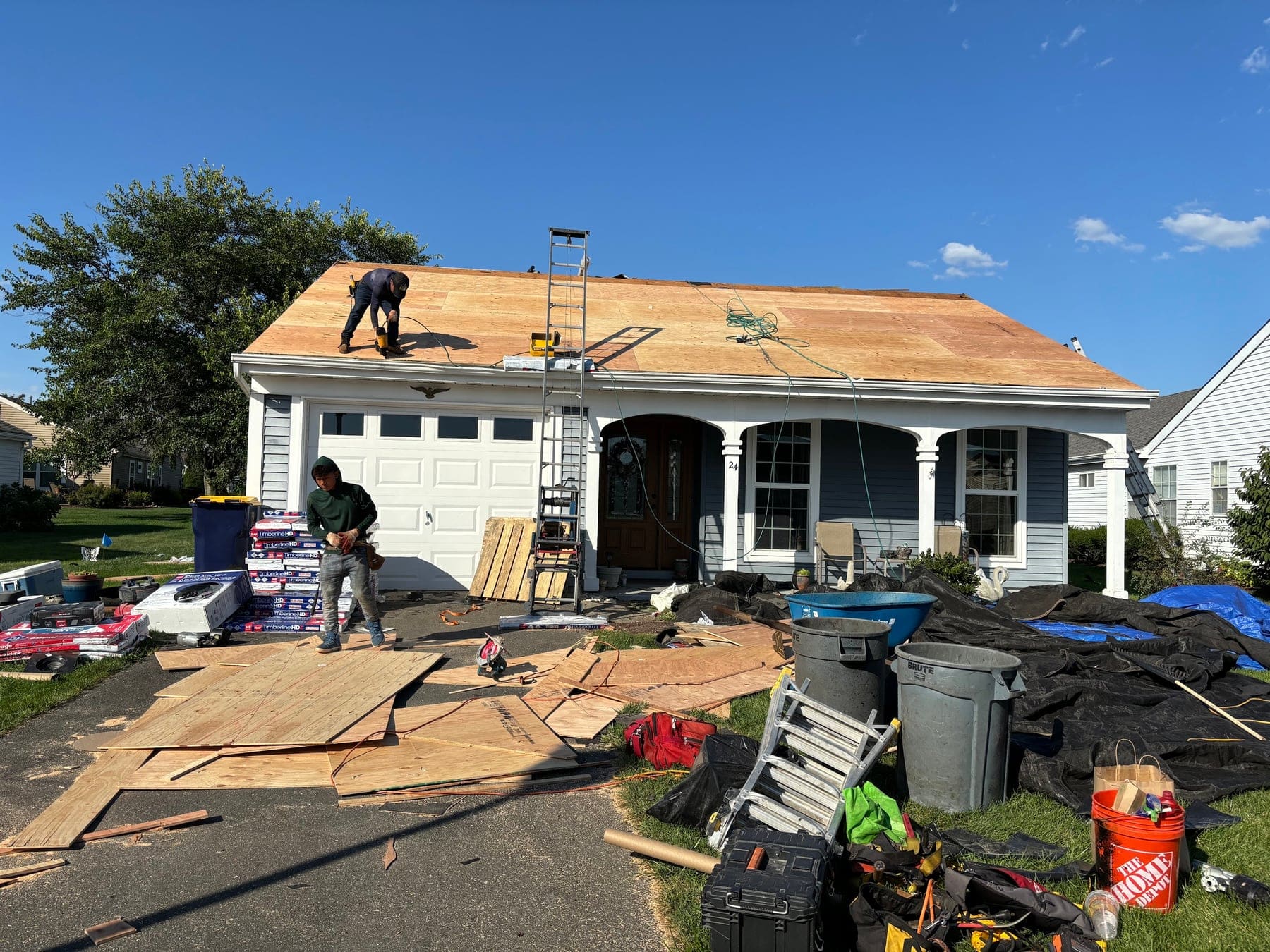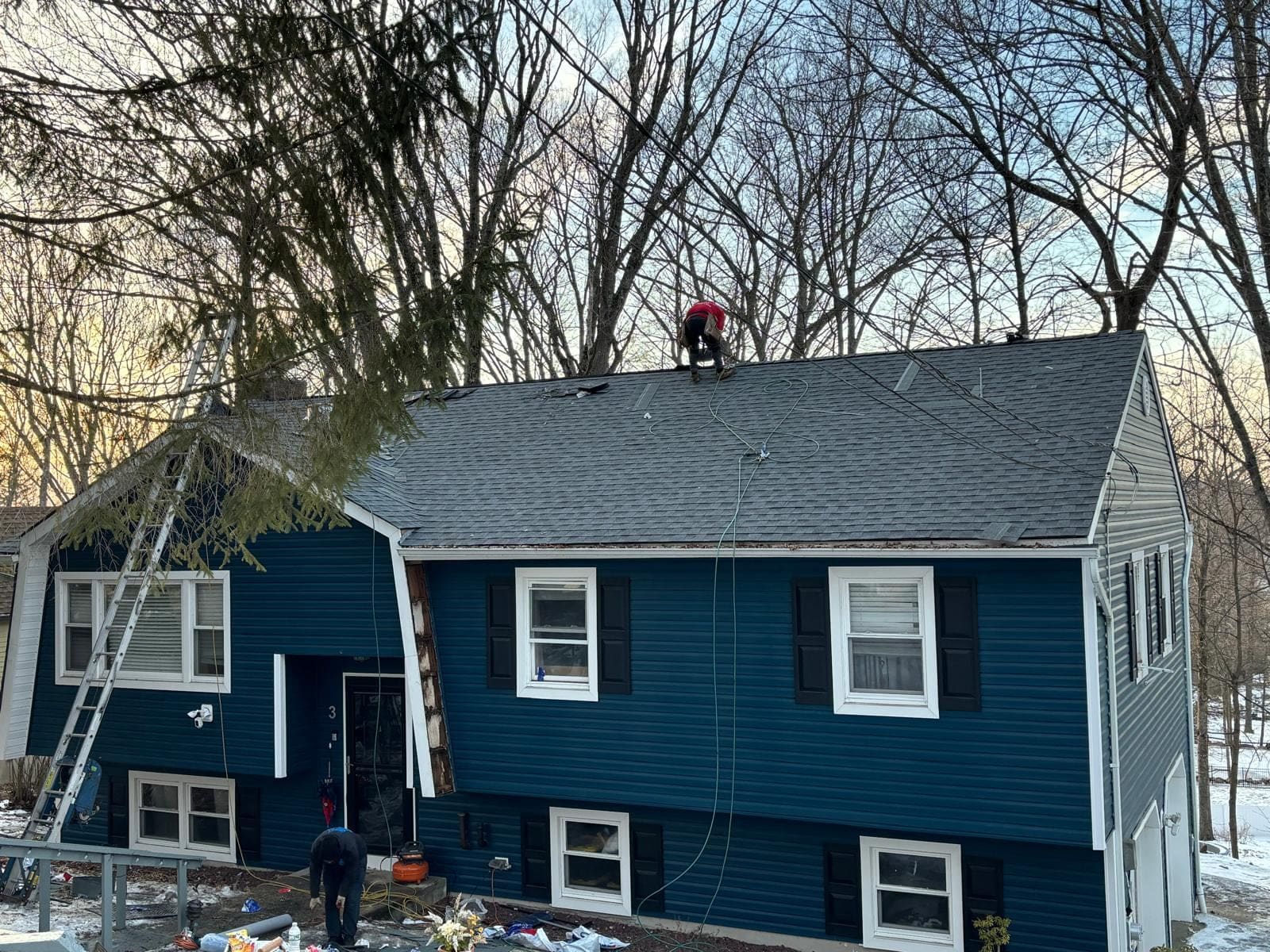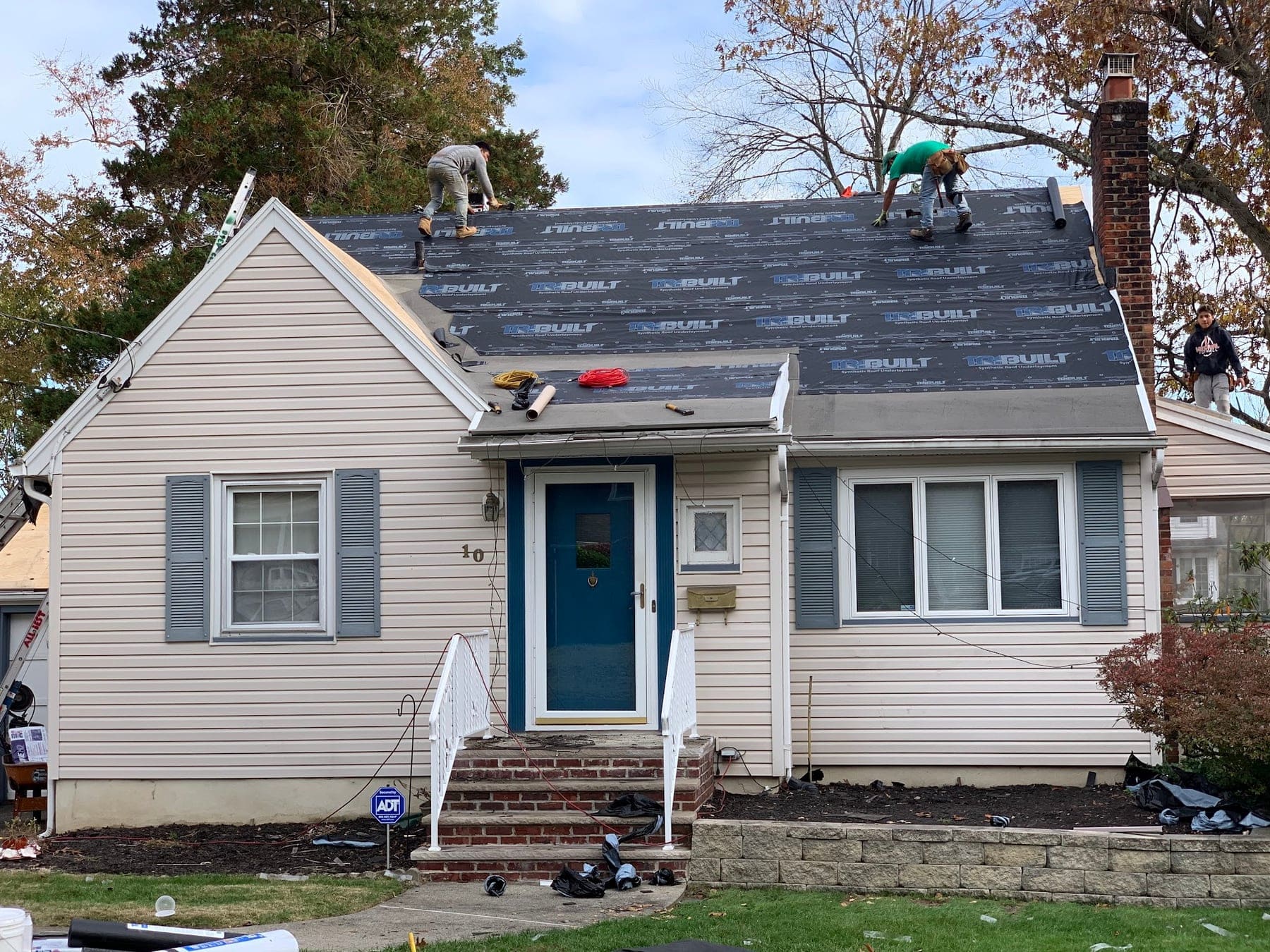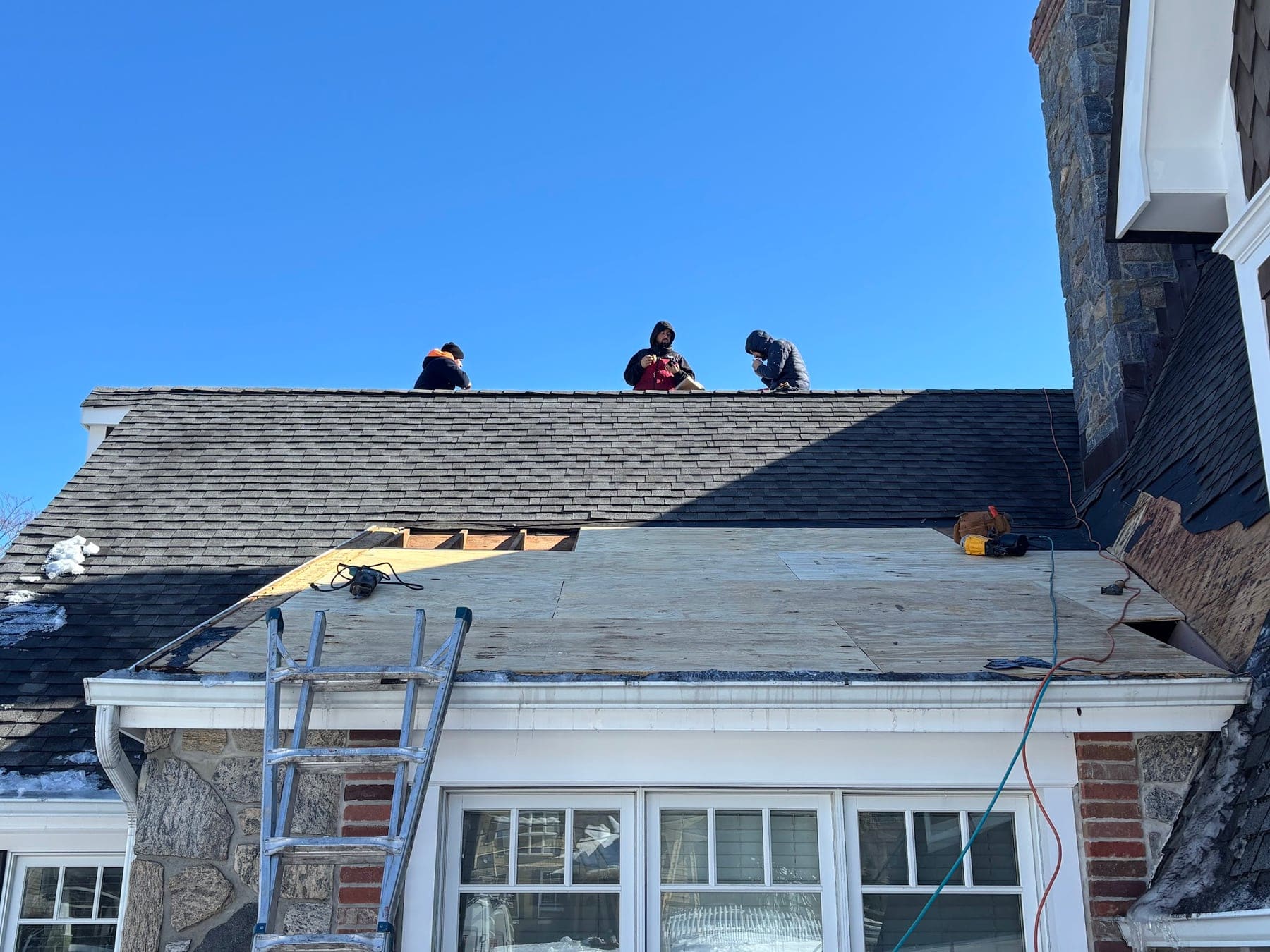
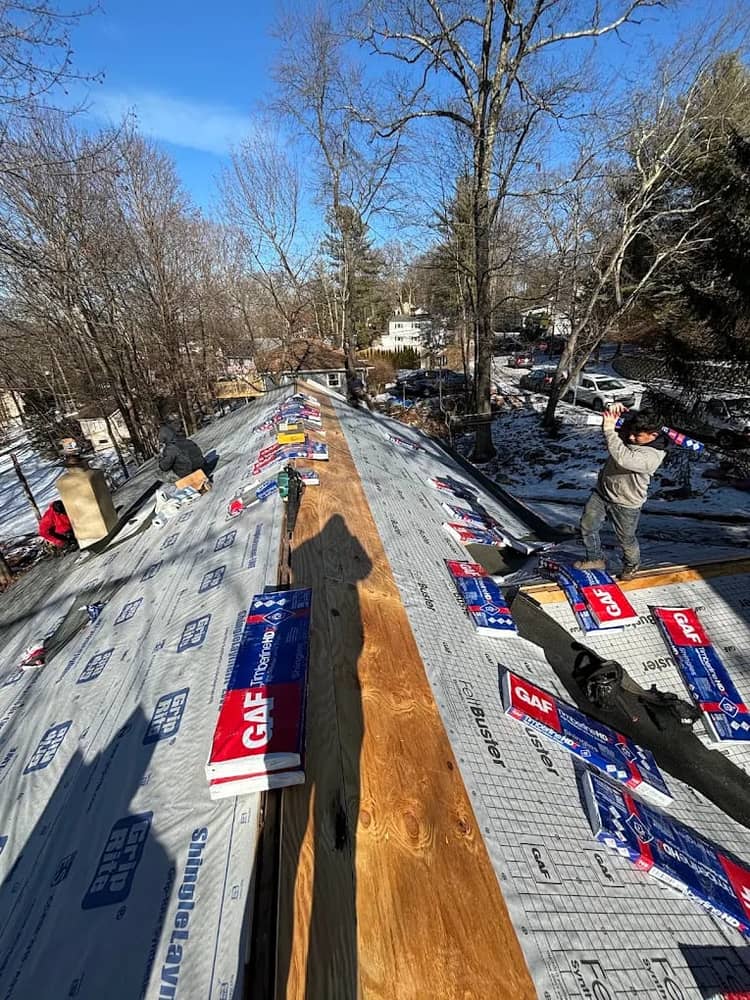
Roof Repair for Ridgefield homes and buildings
On Ridgefield's hillside streets, roof repairs are often about wind. Homes facing west over the Meadowlands take gusts and driving rain on the weather side, which breaks shingle seal strips, lifts ridge caps and pushes water past worn flashing. On the newer two-family and multifamily buildings with low-slope roofs, the usual leak points are parapet terminations, drains and rooftop penetrations.
Down in the borough's commercial and industrial areas, the roofs are larger and flatter: warehouse and retail buildings with single-ply or built-up membranes, roof drains, skylights or smoke hatches and rooftop units. Repairs there mean finding the failed seam, flashing or drain on a big surface and fixing it properly, not spreading coating over a wide area.
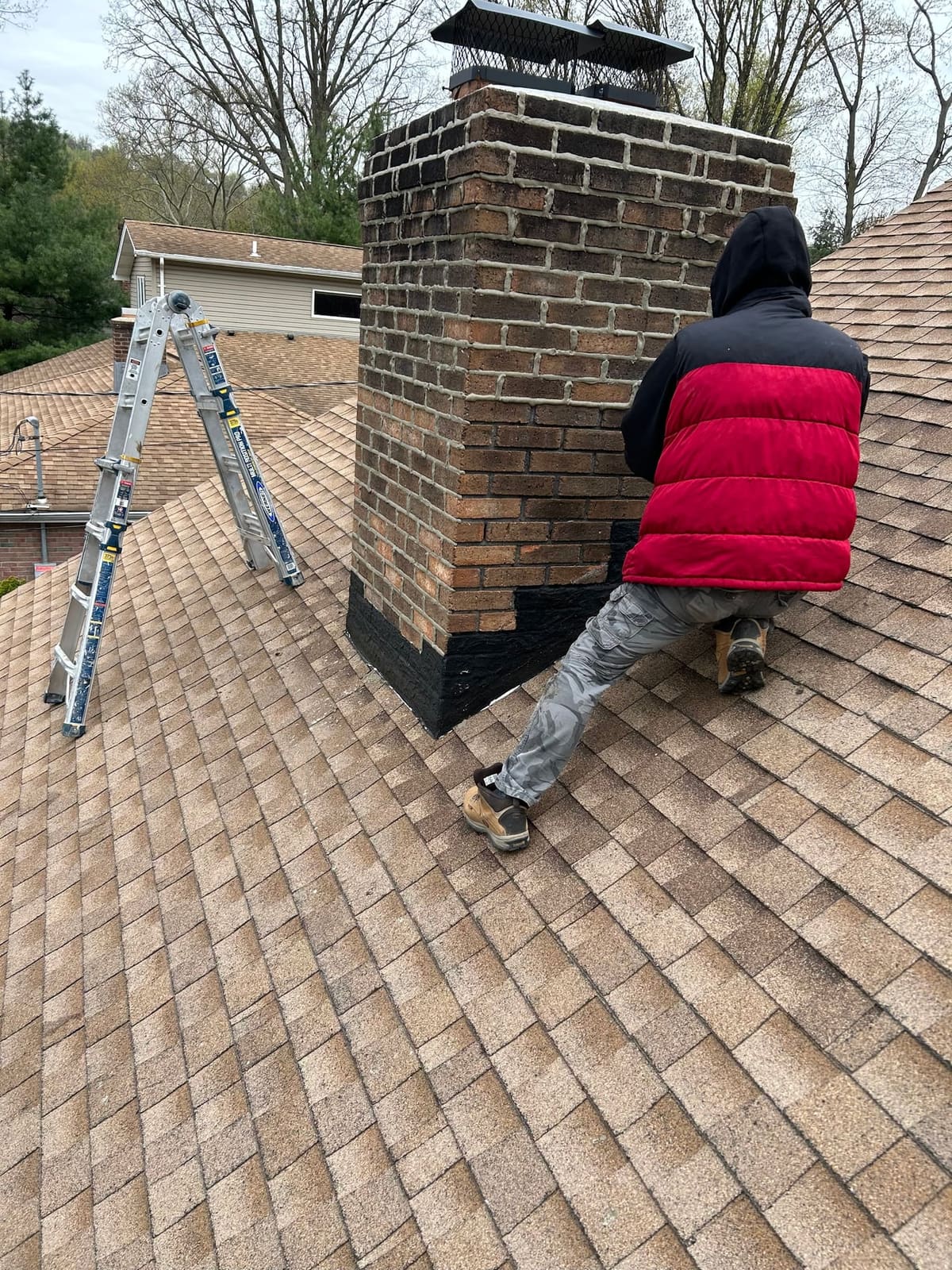
We work on both residential and commercial roofs. When a leak traces back to a chimney or a parapet wall, we handle the masonry too.
Ridgefield housing
Ridgefield's residential areas are a mix of older frame and brick single-family homes, two-family houses, and newer two-family and multifamily construction, generally on small lots along the slope of the ridge. Older homes typically have pitched asphalt shingle roofs and brick chimneys; many newer buildings have low-slope roofs. The lower parts of the borough near the highways and the Meadowlands include warehouse, industrial and retail buildings with flat roofs.
Weather & exposure
The hillside neighbourhoods face west and southwest over the Meadowlands, an open, flat expanse that lets wind build with little to slow it. Storm winds and driving rain hit west-facing slopes and walls hard. The low-lying industrial areas near the creek and marshland deal with high groundwater and humidity, and their large flat roofs collect water quickly in heavy summer storms.
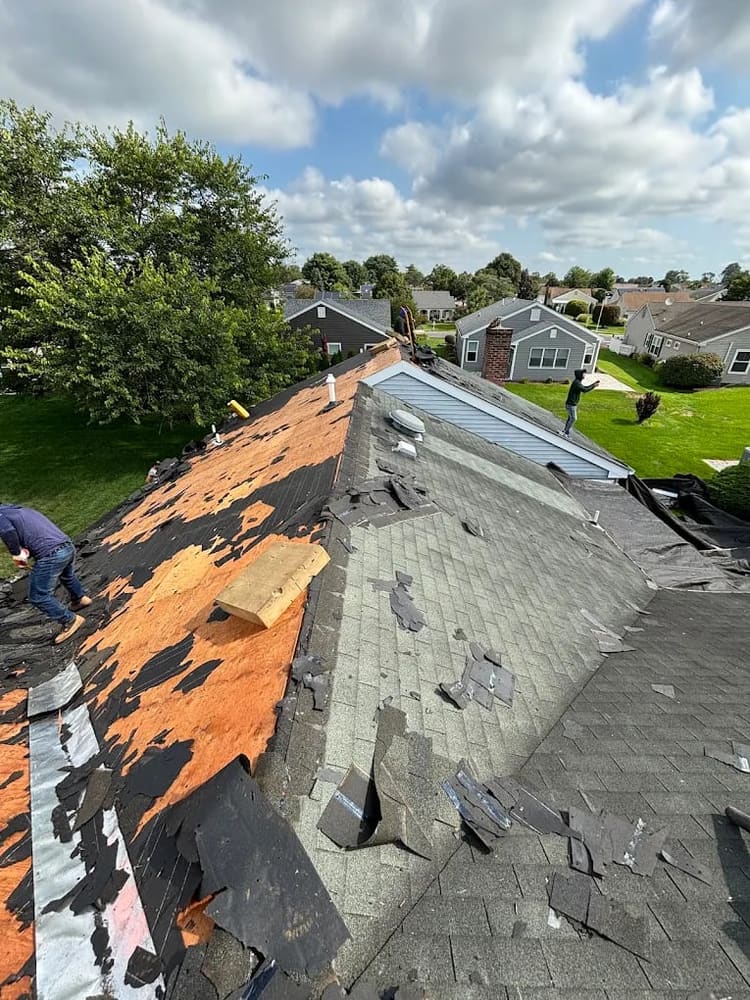
Repair or replace? What we tell Ridgefield homeowners
For Ridgefield homes, wind damage limited to a slope or the ridge is a repair when the shingles are still flexible. If the roof is brittle and loses tabs in every storm, it is reaching the end of its life and we will say so. For commercial roofs, targeted seam, drain and flashing repairs keep a sound membrane in service; widespread ponding and wet insulation point toward replacement.
After a wind storm, we can inspect and document damage with photos and a written report to support an insurance claim. The insurer decides what is covered.