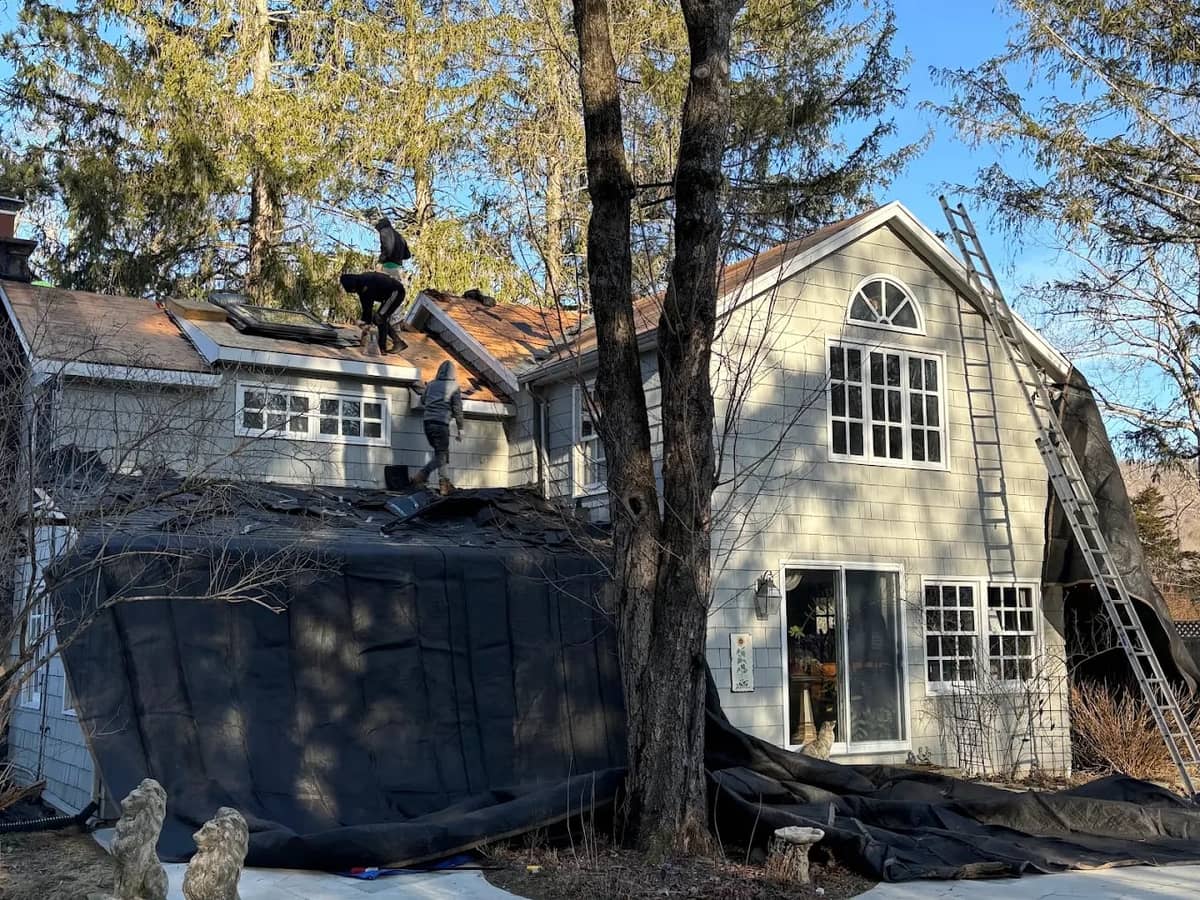
Roof Repair for North Arlington homes and buildings
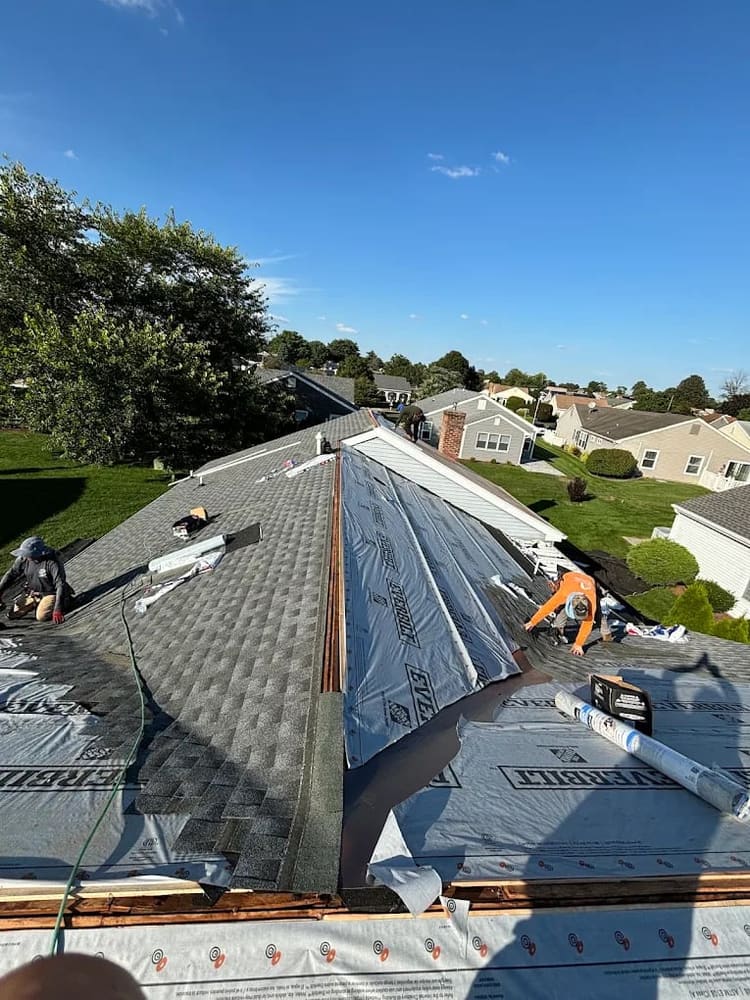
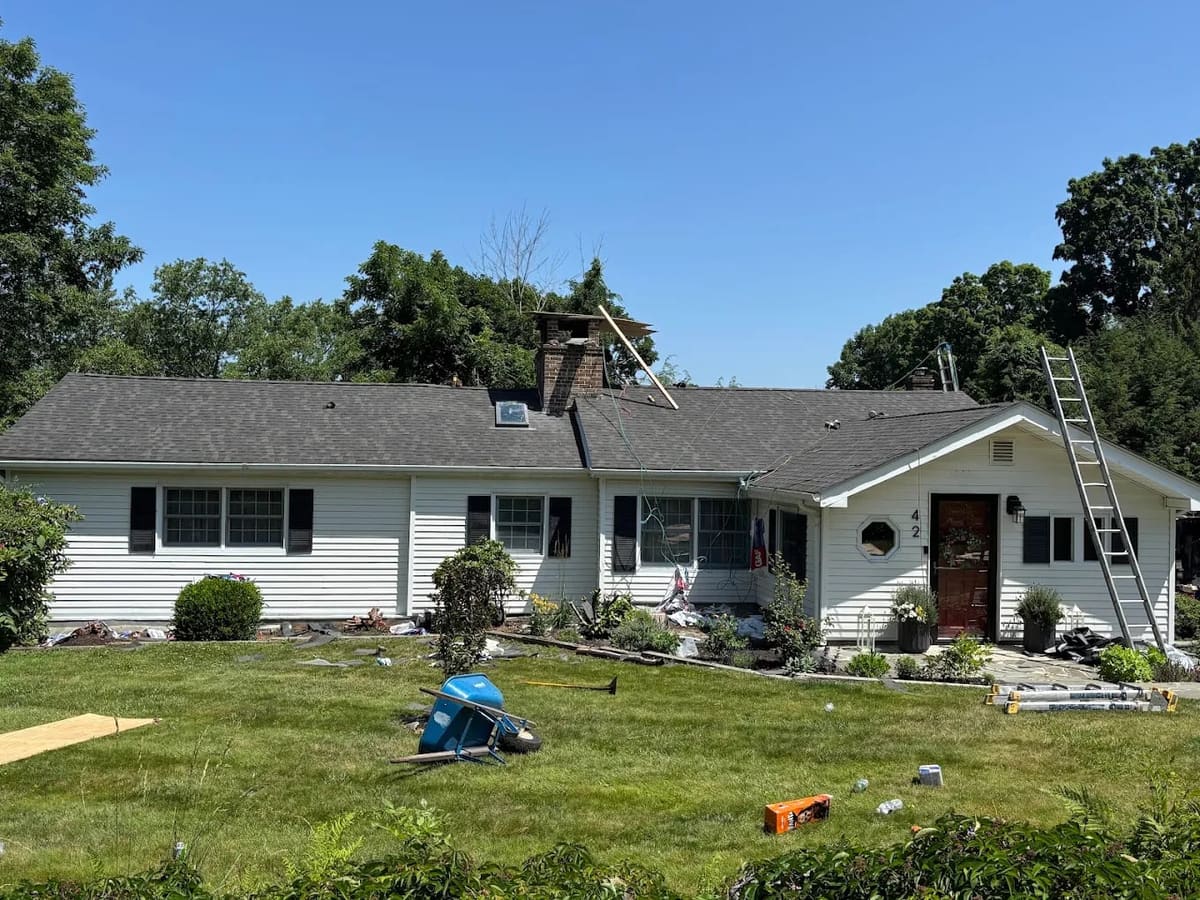
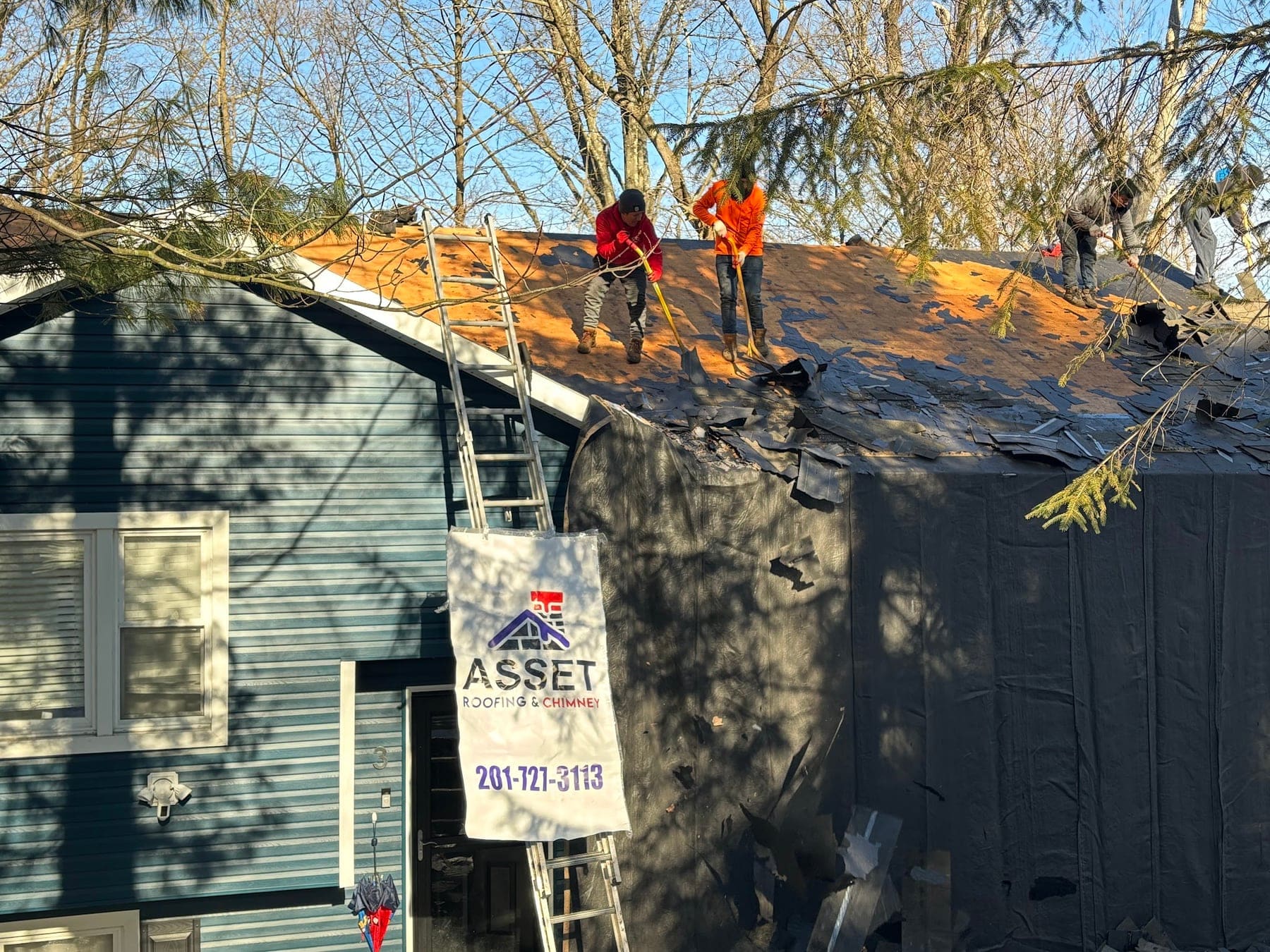
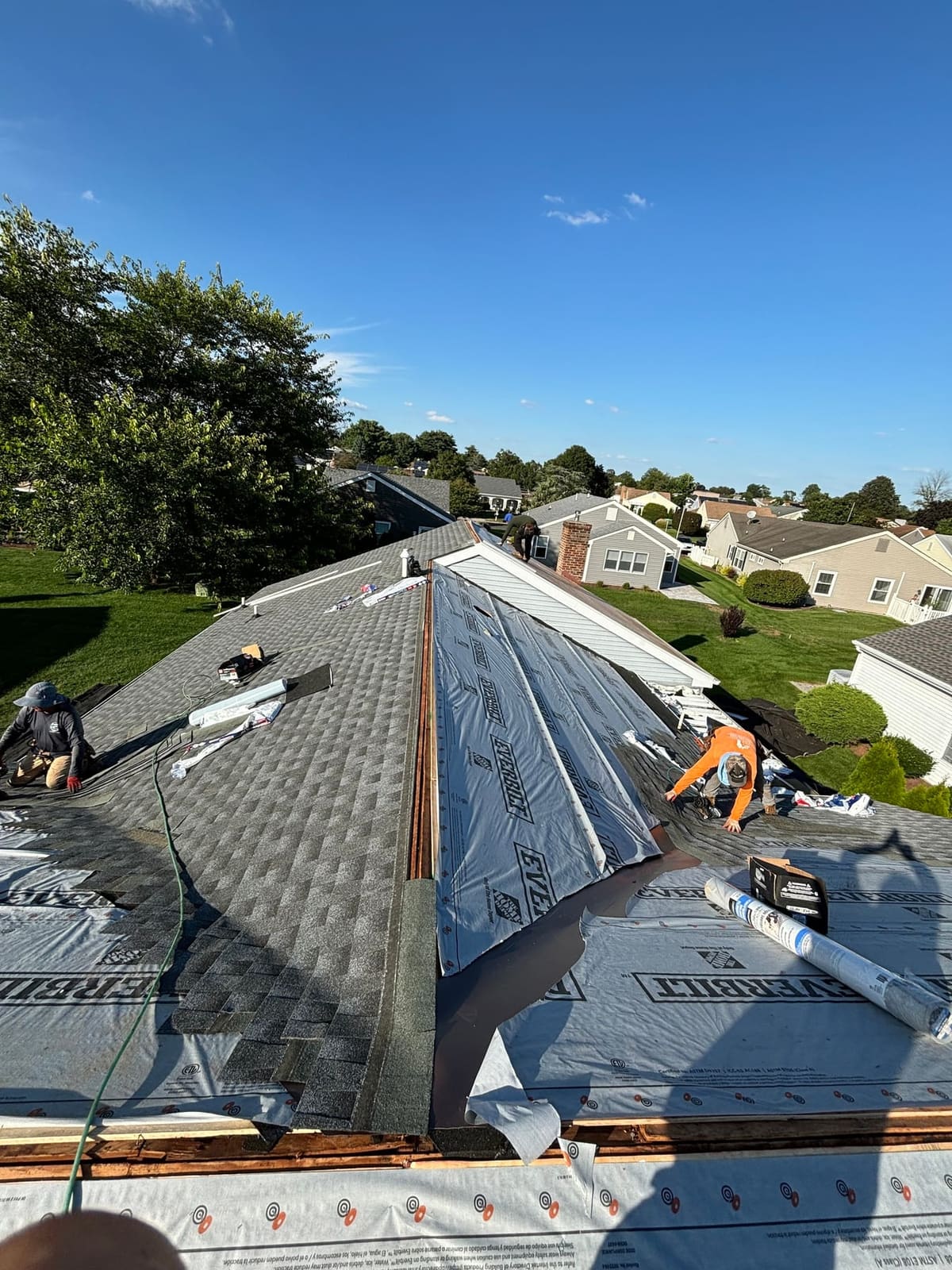
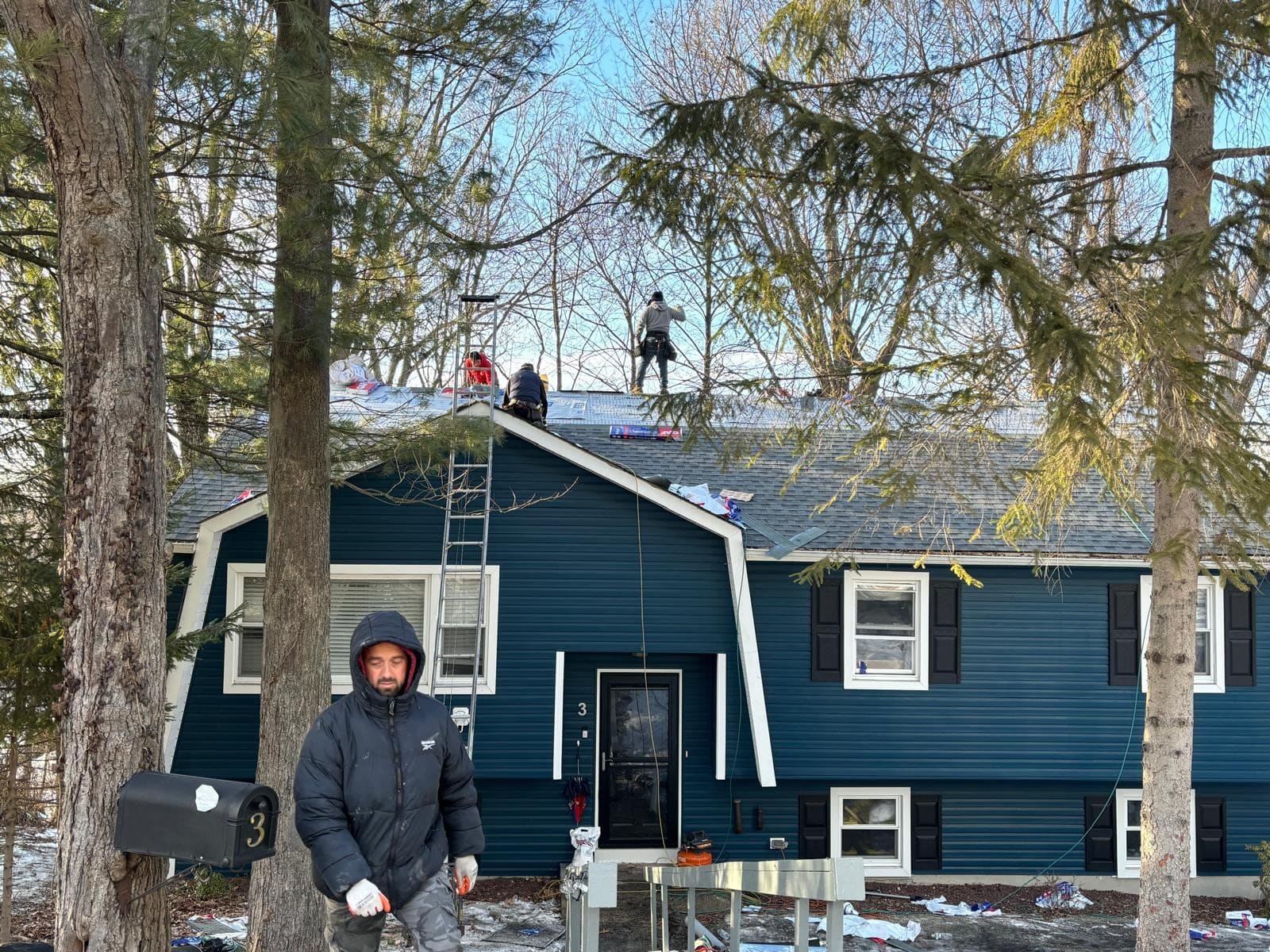
Roof repair in North Arlington often involves two roofs on one house: a pitched shingle roof over the front and main body, and a flat or low-slope roof over the rear, where kitchens, enclosed porches and second-floor rooms were built out to the back of the lot. The low-slope rear section is frequently where the leak is, especially where it meets the pitched roof or the back wall of the main house.
Wind is the second theme. On the ridge, shingle tabs lift and ridge caps loosen in storms, and wind-driven rain gets under flashing at sidewalls and chimneys. On brick houses and mixed-use buildings along Ridge Road, parapet walls and their coping are a common source of leaks that look like roof failures from inside.
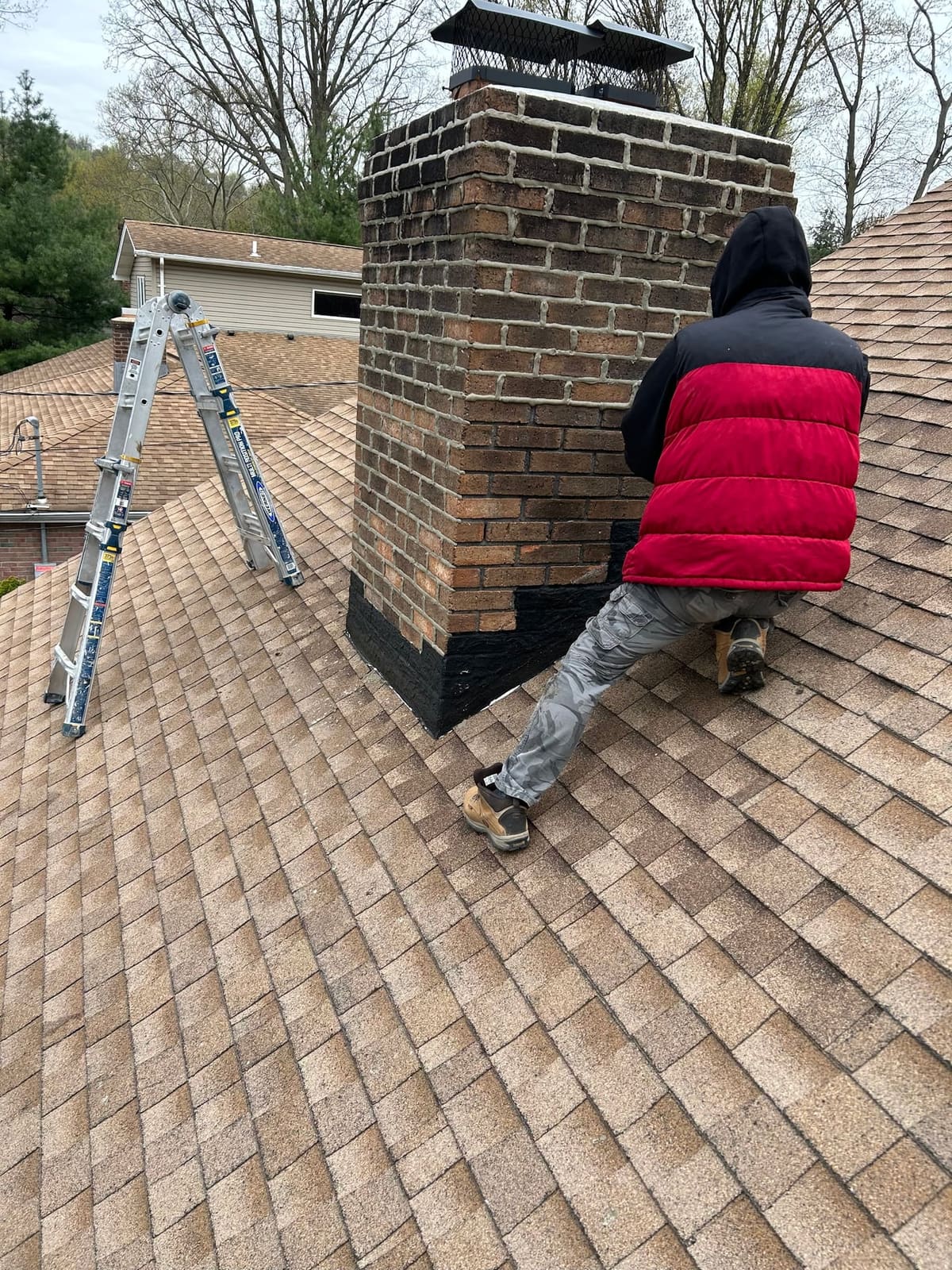
We check the masonry along with the roofing on every inspection, because on a brick building the wall, the parapet and the chimney are often as likely a source of water as the roof membrane itself.
North Arlington housing
North Arlington is densely built with single-family and two-family homes on narrow lots, much of it dating from the 1920s through the 1950s. Houses are a mix of brick and frame, many with pitched asphalt shingle roofs over the main house and low-slope roofs over rear sections, porches and some two-families. Mixed-use buildings with storefronts below and apartments above line Ridge Road, along with some small apartment buildings.
Weather & exposure
The borough's residential core sits on a ridge between the Passaic River valley and the open Meadowlands, so houses on the higher streets catch wind from both directions, and nor'easters drive rain hard against east-facing walls and chimneys. The large open cemetery grounds also leave nearby streets with less shelter than a solid grid of houses would. Freeze-thaw cycles work on the many old brick chimneys, parapets and brick facades.
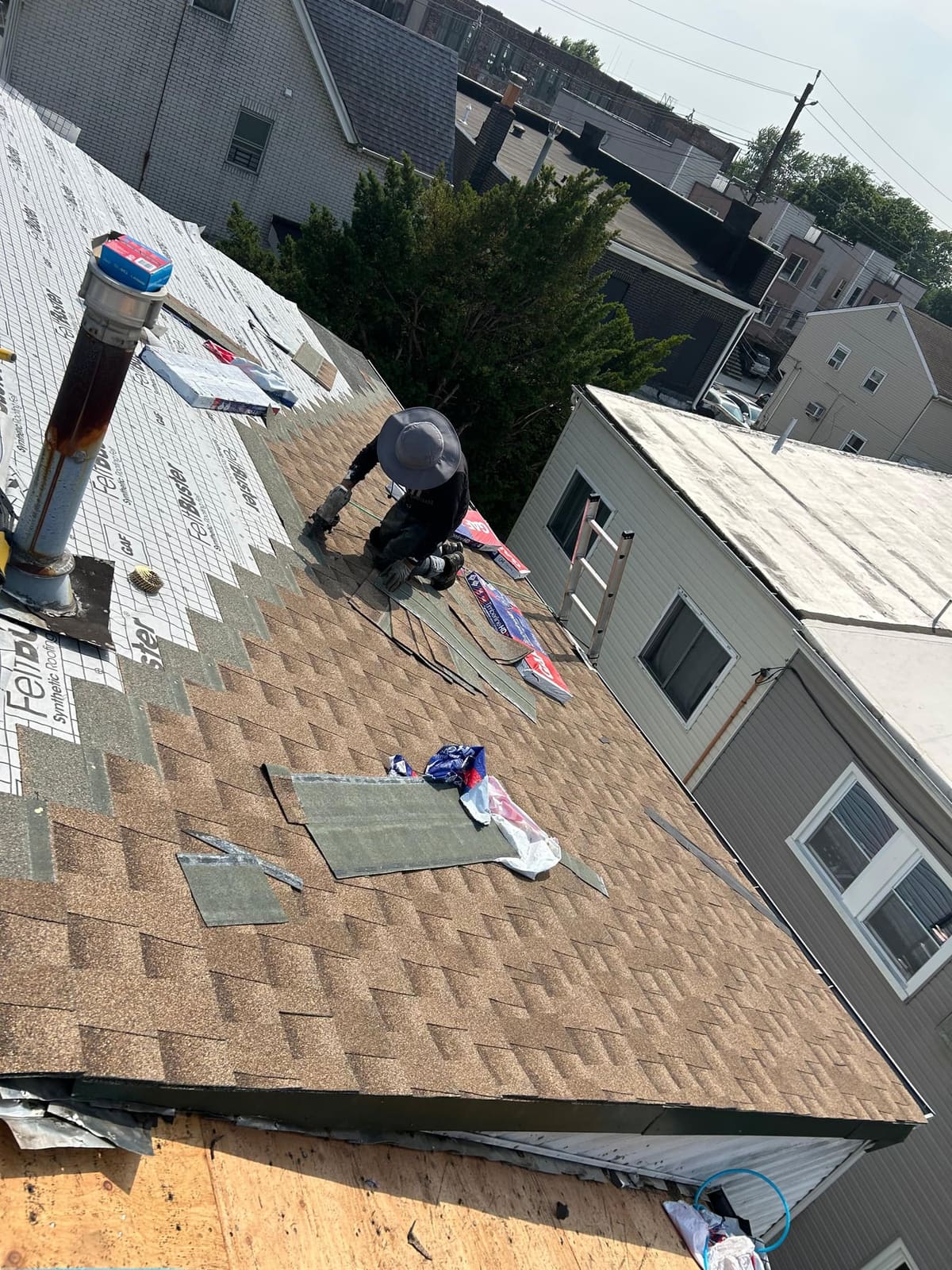
Repair or replace? What we tell North Arlington homeowners
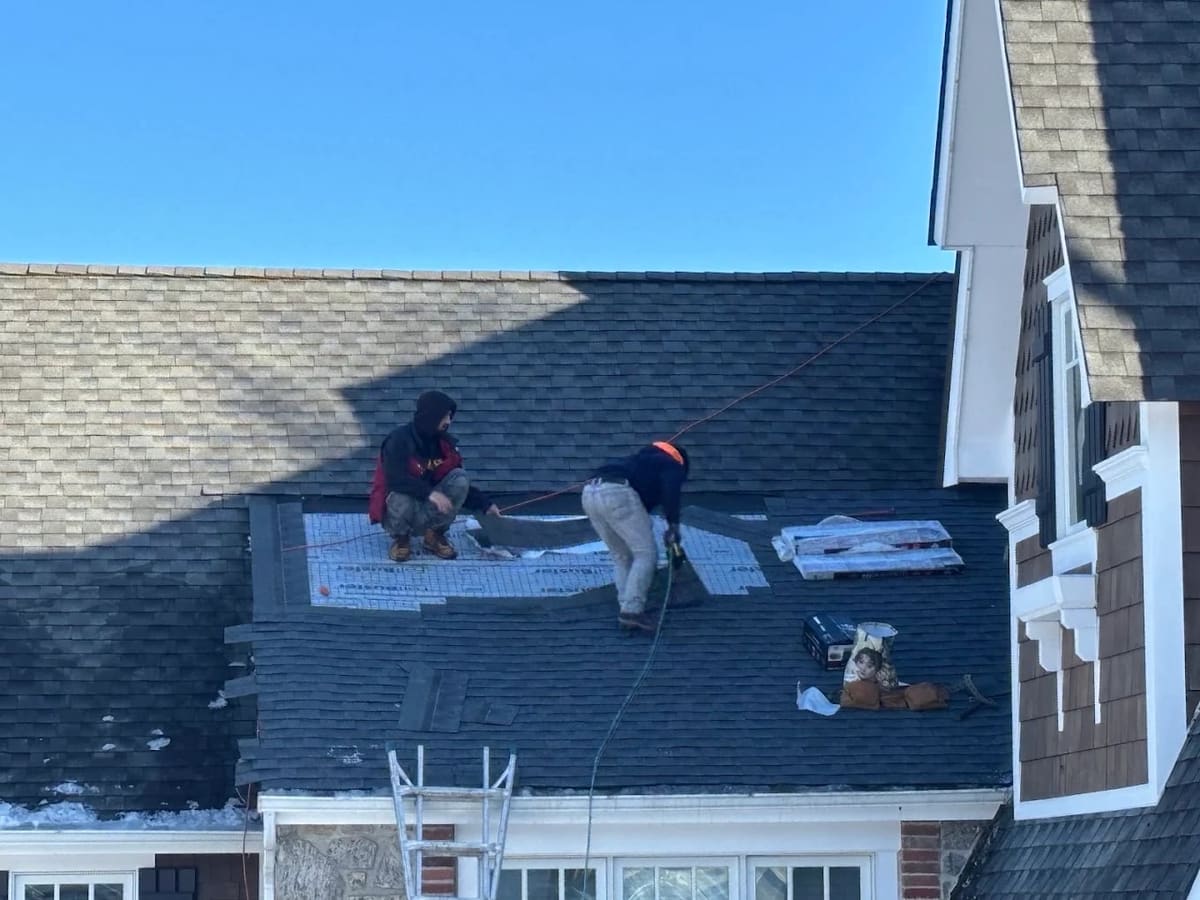
If the leak is at a rear low-slope section or its joint with the main house, a targeted repair or replacement of just that section is often the most sensible choice. If the main shingle roof loses tabs every storm and is brittle throughout, repairs will not keep up, and we will say so. On brick buildings, we tell you when the masonry, not the roof, is the problem.
After wind damage, we photograph and document it for an insurance claim if you choose to file one. Estimates are free.