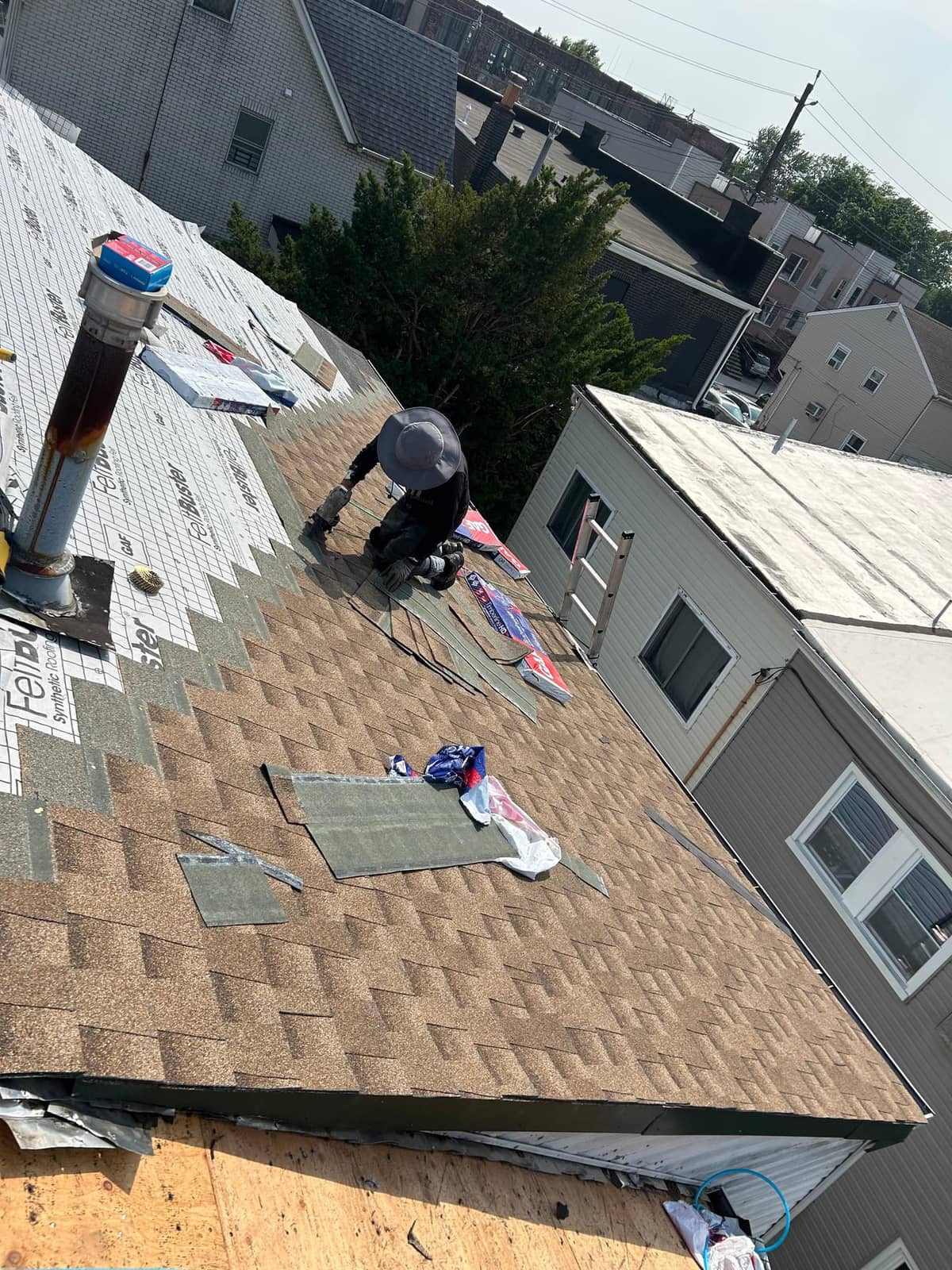
Roof Repair for Park Ridge homes and buildings
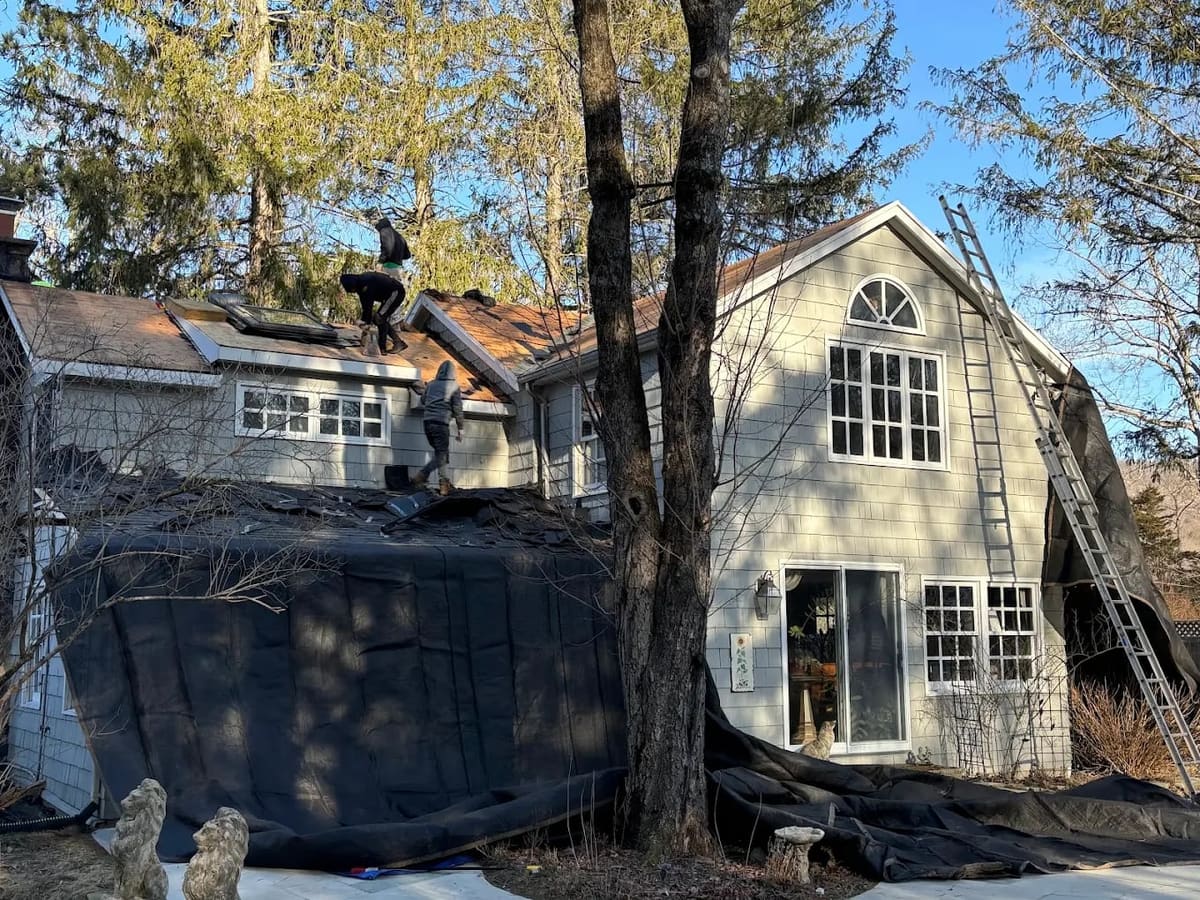
Most roof repair calls in Park Ridge involve tree cover and winter. Leaves and pine needles pack gutters and valleys, branches crack or puncture shingles in wind storms, and on colder winter days, snow that melts higher on the roof refreezes at the eaves and backs water under the shingles. On older homes near the center of town, worn flashing at dormers and chimneys adds to the list.
Split-levels and ranches, common in the post-war parts of the borough, have their own weak spots. Low-pitched roof sections, the junction where the upper level of a split meets the lower roof, and long eaves over unheated overhangs are where ice dams and leaks tend to start. Finding the real entry point matters more than patching the visible stain.
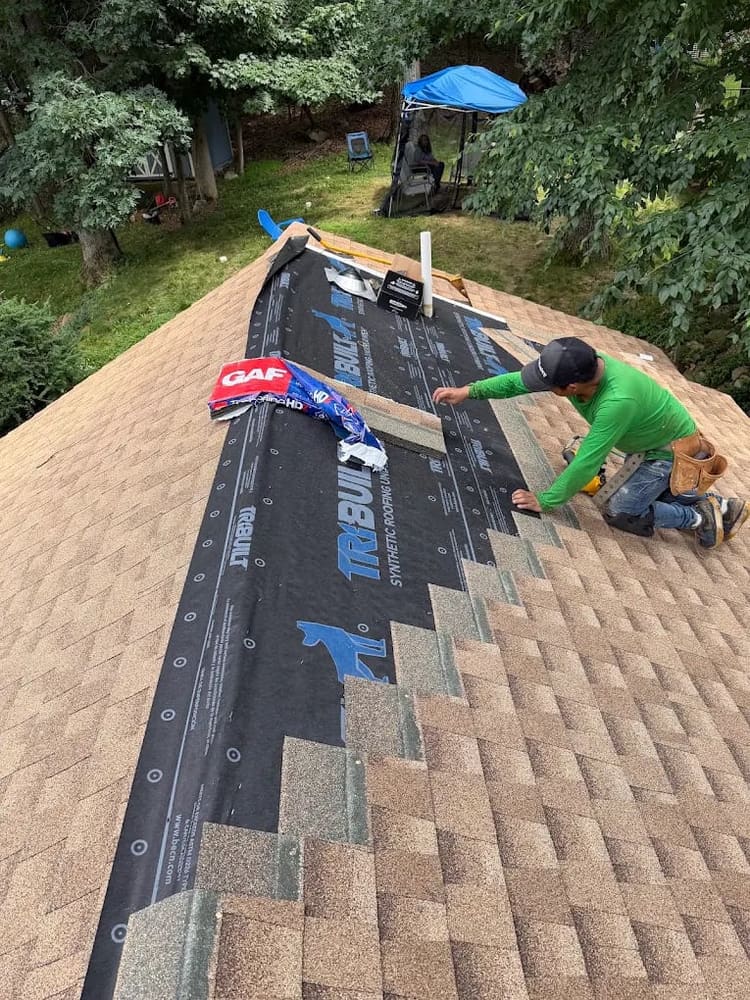
We repair shingle roofs, flashing, valleys, skylights and the flat-roof sections that sometimes cover porches and additions. If the cause turns out to be the chimney, we handle the masonry and flashing as well.
Park Ridge housing
Park Ridge is primarily single-family. Homes near the downtown and rail line include older frame houses from the late 1800s and early 1900s, some with porches, dormers and steep gables. Much of the rest of the borough was built out after World War II with colonials, Cape Cods, ranches and split-levels, followed by later infill and some townhouse construction. Commercial buildings downtown and along the main roads have flat or low-slope roofs.
Weather & exposure
Park Ridge sits in the wooded Pascack Valley, and mature trees are the dominant exposure: falling limbs in storms, leaves and needles in gutters and valleys, and shaded north slopes that stay damp and grow moss. Being farther north and inland than the Hudson-side boroughs, the area tends to see somewhat colder winters and more snow, which adds to ice-dam risk on low-slope sections and freeze-thaw wear on chimney crowns.
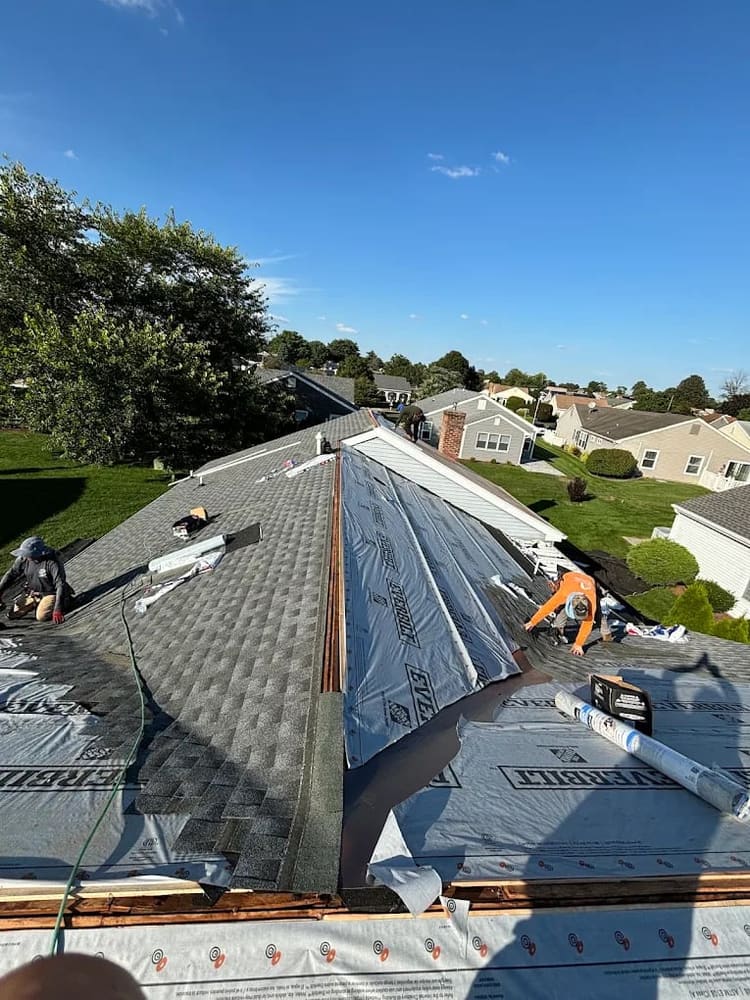
Repair or replace? What we tell Park Ridge homeowners
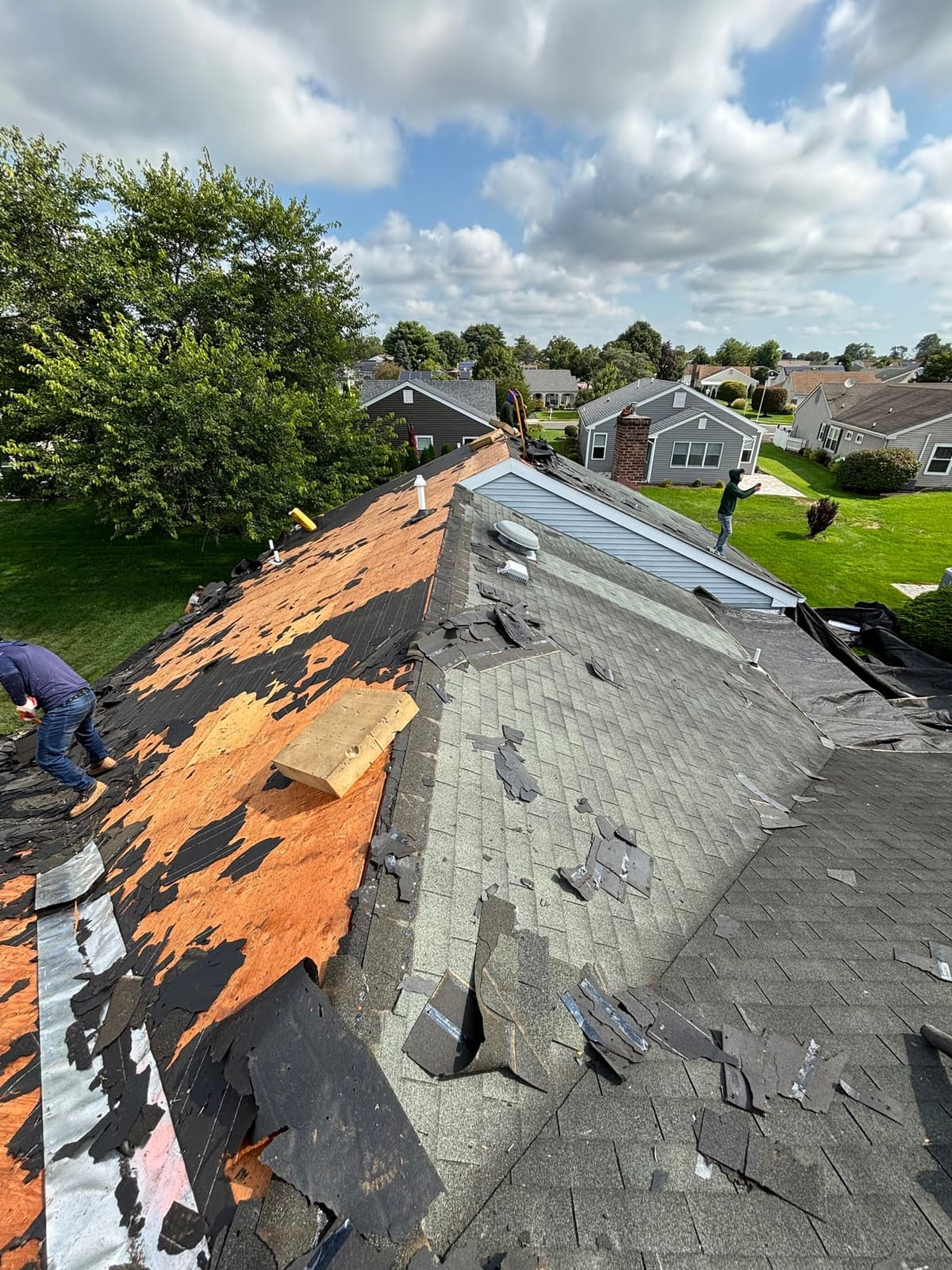
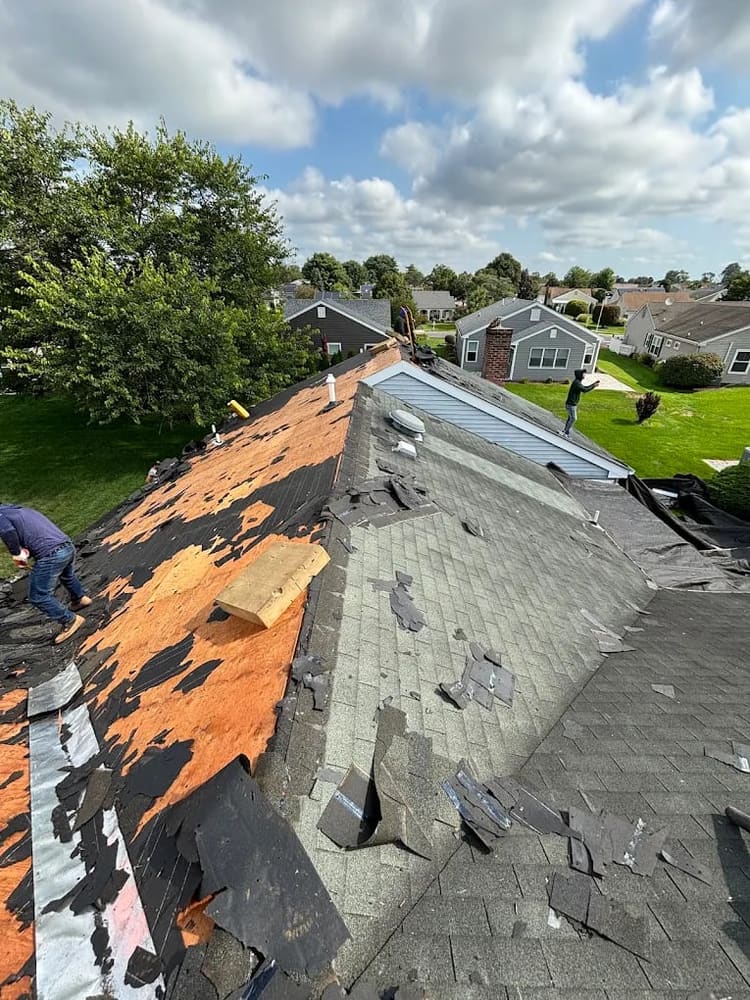
If a Park Ridge roof is leaking at one spot and the rest of the shingles are still flexible, repair is usually the right call: replace the damaged shingles, re-flash the wall or chimney, or rebuild the valley. If the shingles are brittle and losing granules across the roof, or the roof leaks in several places each winter, we will tell you a replacement is the better investment.
For ice-dam leaks, the repair fixes the symptom. We will also point out what contributes to the problem, such as missing eave protection or poor attic ventilation, so you can decide how to address it.