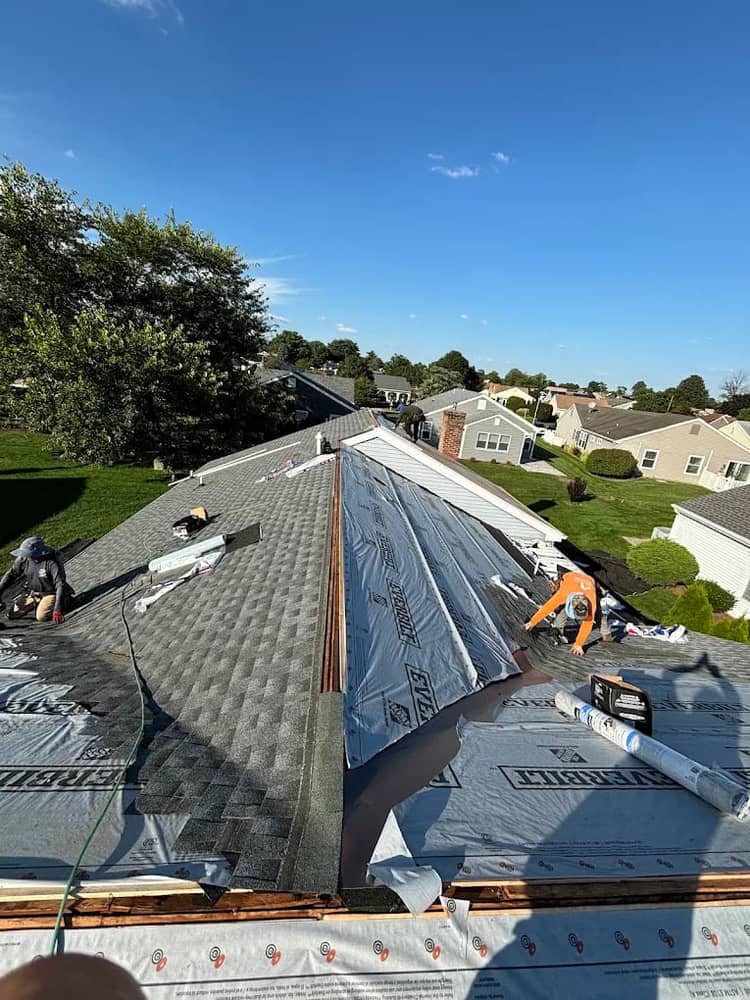
Roof Repair for River Vale homes and buildings
On River Vale's wooded lots, trees drive most roof repairs. Limbs come down in summer storms and winter ice, puncturing shingles and bending flashing. Leaves and pine needles pile into valleys and behind chimneys, holding water against the roof. Shade keeps north and east slopes damp long after rain, and moss and algae creep in under the shingle edges.
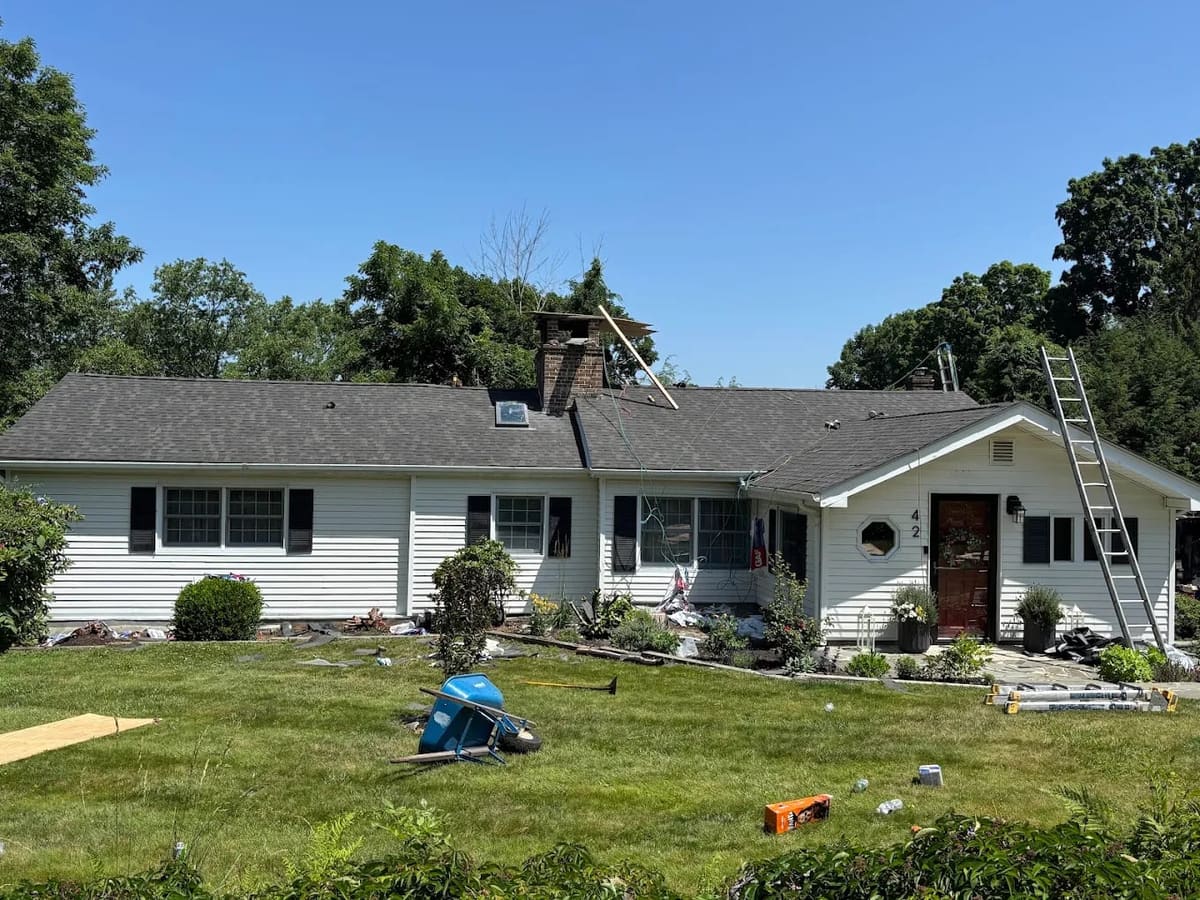
The township's contemporaries and larger homes often have multiple roof planes, clerestories and skylights, and every one of those adds flashing details. Split-levels bring wall-to-roof junctions, and ranches have long eaves where ice can build up in a cold snap.
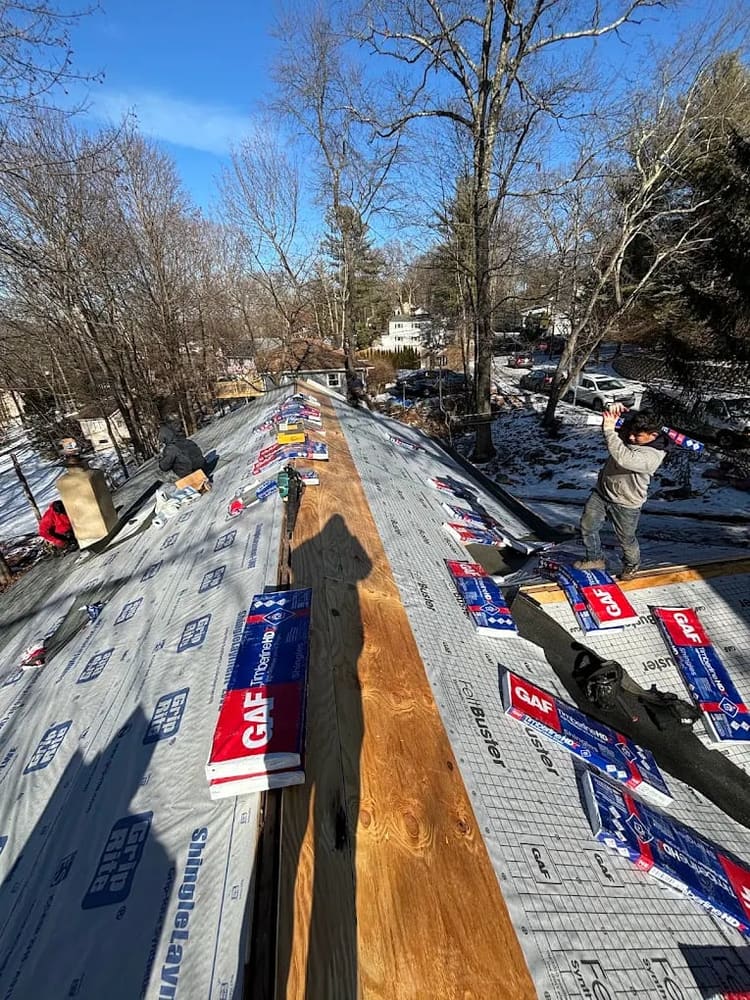
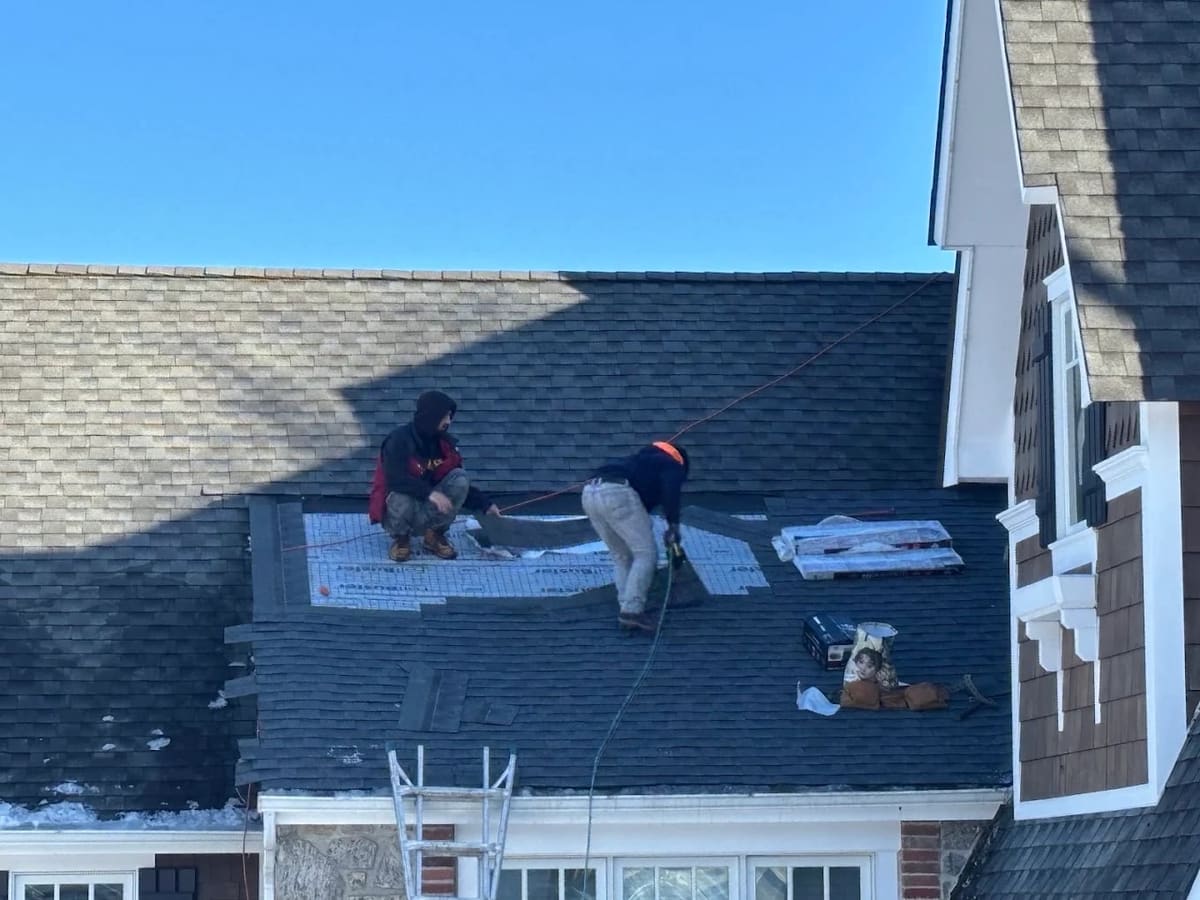
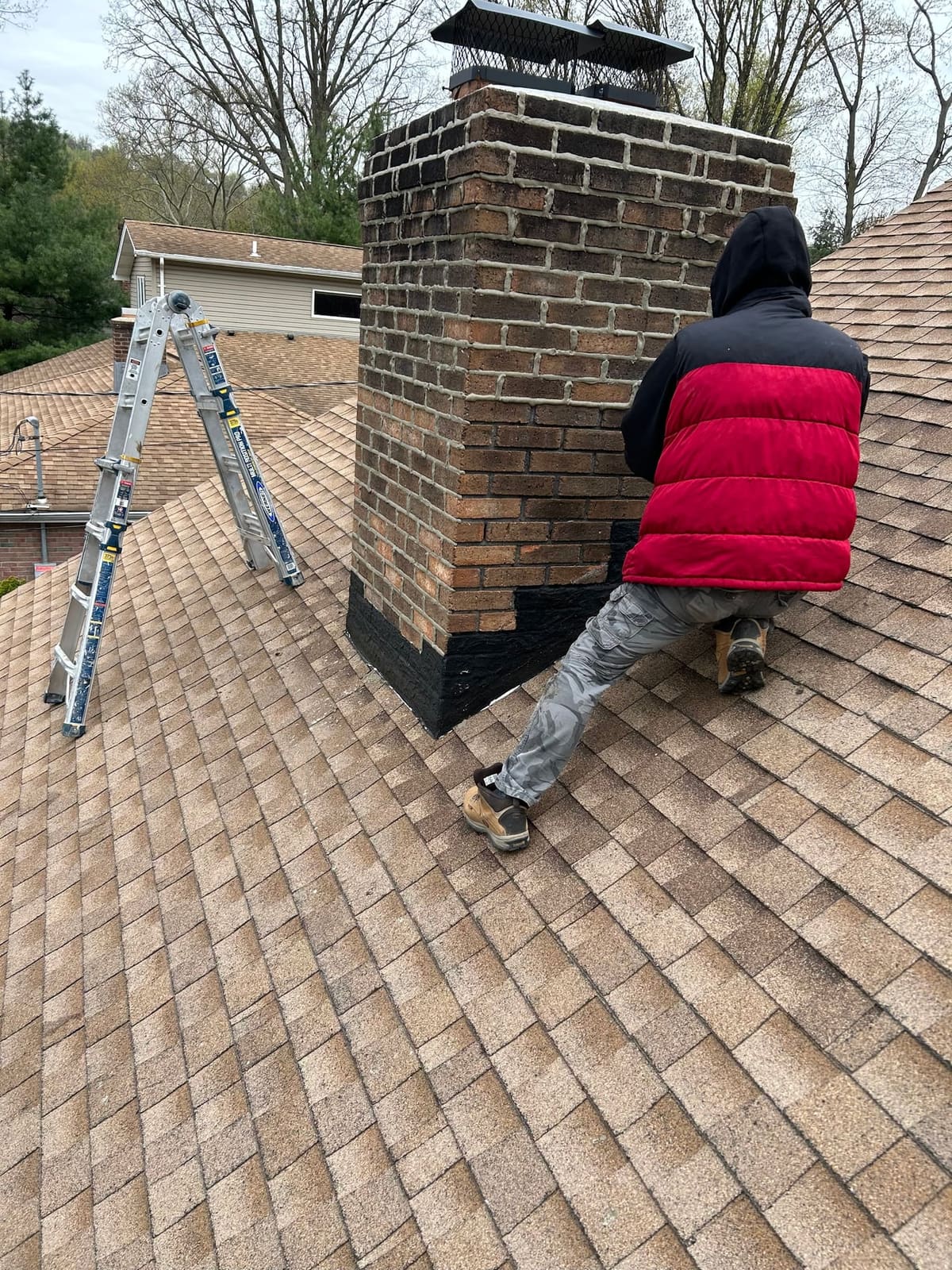
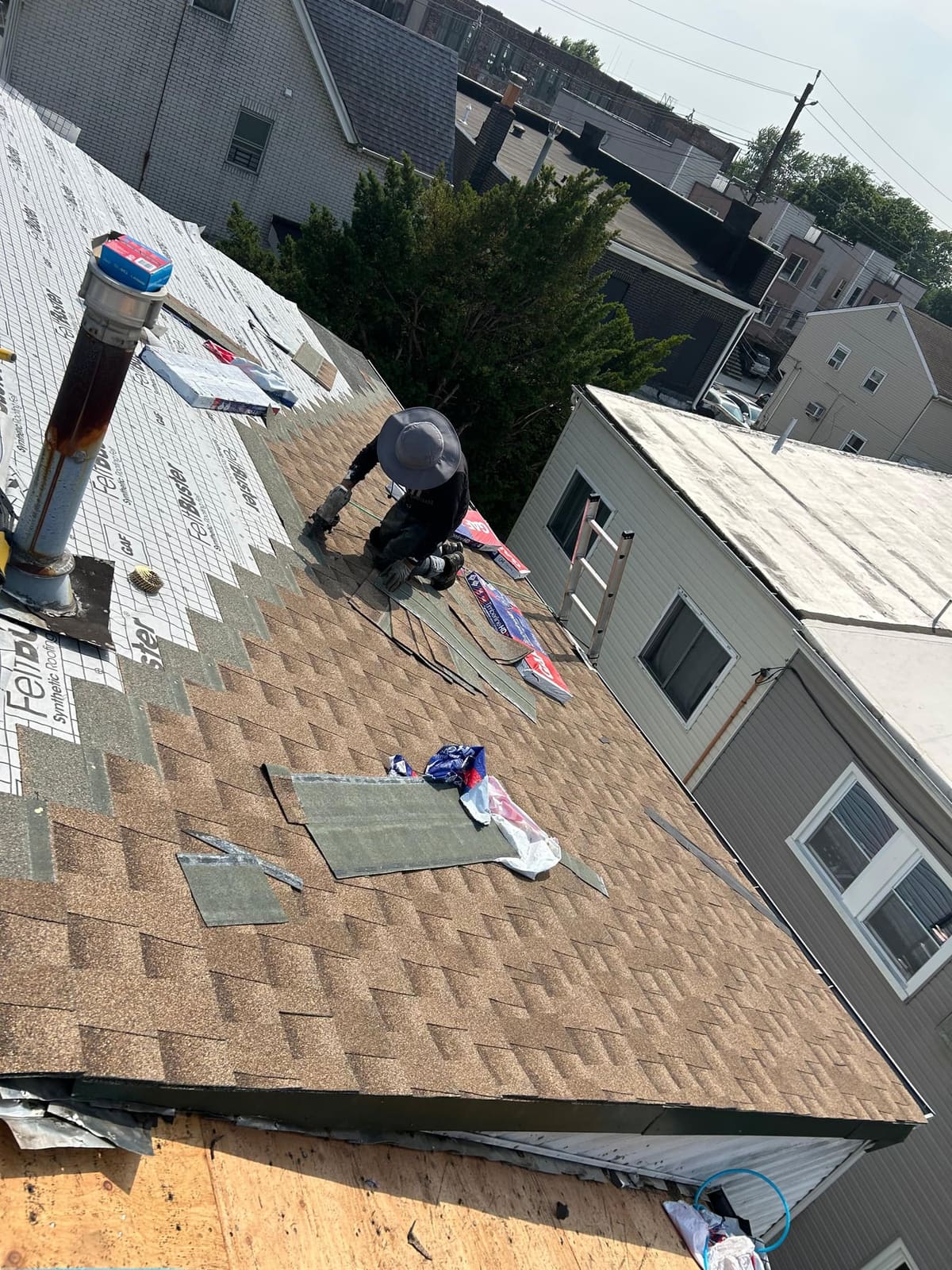
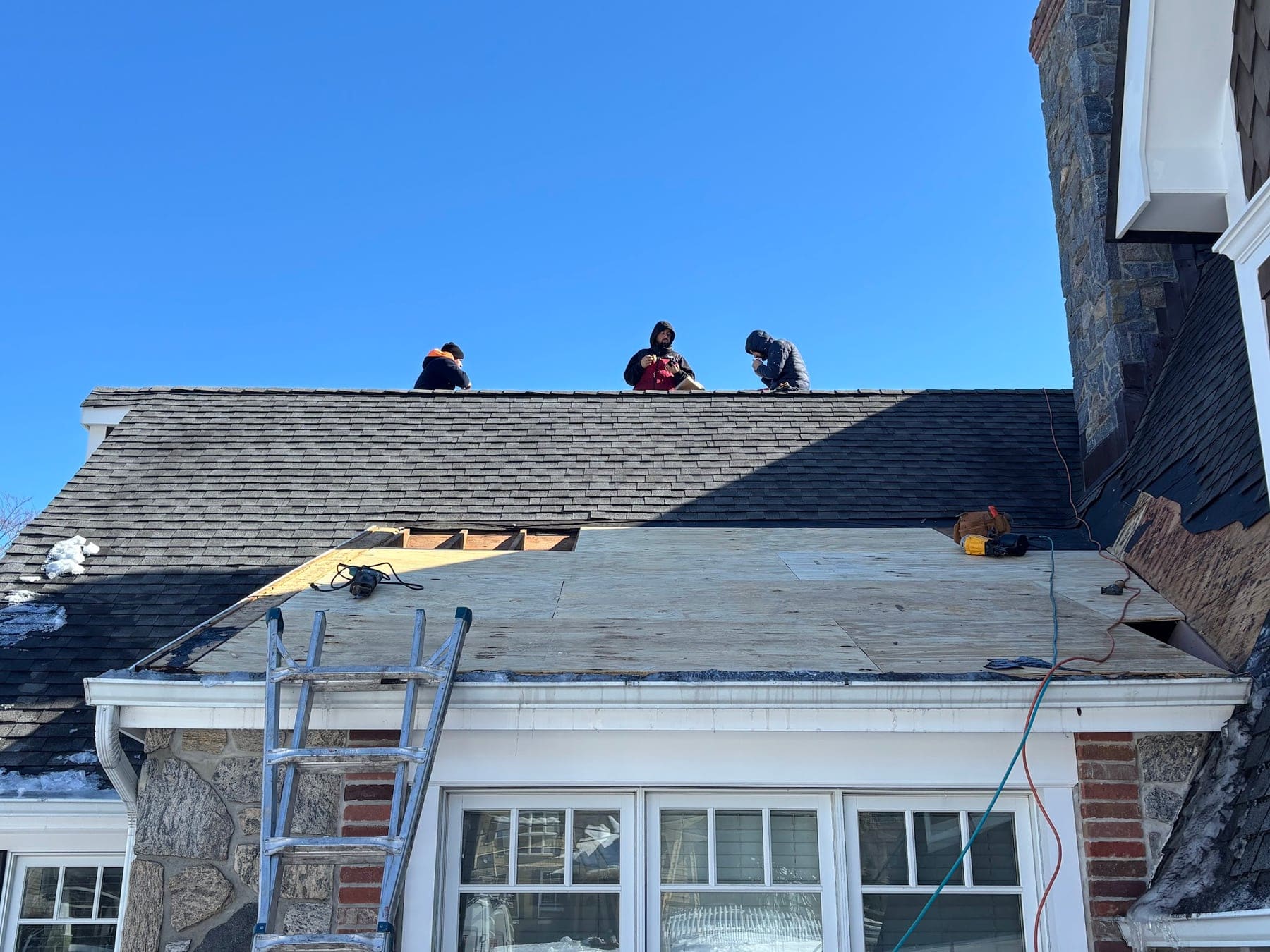
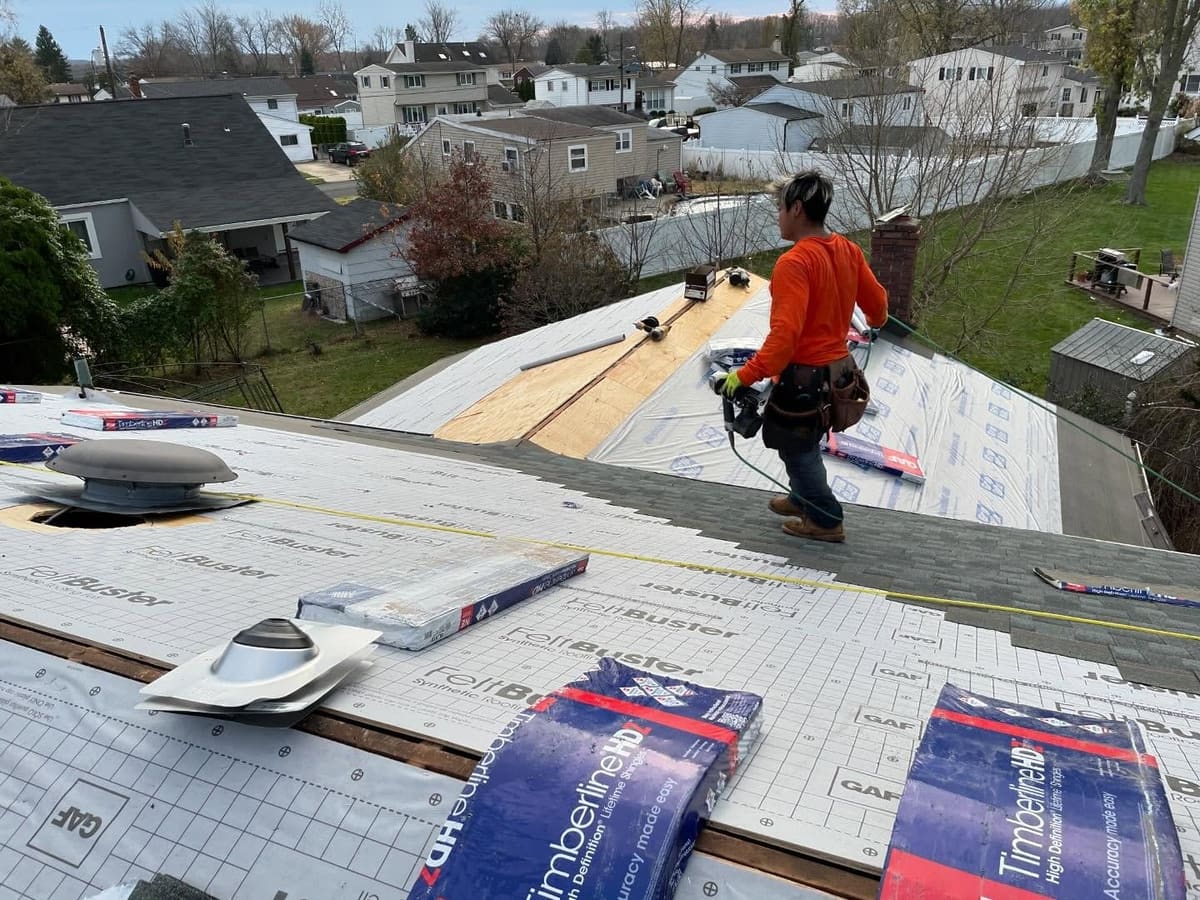
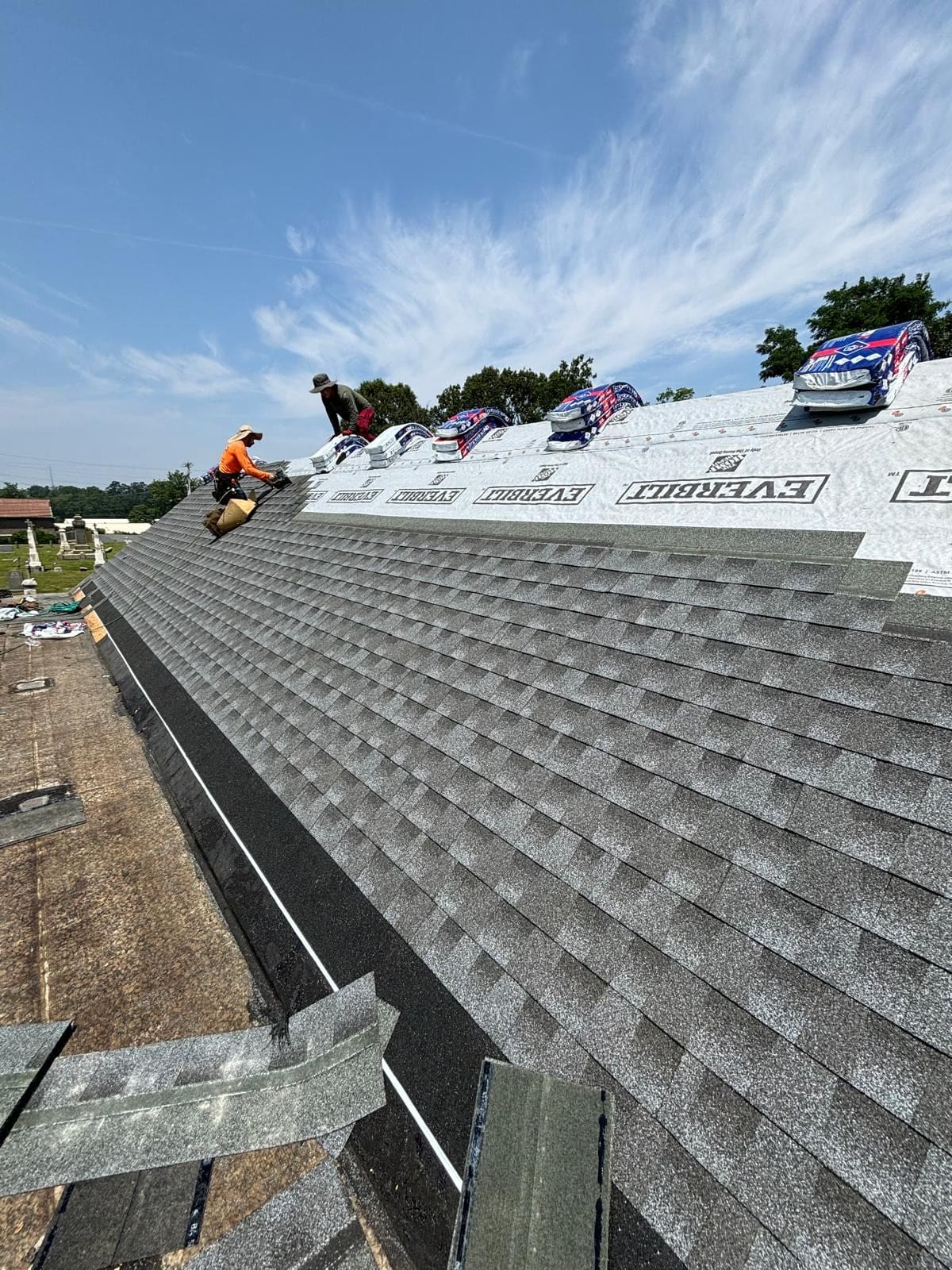
We repair shingles, flashing, valleys and skylights, and we handle the chimney masonry when a leak turns out to come from it. After storms, we can document damage for an insurance claim.
River Vale housing
River Vale's housing is predominantly single-family and largely built from the 1950s onward: split-levels, ranches, colonials and contemporaries, with larger custom homes and townhouse communities added in later decades. Lots tend to be larger and more wooded than in southern Bergen. Most homes have asphalt shingle roofs, many with skylights and multiple roof planes, and brick chimneys serving fireplaces and heating systems.
Weather & exposure
Tall trees close to houses mean heavy leaf and needle loads in gutters and valleys, branch damage in storms and shaded roofs that stay damp and grow moss and algae. Areas near the reservoir and brooks can be more humid. Winters here are typically a bit colder than near the Hudson, with more freeze-thaw cycles and ice-dam potential.
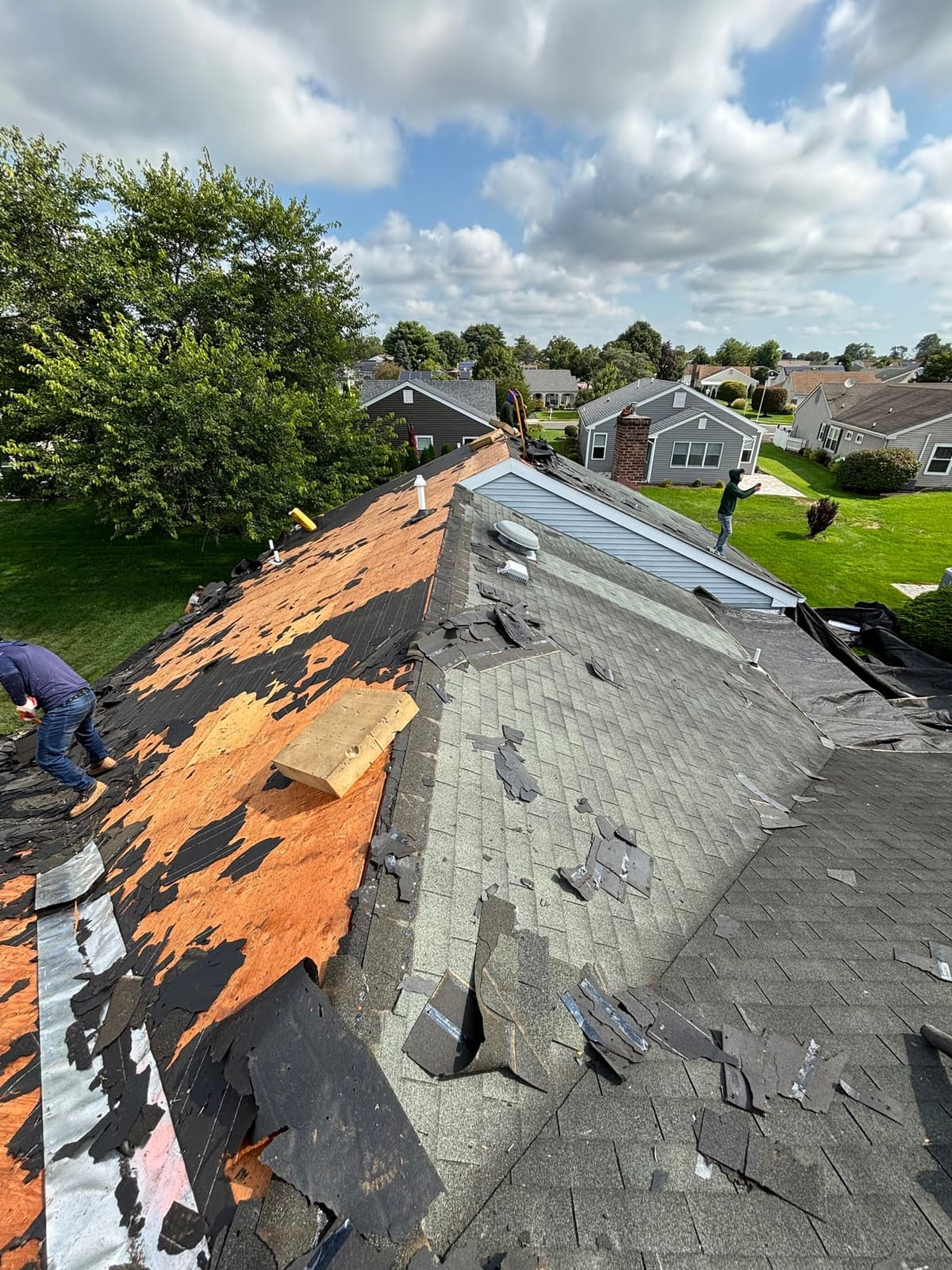
Repair or replace? What we tell River Vale homeowners
If your River Vale roof is leaking at a specific detail and the shingles are still in reasonable shape, a targeted repair is the right choice. Where moss, debris and branch damage have worn the roof down across large areas, a replacement may be more sensible. We will give you an honest assessment with photos.
Keeping valleys and gutters clear and trimming limbs back from the roof goes a long way in a wooded township. We will point out the spots on your roof that collect the most debris.