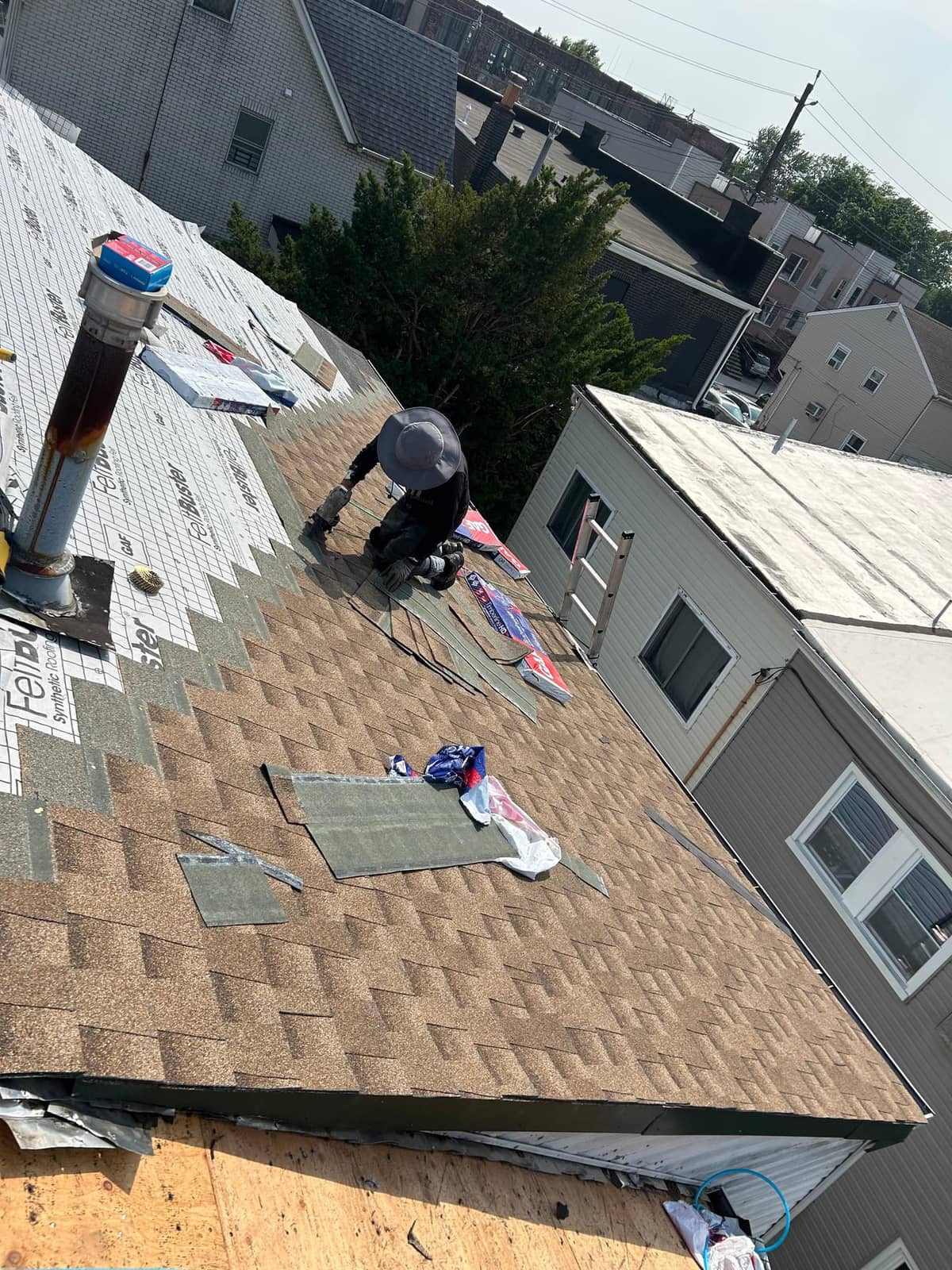
Roof Repair for Fairfield homes and buildings
A large share of roofing work in Fairfield is commercial: flat roofs on warehouses, offices and light industrial buildings. These roofs cover large areas, carry rooftop HVAC units, exhaust fans, skylights and hatches, and leak at seams, drains, penetrations and perimeter edges long before the membrane itself wears out. For owners and facility managers, a leak means wet inventory, damaged ceilings or interrupted operations.
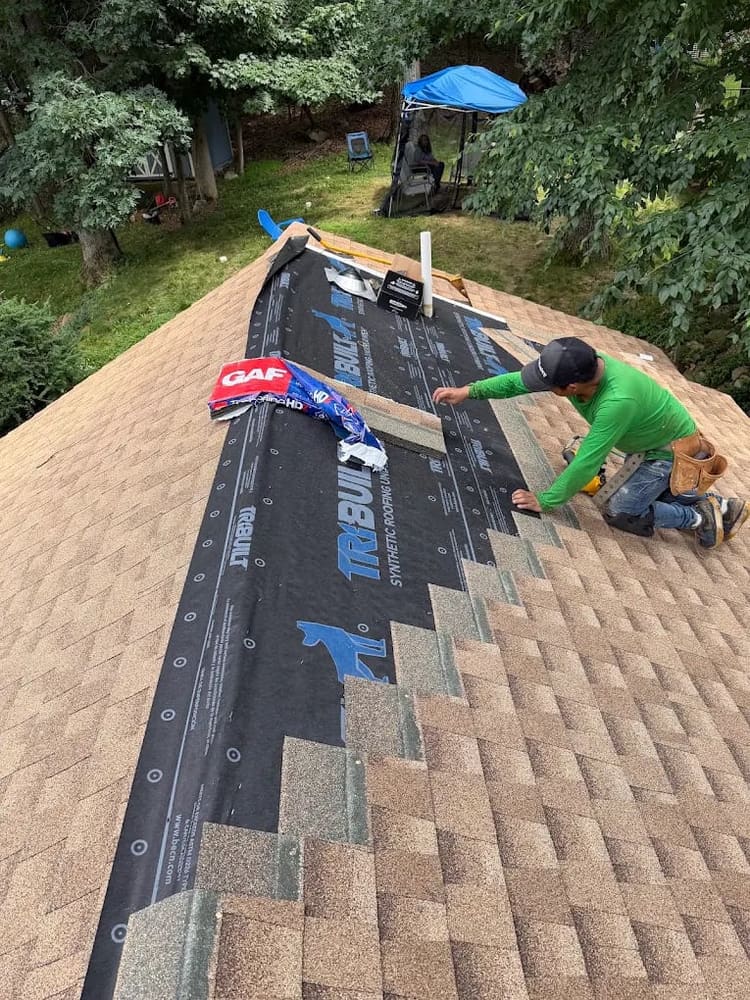
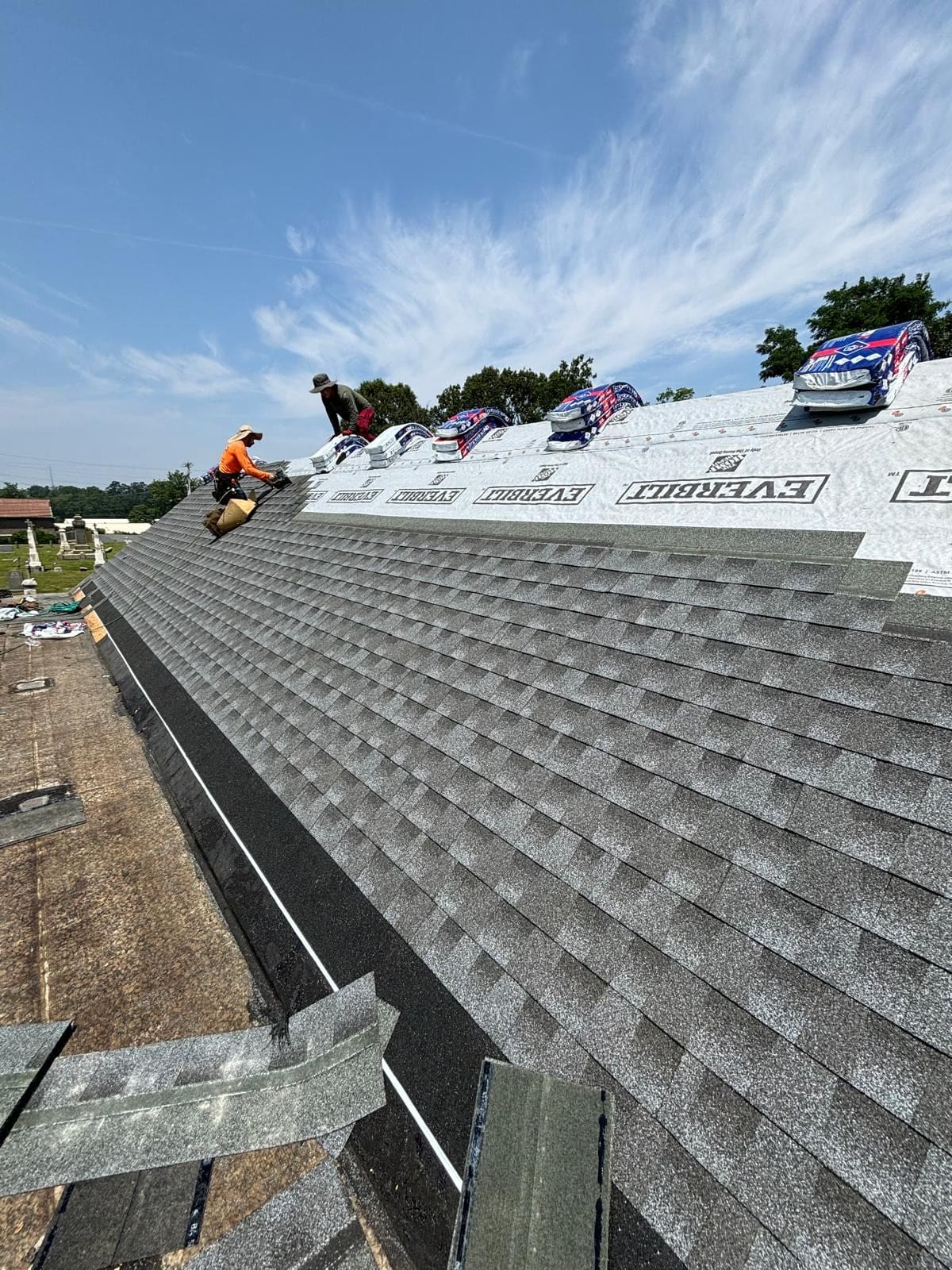
We repair single-ply membrane and built-up roofs on commercial and industrial buildings, and asphalt shingle roofs and low-slope sections on homes. For commercial properties, we inspect the full roof, photograph every defect and provide a written scope that separates urgent repairs from maintenance.
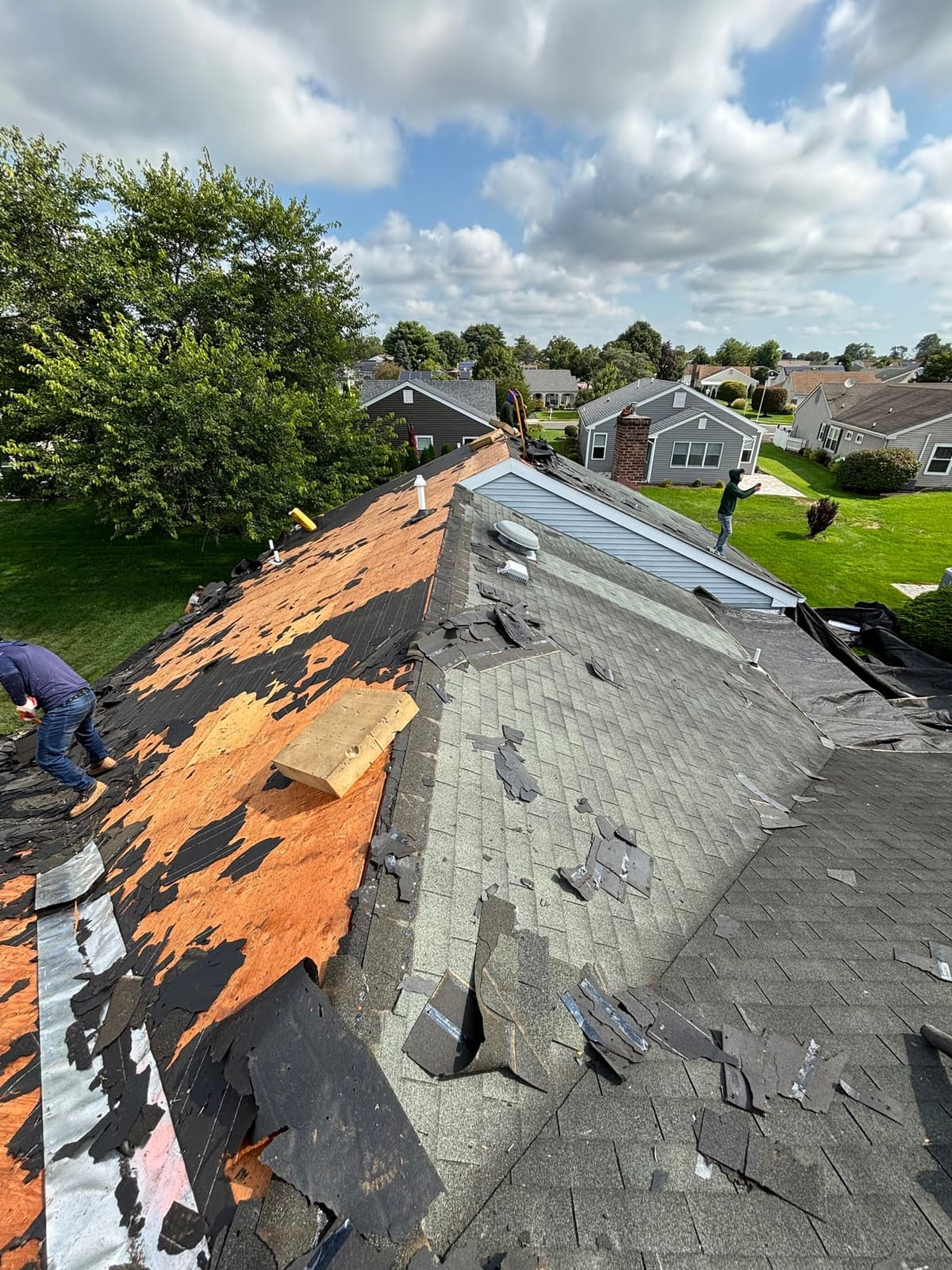
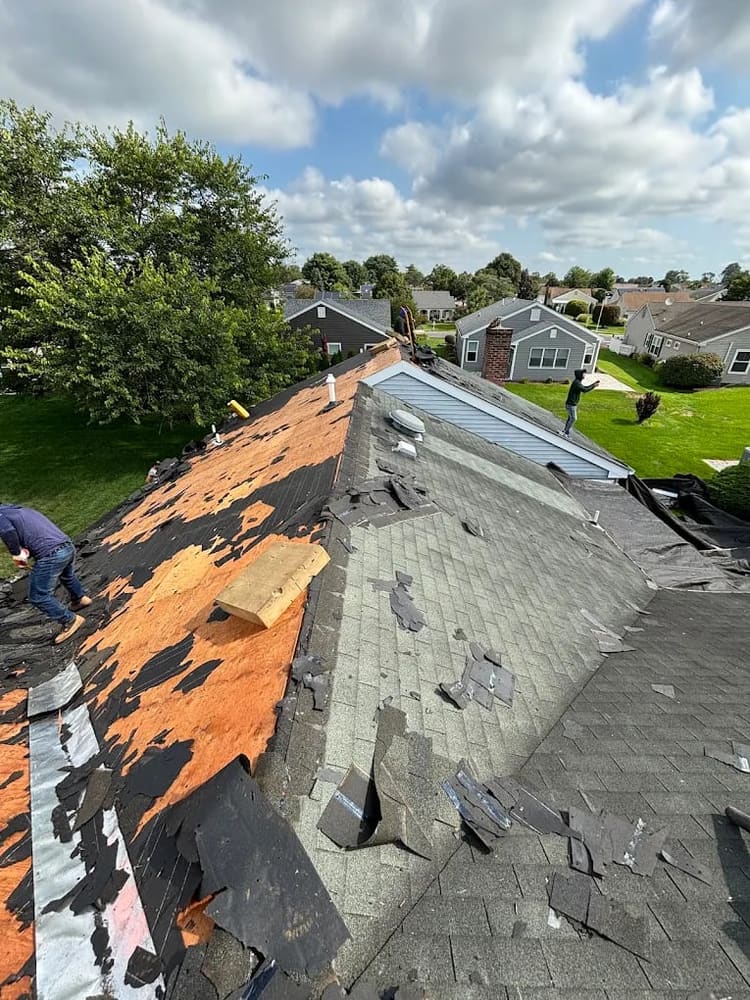
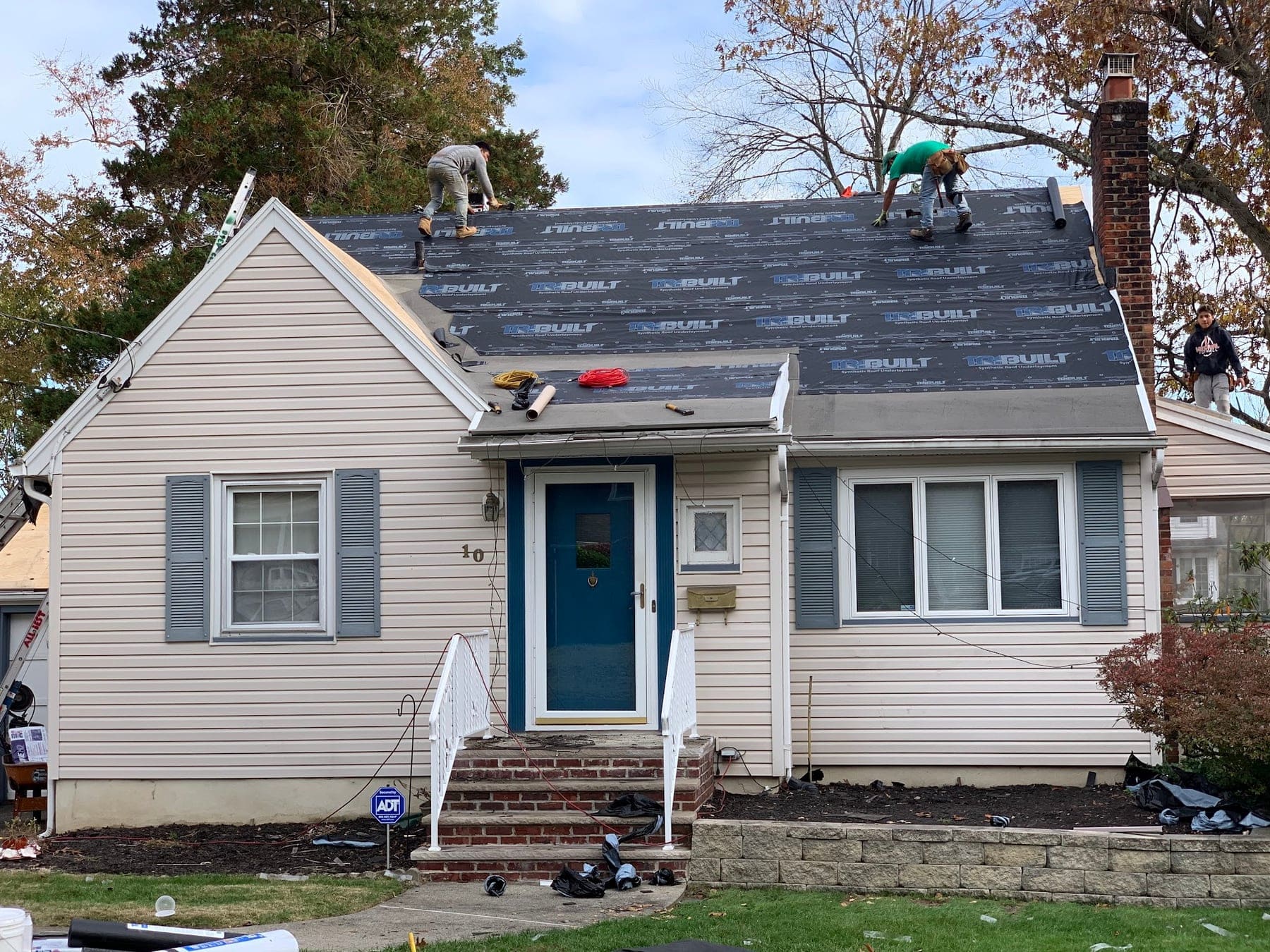
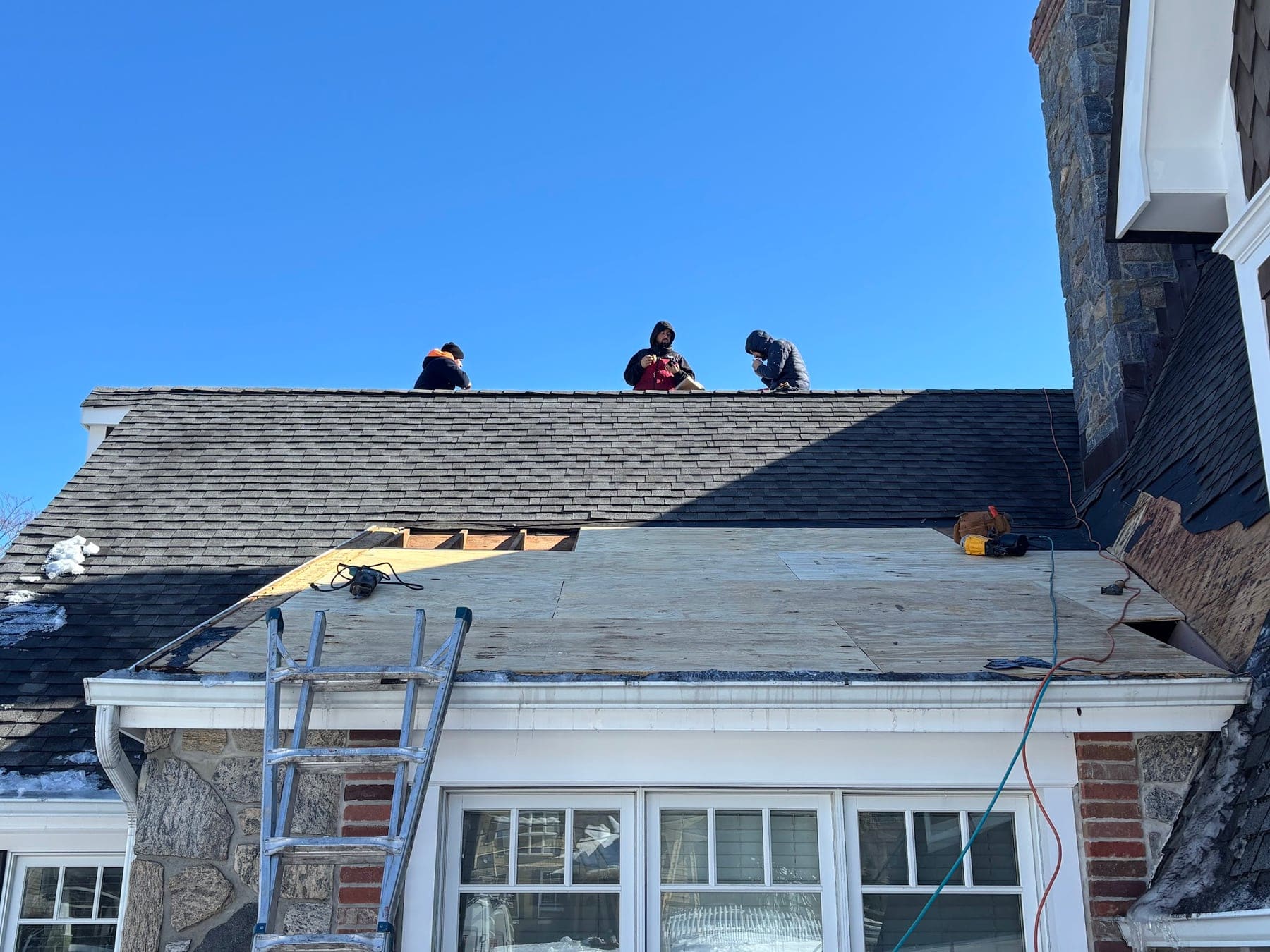
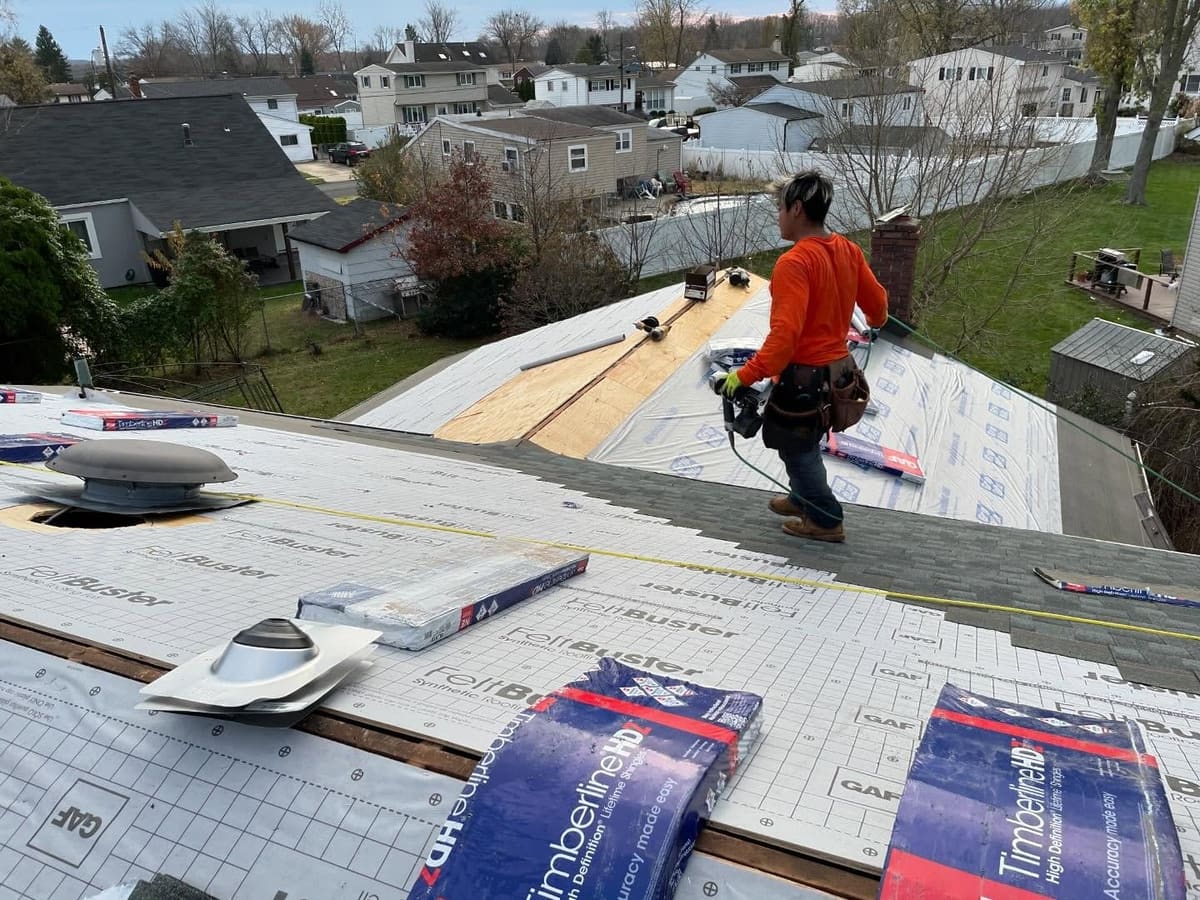
On Fairfield's post-war homes, repairs most often involve failed pipe boots, chimney and sidewall flashing, shallow garage and family room roofs and wind damage on exposed roofs. We trace the leak to its source and show you photos of the problem and the fix.
Fairfield housing
Fairfield's building stock has two distinct sides. Residential neighborhoods are mostly 1950s to 1970s ranches, split-levels, bi-levels, capes and colonials, many now on their second or third roof, with brick chimneys serving a fireplace and furnace. Alongside them, a large share of the township is commercial and industrial: low-rise offices, warehouses, light manufacturing and flex buildings with large flat roofs, rooftop HVAC, skylights and roof hatches.
Weather & exposure
Fairfield is generally flat to gently rolling, with large open areas around the industrial parks and airport where wind moves unobstructed across wide roofs. Low ground near the Passaic River and its tributaries has flooded in major storms, which affects lower levels and the base of chimneys more than roofs. Large flat roofs collect water during heavy downpours, and freeze-thaw cycles work on parapets, coping and masonry.
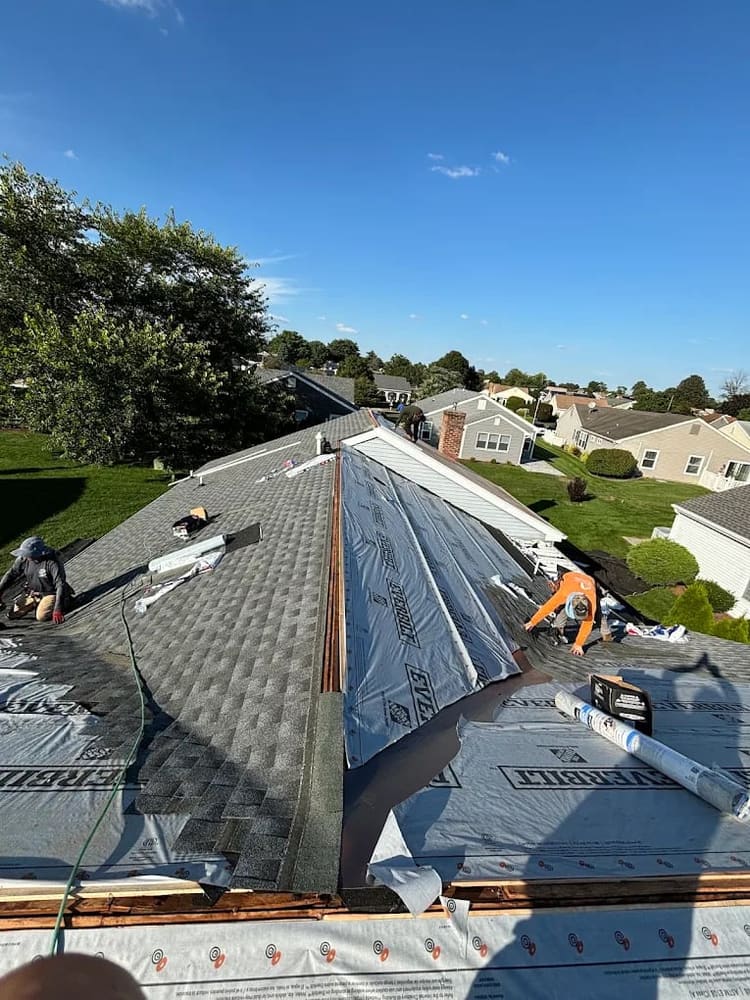
Repair or replace? What we tell Fairfield homeowners
For commercial roofs, regular inspections, ideally in spring and fall and after major storms, catch open seams, clogged drains and damaged flashing before they cause interior damage. Repairs are far less expensive than wet inventory or ceiling replacement. We provide written findings with photos for every inspection.
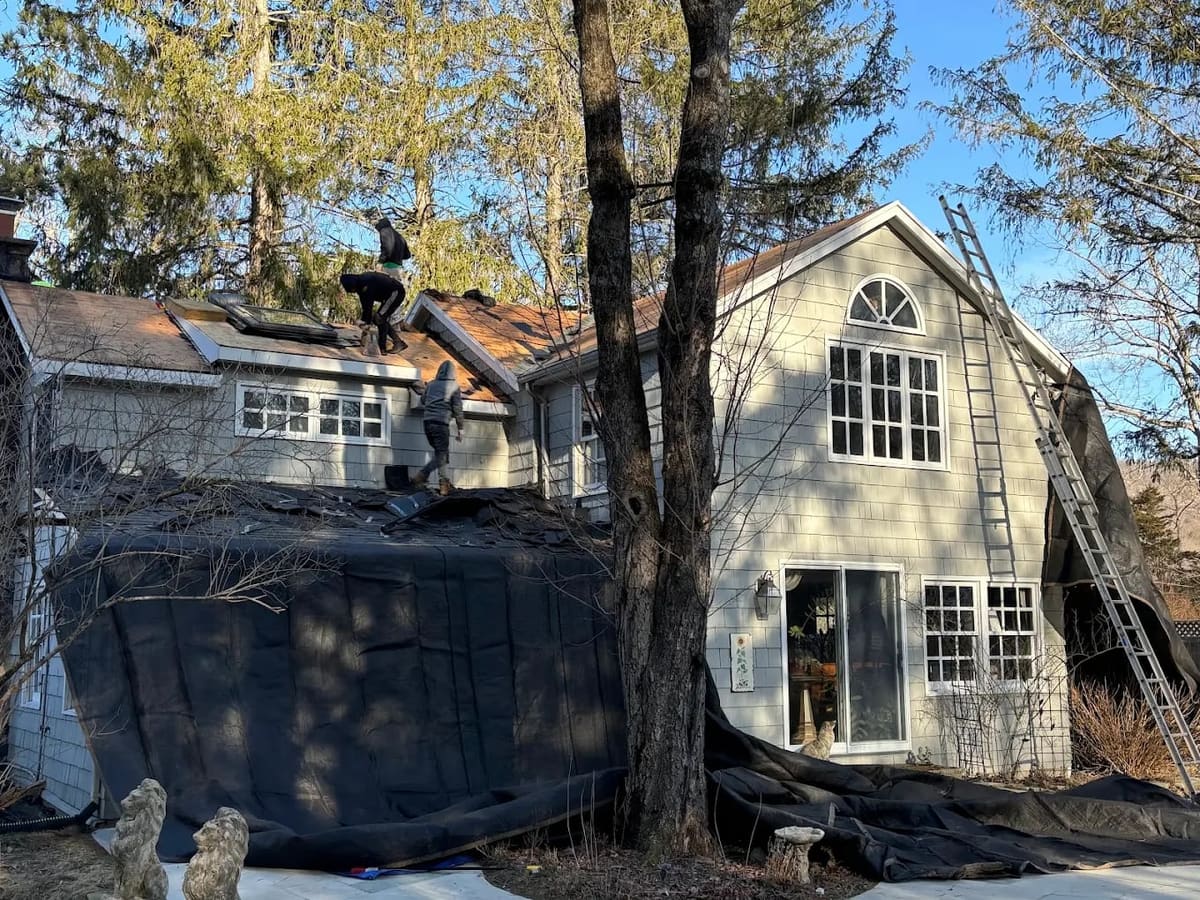
For homes, a single leak on an otherwise sound roof is a repair. Roofs from the 1990s or earlier with curling and granule loss are usually better replaced. After a storm, photograph visible damage and call us; we document storm damage for insurance claims.