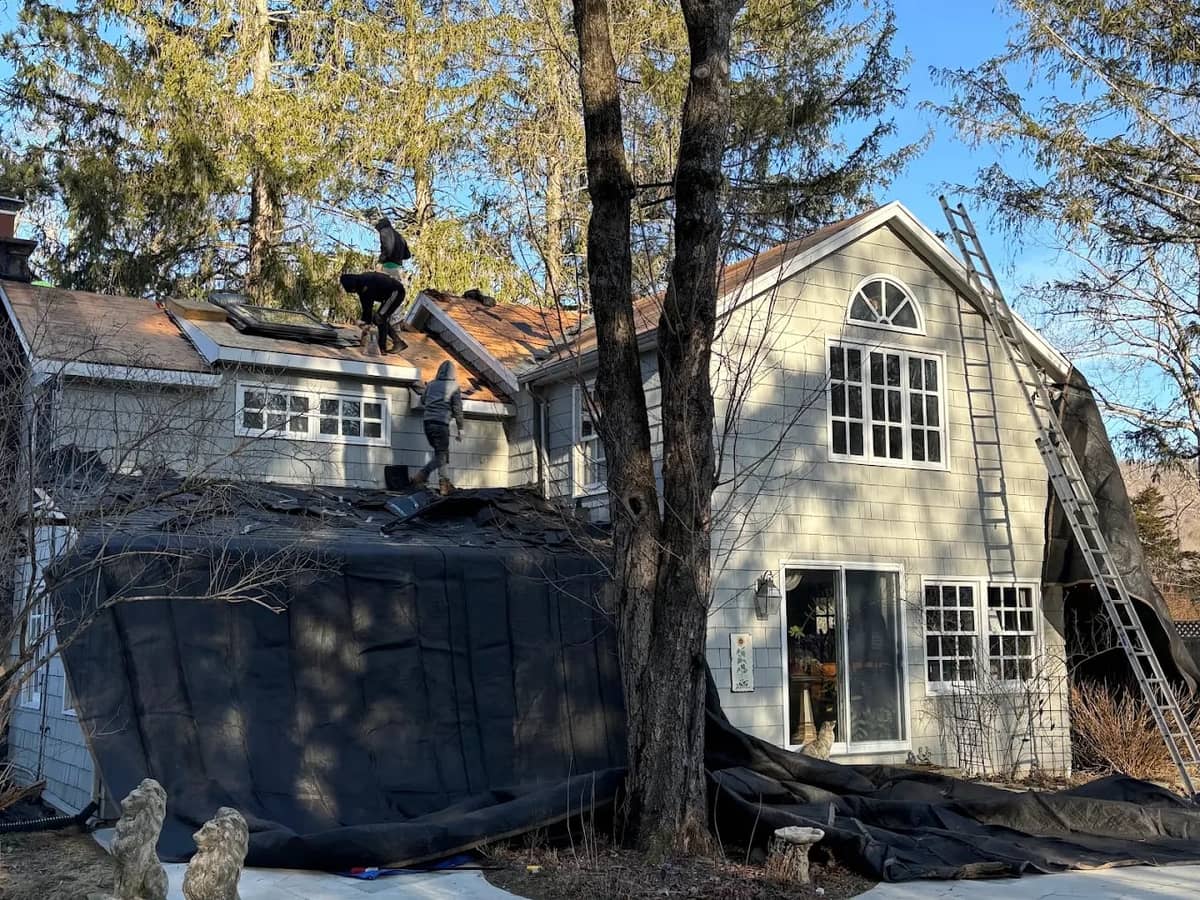
Roof Repair for West Caldwell homes and buildings
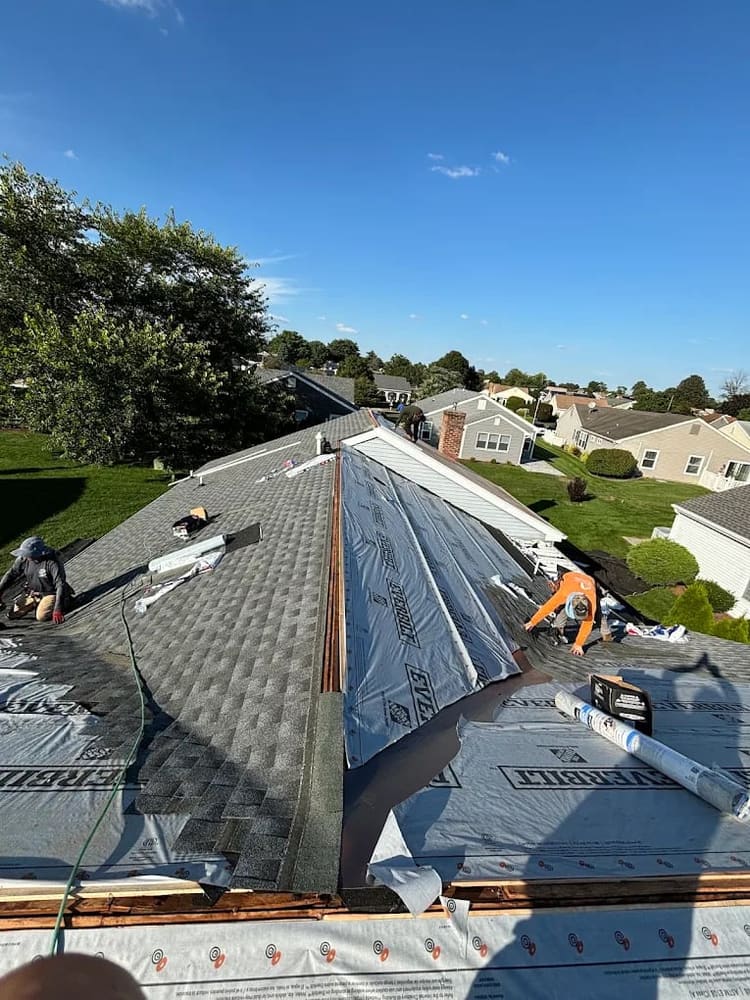
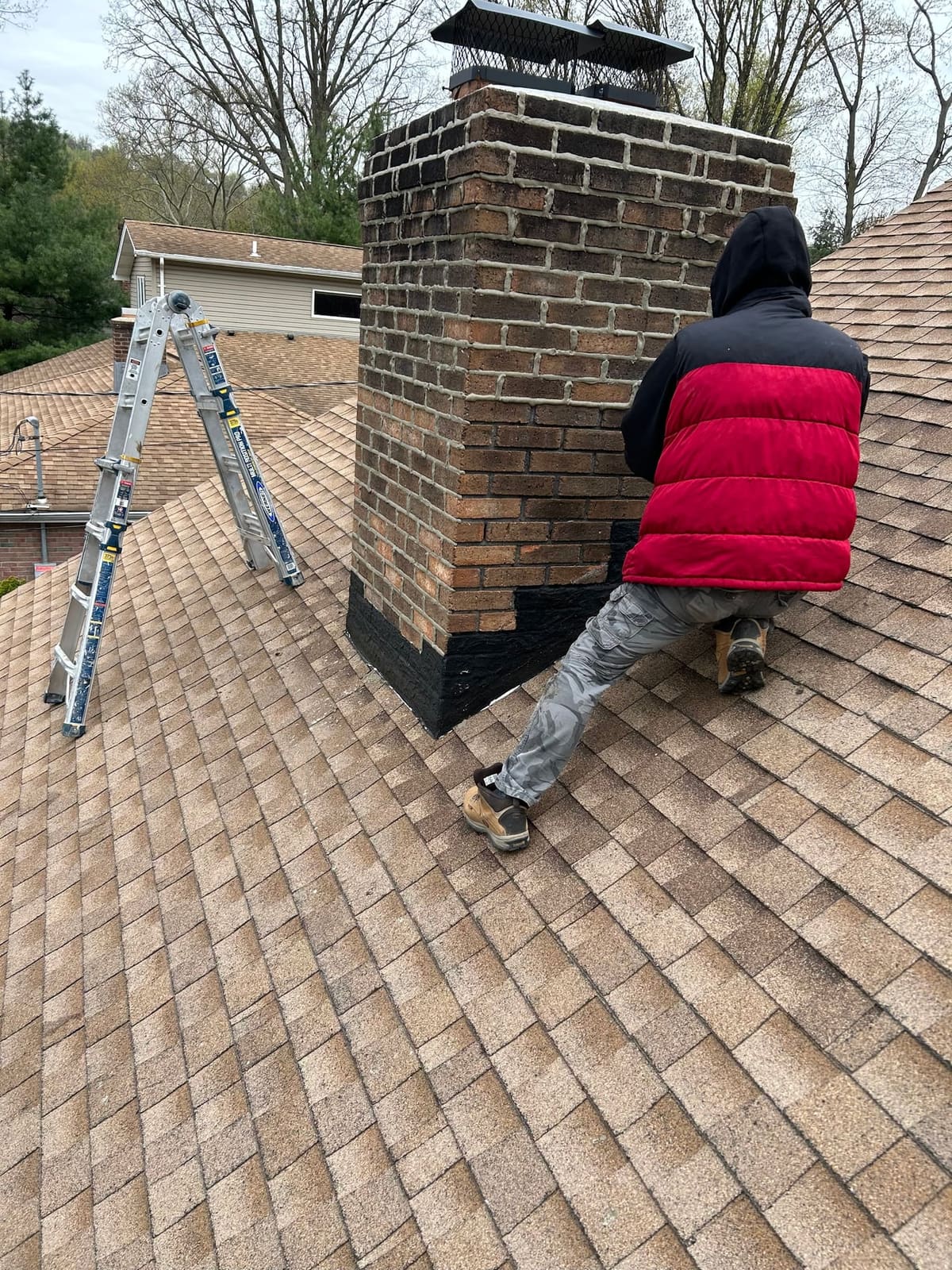
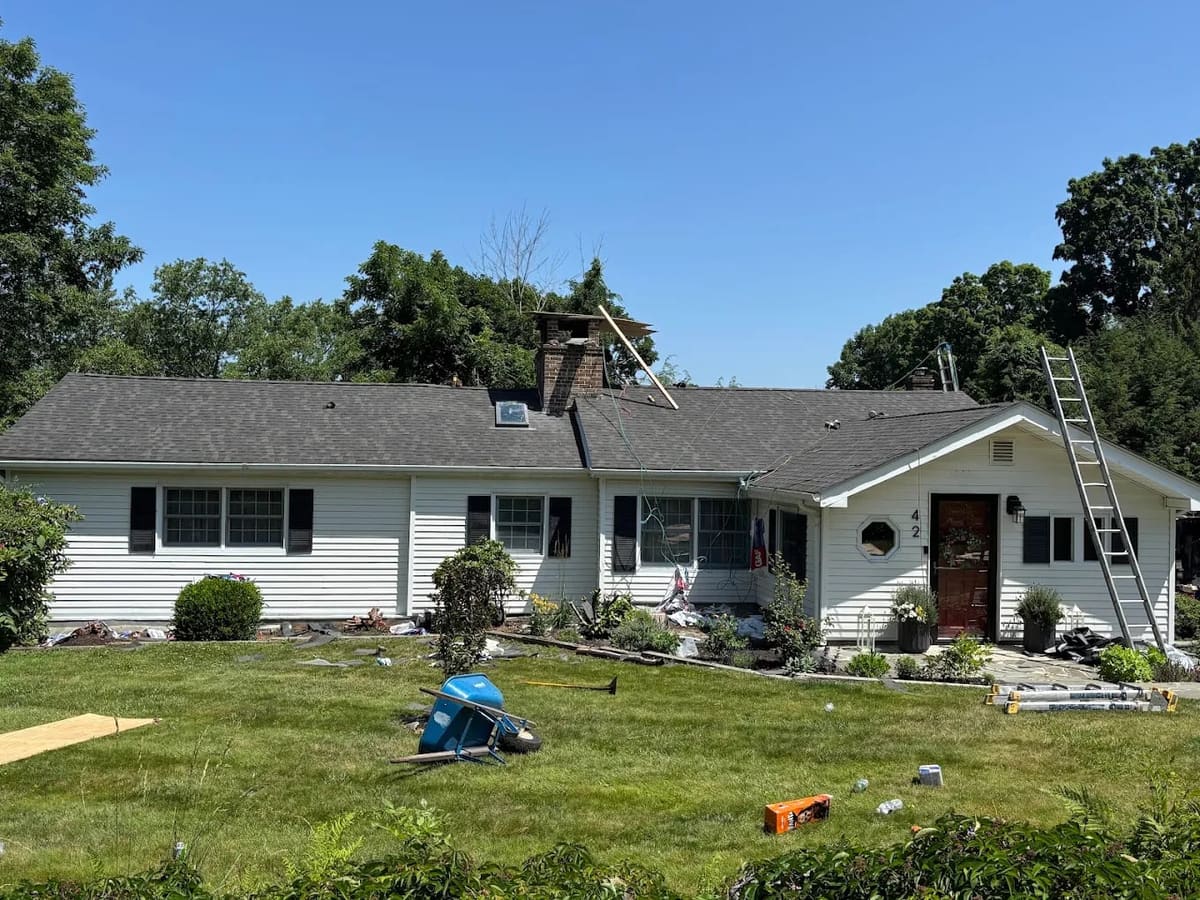
West Caldwell's ranches and split-levels have long, fairly simple roofs, and that simplicity means leaks tend to come from a short list of details: cracked rubber boots around plumbing vents, worn flashing at the chimney, shallow sections over garages and breezeways, and eaves that ice up in winter. Most residential repairs here target one of those points.
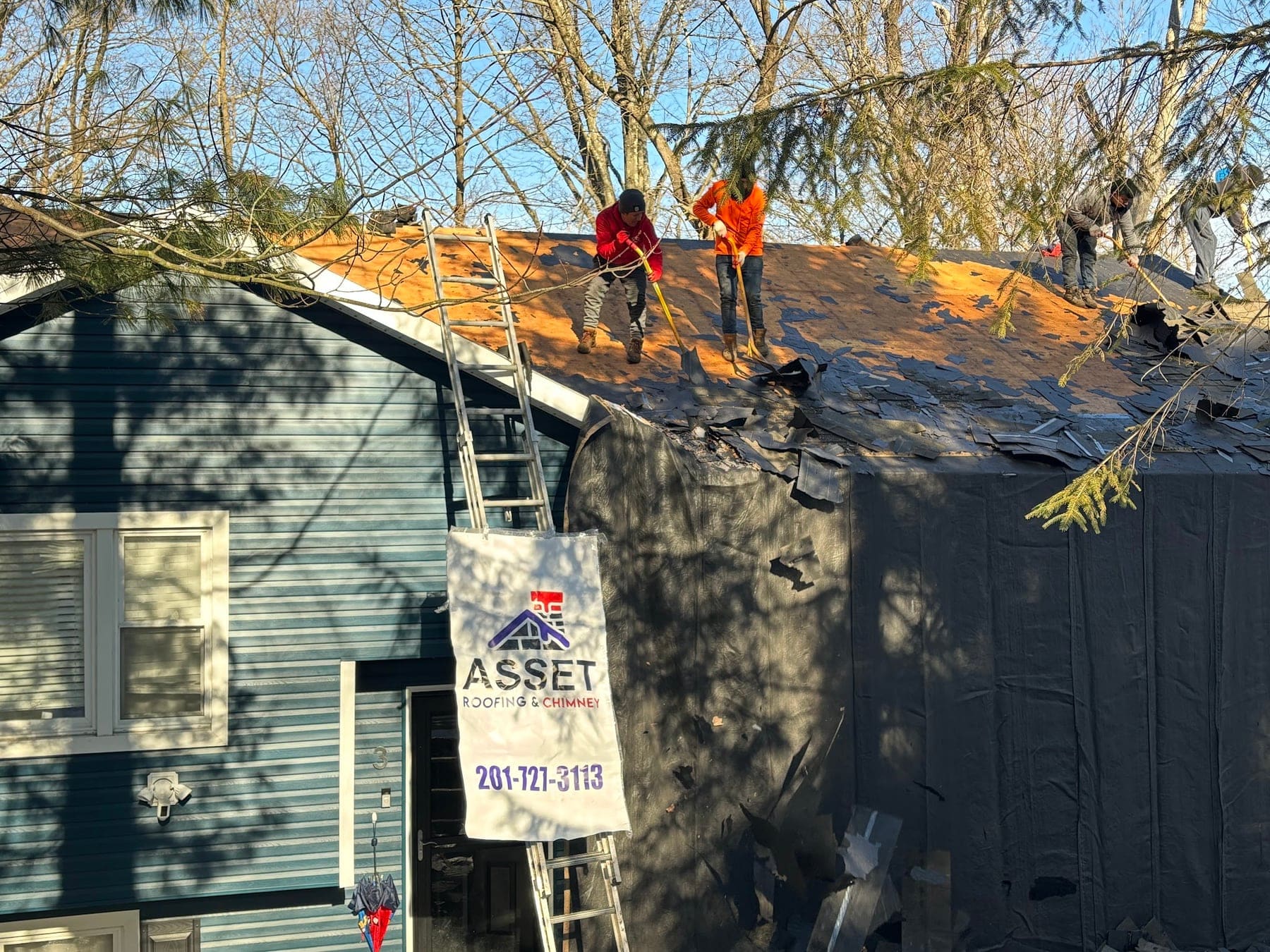
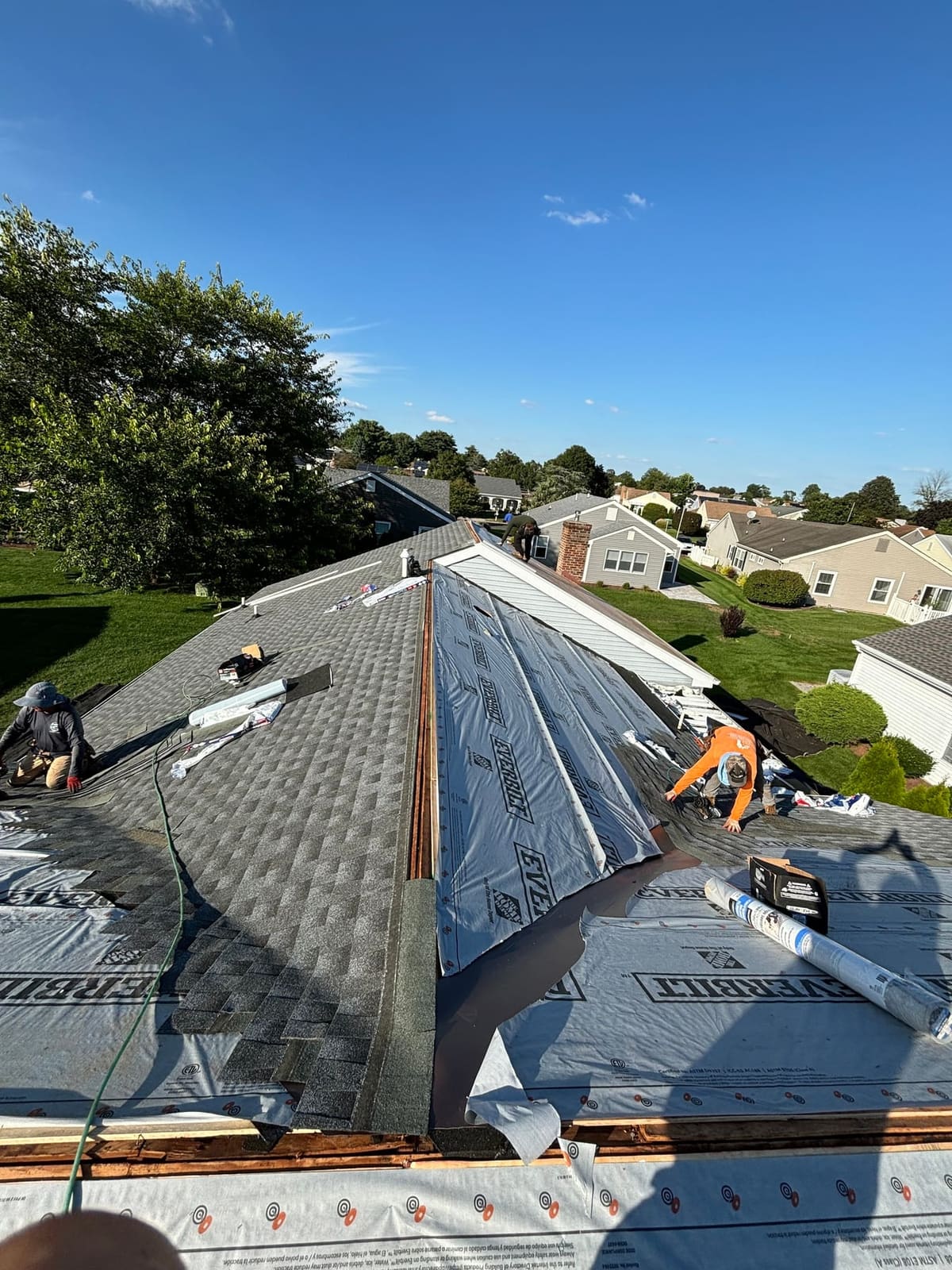
We repair asphalt shingle roofs, flat and low-slope roofs on additions and garages, and the flashing at chimneys, skylights and sidewalls. Many West Caldwell homes have had family rooms or second stories added over the years, and the joint between the original roof and the addition is a frequent source of leaks that we trace and reflash properly.
On the township's industrial and office buildings, repairs involve membrane seams, drains and scuppers, rooftop equipment curbs, skylights and roof hatches. Owners and property managers get photos and a written scope that separates urgent repairs from items that can be planned.
West Caldwell housing
West Caldwell's homes are dominated by 1950s and 1960s ranches, split-levels, capes and colonials, many now on their second or third roof, with some newer homes and large additions mixed in. A single brick chimney serving a fireplace and the furnace is typical, often with two flues in one stack. The township's light industrial and office buildings are low, wide structures with flat membrane or built-up roofs, rooftop units and skylights, and some have metal roofs.
Weather & exposure
West Caldwell is relatively level, so wind exposure is moderate, but mature trees on most residential streets shade roofs and fill gutters and valleys with leaves. Long ranch eaves with shallow attics are prone to ice dams in cold stretches. On the industrial side, large flat roofs collect windblown debris at drains and scuppers, and heavy summer rain tests drainage that may already be marginal on wide, nearly level roofs.
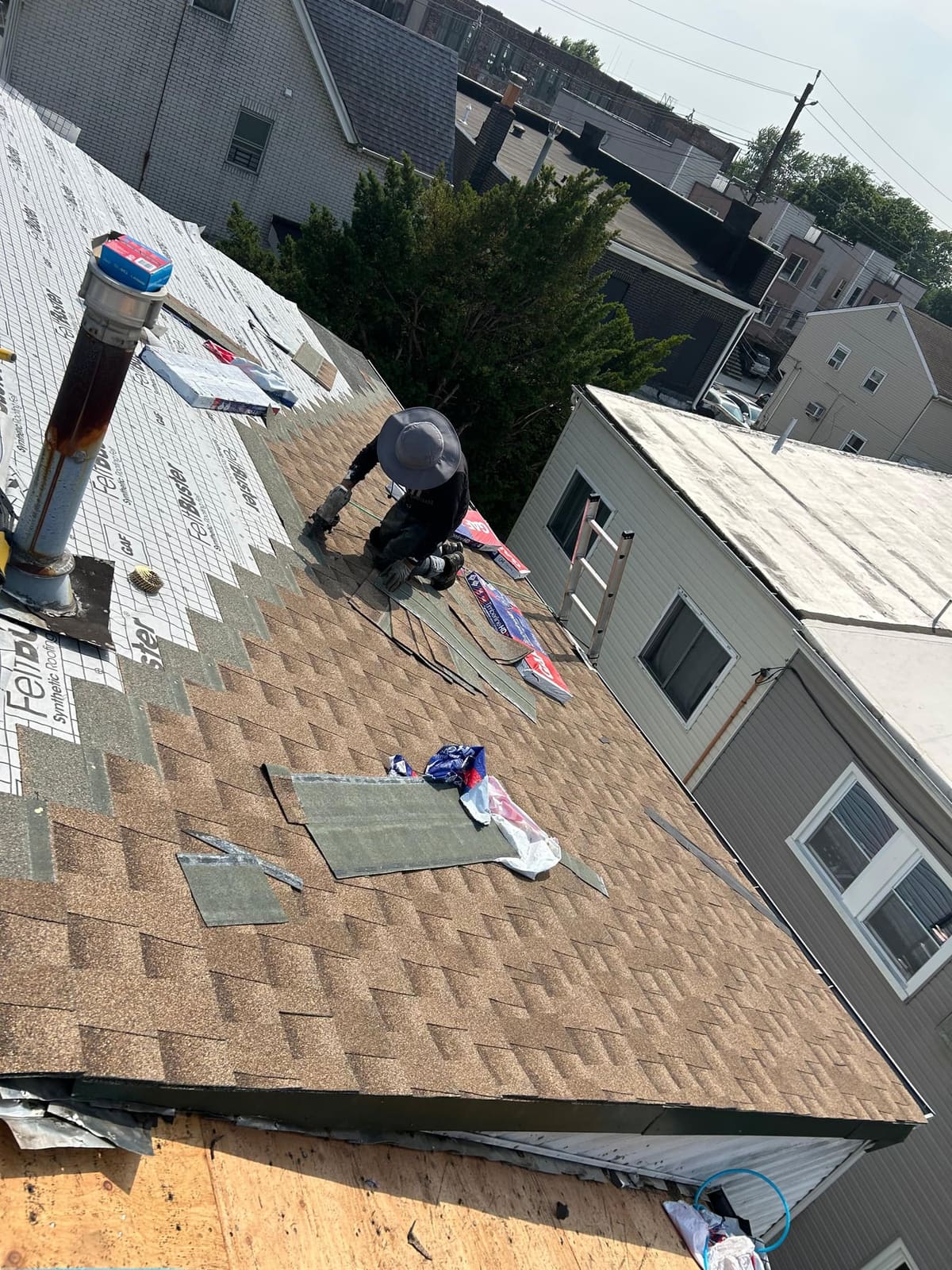
Repair or replace? What we tell West Caldwell homeowners
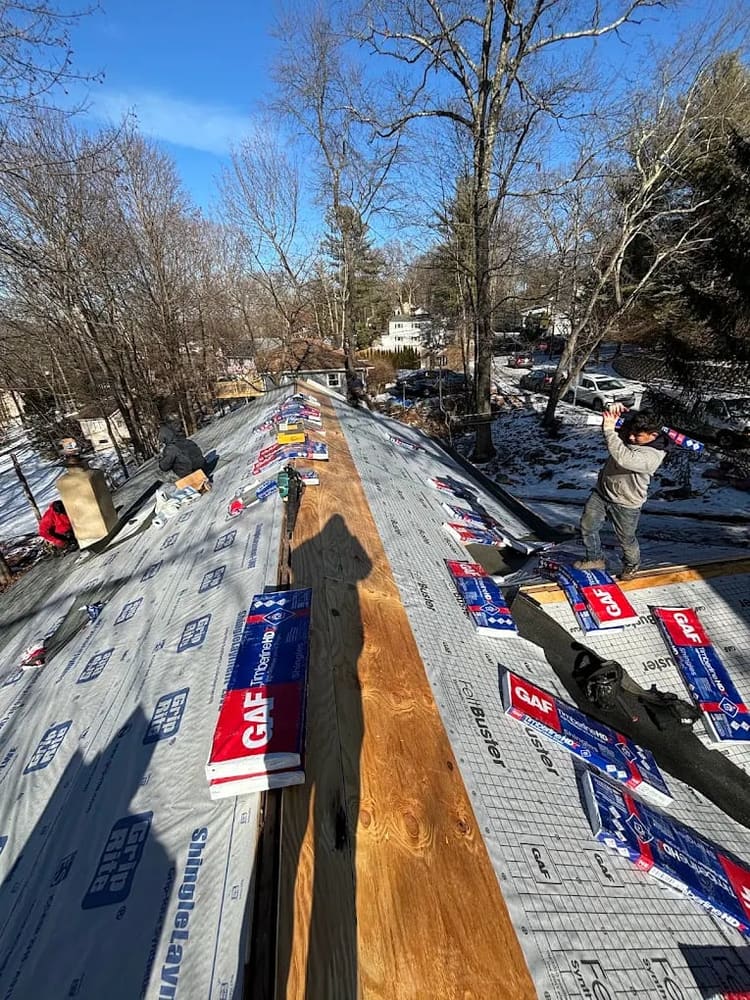
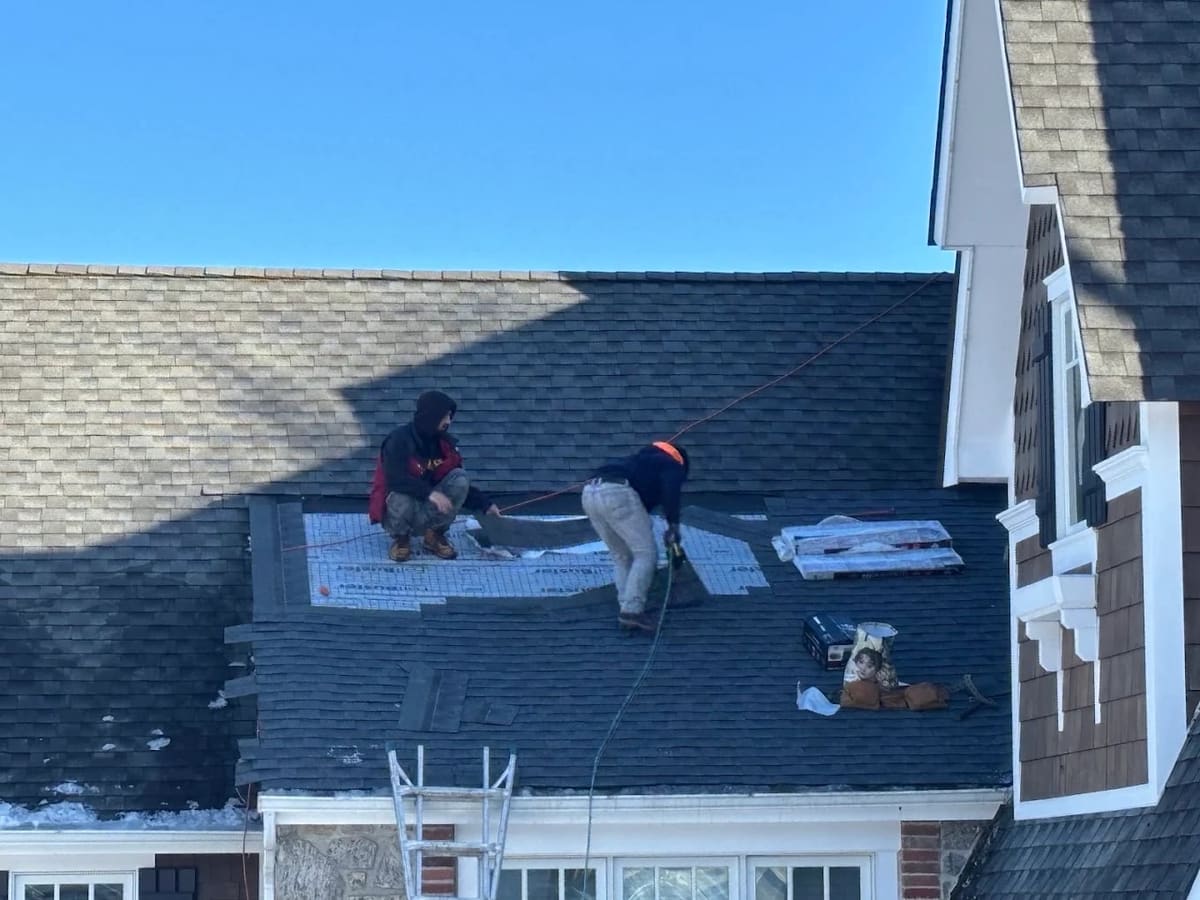
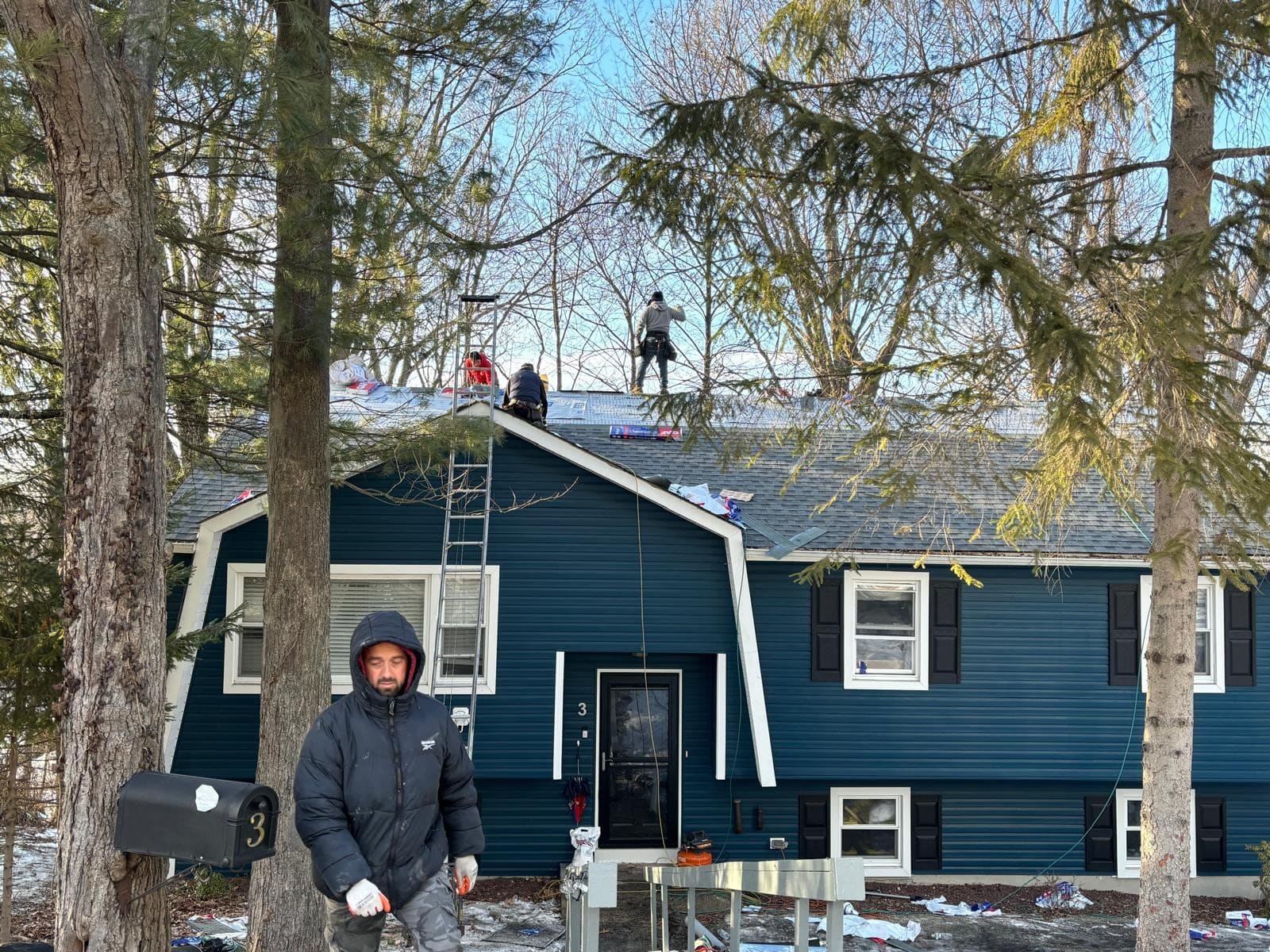
If the shingles are still flexible and the leak traces to one detail, a targeted repair is sensible. Ask to see photos of the source and the finished fix. If shingles are curling, granules are gone and leaks are appearing in several spots, repairs will keep coming, and replacement is better value.
For commercial and industrial owners, a routine inspection of flat roofs, ideally each spring and fall, catches clogged drains and open seams before they cause interior damage or wet insulation. We provide documentation suited to building management and budgeting.