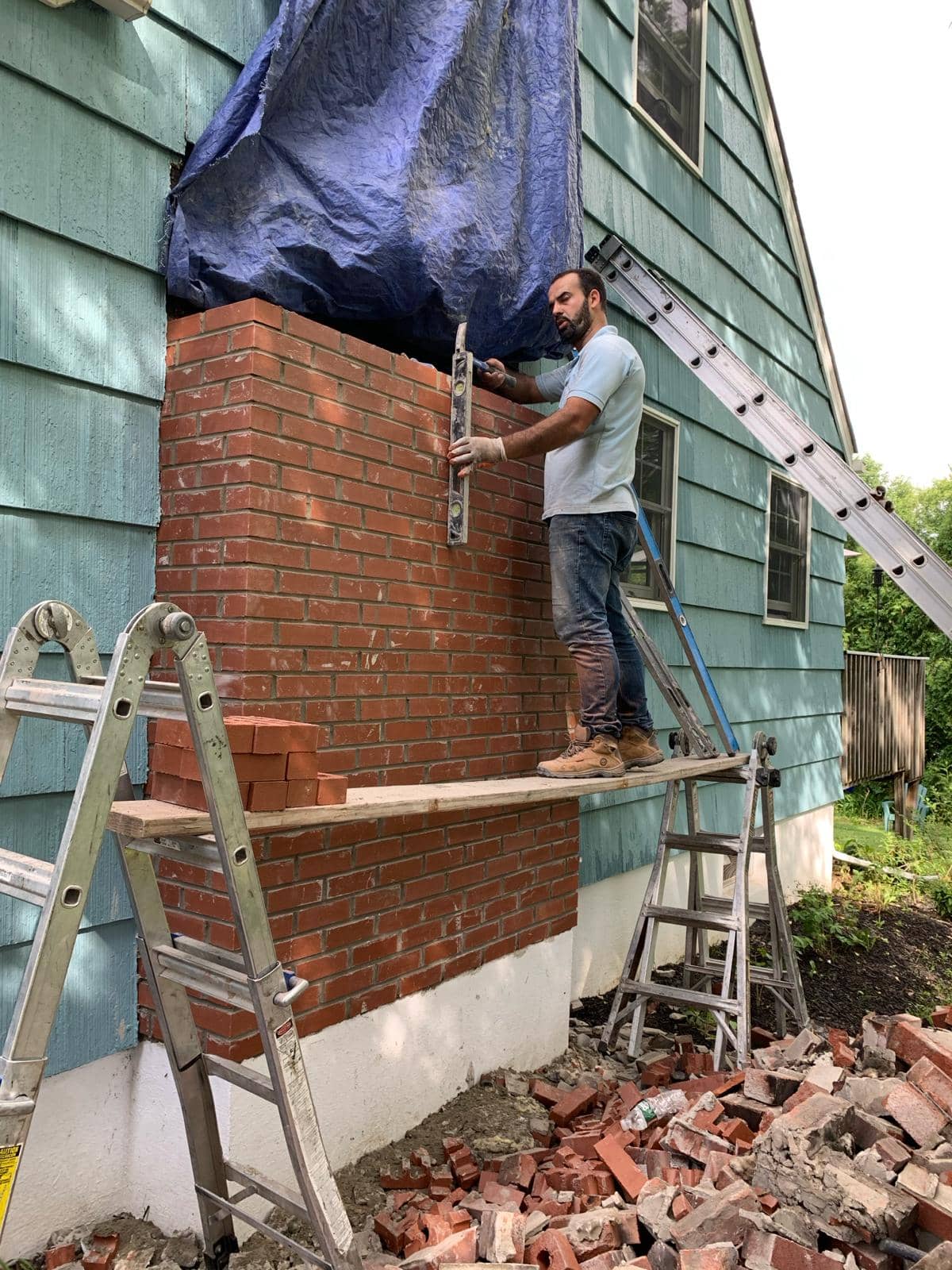
Chimney Repair for Butler chimneys
Butler's older homes typically have a single brick chimney serving the heating system and sometimes a fireplace, often built with soft lime mortar and clay liners. After many winters at the Highlands edge, crowns crack, mortar erodes near the top and flashing fails where the chimney meets the roof. Mid-century homes usually have a brick chimney with a clay liner, and some newer houses have prefabricated fireplaces in sided chases.
Commercial and industrial buildings in the borough can have masonry chimneys or stacks rising through flat roofs, some of them no longer in use. Asset Roofing & Chimney inspects, repairs, caps, relines and rebuilds chimneys of all these types, and can cap off or rebuild the tops of unused stacks so they stop letting water into the building.
Butler housing
Butler's housing is a mix of early-1900s homes near the center, many of them modest gable-front and two-story frame houses built close together, with mid-century capes, ranches and split-levels on the streets farther out and on the hillsides. There are some two-family houses and small apartment buildings. Along the river and Route 23 are industrial, warehouse and commercial buildings with flat and low-slope roofs.
Weather & exposure
Butler sits in a valley with hills rising nearby, so it gets the colder winters and heavier snow of the Highlands edge. Homes near the Pequannock River deal with damp valley air, and hillside lots under mature trees see heavy leaf loads and shade. Strong summer storms and nor'easters bring wind-driven rain, and large flat roofs in the industrial areas are exposed to the full force of wind and ponding rain.
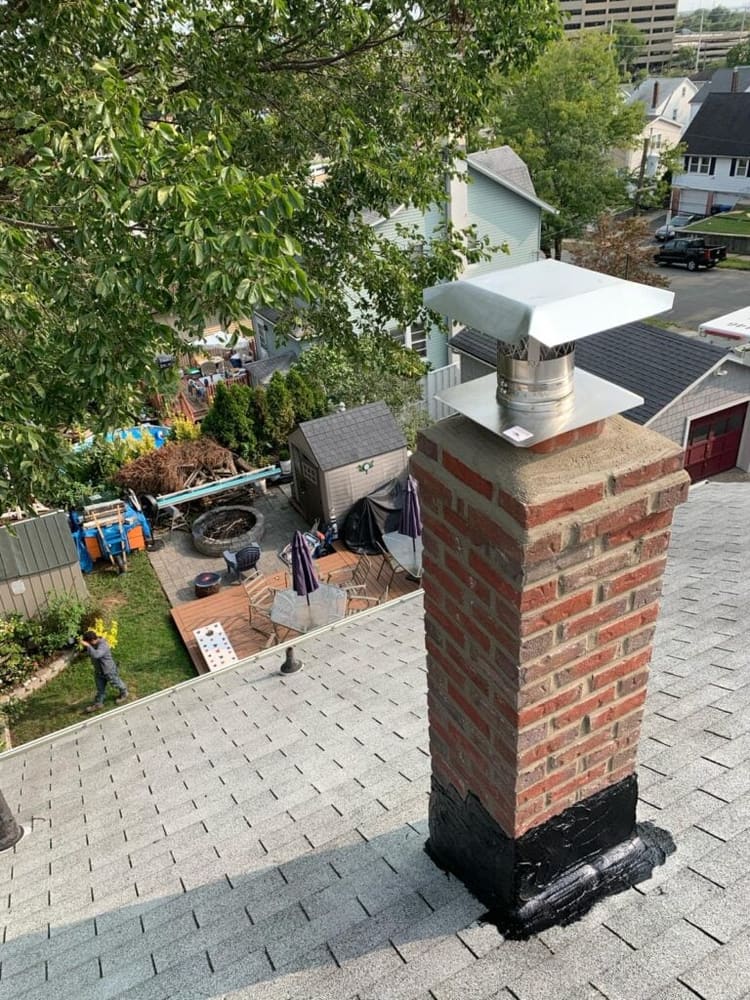
Repair, repoint or rebuild in Butler
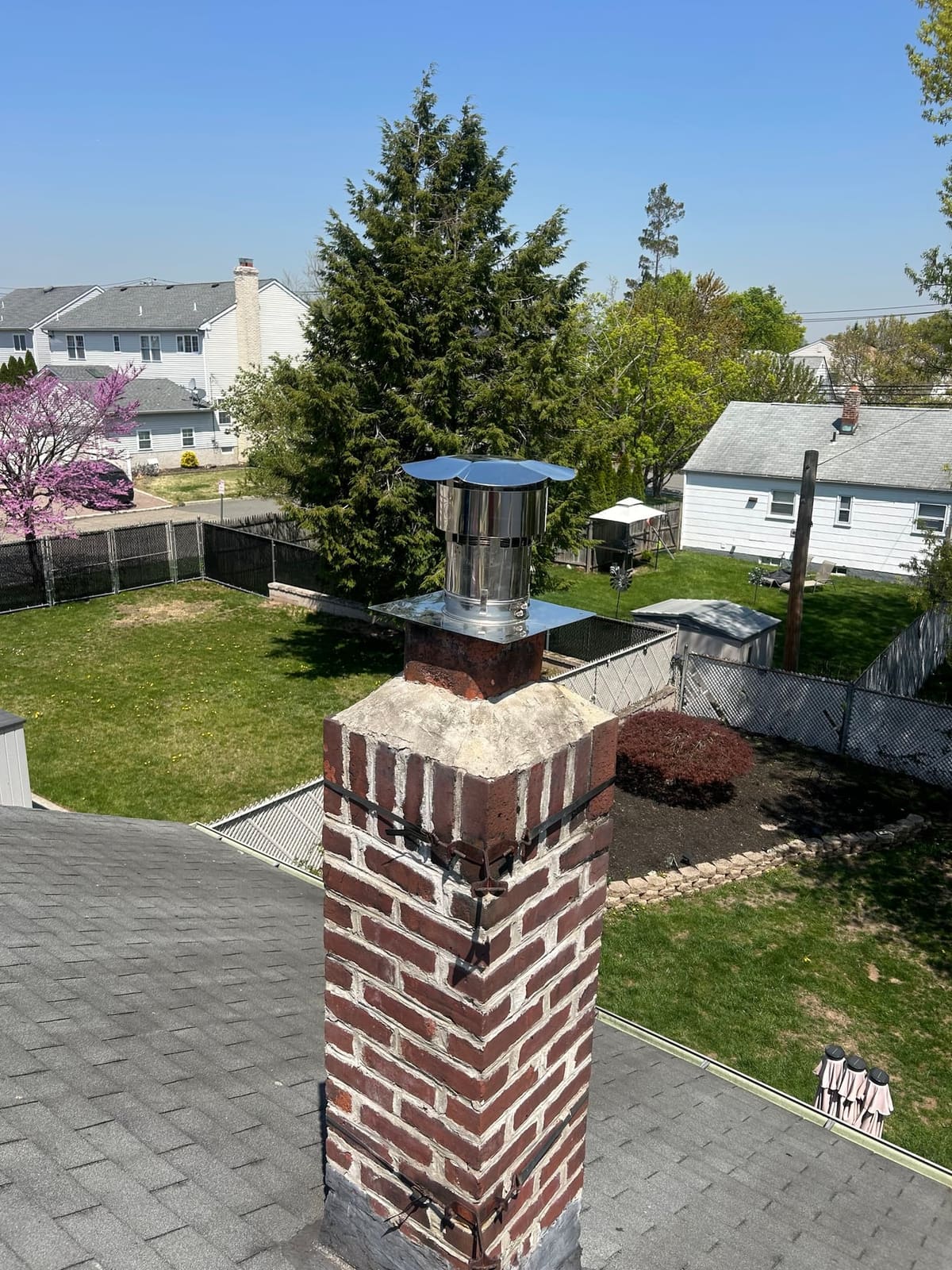
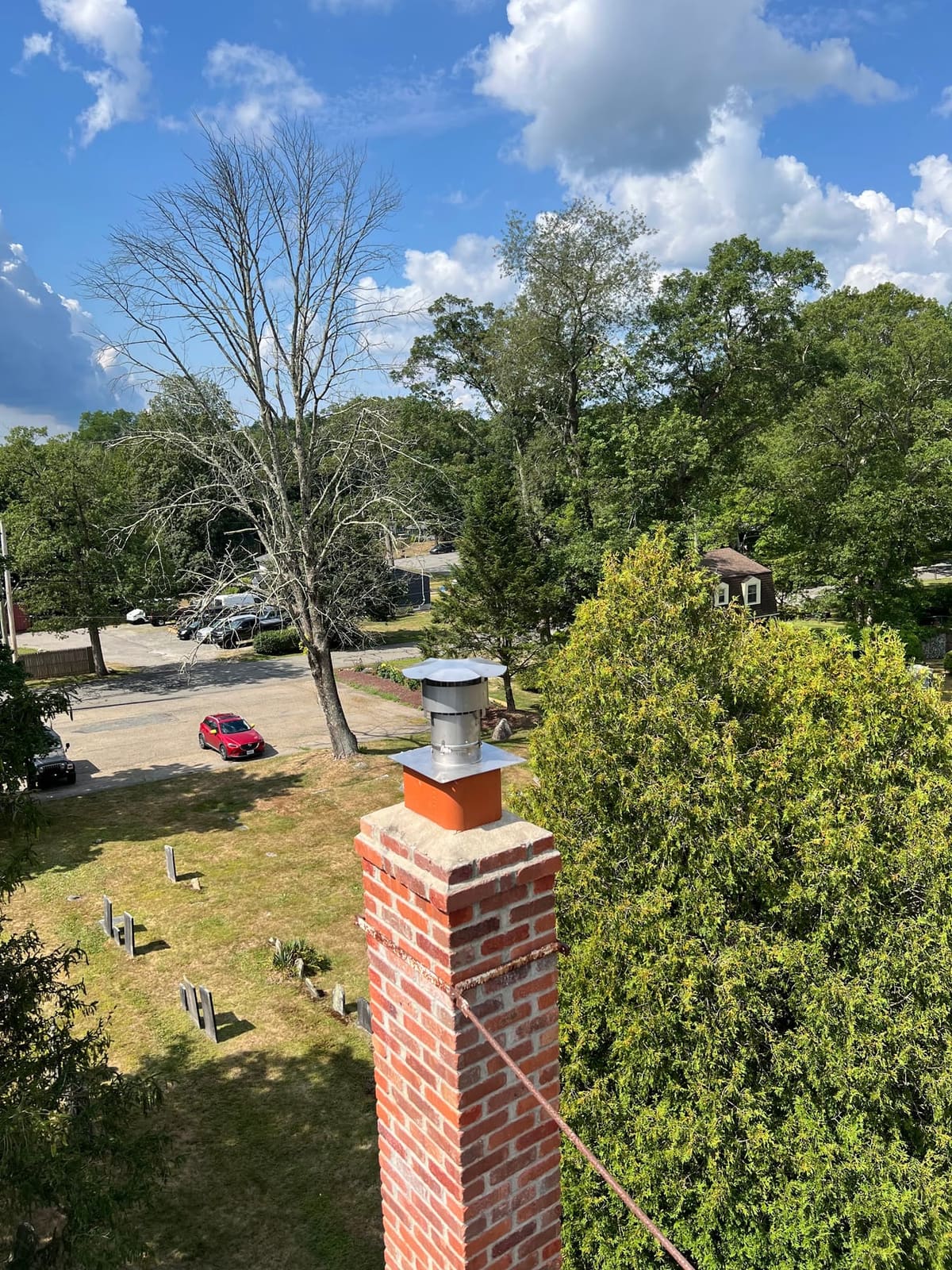
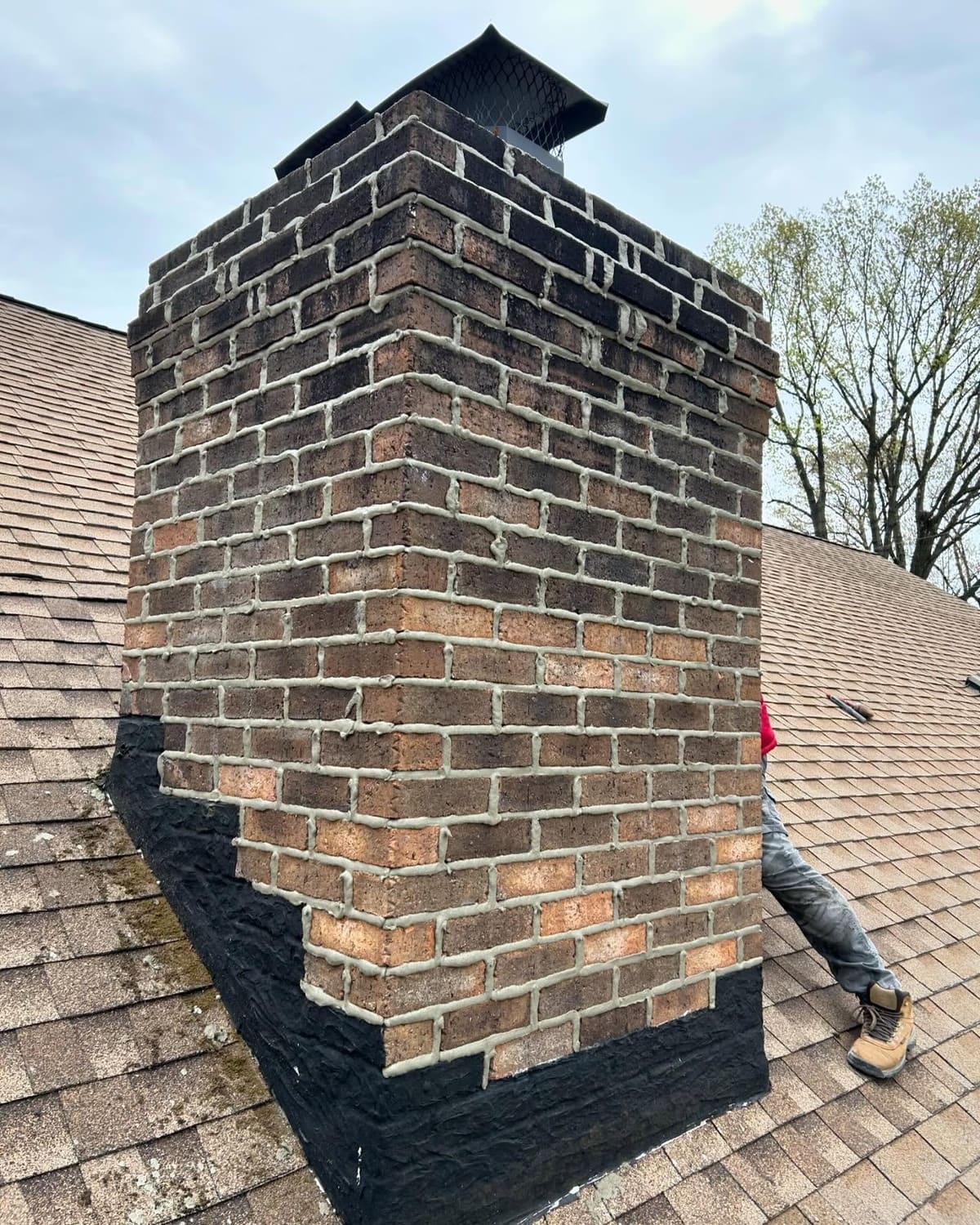
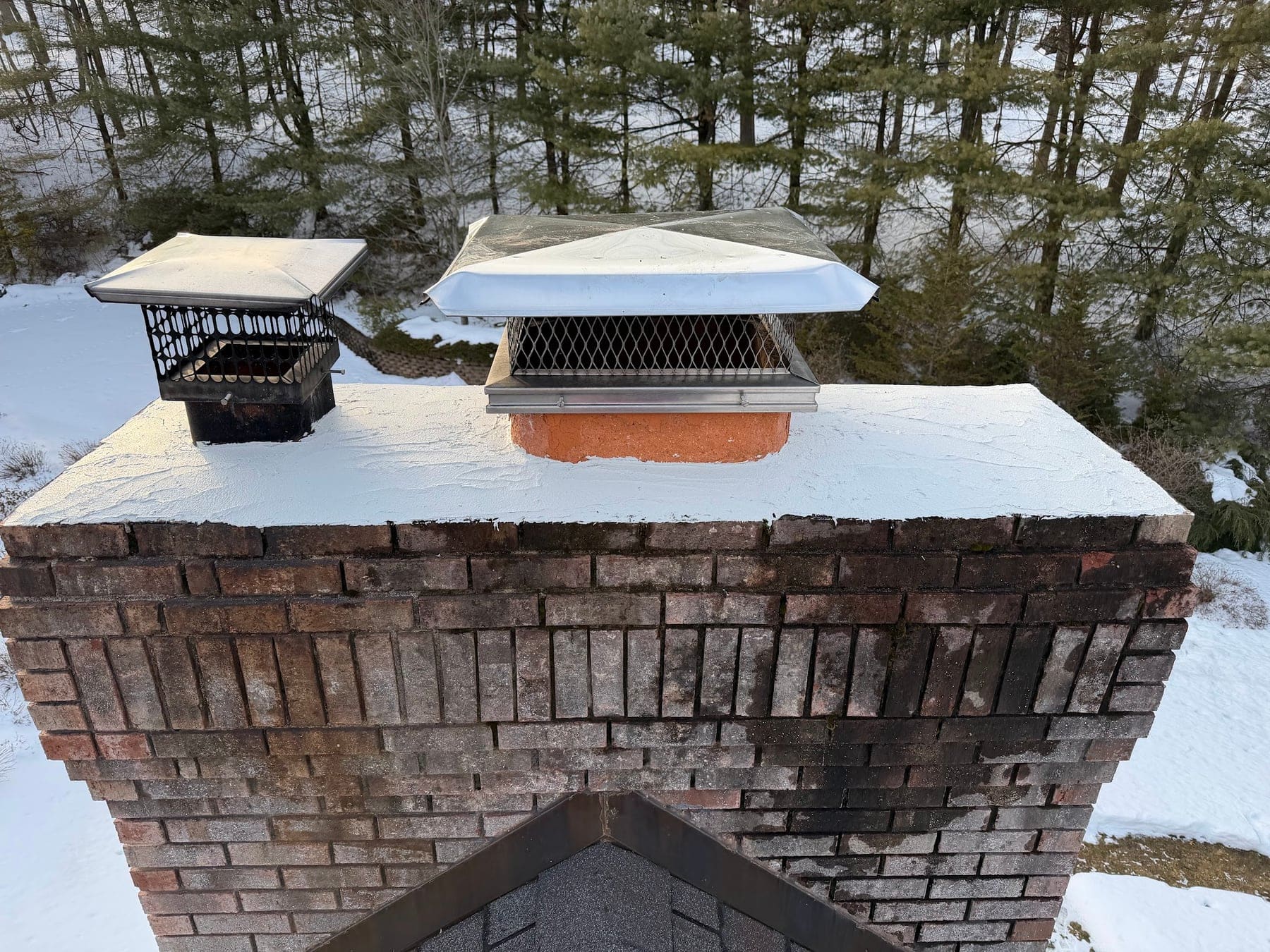
We inspect from the roof and from inside. For most Butler homes the work comes down to a new crown, repointing the exposed section above the roof, a stainless cap and new flashing cut into the mortar joints. Where a modern appliance vents into an old flue, we check the liner and install a stainless liner if needed.
For unused chimneys on commercial buildings, the options are to cap and seal the top properly, rebuild the deteriorated portion, or, where appropriate, take the stack down below the roofline and deck over it. We explain the trade-offs so the owner can choose.