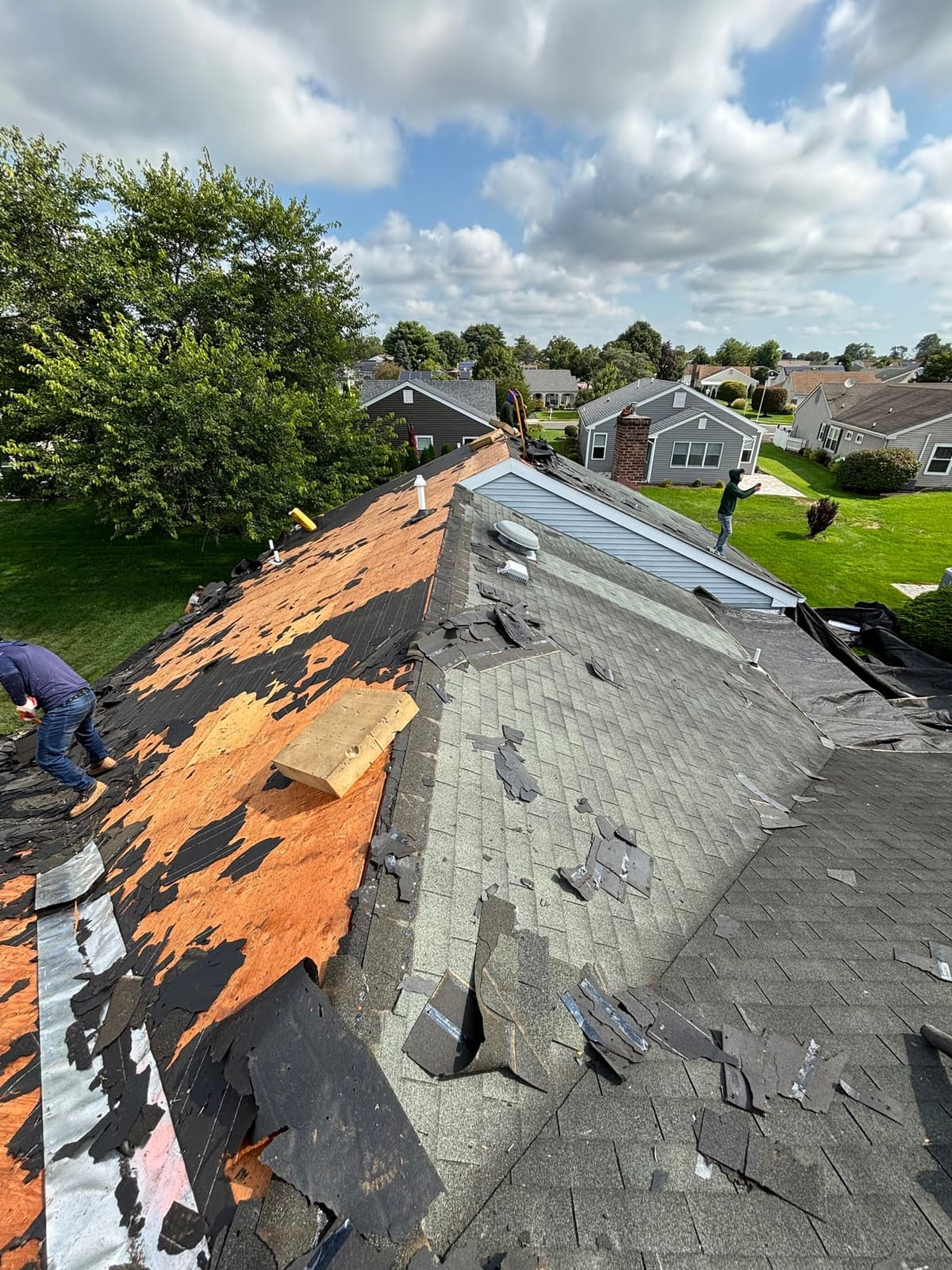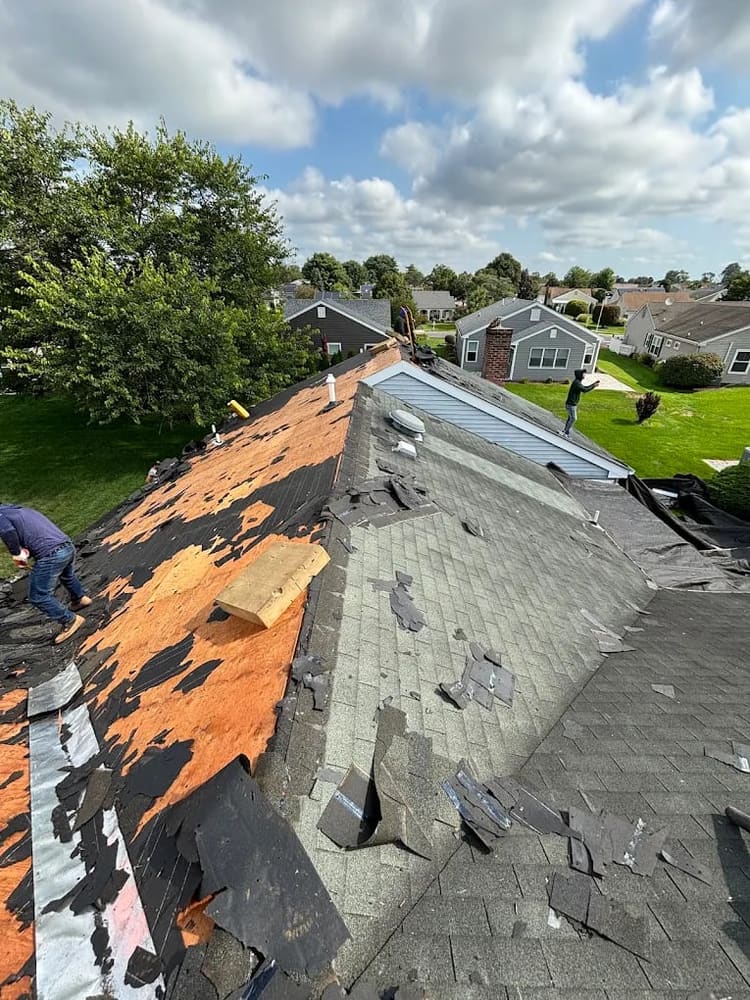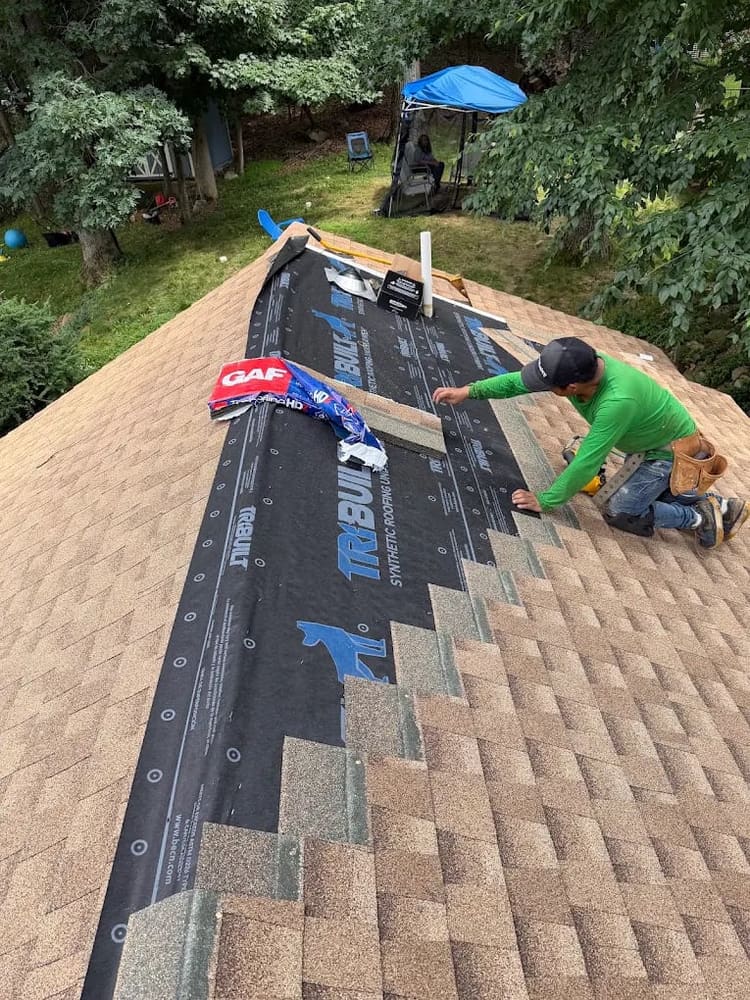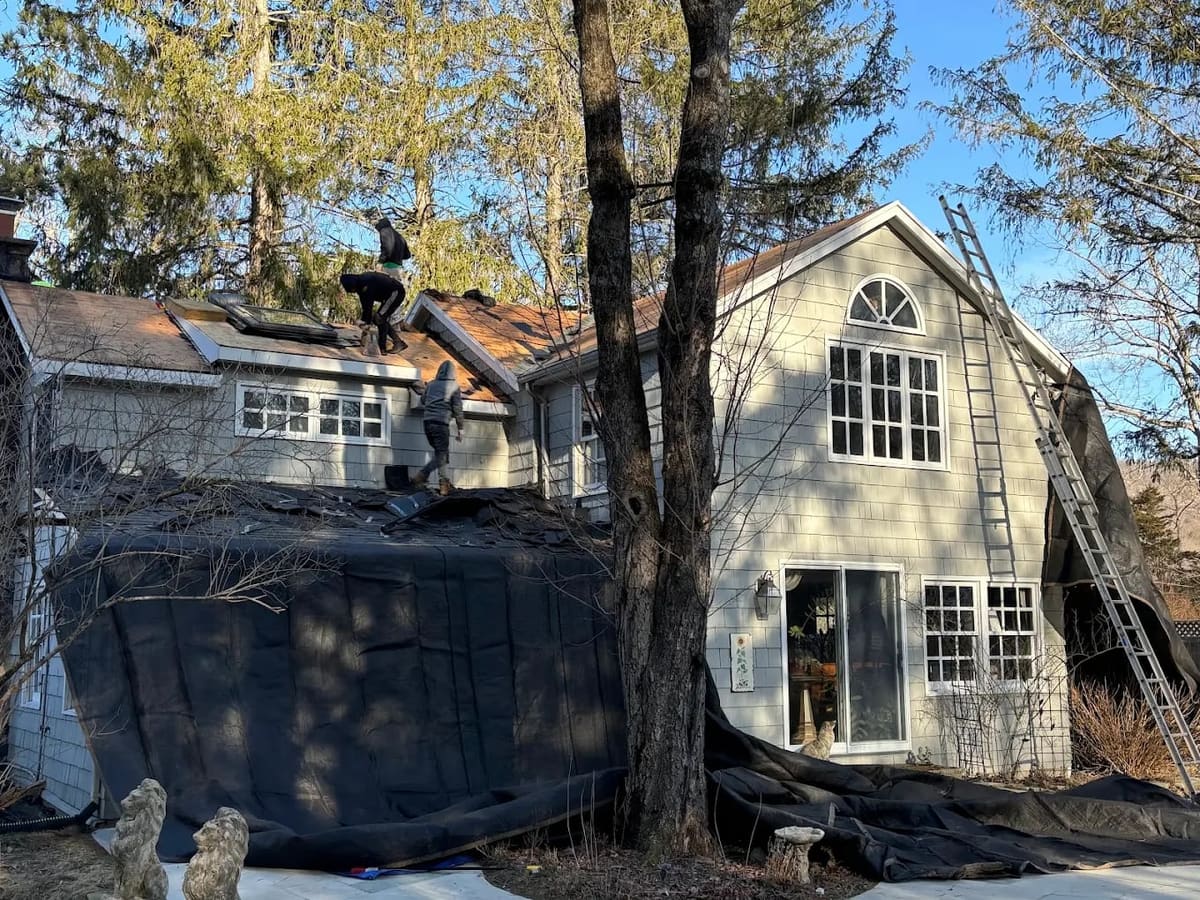
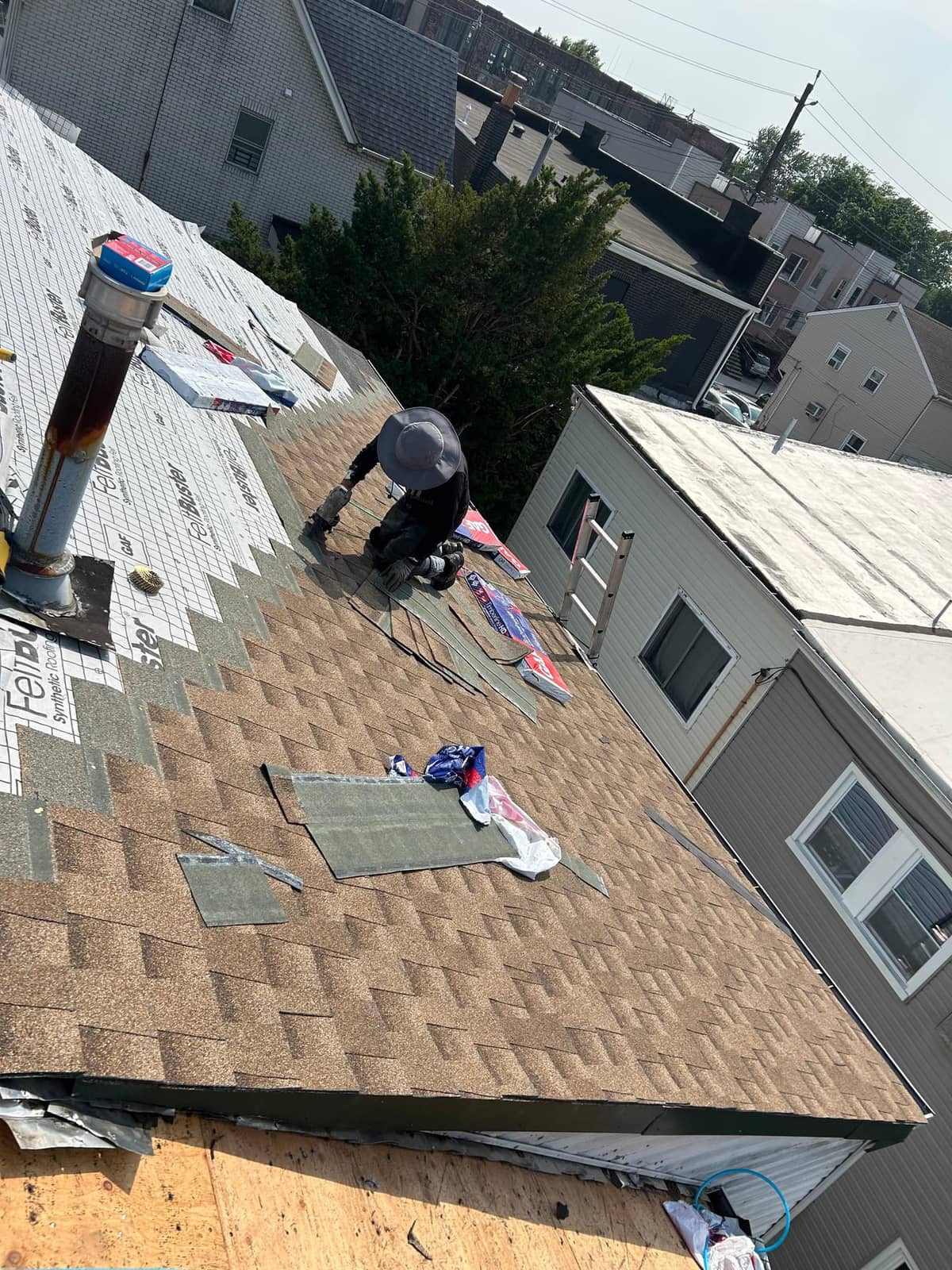
Roof Repair for Manville homes and buildings
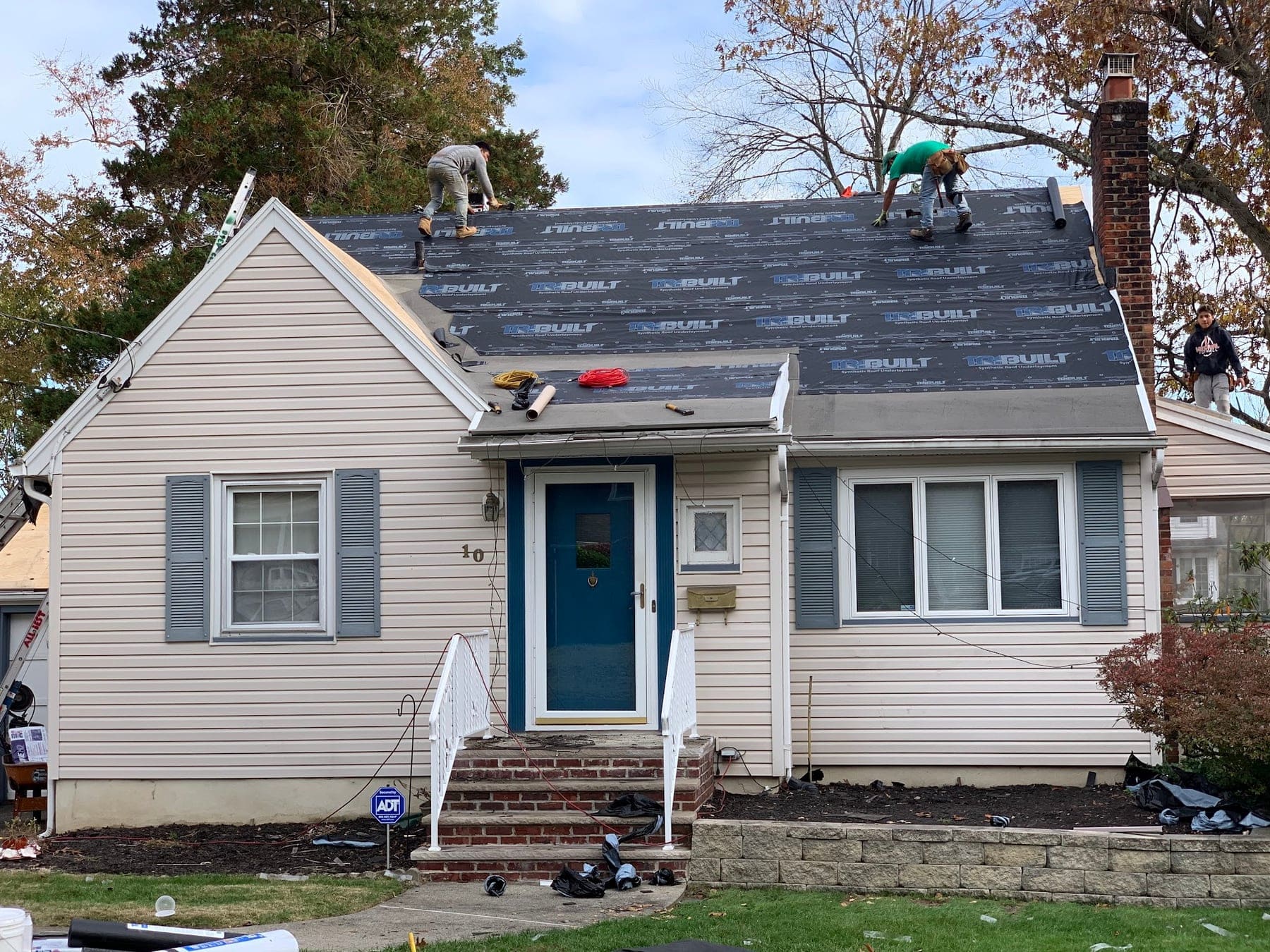
Roof repair in Manville centers on small, older homes that have been added onto over the decades. Dormers added to bungalows and capes create sidewall and valley details that were not always flashed well. Rear additions often have shallow roofs that were shingled anyway. Chimney flashing on the single brick chimney is a regular leak point, as are aging pipe boots.
Some older homes in the area may also have cement-based shingles or siding from the mid-1900s, which should be identified and handled appropriately before they are disturbed. Asset Roofing & Chimney repairs asphalt shingle and flat roofs on homes and on Main Street commercial buildings.
Manville housing
Manville's housing is mostly modest single-family homes on small lots: bungalows, small two-story frame houses and capes from the 1920s through the 1950s, with ranches and other homes filling in later. Many have been expanded with dormers and rear additions, and some have been raised or rebuilt after floods. Main Street and the surrounding blocks have small commercial and mixed-use buildings with flat roofs. Most homes have asphalt shingle roofs and a single brick chimney.
Weather & exposure
Manville is low, flat river-plain land, so humidity is high and flood history shapes the town. Damp air and limited attic ventilation in small older homes lead to condensation and mildew on roof decks. Tree cover is moderate along residential streets. Winters bring ice dams on small homes with limited attic insulation, and summer storms bring heavy rain.
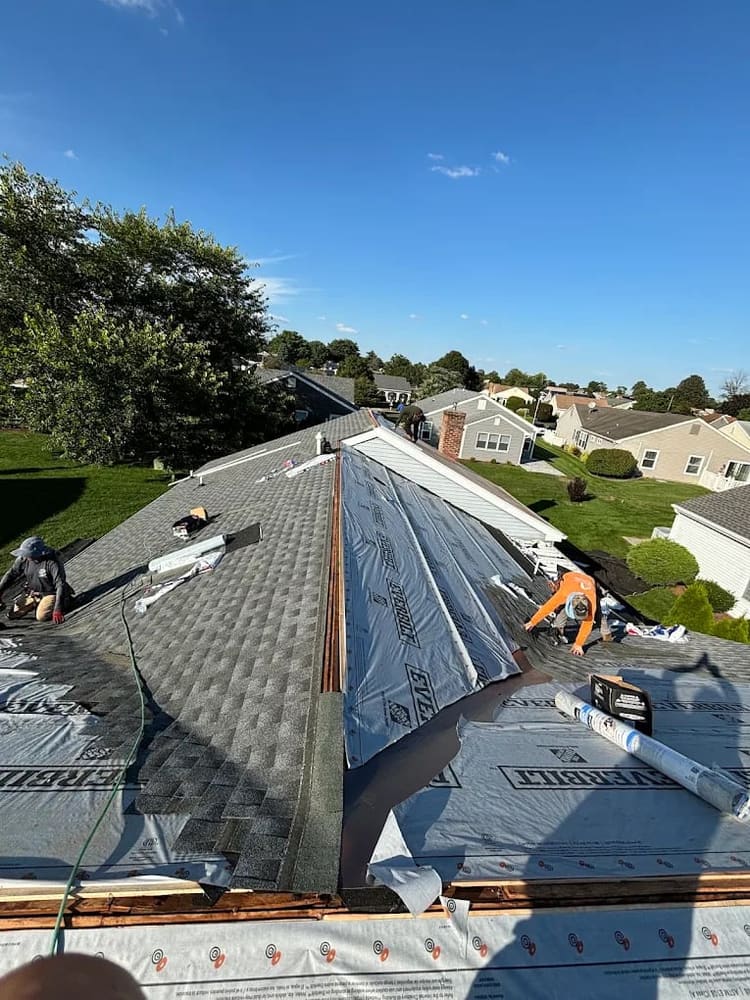
Repair or replace? What we tell Manville homeowners
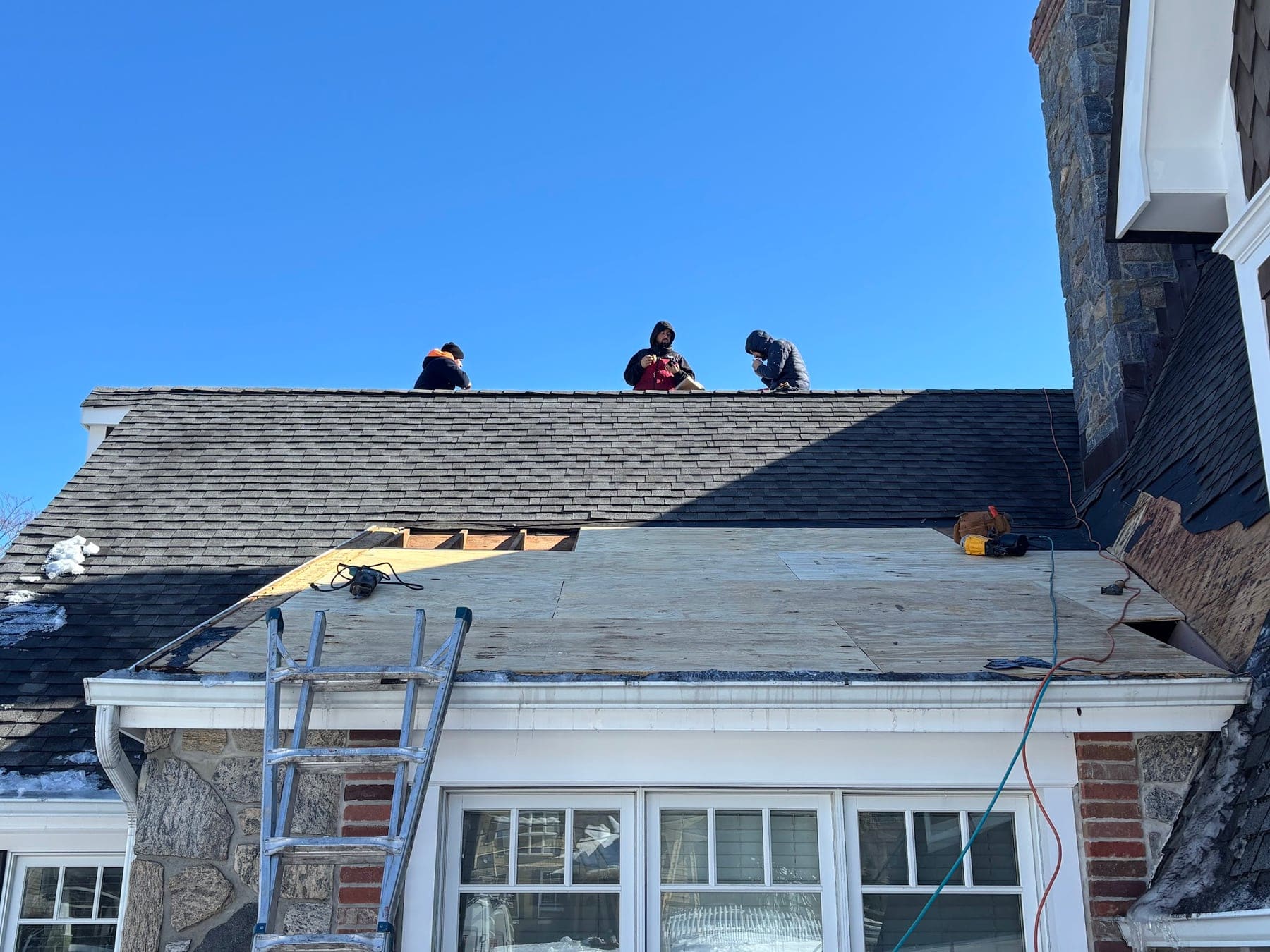
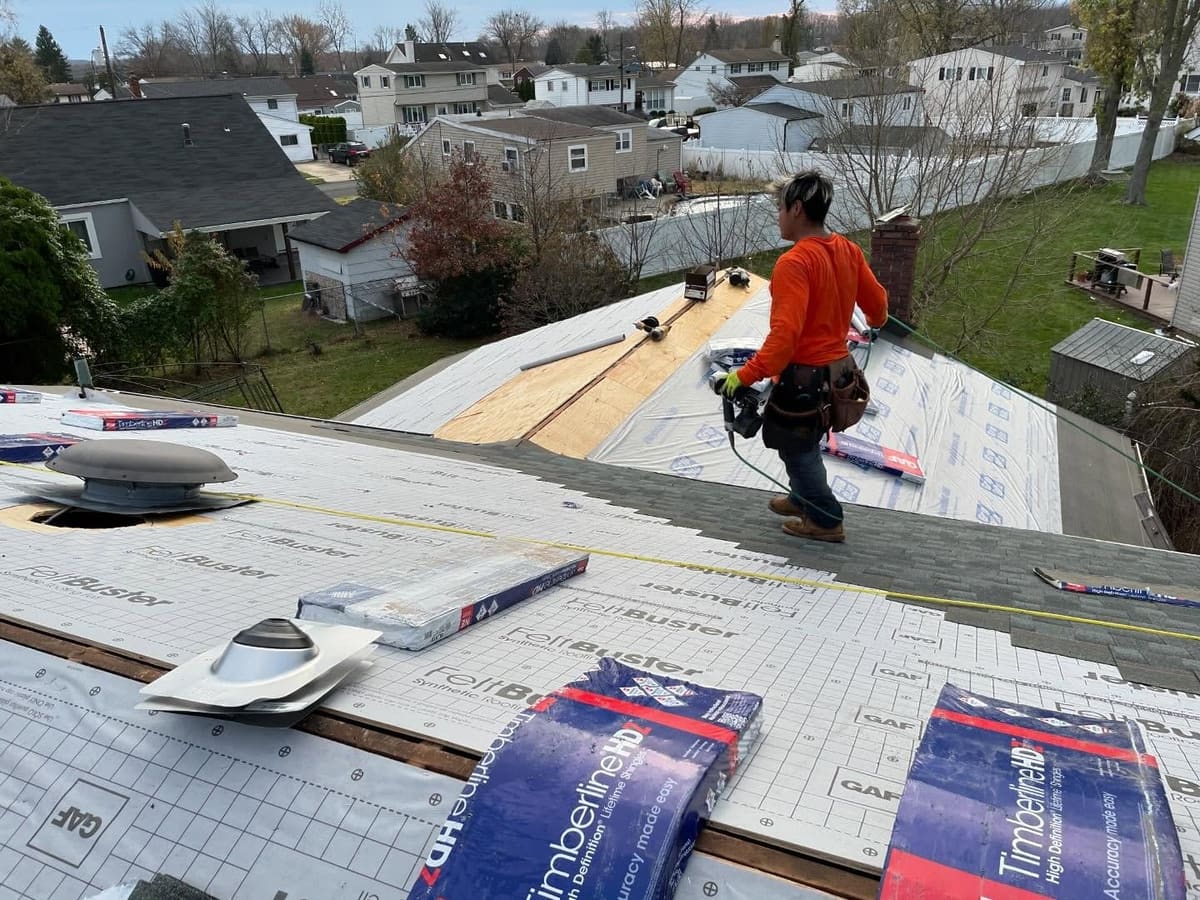
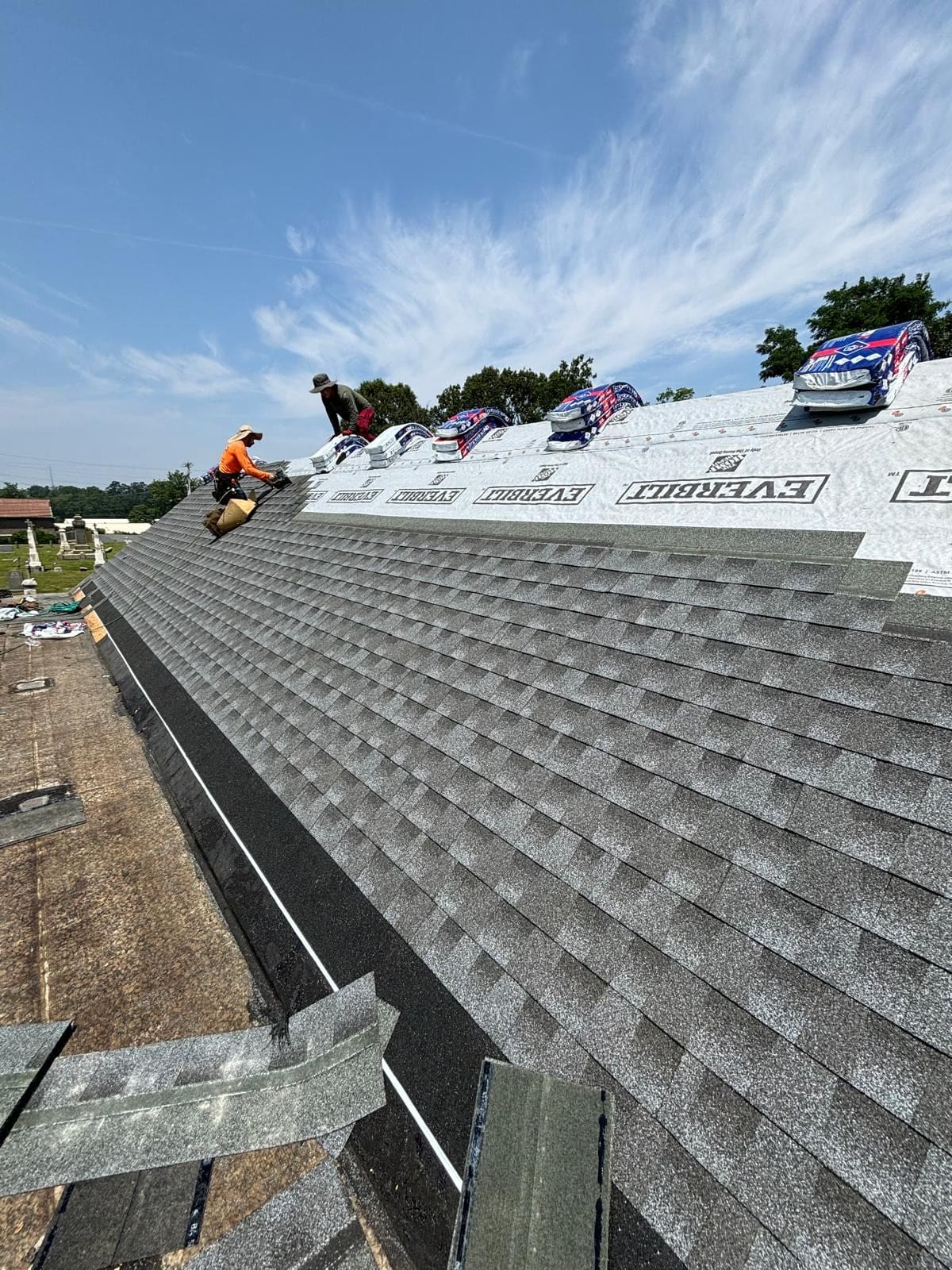
We trace the leak from inside and check whether it is a true roof leak or condensation, since the fixes are different. Roof leaks on Manville homes are usually repaired with new dormer and wall flashing, valley work, pipe boots or chimney flashing. Shingled low-slope additions are best converted to membrane.
If we see roofing or siding that may contain older cement-based materials, we tell you before any work disturbs it so it can be identified and handled appropriately. On commercial buildings we start with drains and seams and provide a written scope.