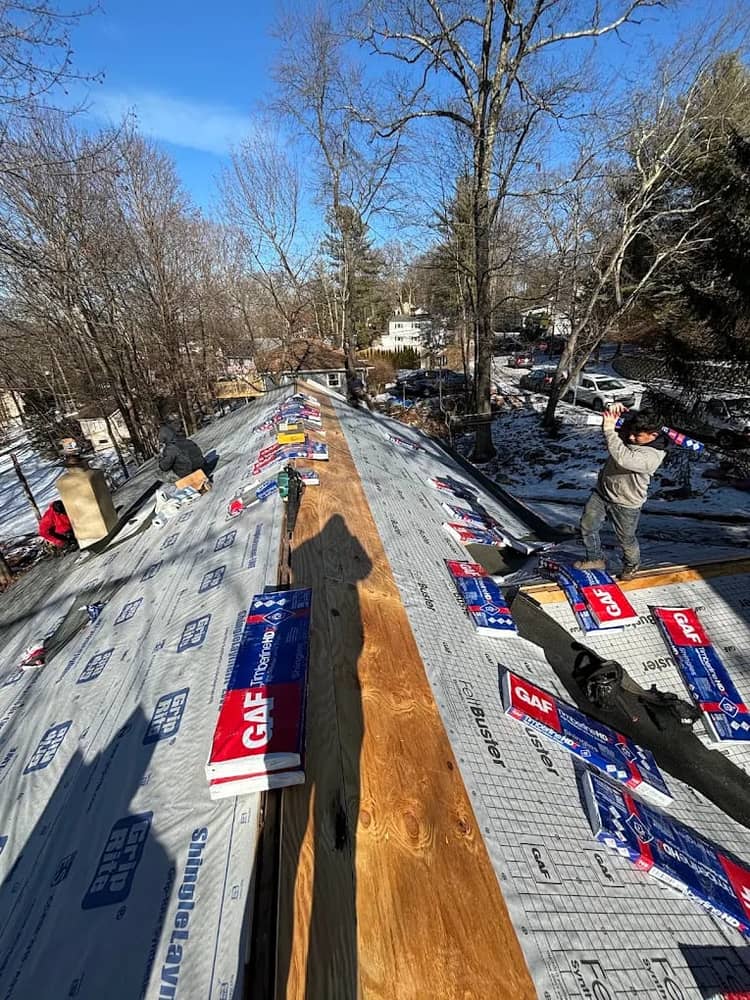
Roof Repair for Hillside homes and buildings
Hillside's Tudors and older colonials are the most distinctive roofs in the township: steep front gables, catslide roofs sweeping down over entries, eyebrow and shed dormers, and chimneys set into the front wall. Those features look good and leak in predictable places, mostly where steep slopes meet masonry or stucco walls. The two-families and capes have simpler roofs with their own issues at dormers and rear additions.
We repair asphalt shingle roofs, flat and low-slope residential sections, and the membrane and built-up roofs on apartment, commercial and industrial buildings. On the industrial side, most leaks come from seams, drains, curbs and edge metal on very large roof areas.
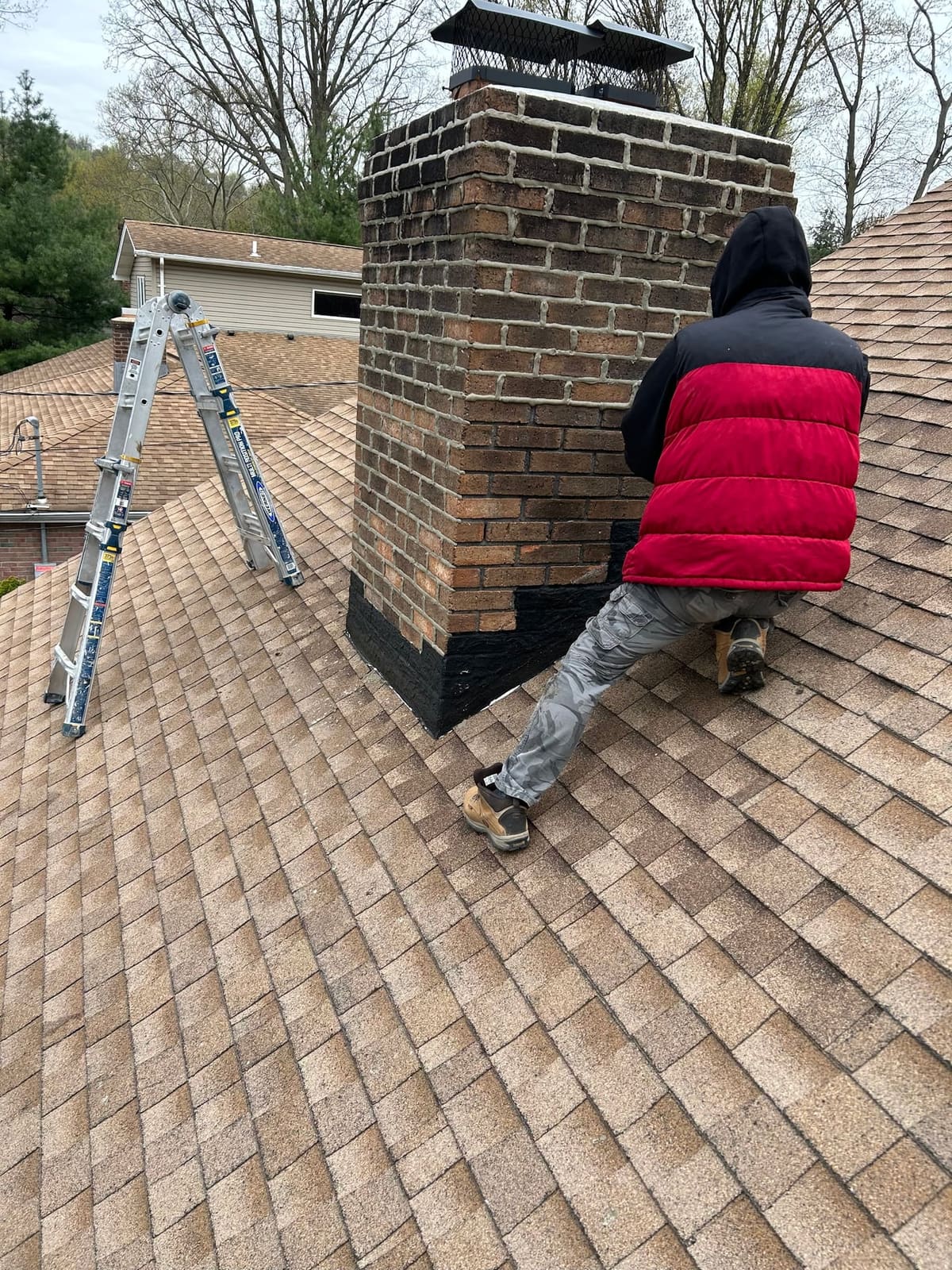
We inspect the whole roof and trace the leak from inside where we can, then show you photos. On stucco and masonry homes we also look at whether water is getting in through the wall rather than the roof, since the two are often confused.
Hillside housing
Hillside's housing stock is largely from the 1920s through the 1950s: brick and stucco Tudors with steep front gables, center-hall colonials, capes, and two-family homes, along with some garden apartments and brick apartment buildings. Masonry chimneys are nearly universal on the older homes, and many Tudors have chimneys built into the front facade. The industrial areas hold warehouses, manufacturing and distribution buildings with large flat roofs.
Weather & exposure
Hillside is low-lying and close to Newark Bay, so wind-driven rain in nor'easters is a real factor, particularly on flat roofs and exposed chimney faces. Street trees are moderate. The proximity to busy highways, rail and the airport means roofs and masonry collect grime, and flat roofs on large industrial buildings see significant wind uplift at edges and corners. Freeze-thaw cycles work steadily on brick, stucco and mortar.
Repair or replace? What we tell Hillside homeowners
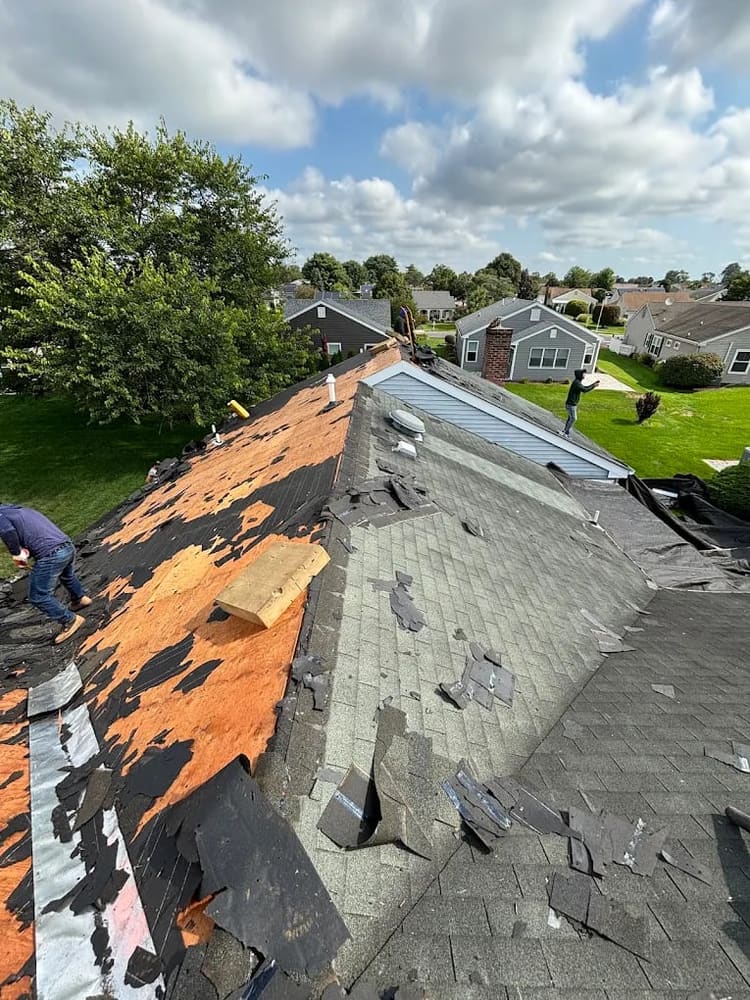
A repair is right when the roof is sound and one detail is failing. On Tudors that is often a flashing junction rather than the shingles. If the shingles are worn across the roof or there are multiple layers, replacement is better value. We tell you which applies after inspecting.
For industrial and commercial owners, a documented annual inspection keeps small seam and drain problems from becoming interior damage.