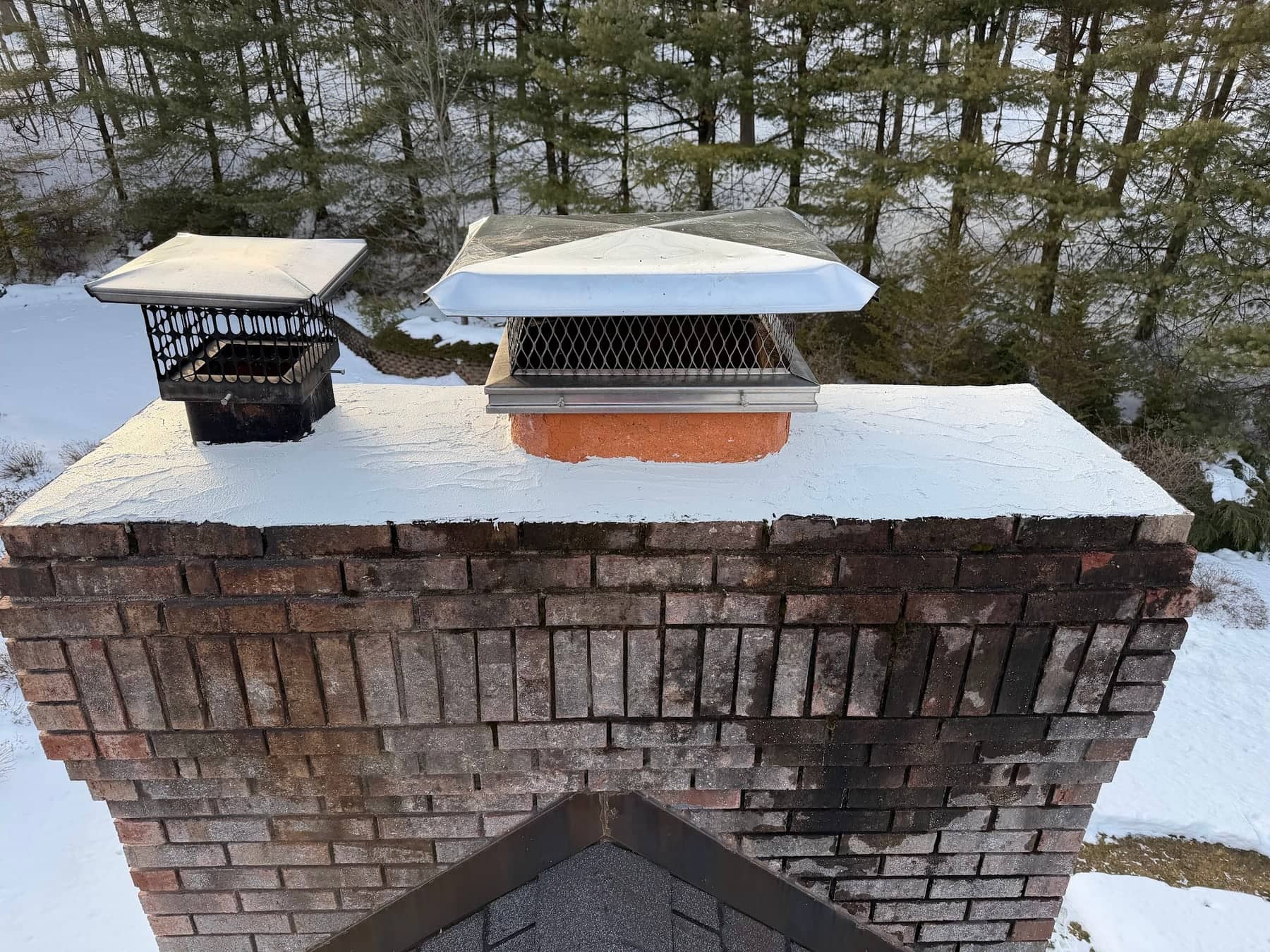
Chimney Repair for New Providence chimneys
New Providence's post-war homes typically have one brick chimney, often built against a gable end wall, with a flue for the furnace and water heater and a second for a fireplace. Many furnaces have since been replaced with high-efficiency units that vent through the side wall, leaving the water heater alone in a flue sized for much more exhaust.
That orphaned water heater is one of the most common chimney problems in a town like this. Its cool, moist exhaust condenses in the oversized flue and breaks down the tile and mortar from inside. Outside, the exposed brick on the gable end takes wind-driven rain on the borough's higher ground and loses mortar to freeze-thaw.
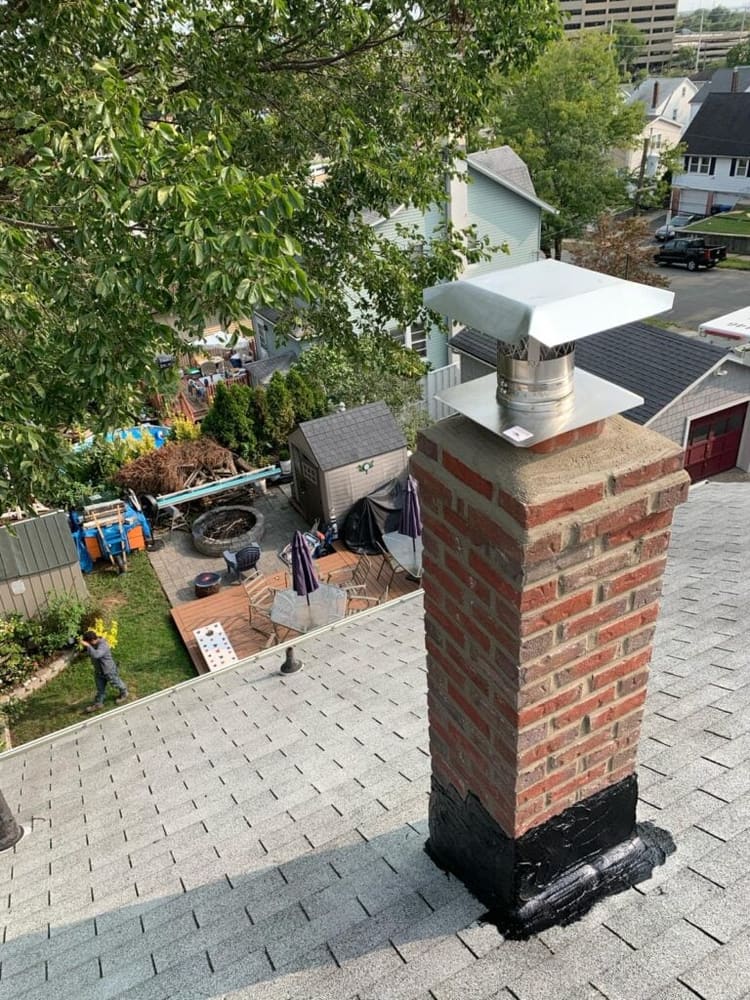
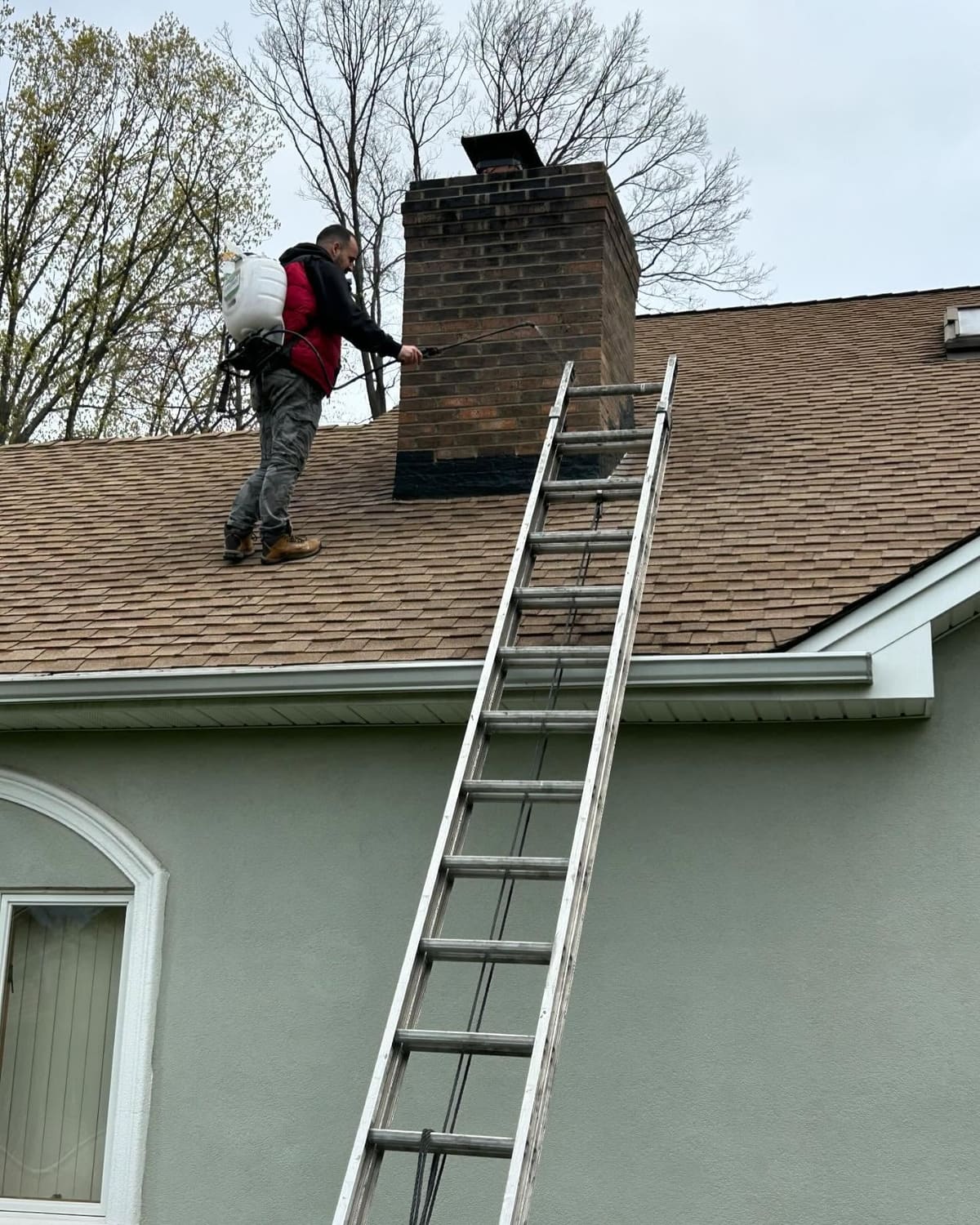
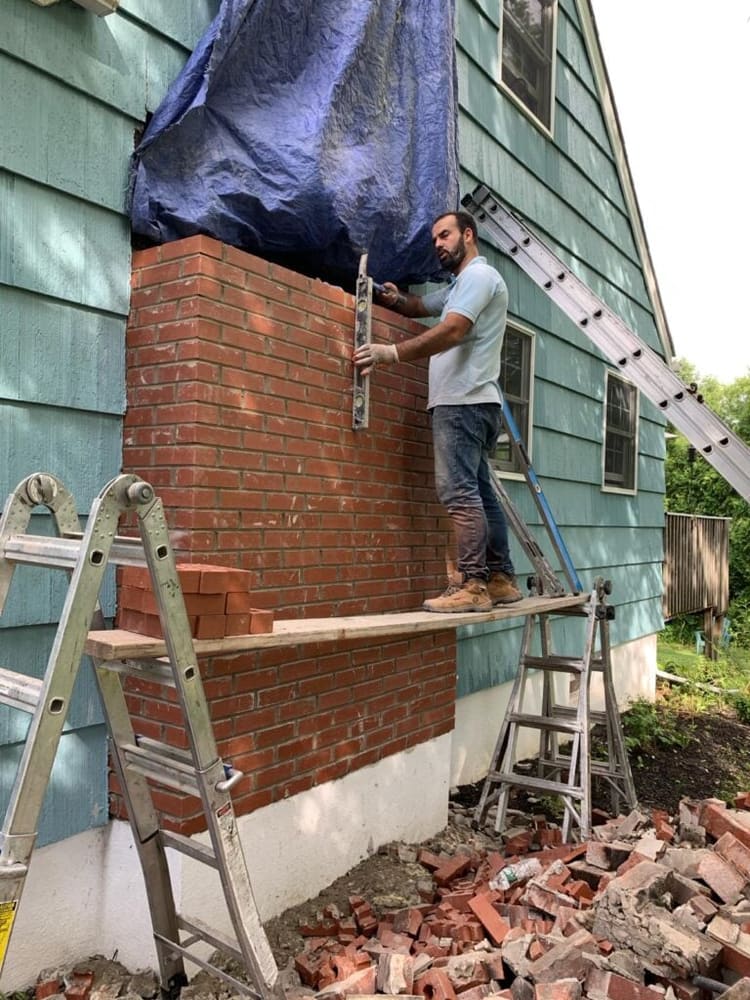
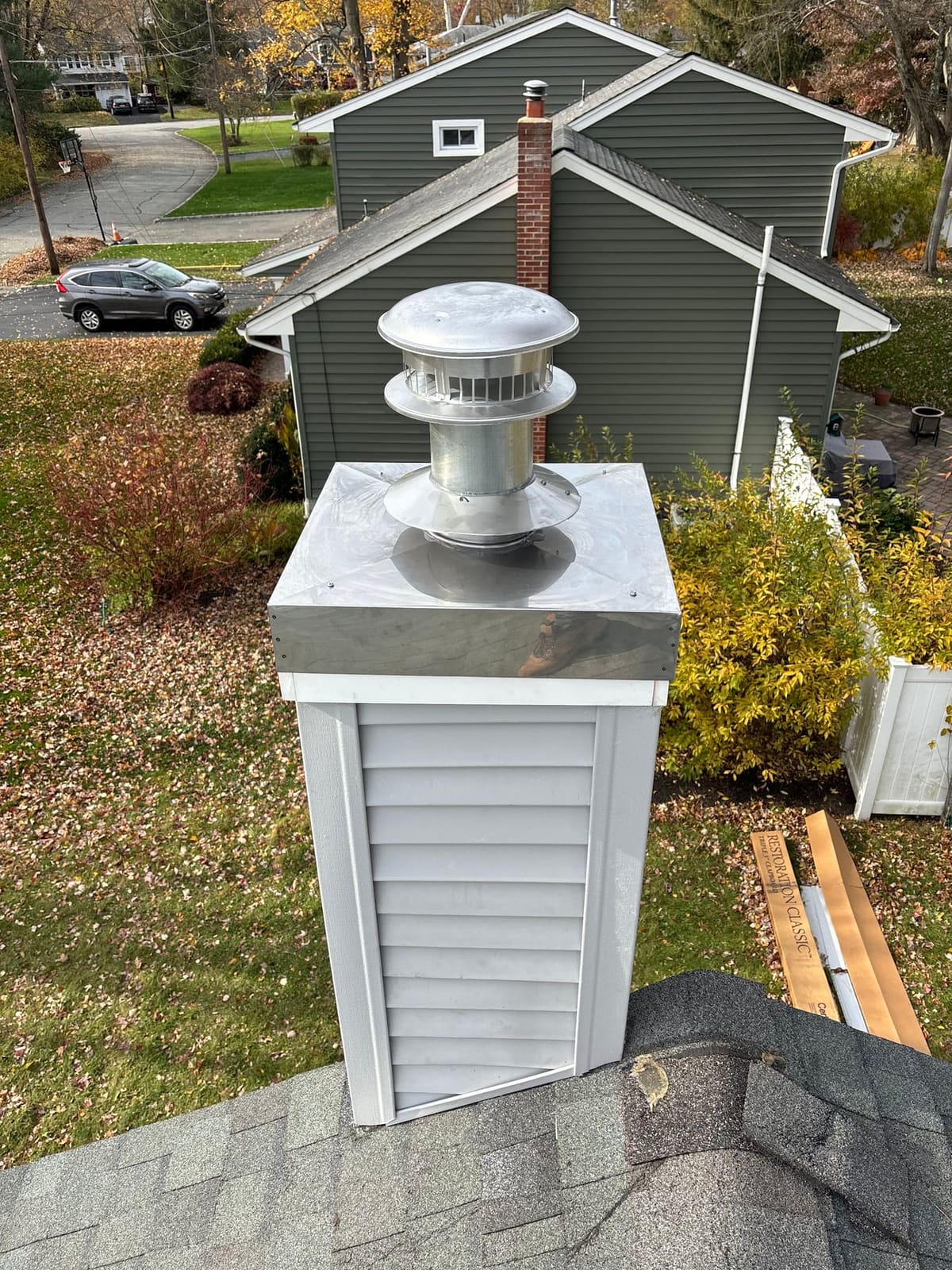
We inspect, repoint, rebuild, reline, cap, crown, flash, waterproof and clean chimneys across New Providence. Newer homes and townhouses with factory-built fireplaces have framed chases and metal chase covers, which we also inspect and replace when they rust.
New Providence housing
Most of New Providence was built out from the late 1940s through the 1960s with center-hall colonials, split-levels, bi-levels and ranches on suburban lots. A large share have since been expanded with full second stories, dormers or rear family-room additions, so many roofs combine original and newer sections. Townhouse and condominium complexes, a compact downtown of low commercial buildings and office and research buildings in Murray Hill carry flat and low-slope roofs.
Weather & exposure
The borough sits on elevated ground between the Watchung ridges, more open to wind than the lowland towns to the east, with mature shade trees over most streets. Nor'easters drive rain against the weather side of two-story colonials, north eaves form ice dams in cold stretches, and leaves and seed pods collect in the valleys created by additions. Freeze-thaw works on exterior brick chimneys built on gable end walls.
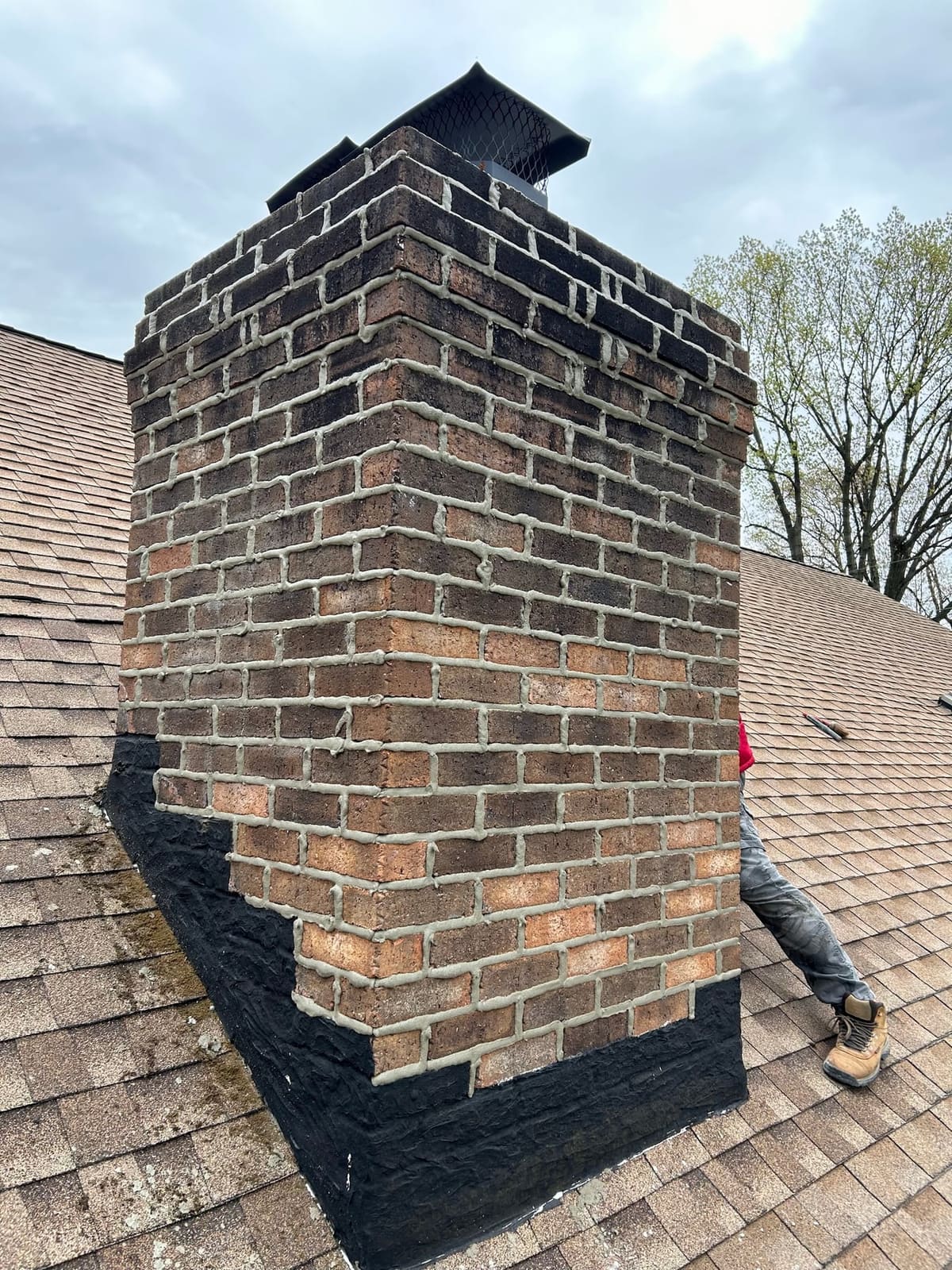
Repair, repoint or rebuild in New Providence
If you have replaced your furnace with a high-efficiency model in the last several years, have the chimney checked for what is left venting into it. An inspection covers the crown, caps, brick, joints and flashing outside and each flue inside. You get photos and a written scope that separates what is urgent from what can wait.
Fireplaces that see regular use should be inspected and cleaned routinely. For factory-built fireplaces, the chase cover and the termination cap are the parts most likely to fail.