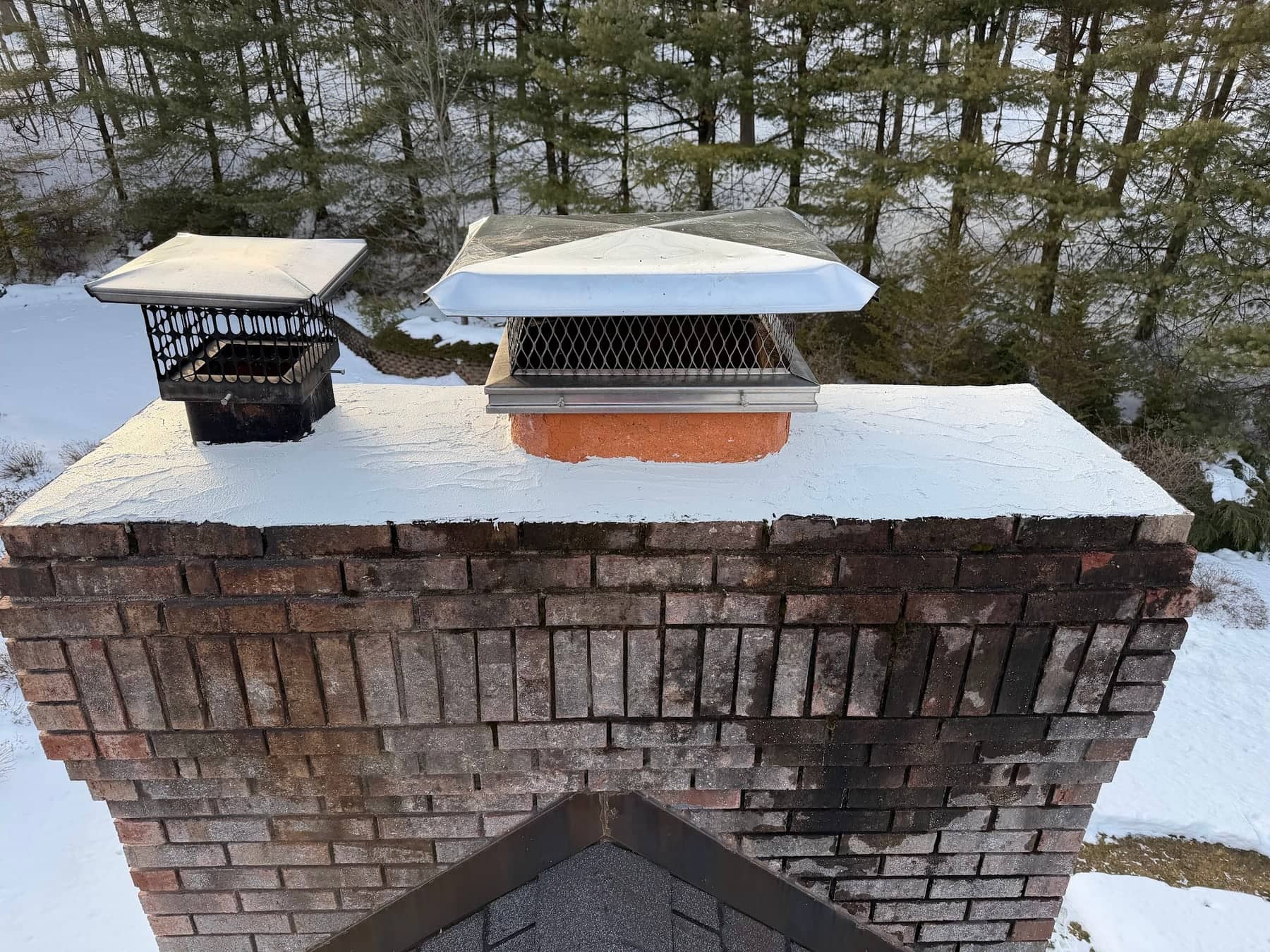
Chimney Repair for Hackensack chimneys
Hackensack's chimneys are mostly brick, mostly pre-1960, and mostly built for coal or oil heat. Many of the houses have since converted to gas, often without relining the flue. The result is a lot of chimneys with cracked clay tile liners, mortar joints eaten away from the inside by acidic condensation, and crowns that have split from decades of freeze-thaw. These problems are invisible from the street until the brick starts to spall or water shows up inside.
On the two-family and multifamily buildings near downtown, chimneys often serve more than one appliance and more than one flue. That makes inspection and relining more involved, and it also means a problem in one flue can affect the whole building. We inspect every flue, document what we find with a camera where needed, and explain the options clearly before any work begins.
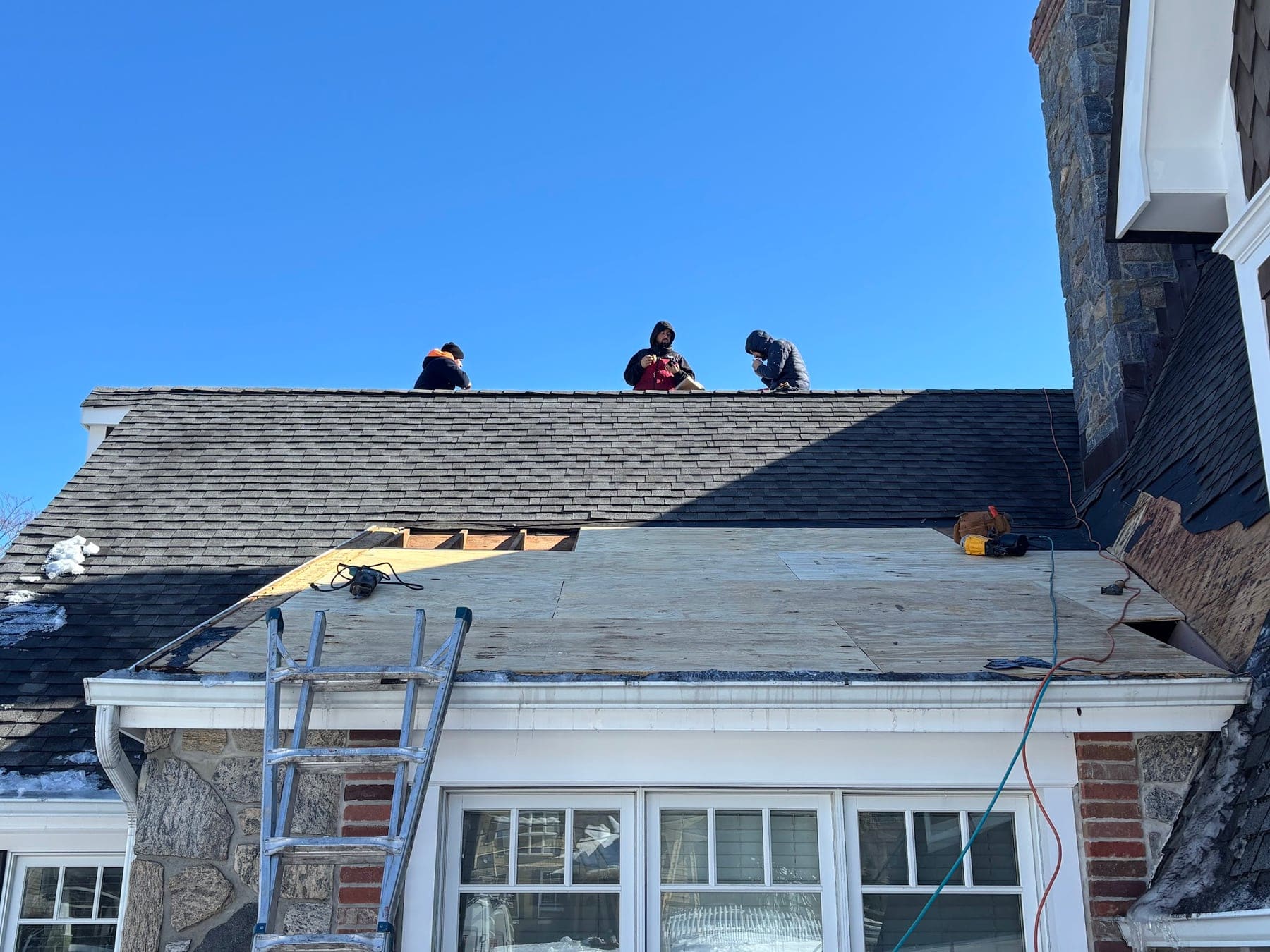
Because we also roof, we see the other side of chimney failures: flashing that has pulled away, saddles that were never installed behind wide chimneys, and water entering at the roofline rather than through the masonry. Many Hackensack chimney leaks are flashing leaks, and we fix both.
Hackensack housing
Hackensack has a dense, older housing stock. Much of it predates 1960: pre-war two-family homes and walk-up apartment buildings with flat roofs near the downtown core, older colonials and capes on the residential side streets, and a corridor of mid- and high-rise apartment buildings closer to the Hackensack River. Newer multifamily construction has been added downtown in recent years.
Weather & exposure
The city sits in the Hackensack River lowlands, so the low-lying blocks deal with flooding and chronic ground moisture rather than cliff-top wind. Older residential streets have mature trees that drop limbs and clog gutters. Flat roofs downtown collect ponding water after heavy summer thunderstorms, and winter freeze-thaw works on the many pre-war brick chimneys and parapet walls.
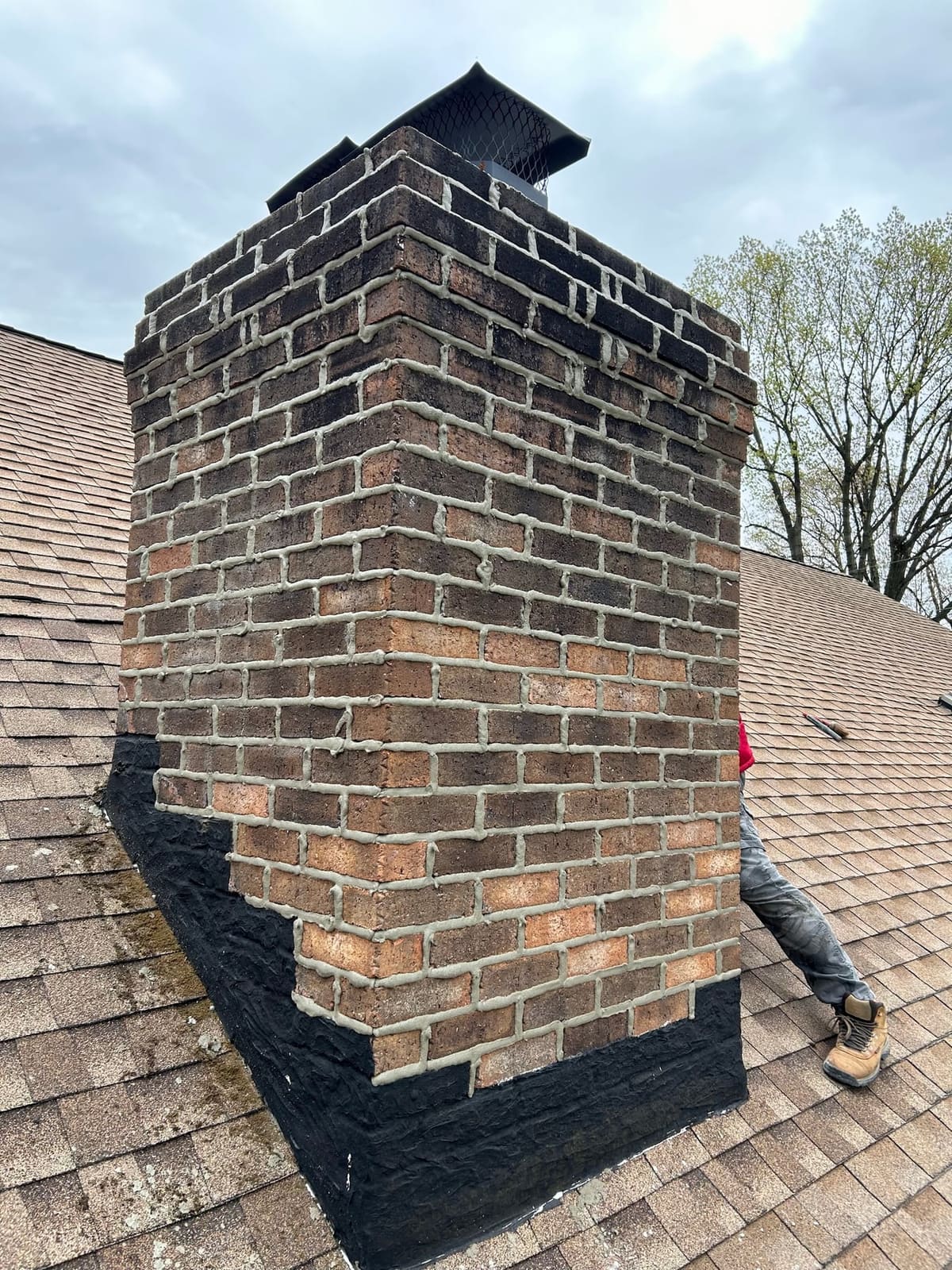
Repair, repoint or rebuild in Hackensack
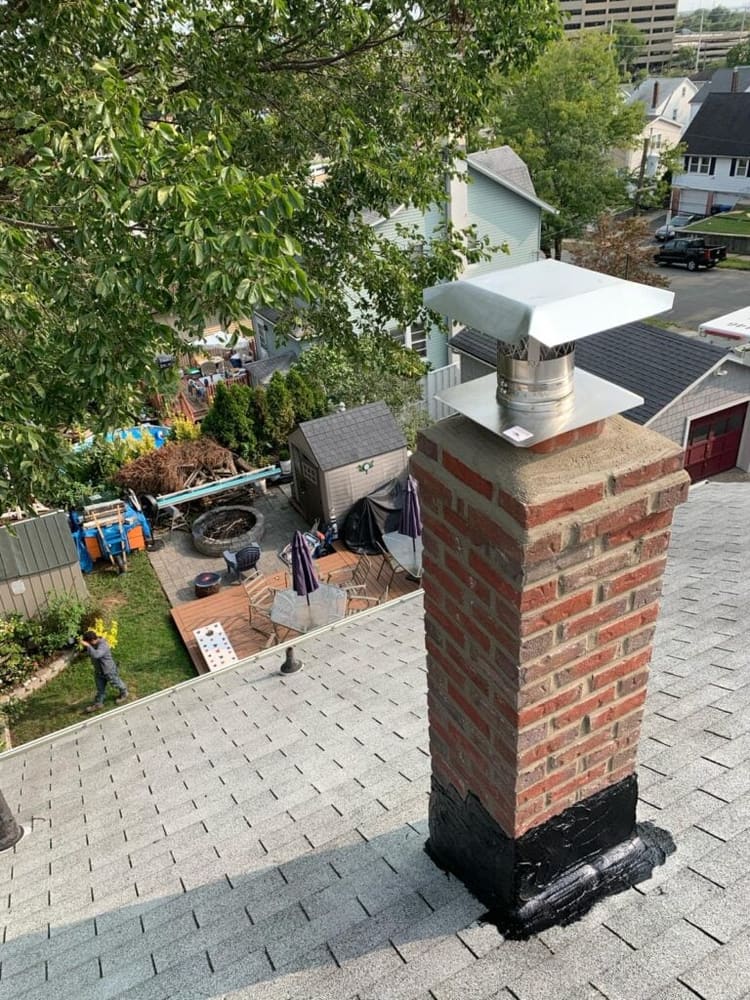
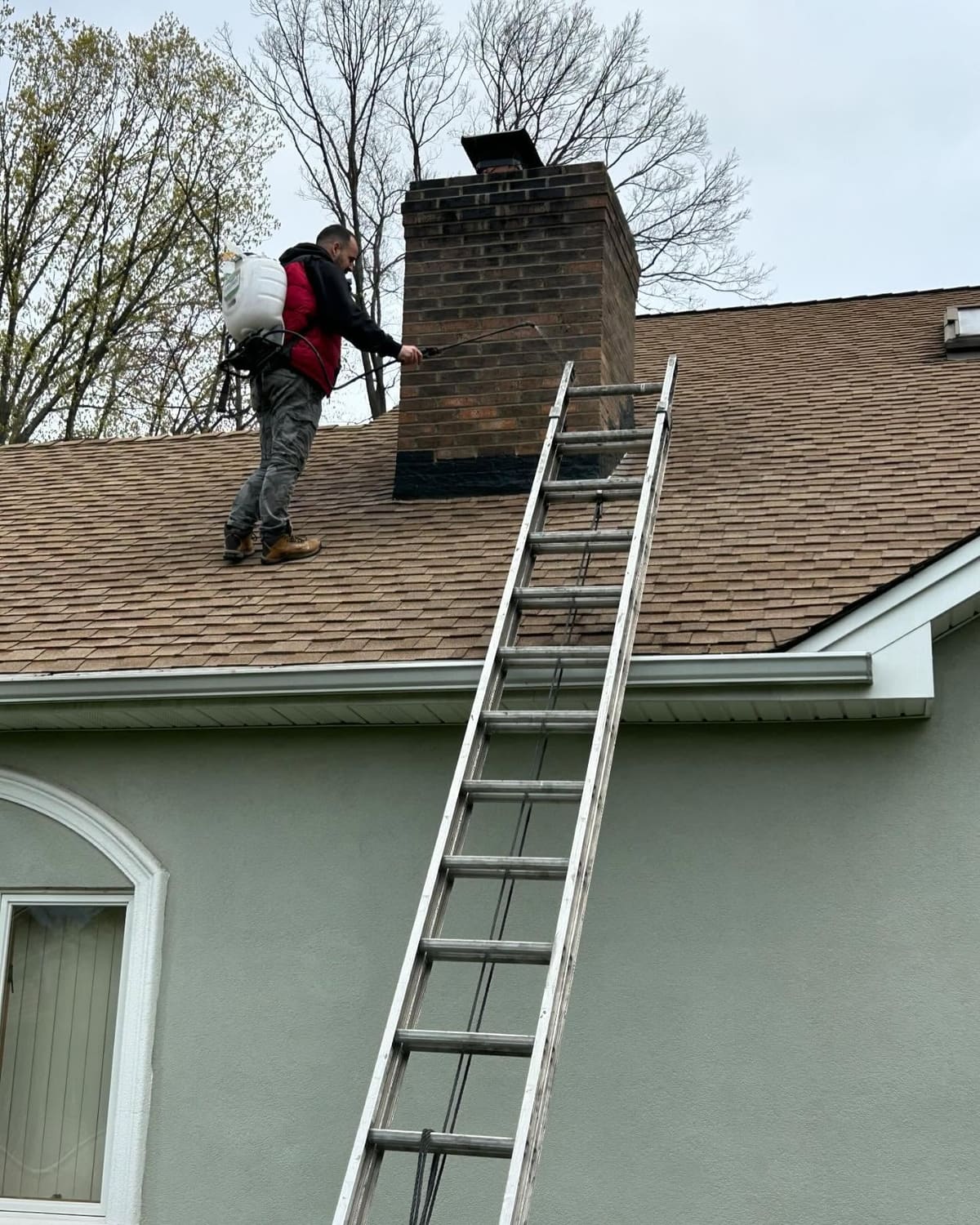
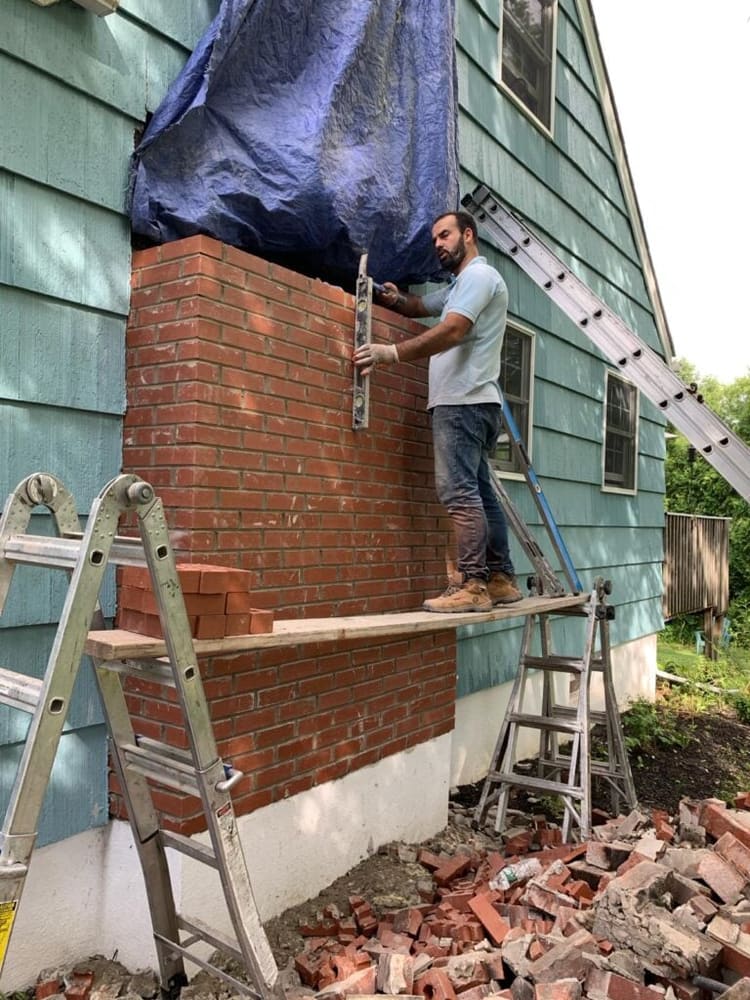
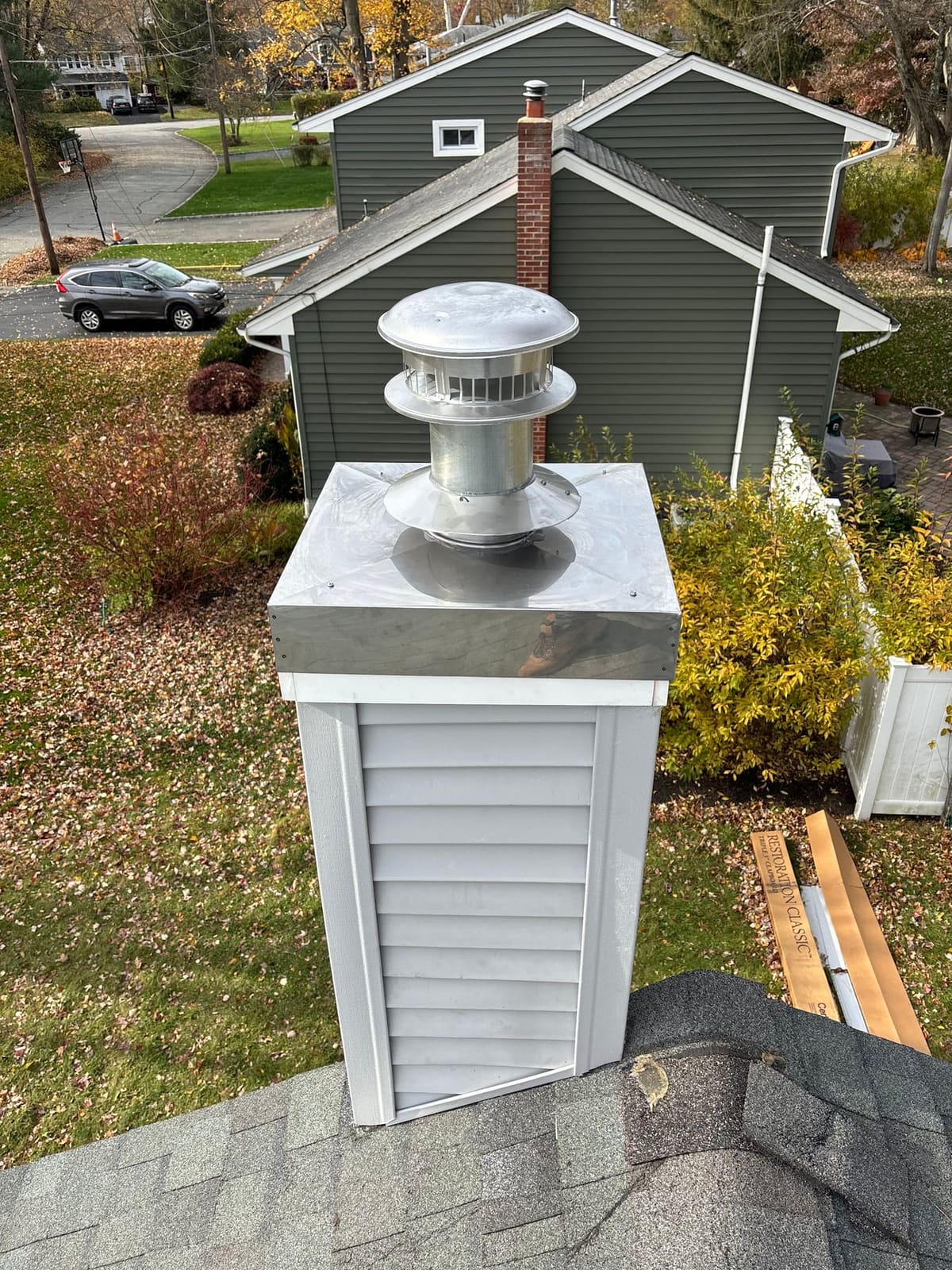
If your Hackensack chimney shows white staining, spalling brick faces, loose mortar or a visibly cracked crown, have it inspected before the next heating season. Most of these conditions are repairable with repointing, a new crown, a cap and waterproofing. A chimney that is leaning, has lost large sections of brick above the roofline or has a badly deteriorated liner may need a partial rebuild from the roof up, which is still routine work for us.
If you have converted to gas or are about to, ask us to check the flue sizing and liner condition. An unlined or oversized flue serving a gas appliance is both a maintenance problem and a safety problem. Estimates are free and we explain exactly what we found and why we recommend each step.