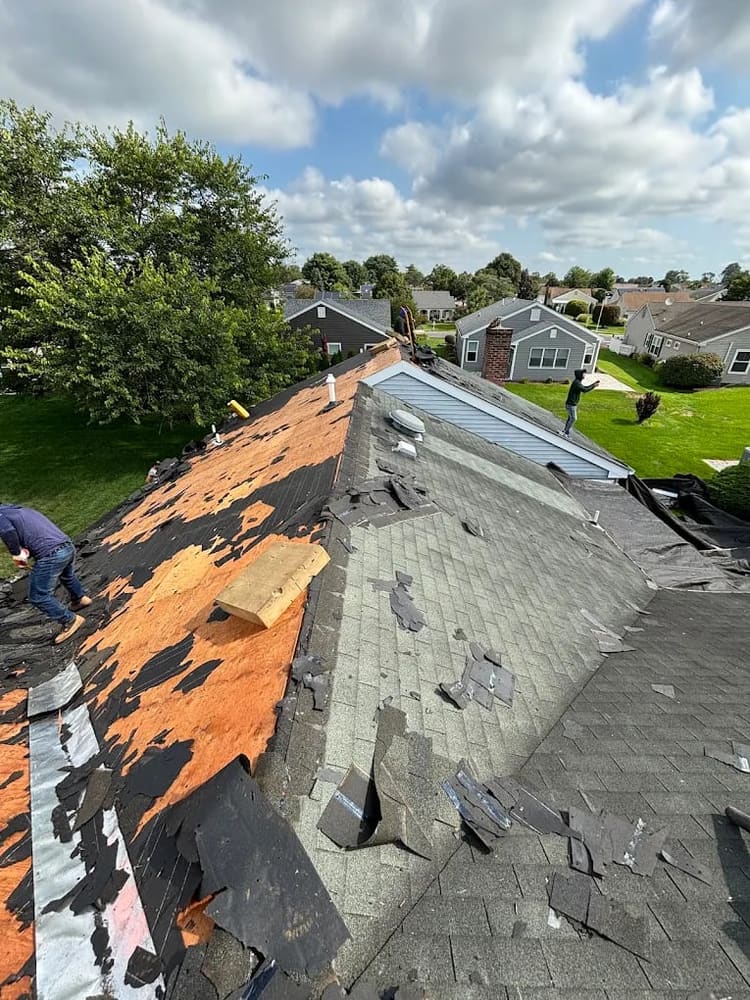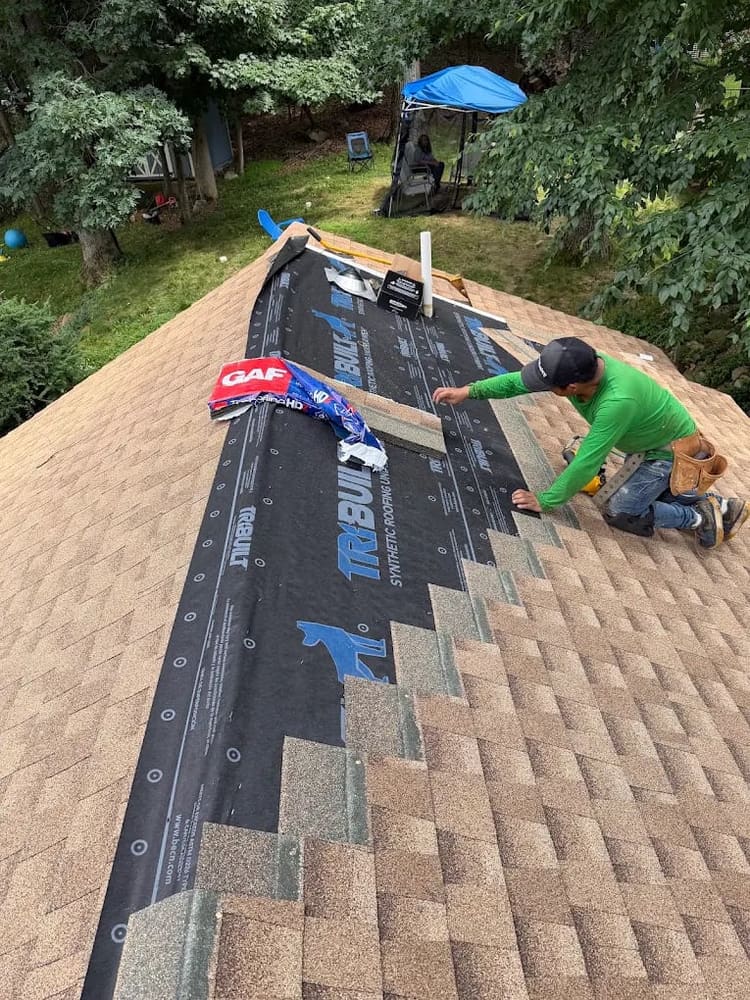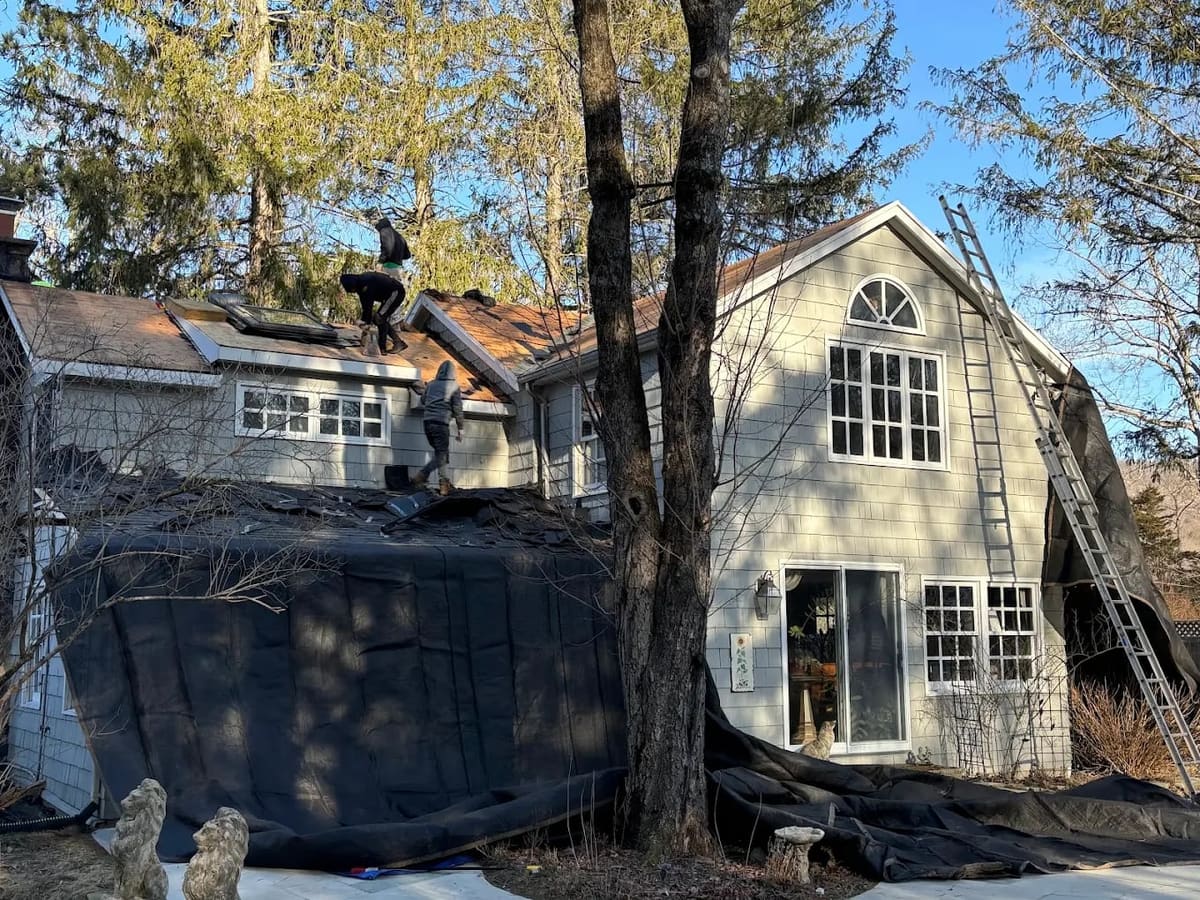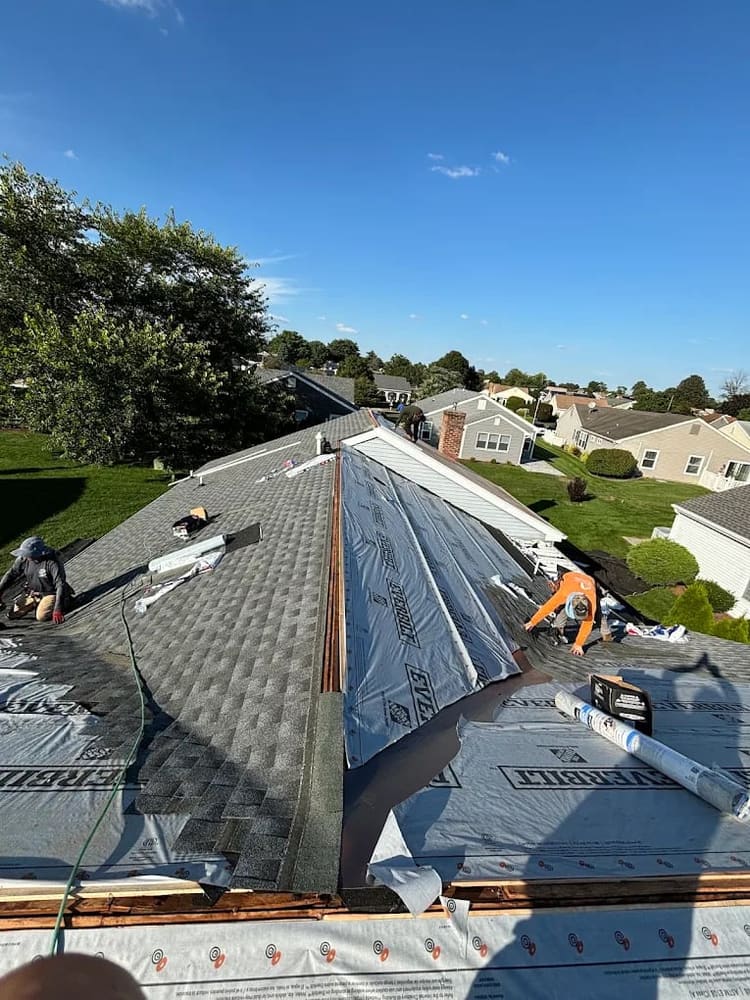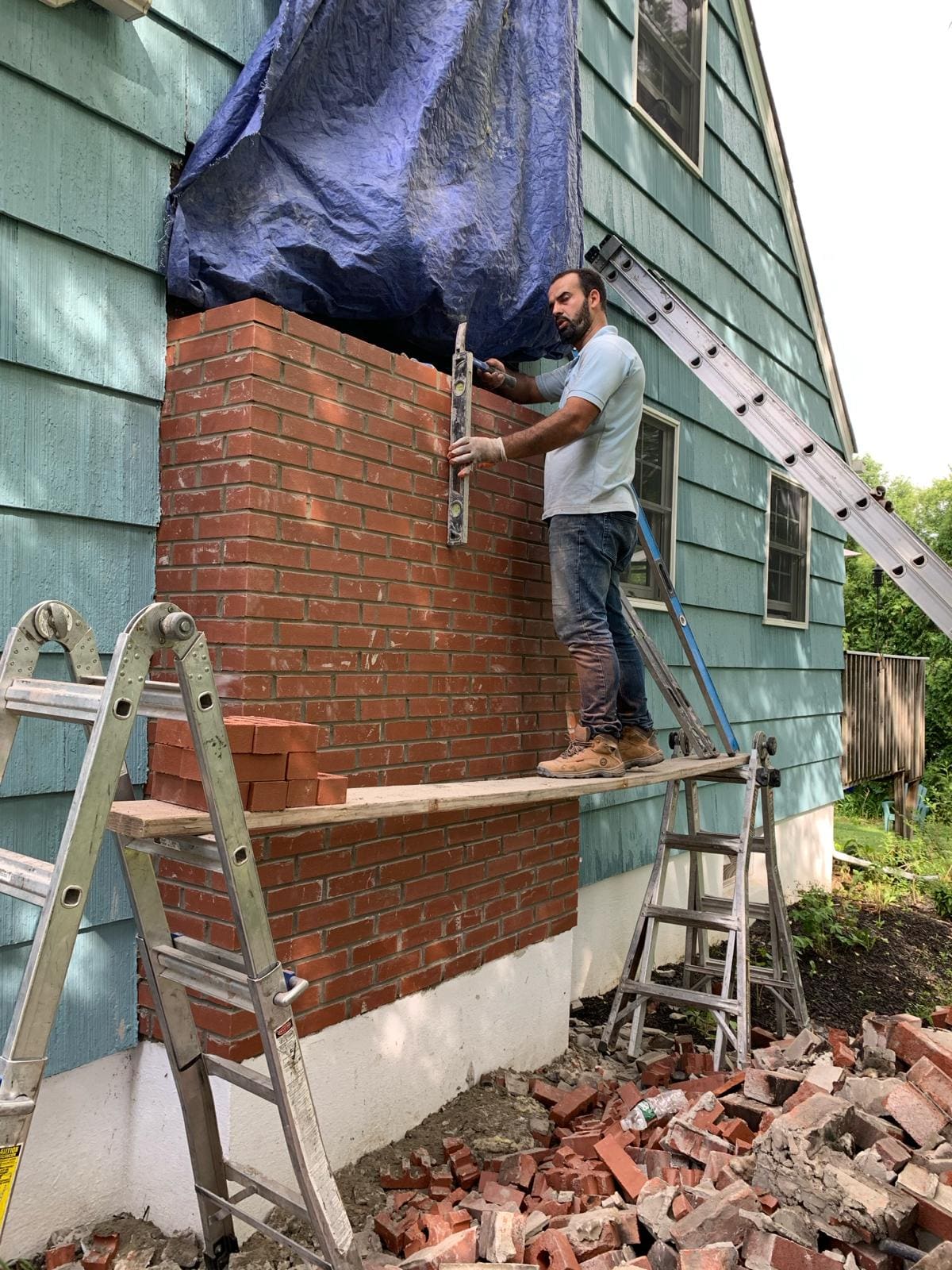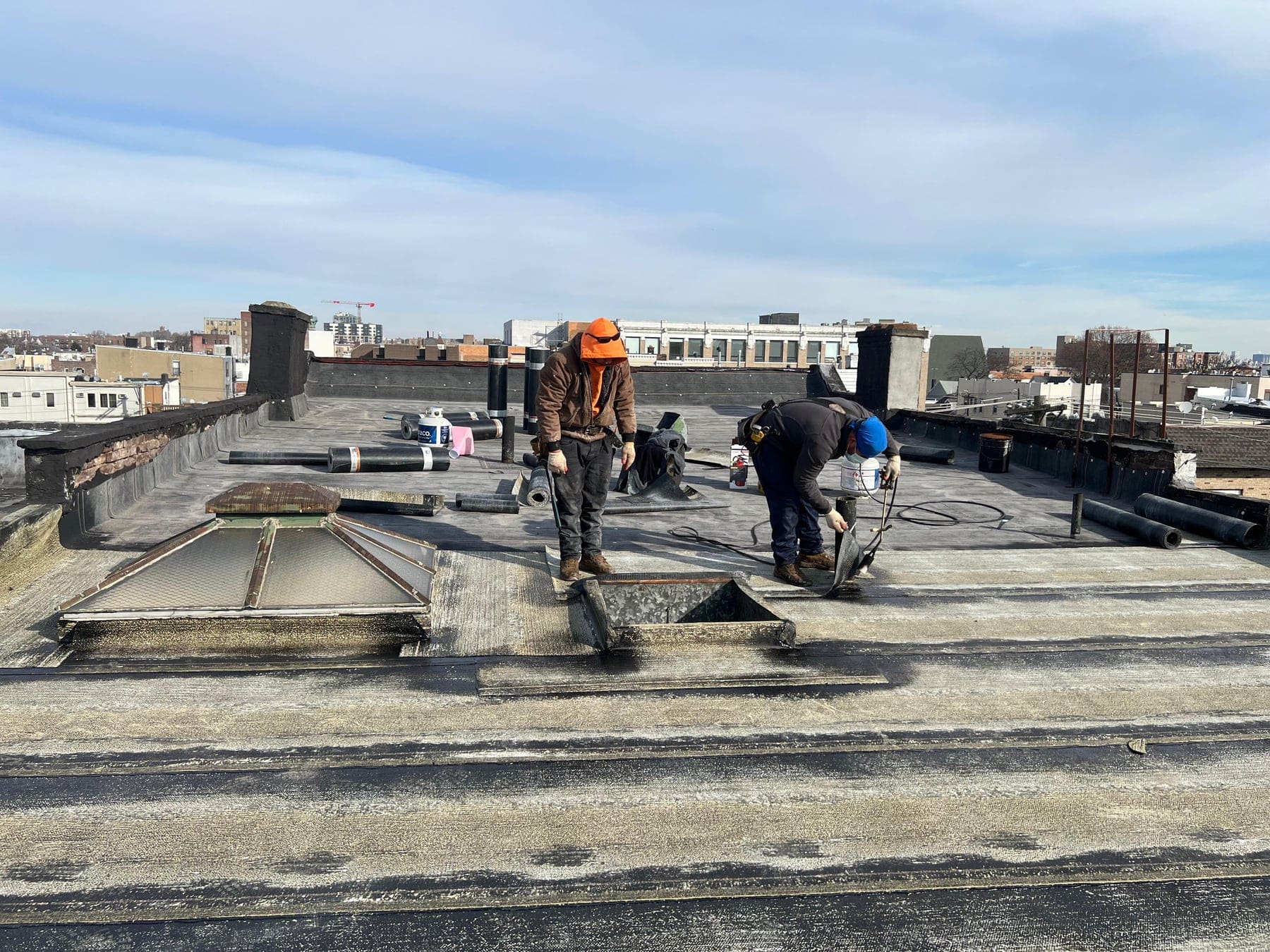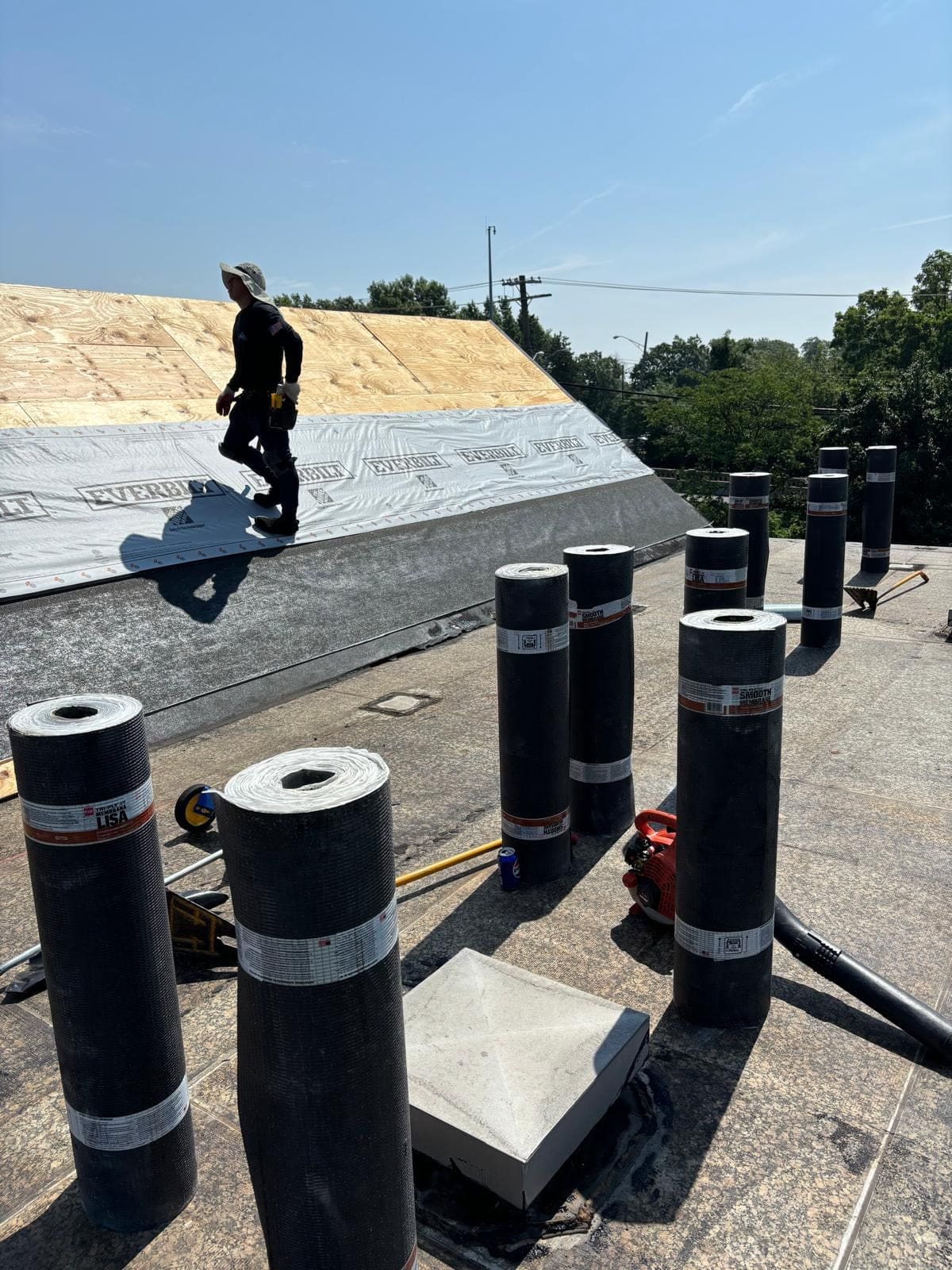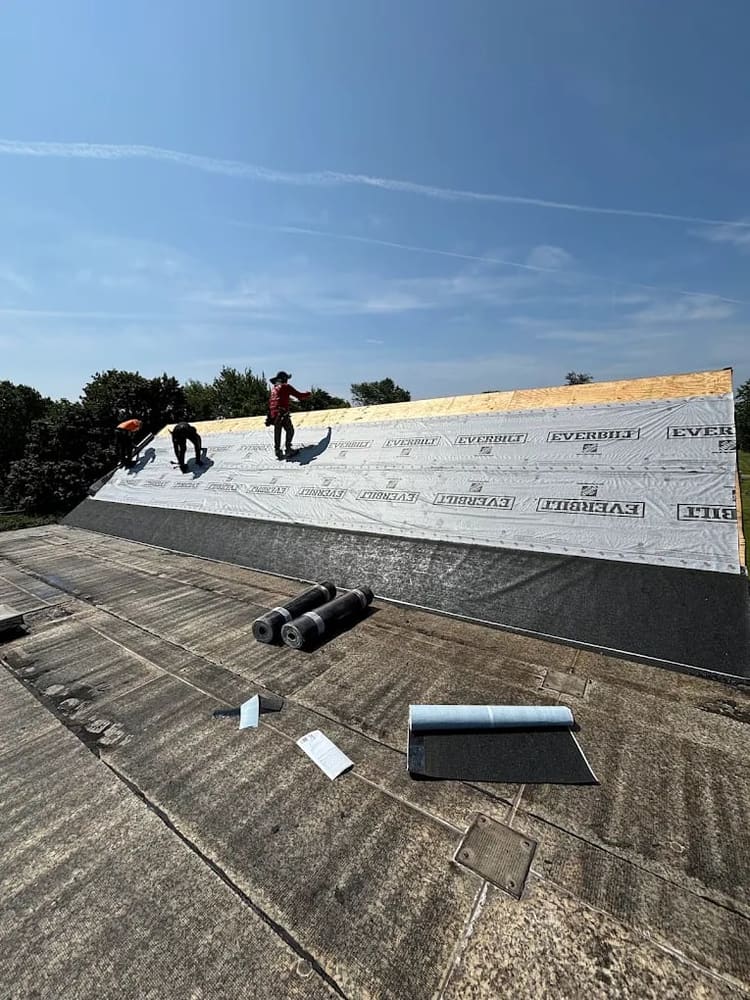
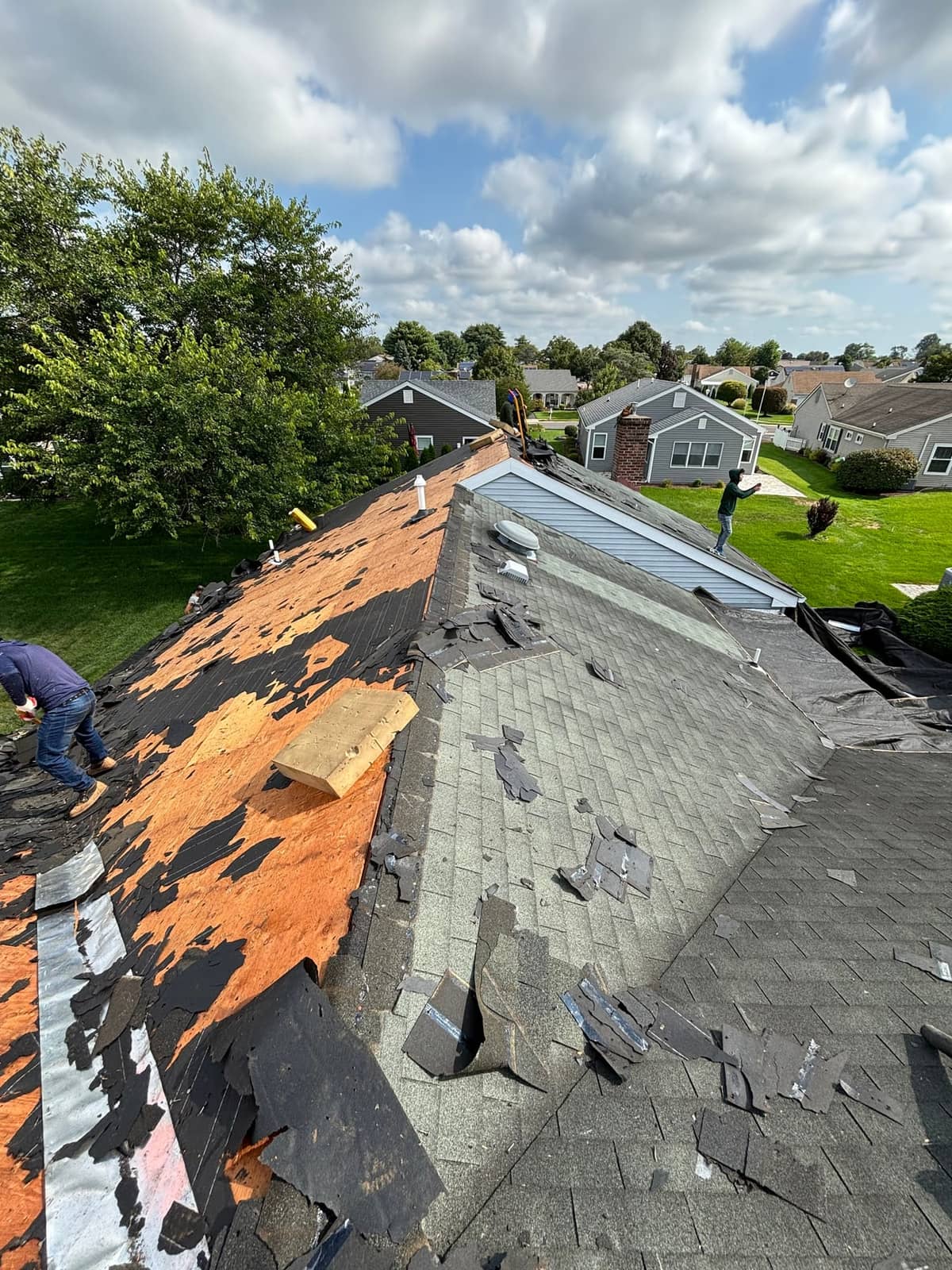
Roof Repair for Haworth homes and buildings
In Haworth, the trees decide a lot about how a roof ages. Heavy canopy keeps roofs shaded and damp, and the back slopes of many houses rarely see full sun. That means moss, algae, slow-drying shingles and granule loss under branches. When storms come through, falling limbs are the most common cause of sudden roof damage.
The borough's older homes add steeper roofs, dormers and tall chimneys, while the post-war splits and ranches have low eaves where ice dams form. Expansions often join new roof sections to old ones. Each of those features is a place we check when tracing a leak.
We find the actual source, repair it, and point out tree and gutter conditions that will cause the next problem if left alone.
Haworth housing
Haworth is almost entirely single-family homes, generally on larger lots than in the boroughs to the south. The housing mixes older pre-war homes, including colonials and Tudor-style houses, with post-war colonials, split-levels and ranches, and some larger newer homes. Many houses have been expanded over time. Commercial buildings are few.
Weather & exposure
Tall, mature trees surround most homes, and the reservoir lands and woods keep the air damp. Roofs under heavy canopy stay shaded and wet, gutters fill quickly in fall, and storms bring down limbs. Rolling terrain near the reservoir means some homes sit on slopes or low spots where runoff and ground moisture collect. Winter freeze-thaw and lingering snow on shaded roofs bring ice dams.
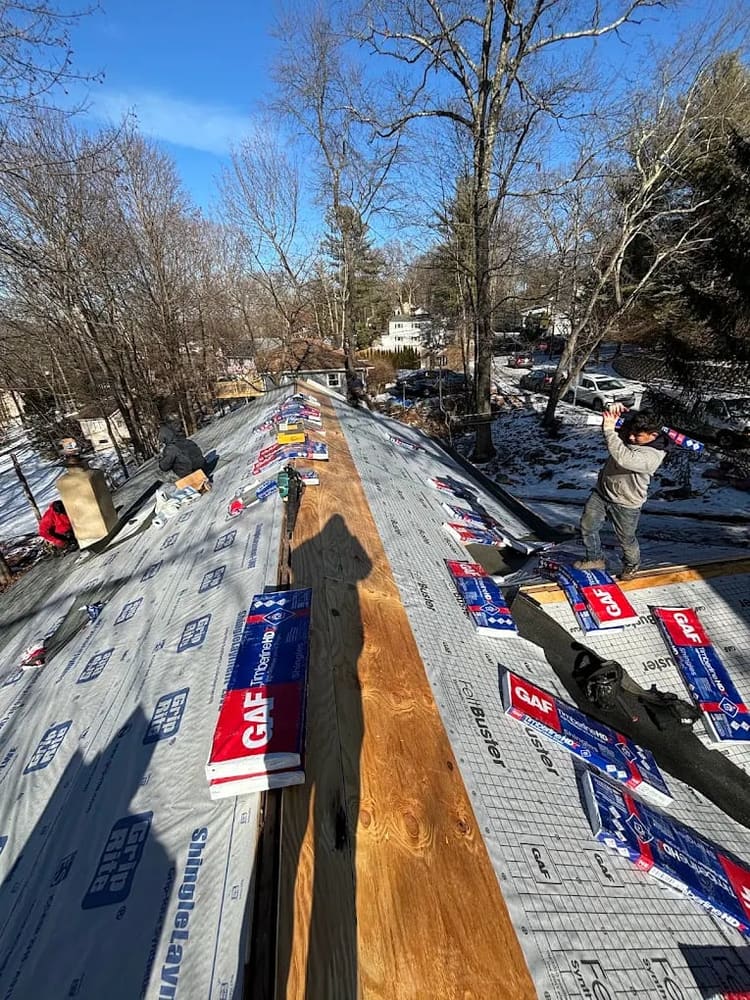
Repair or replace? What we tell Haworth homeowners
Most Haworth roof repairs are localized: a limb strike, a dormer, a worn section under a branch. If the shingles elsewhere are still flexible, repair is the right call. If moss and wear have spread across the roof and shingles are brittle, we will tell you replacement is due.
For slate or cedar on older homes, we can assess and advise. Estimates are free, and we document storm damage for insurance claims when needed.