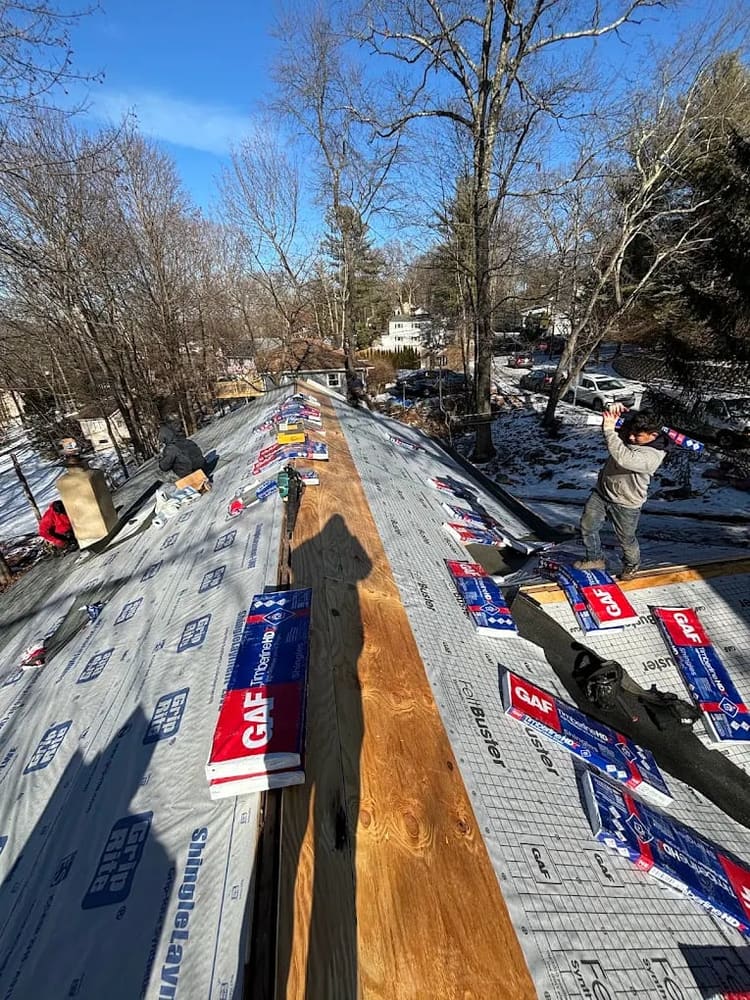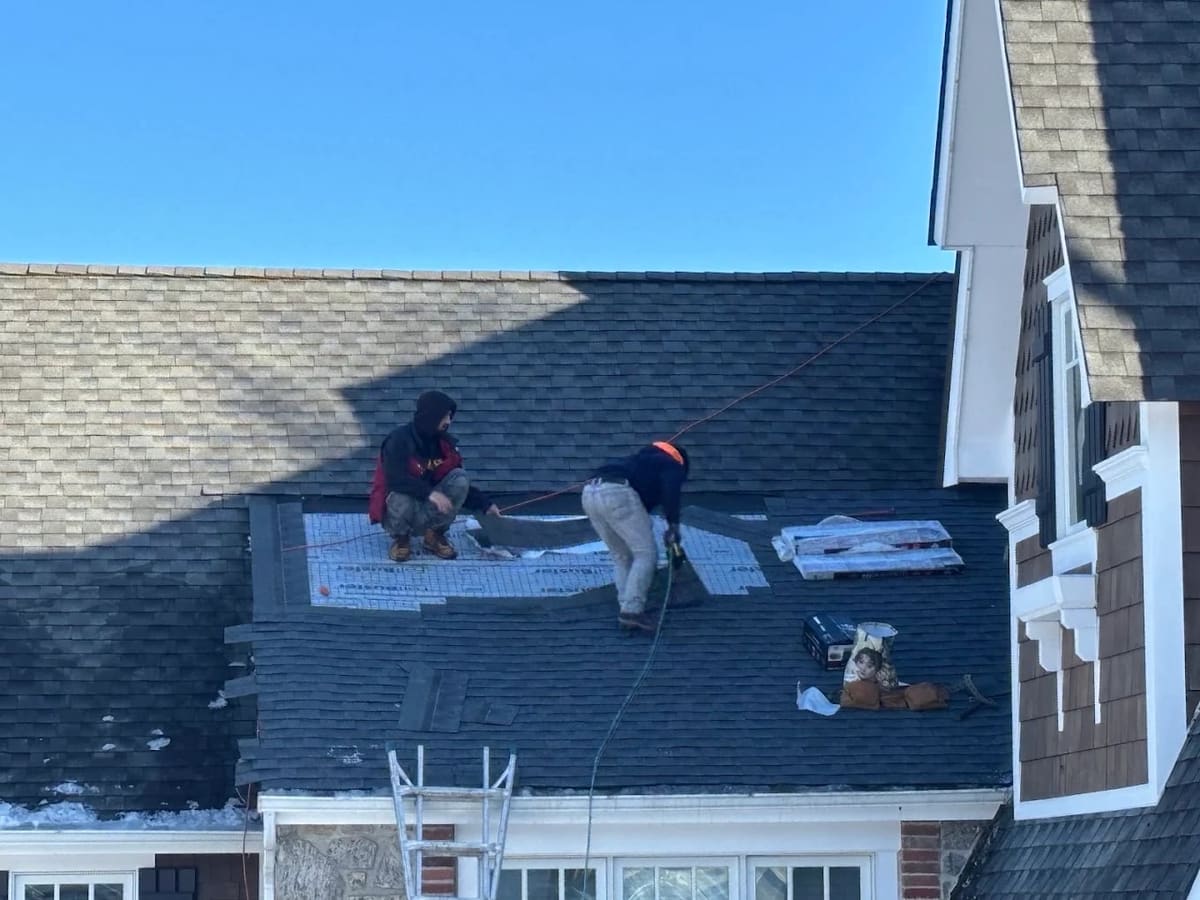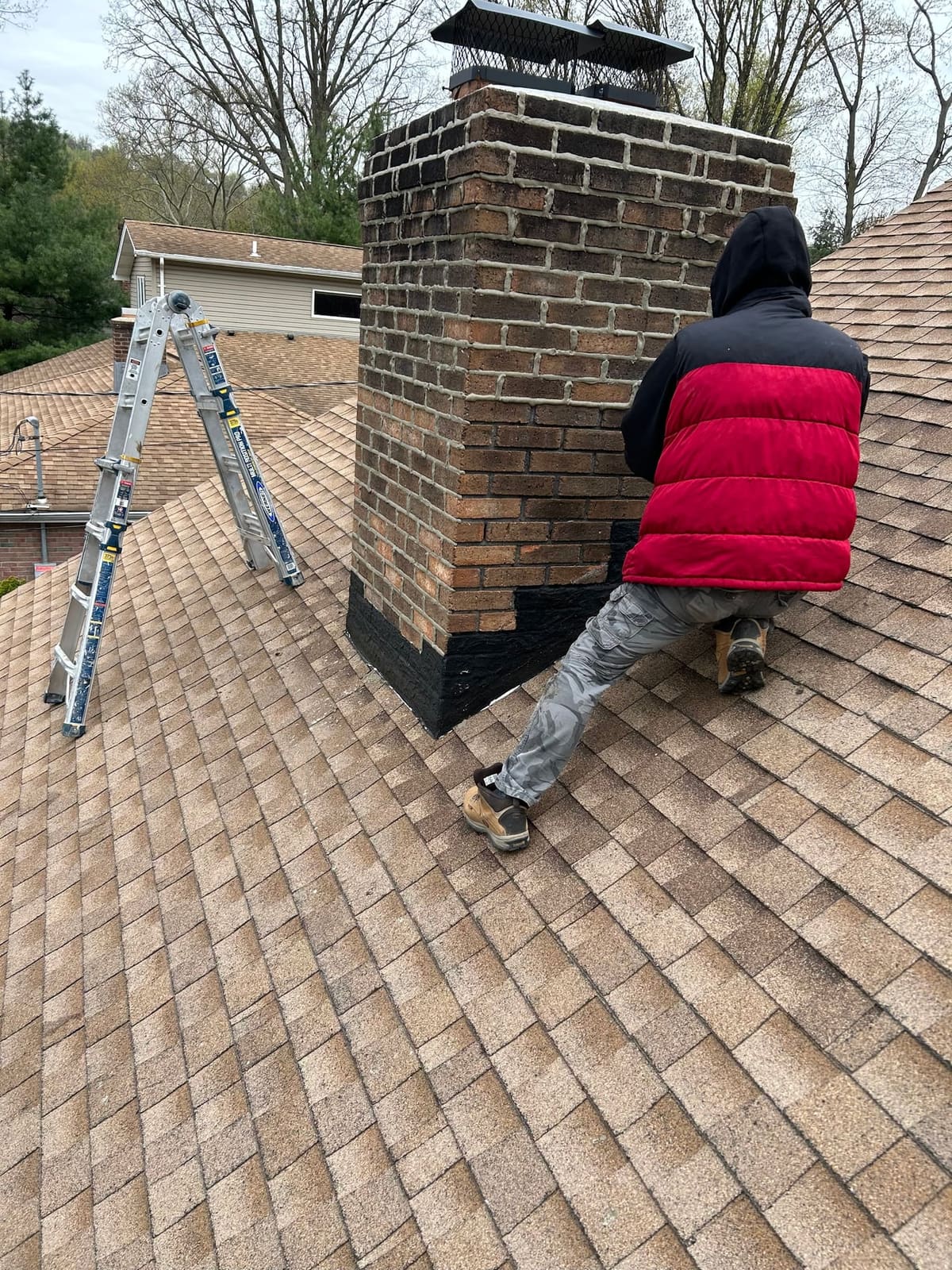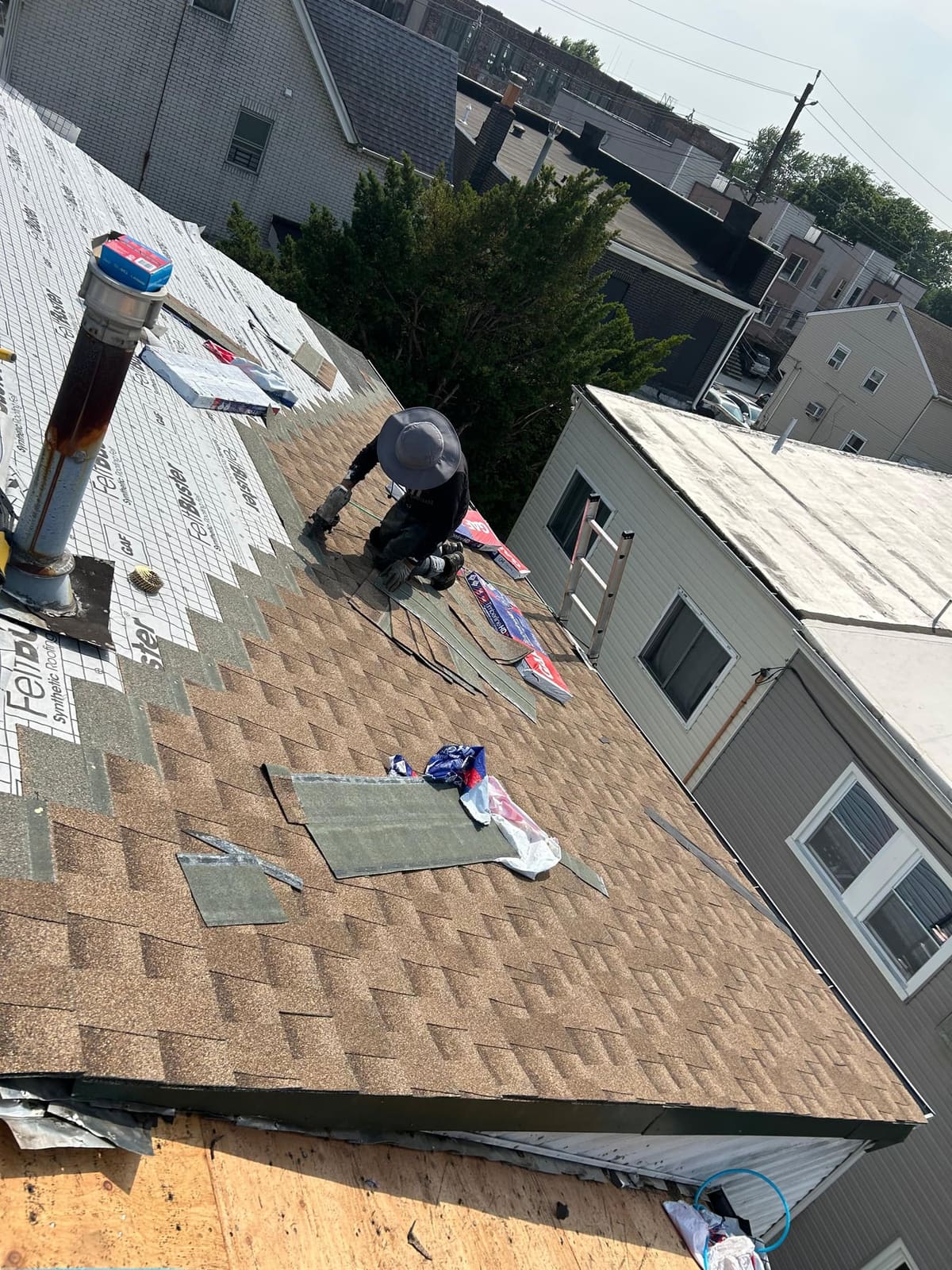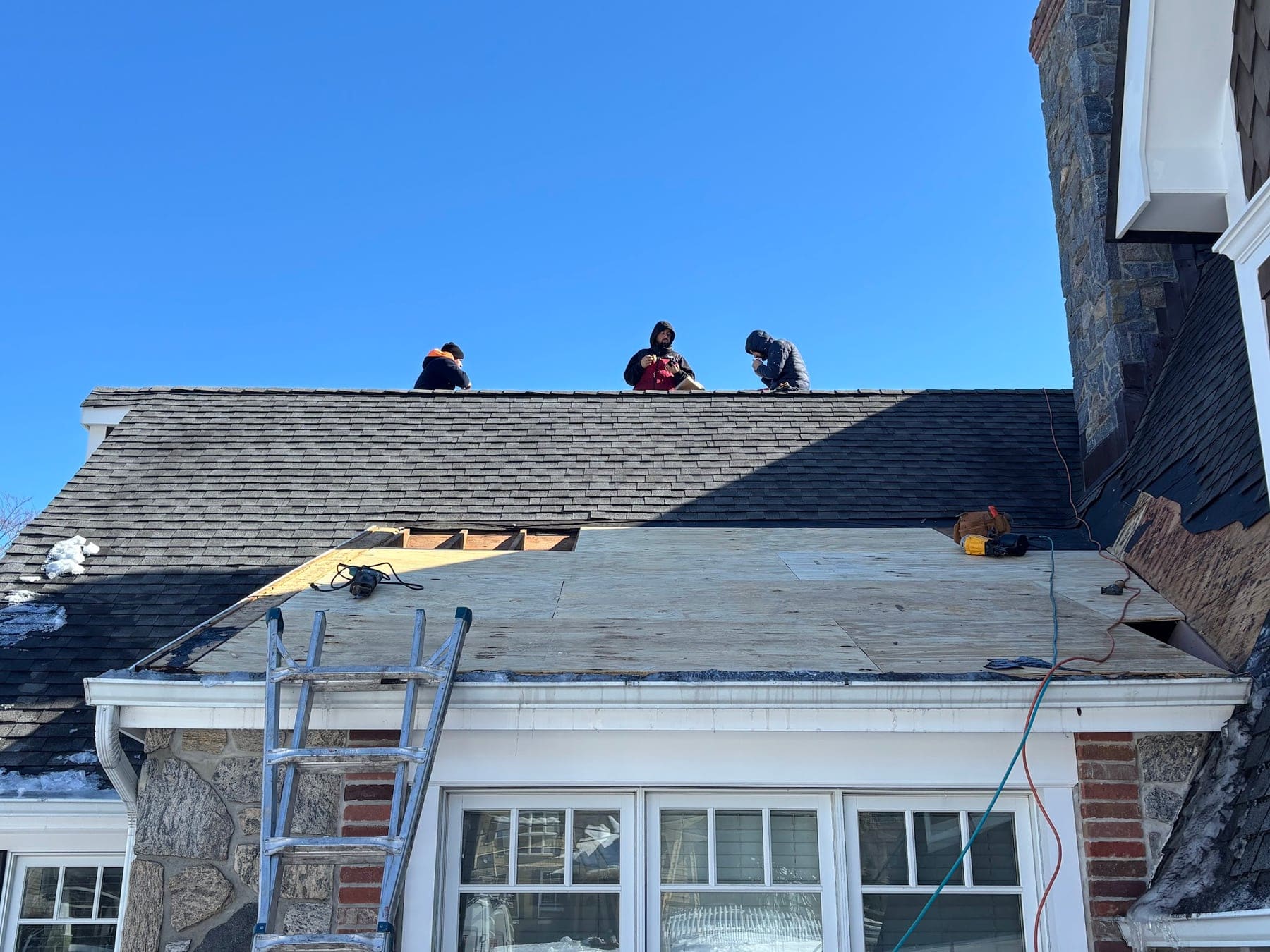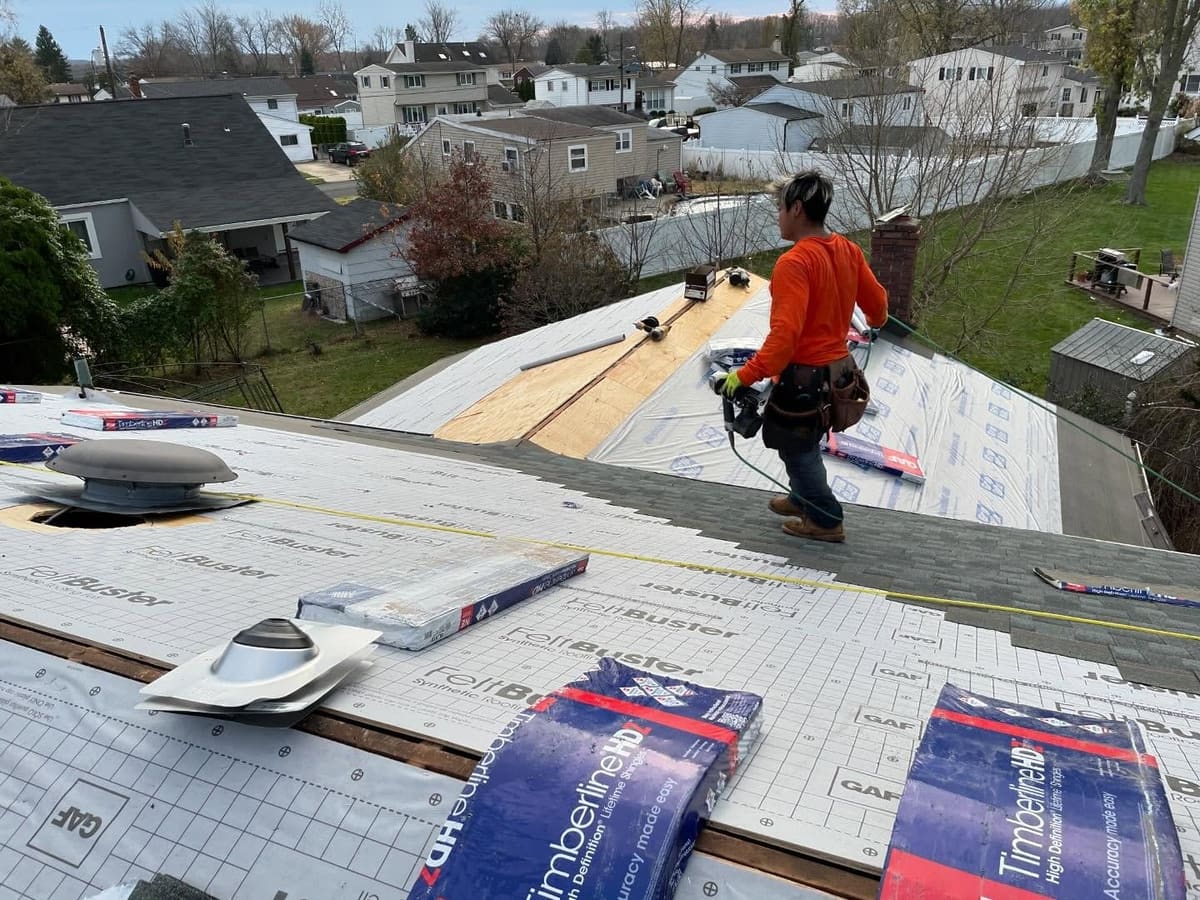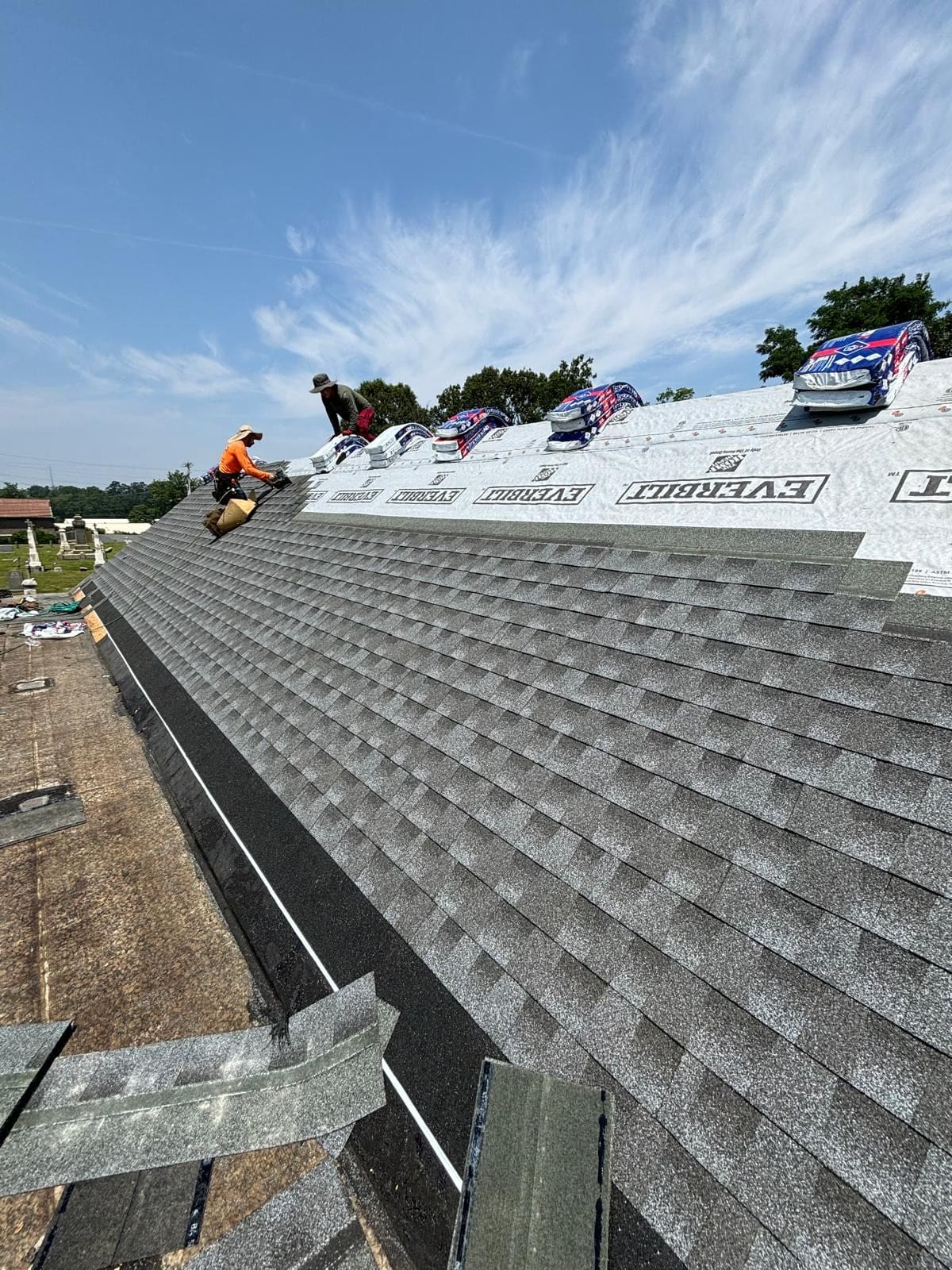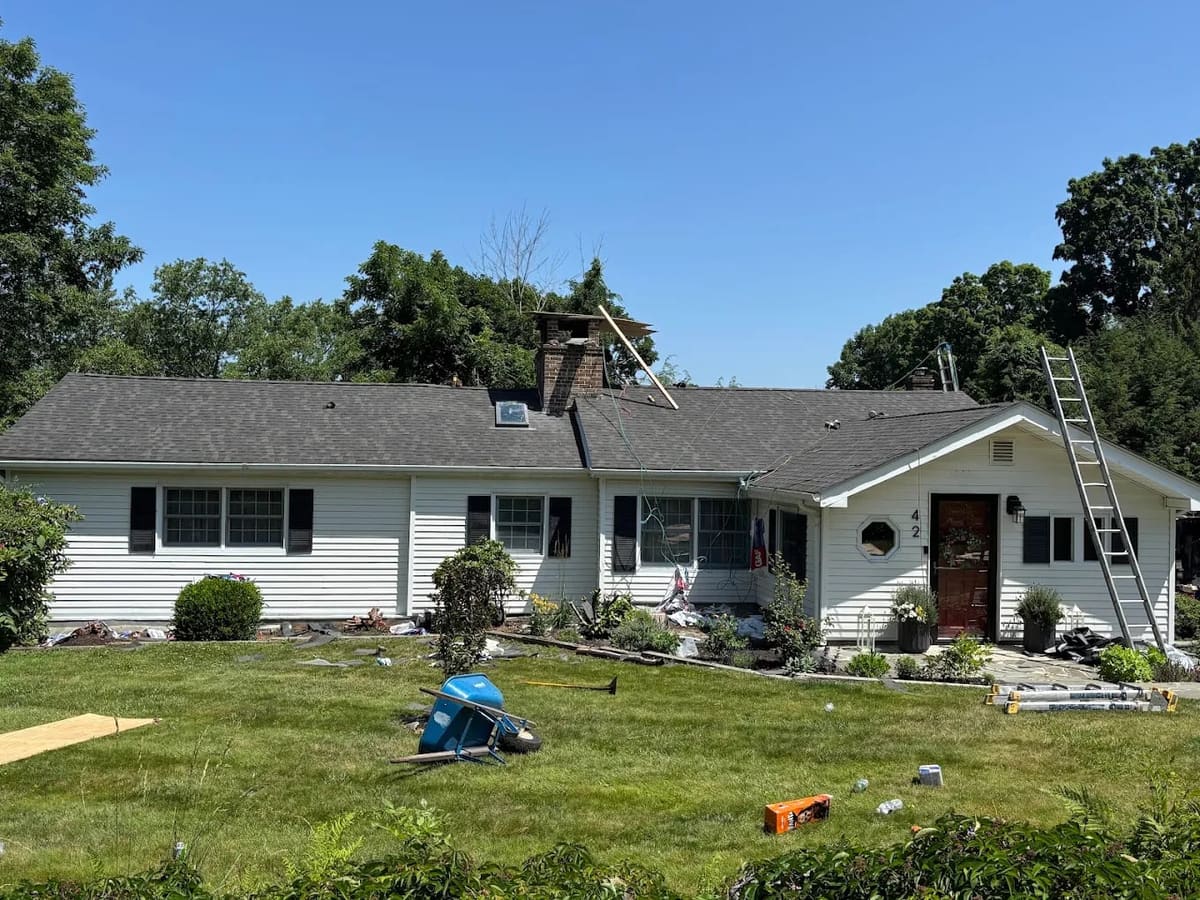
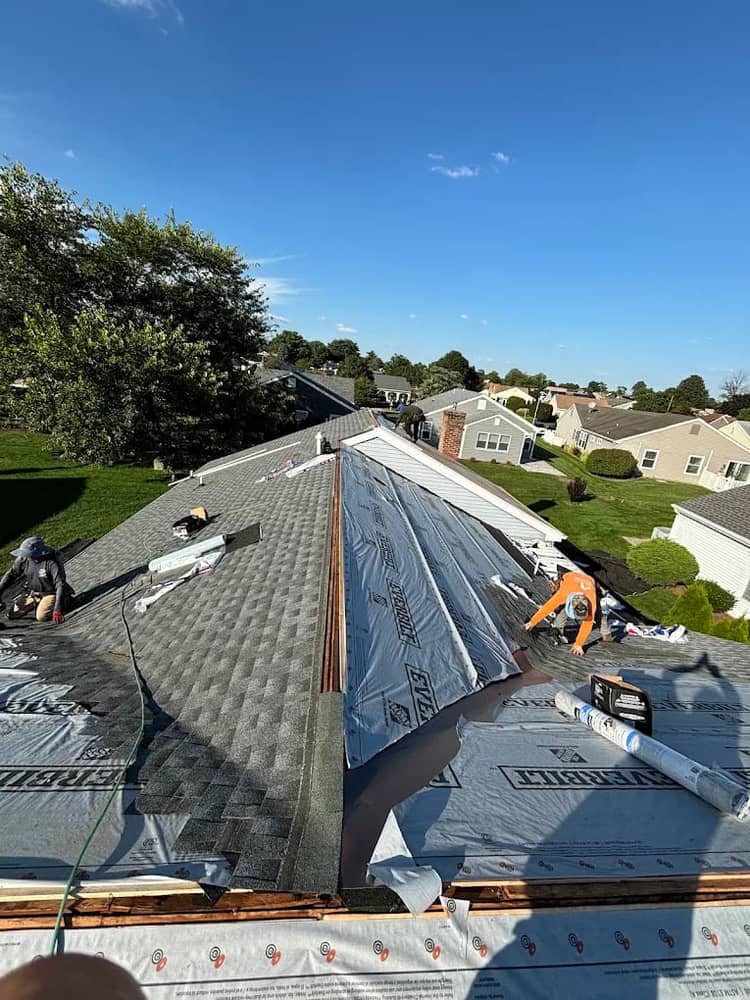
Roof Repair for Montgomery homes and buildings
Roof repair in Montgomery depends heavily on where the house sits. On the Sourland Mountain side, most problems trace back to trees: limbs coming through the roof in storms, valleys and gutters packed with leaves, and moss and algae on shaded slopes that stay wet for days after rain. In the developments on open ground the pattern is wind instead, with lifted tabs, displaced ridge caps and shingles torn from rake edges after strong fronts.
The houses add their own weak points. Larger 1980s and 1990s colonials and contemporaries tend to have complicated roofs with several valleys, skylights, clerestory walls and long sidewall flashing runs where a garage or lower wing meets a taller wall. Farmhouses carry plank decking, old flashing and additions built at mixed pitches. Asset Roofing & Chimney repairs all of these and documents storm damage with photos for insurance claims.
Montgomery housing
Most of Montgomery's housing is single-family construction from the 1970s through the 2000s: large two-story colonials and contemporary homes in planned developments, many with multiple gables, skylights, attached garages and either a masonry or prefabricated fireplace, along with townhouse communities. Farmhouses and barns from the township's agricultural past remain along the older roads, and the Sourland Mountain side has larger homes on wooded acreage. Asphalt shingle is the dominant roof covering, with some slate, cedar and metal on older houses and outbuildings.
Weather & exposure
Montgomery has two distinct exposures. On the Sourland Mountain, dense forest drops limbs and debris, keeps roofs shaded and damp, and holds snow on north slopes well after it has melted elsewhere. On the open former farmland in the center and east of the township, roofs take sustained wind with little to break it. Ground near the Millstone River is lower and more humid. Winters bring regular freeze-thaw cycles, and summer thunderstorms bring downpours and occasional hail.
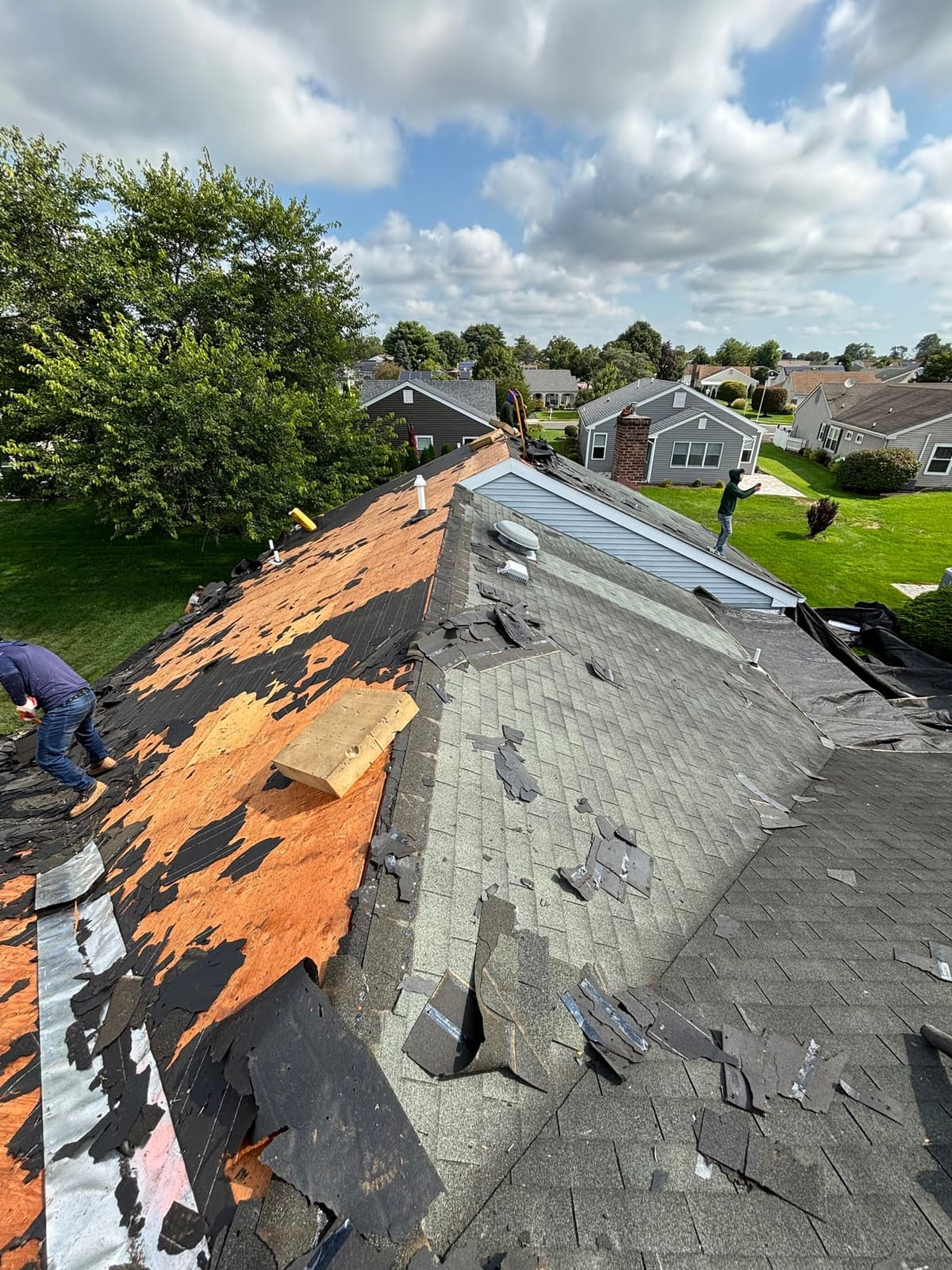
Repair or replace? What we tell Montgomery homeowners
On a wooded lot we start by clearing the valleys and gutters so we can see the roof, then check every flashing detail near the stain and look for impact damage and moss-lifted shingles. On a development home on open ground we focus on the ridges, rakes and corners after a wind event. In both cases, if the shingles across the roof are brittle or badly worn, we will tell you that repair is a short-term measure.
For skylights we inspect the flashing kit and the unit itself. A skylight that is leaking through its own seal or glazing is usually better replaced than repaired, and replacing it together with any roof work around it means the flashing is done once. On farmhouses we trace the leak from inside and rebuild the flashing at additions properly rather than relying on sealant.