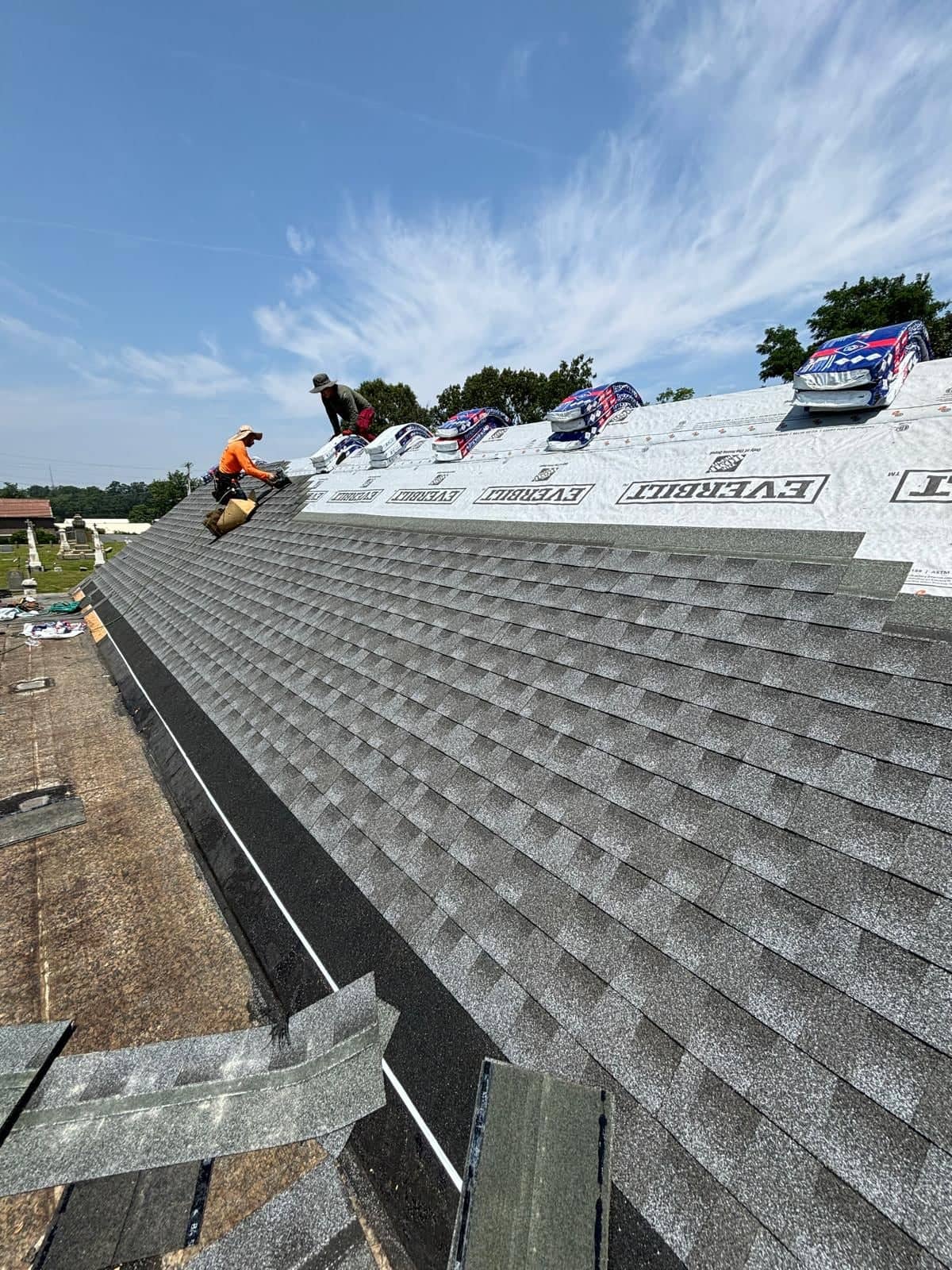
Roof Replacement for Bridgewater homes and buildings
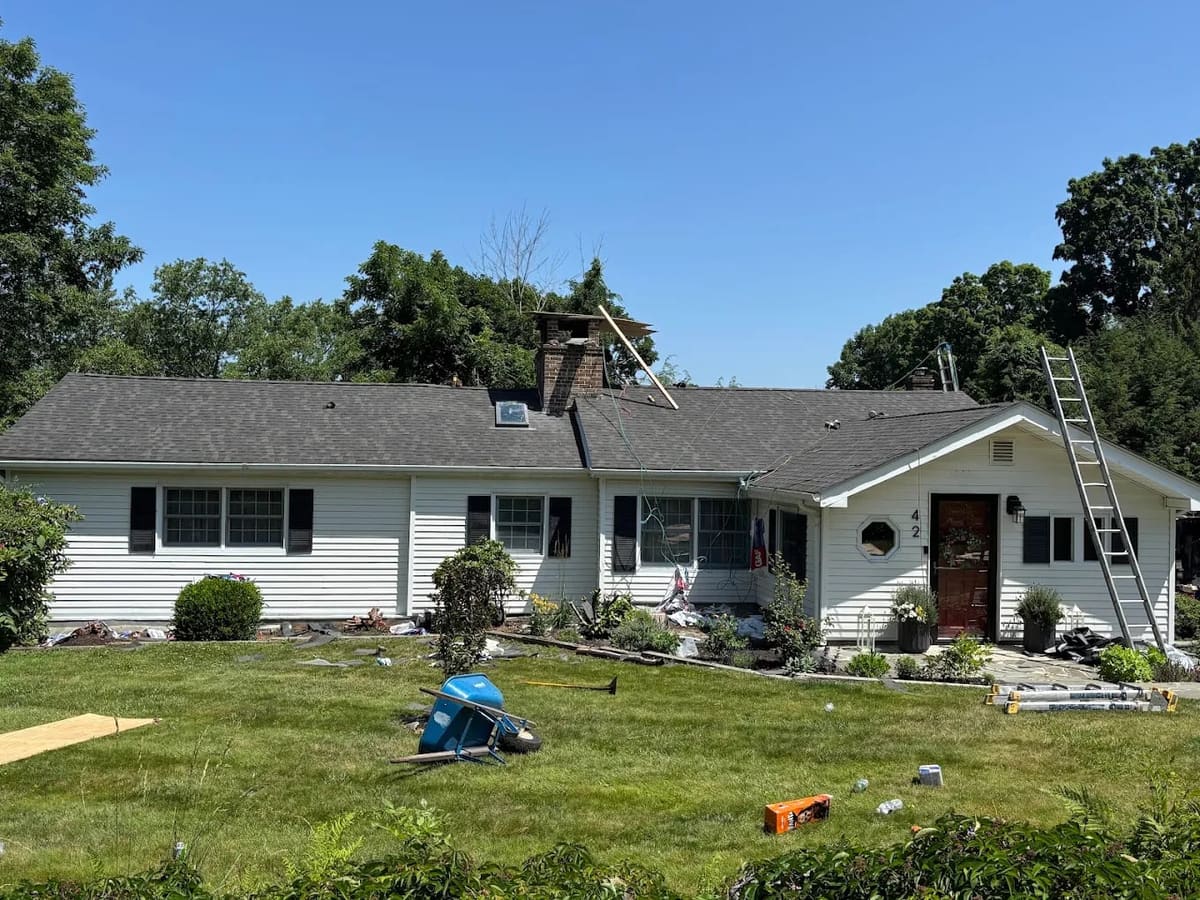
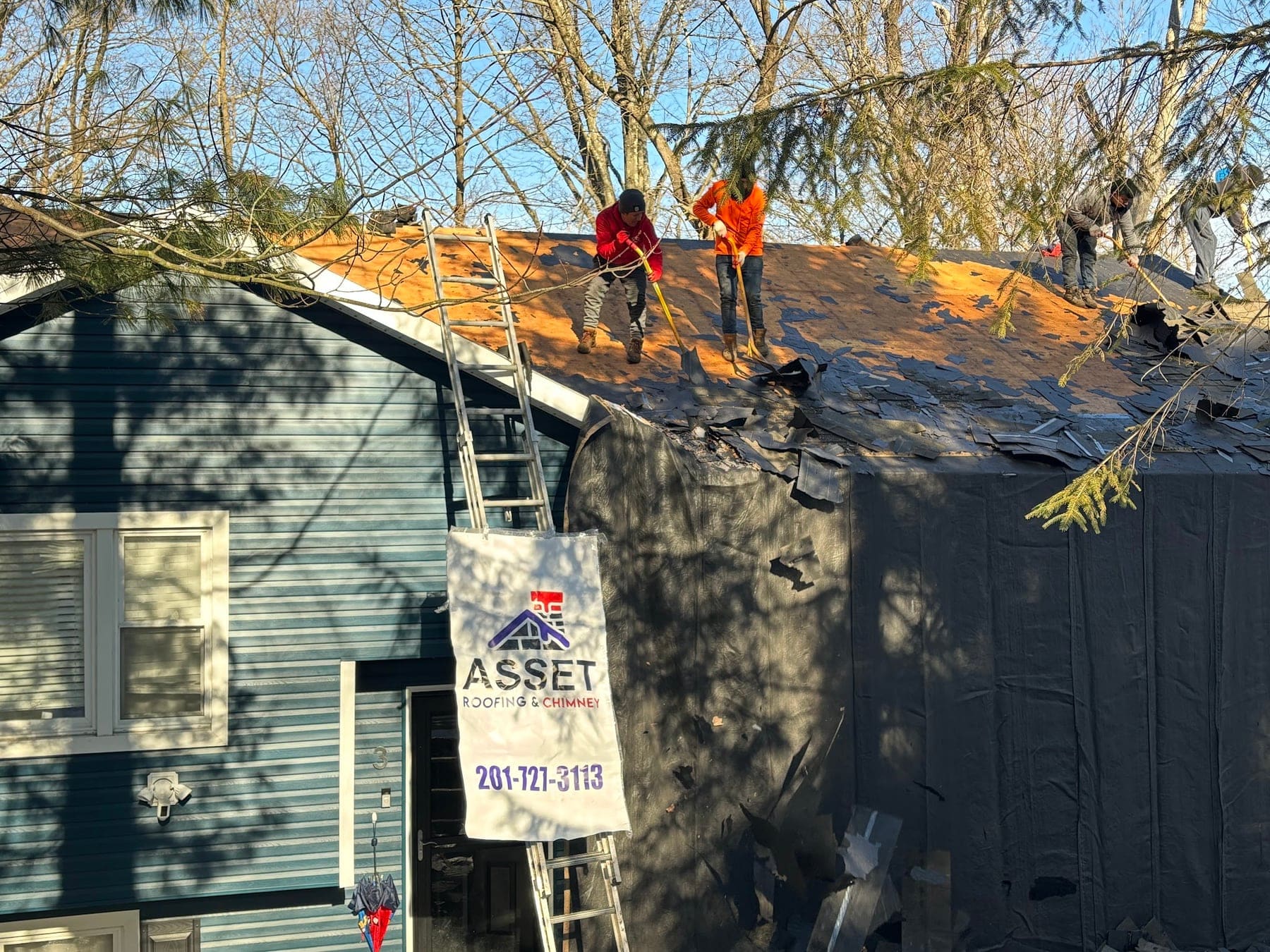
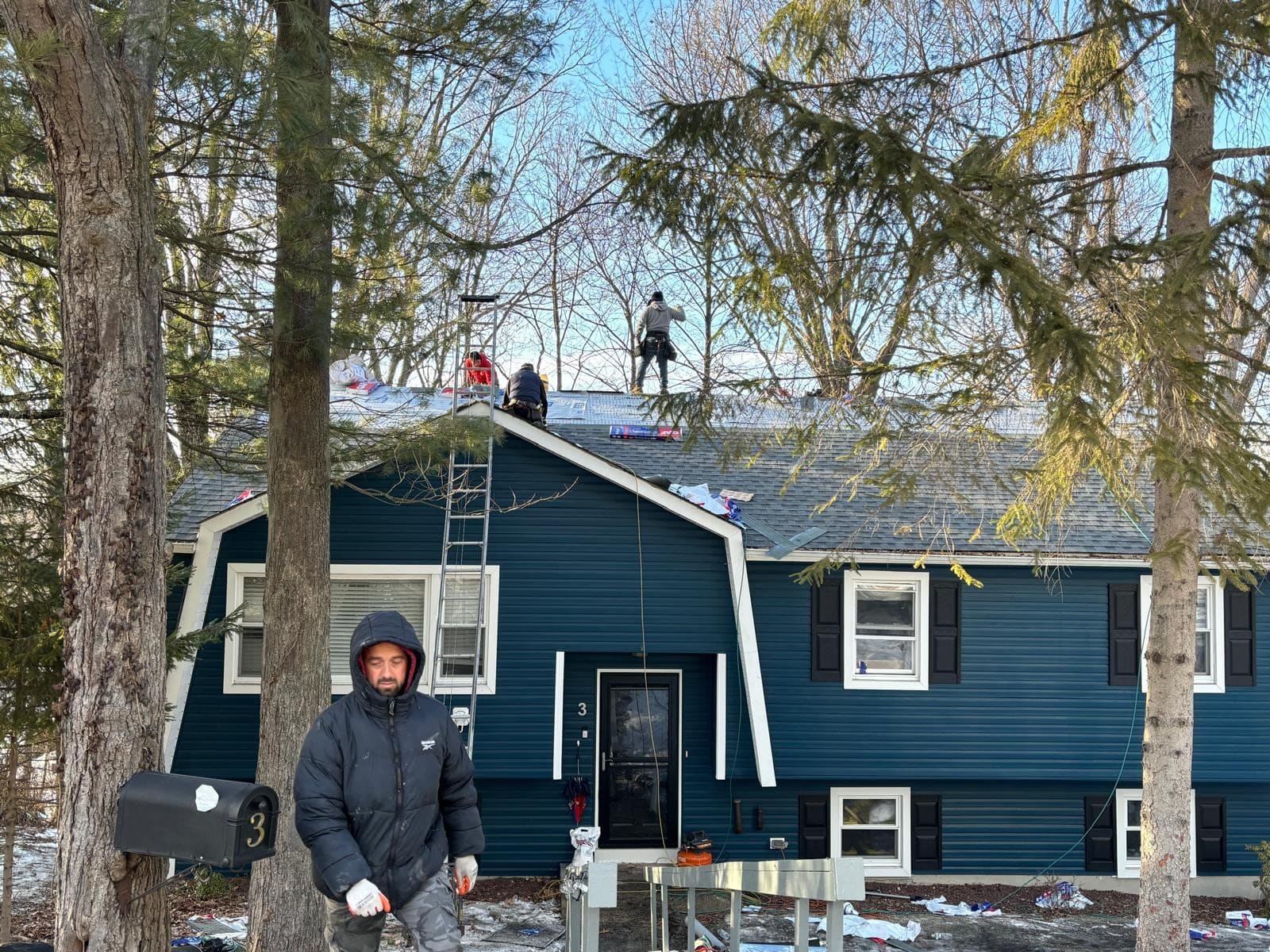
Roof replacement in Bridgewater is largely a matter of 1960s through 1990s houses reaching the end of another roofing cycle. Many colonials and split-levels are on their second or third roof, and some still carry a layer of old shingles under the current one. A full tear-off, deck repair where needed and a new architectural shingle system with proper ventilation is the standard scope.
Asset Roofing & Chimney also replaces flat and low-slope roofs: the membrane roofs on commercial buildings along the highway corridors, and the low-slope roofs on residential additions, sunrooms and garages that should be done in membrane rather than shingles. On homes in the northern hills, we specify high-wind shingle installation and extra ice-and-water protection.
Bridgewater housing
Bridgewater's housing is dominated by 1960s through 1990s single-family construction: center-hall colonials, split-levels, bi-levels and ranches, with larger late-1980s and 1990s two-story homes in the newer sections. Townhouse and condominium communities are common. The northern hills hold older and larger homes on wooded lots. Nearly all residential roofs are asphalt shingle, and the highway corridors carry extensive commercial flat roofing.
Weather & exposure
The township spans flat land along the Raritan River and the ridges of the Watchung hills to the north, so exposure varies by neighborhood. Hillside lots see stronger wind and more snow; the lowlands see more humidity. Winters are colder than Bergen County, with ice dams and freeze-thaw cycles. Summer thunderstorms and nor'easters bring heavy rain that tests flat-roof drainage along the highways.
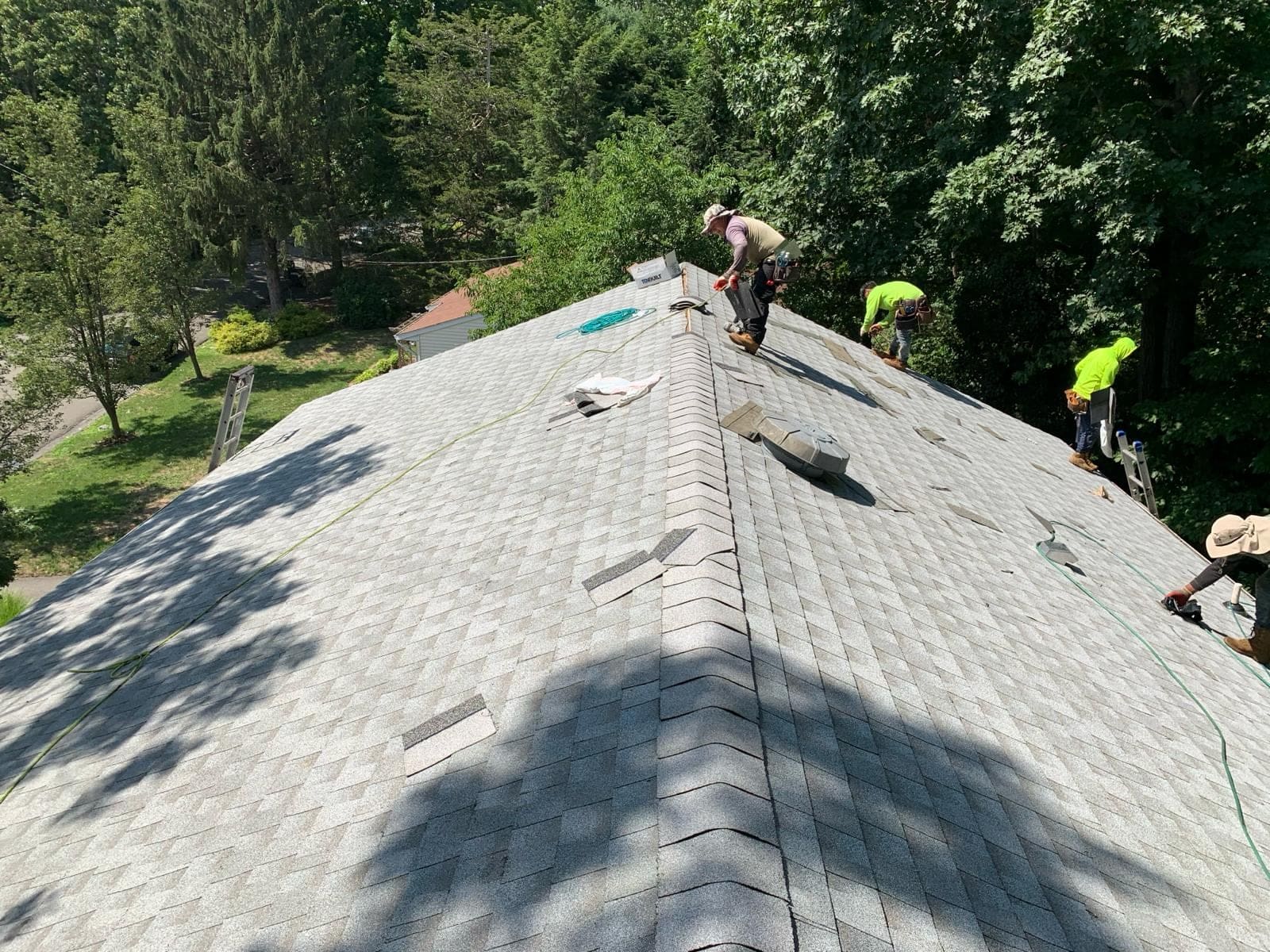
When replacement is the right call in Bridgewater
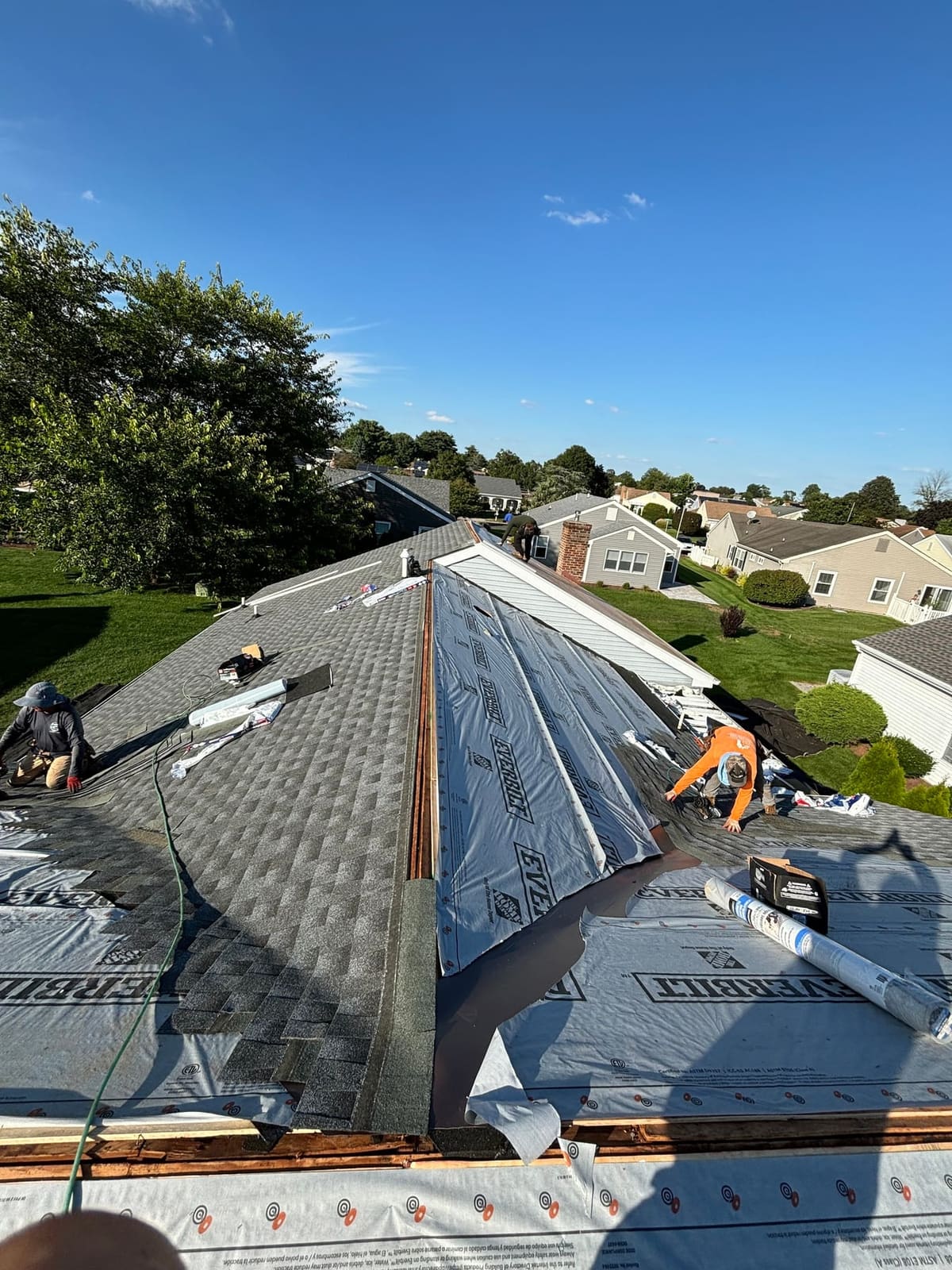
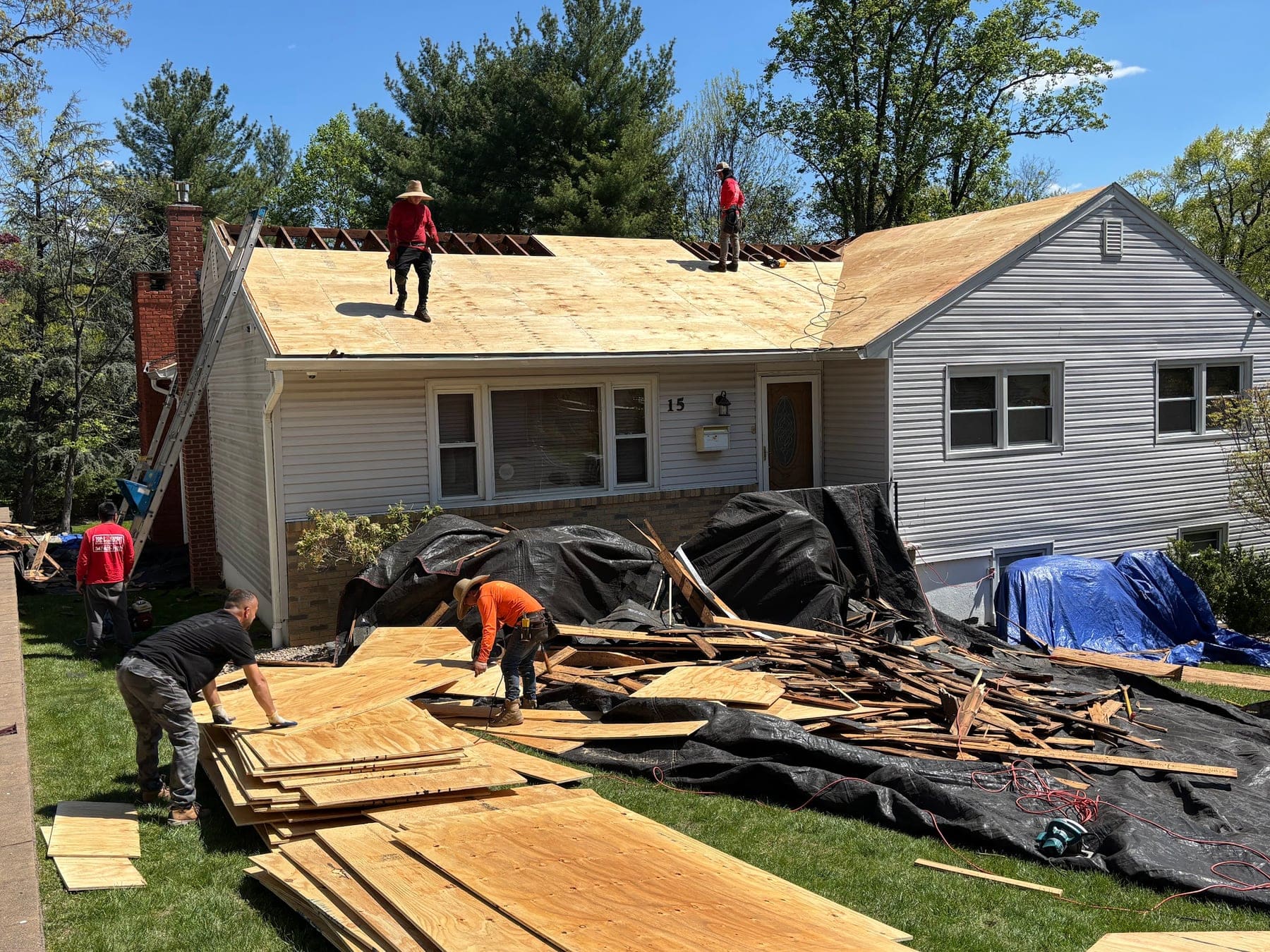
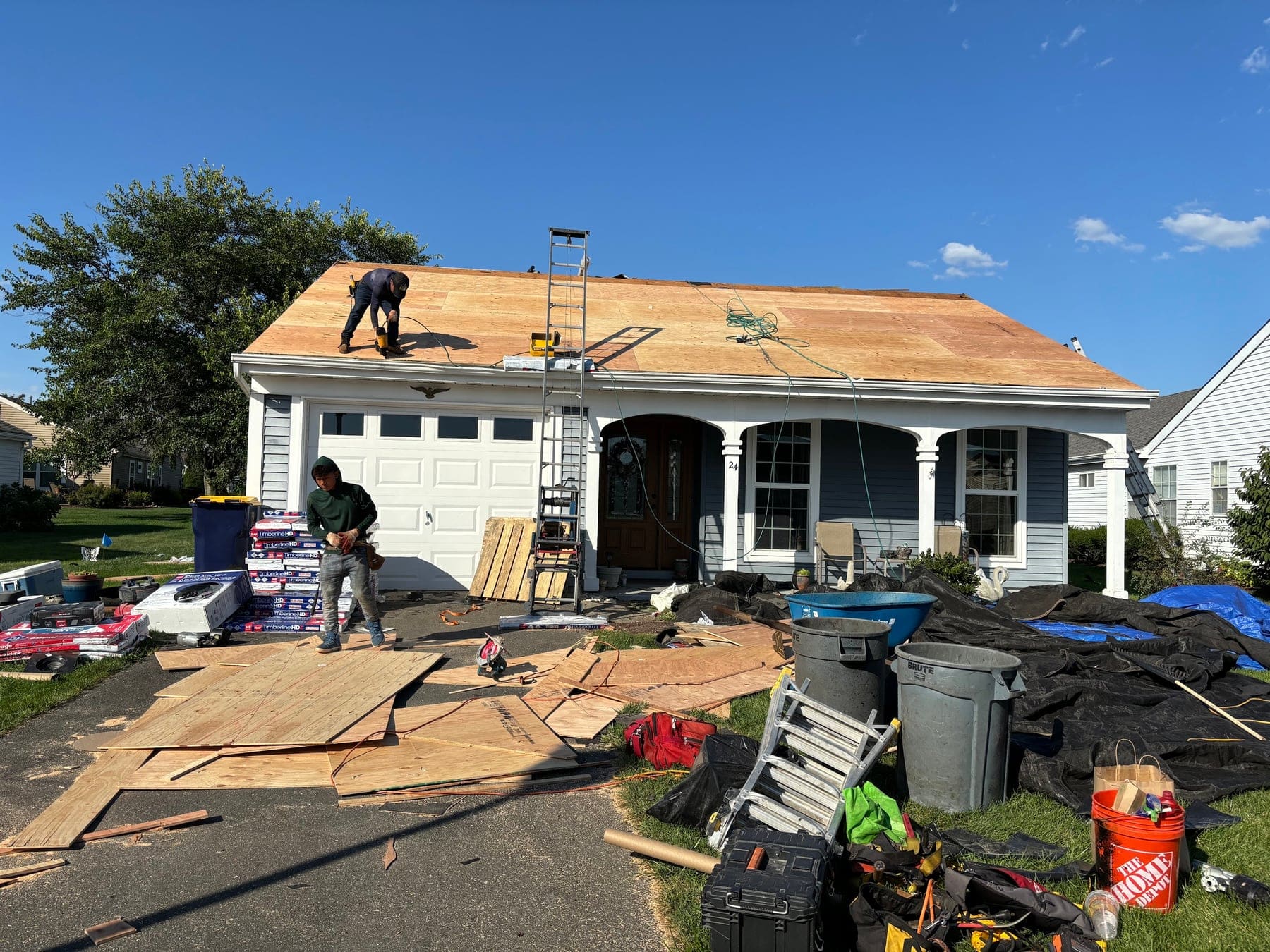
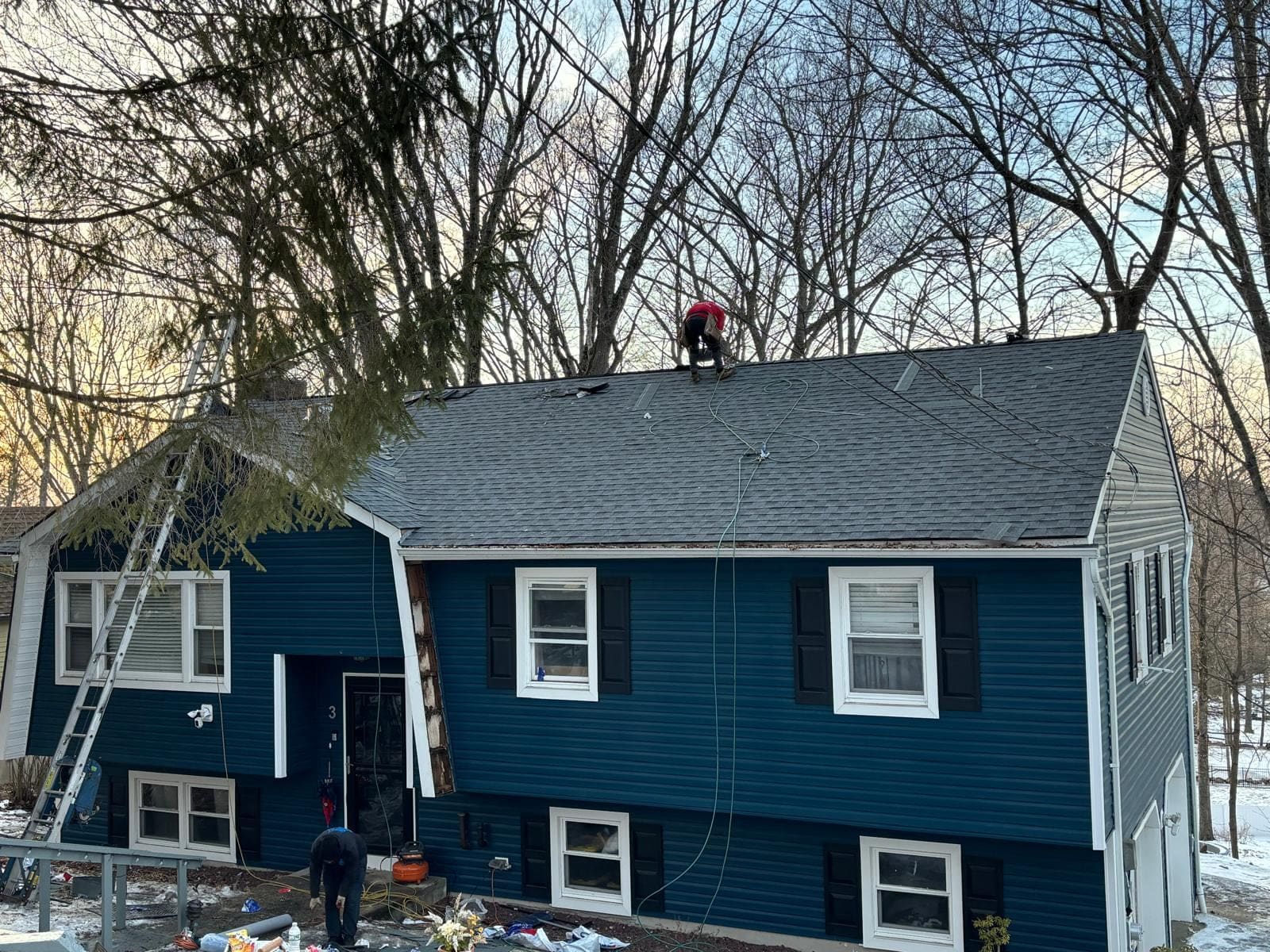
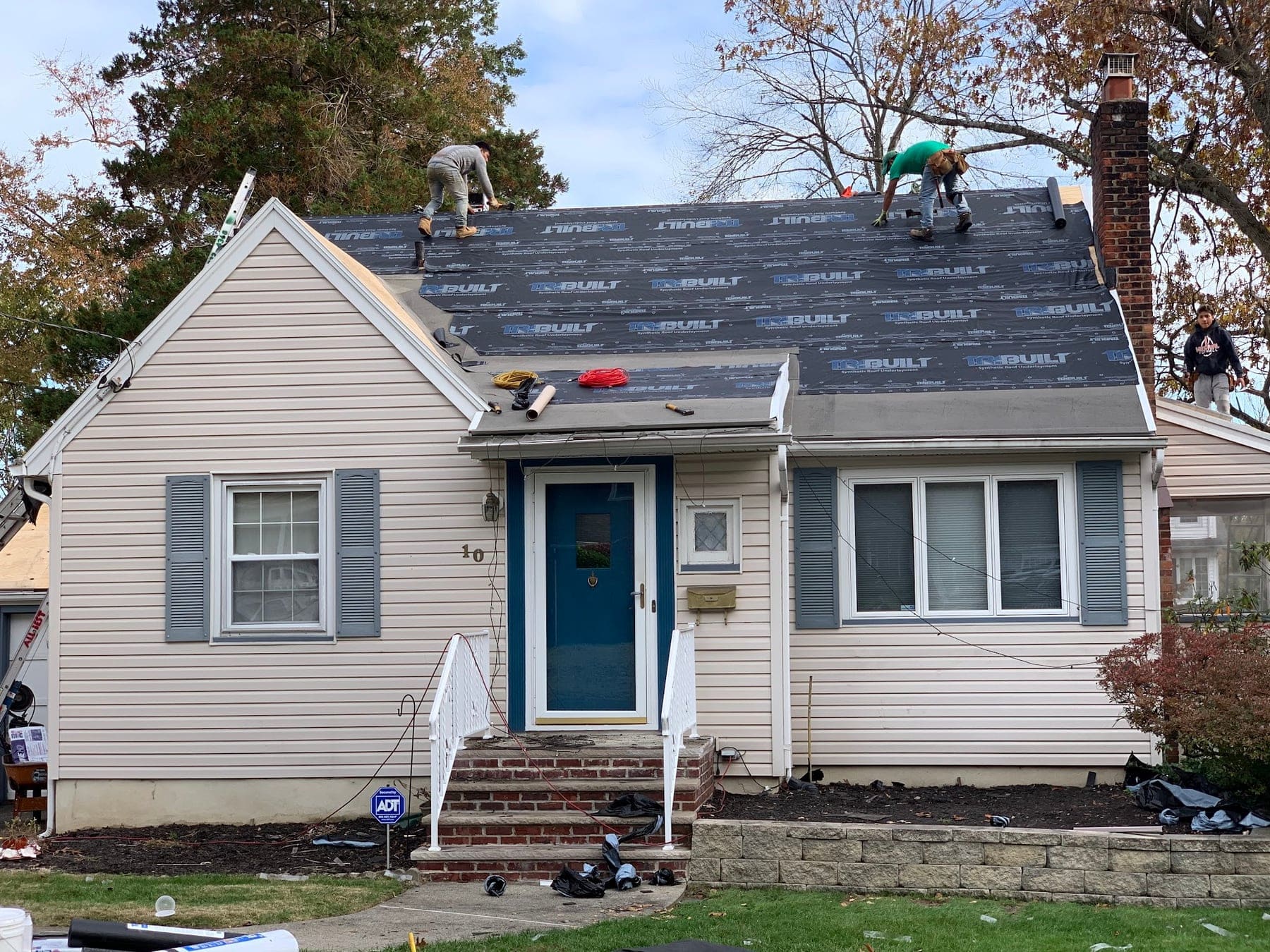
Replace rather than repair when shingles are brittle across the roof, when there is a second layer, when leaks appear in several unrelated areas, or when the roof has simply reached the end of its life. On a typical Bridgewater colonial the project takes one to two days: tear off to the deck, replace damaged sheathing, install ice-and-water membrane at the eaves and valleys, synthetic underlayment, new flashing at every wall and chimney, architectural shingles and ridge ventilation.
For commercial buildings we evaluate the existing membrane, test for wet insulation, assess drainage and check curbs and penetrations before recommending a system. We sequence the work so the building is never left open overnight and coordinate with the HVAC contractor where rooftop units need to be lifted or reflashed.