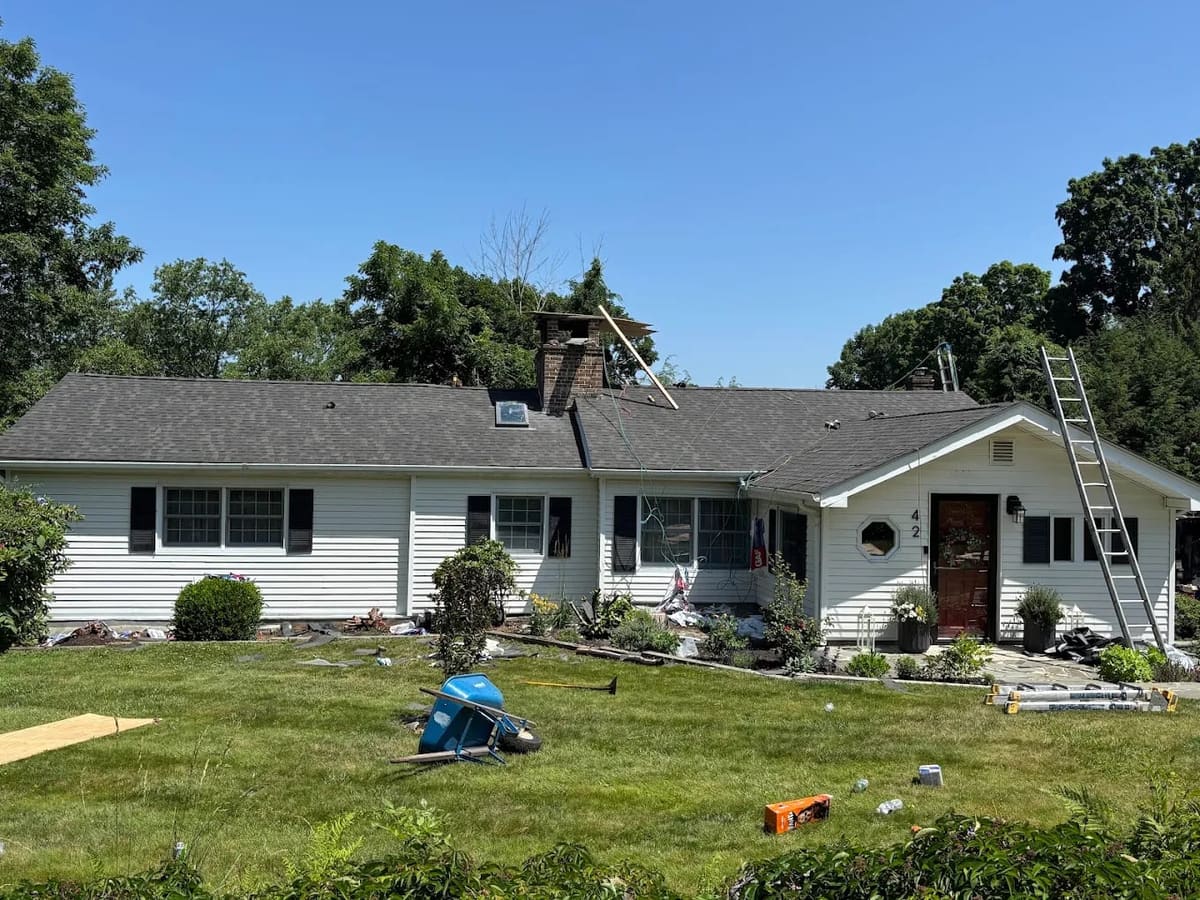
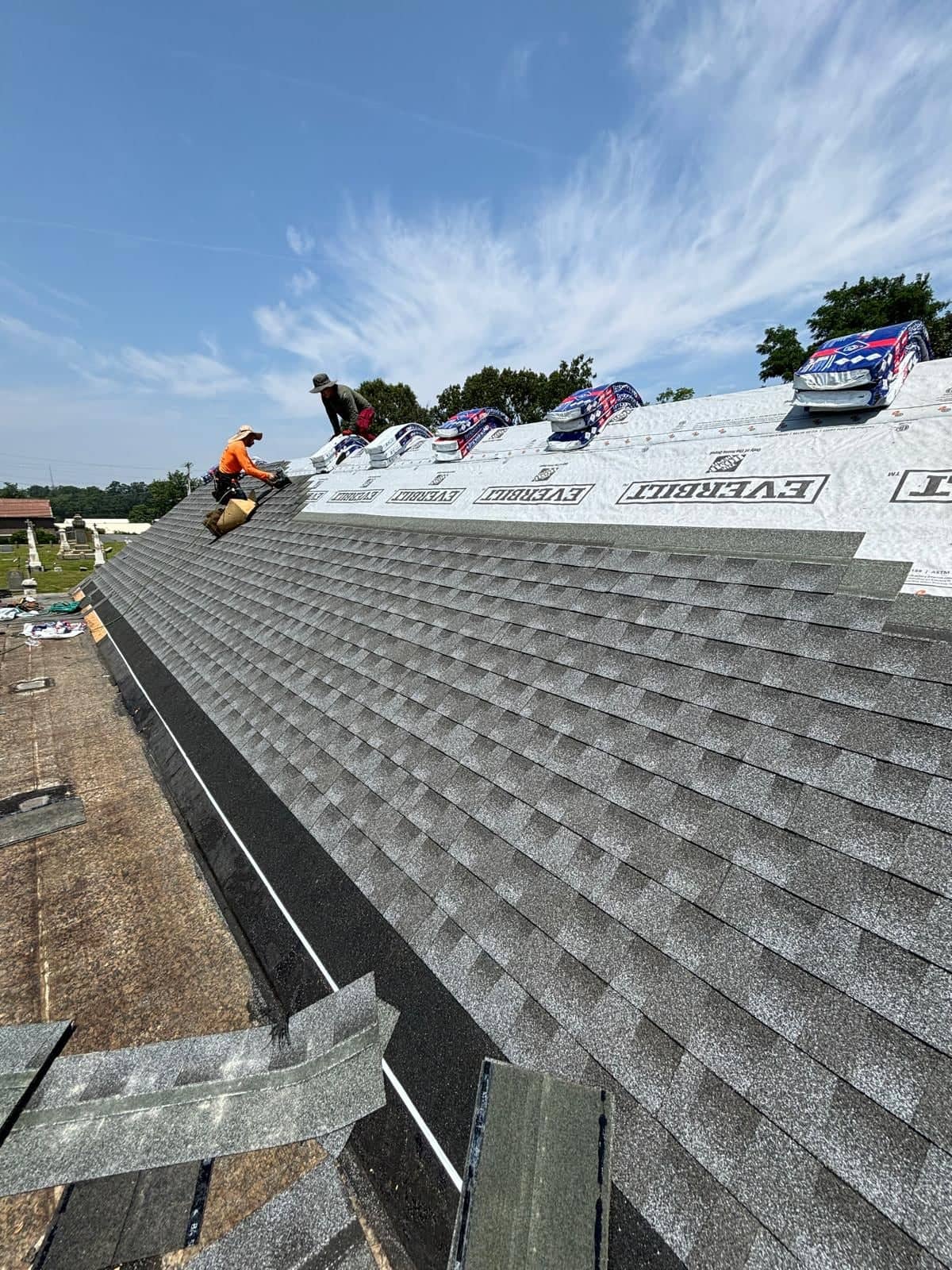
Roof Replacement for Roselle homes and buildings
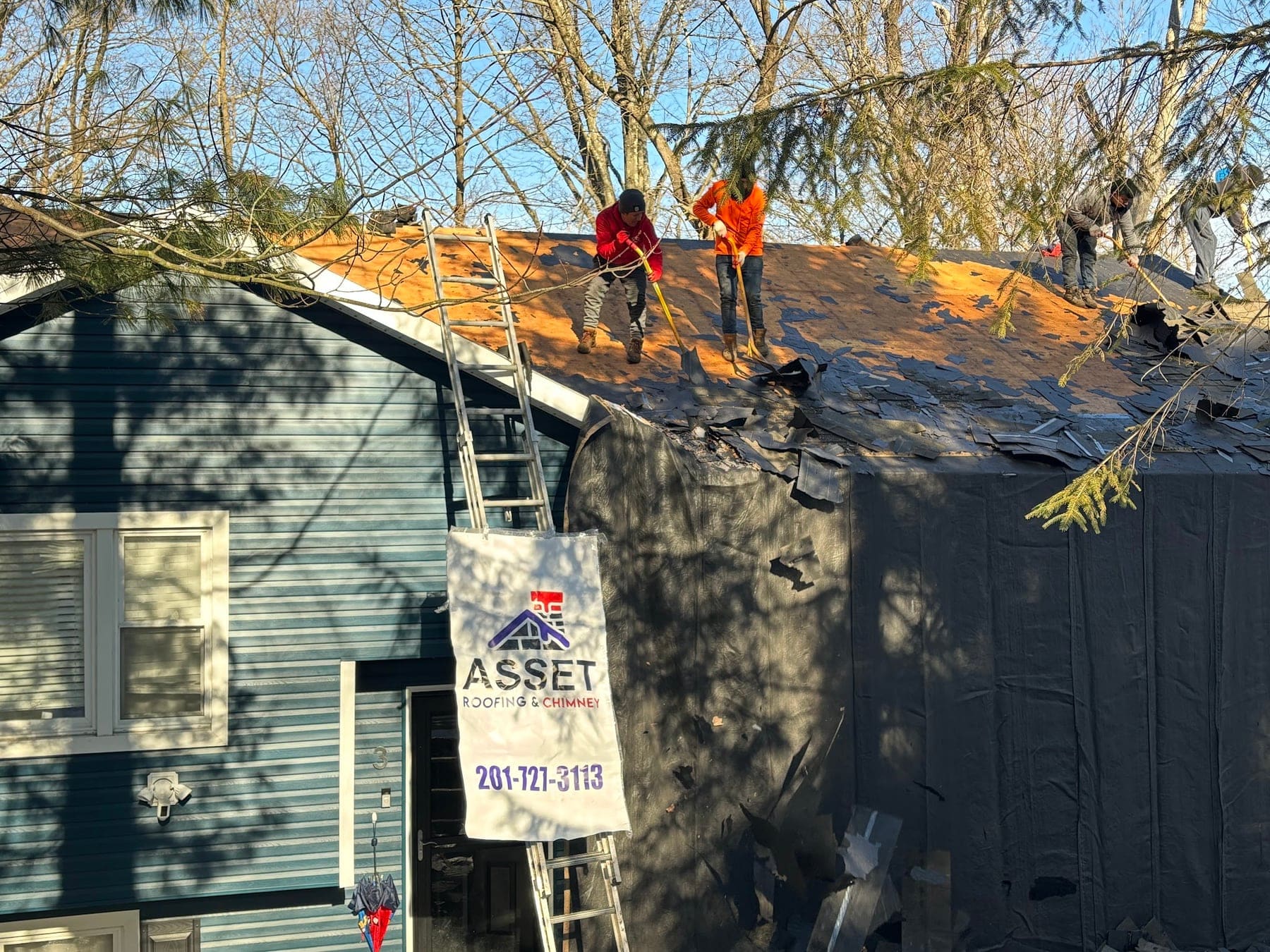
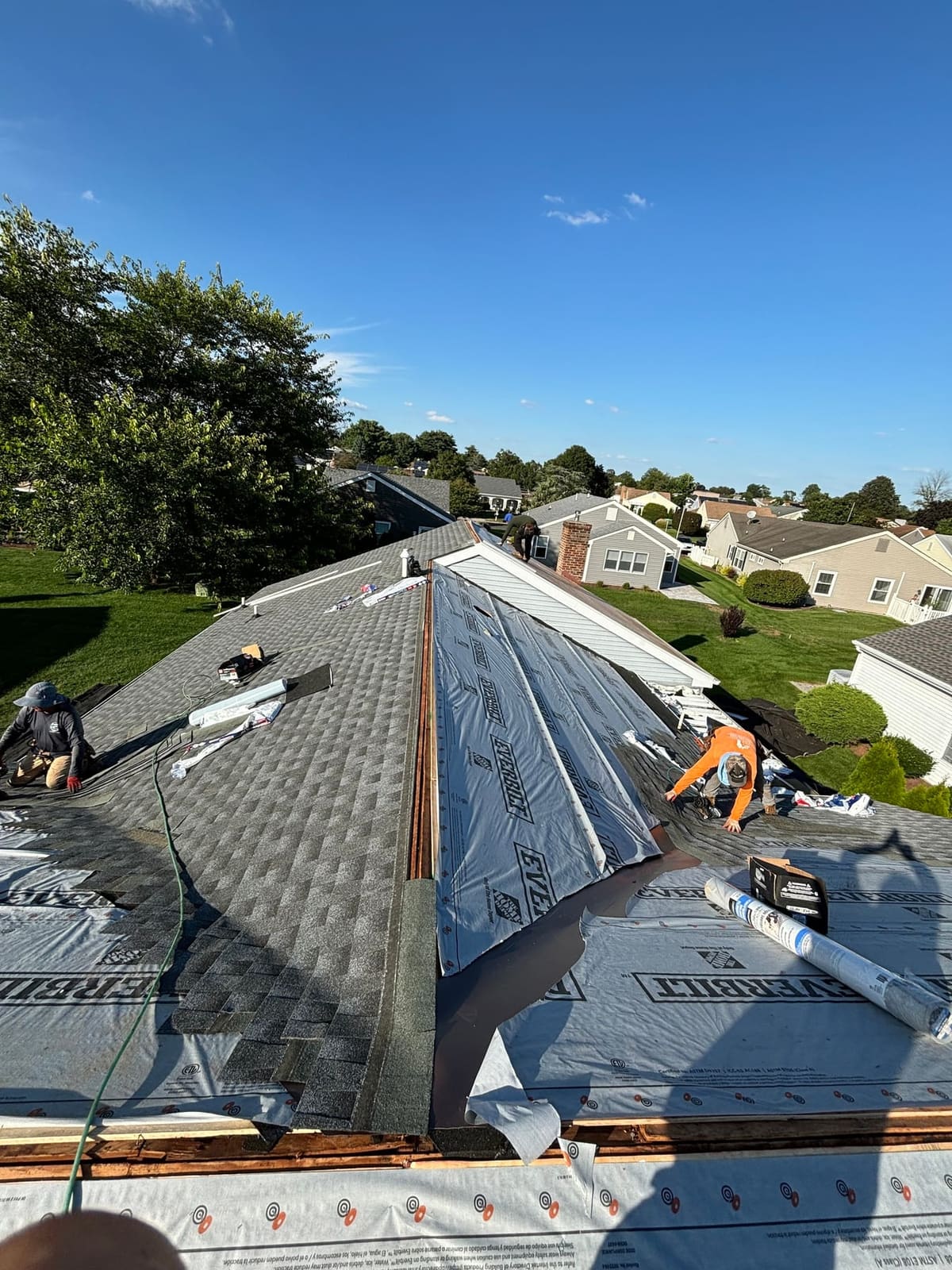
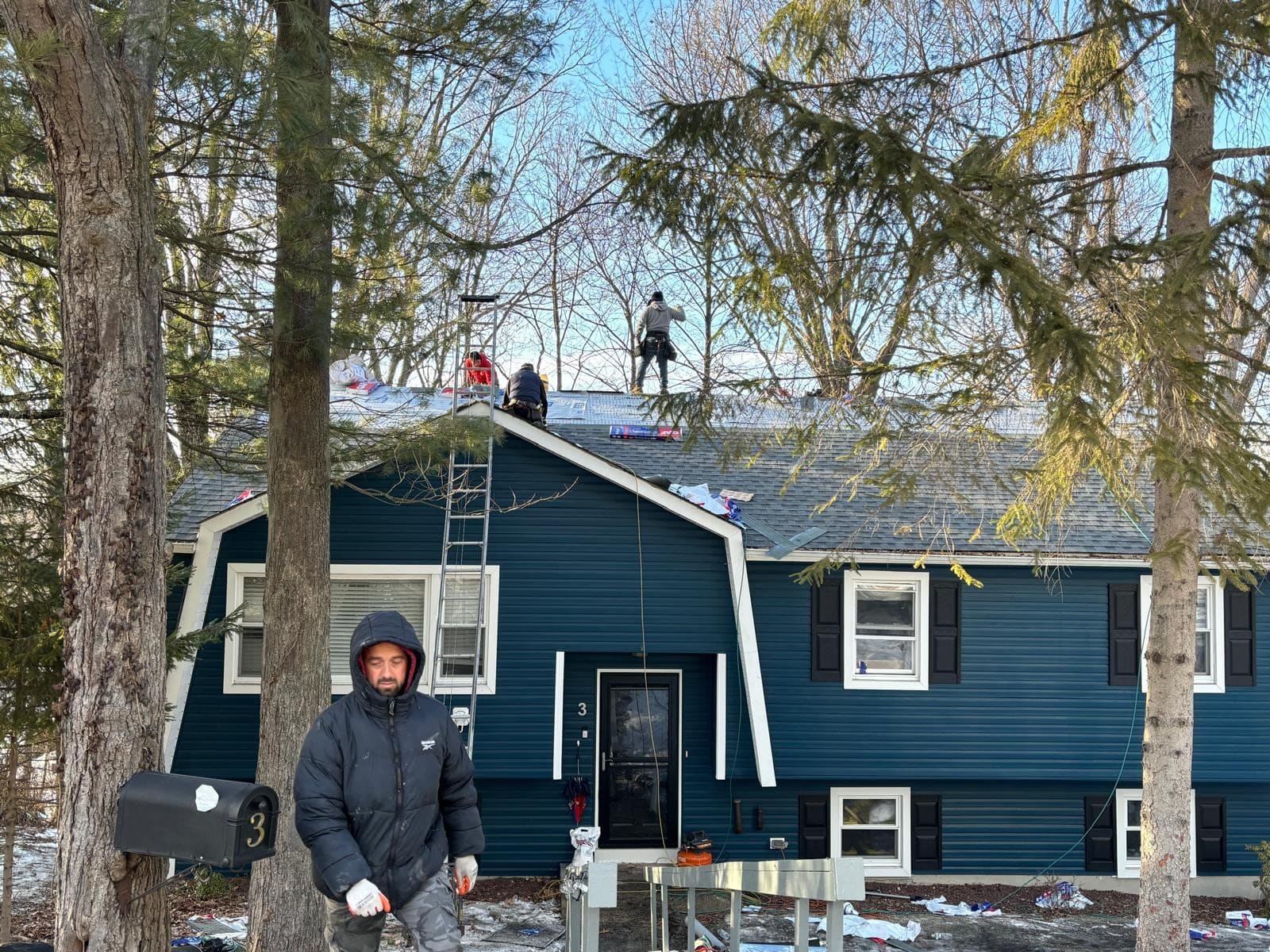
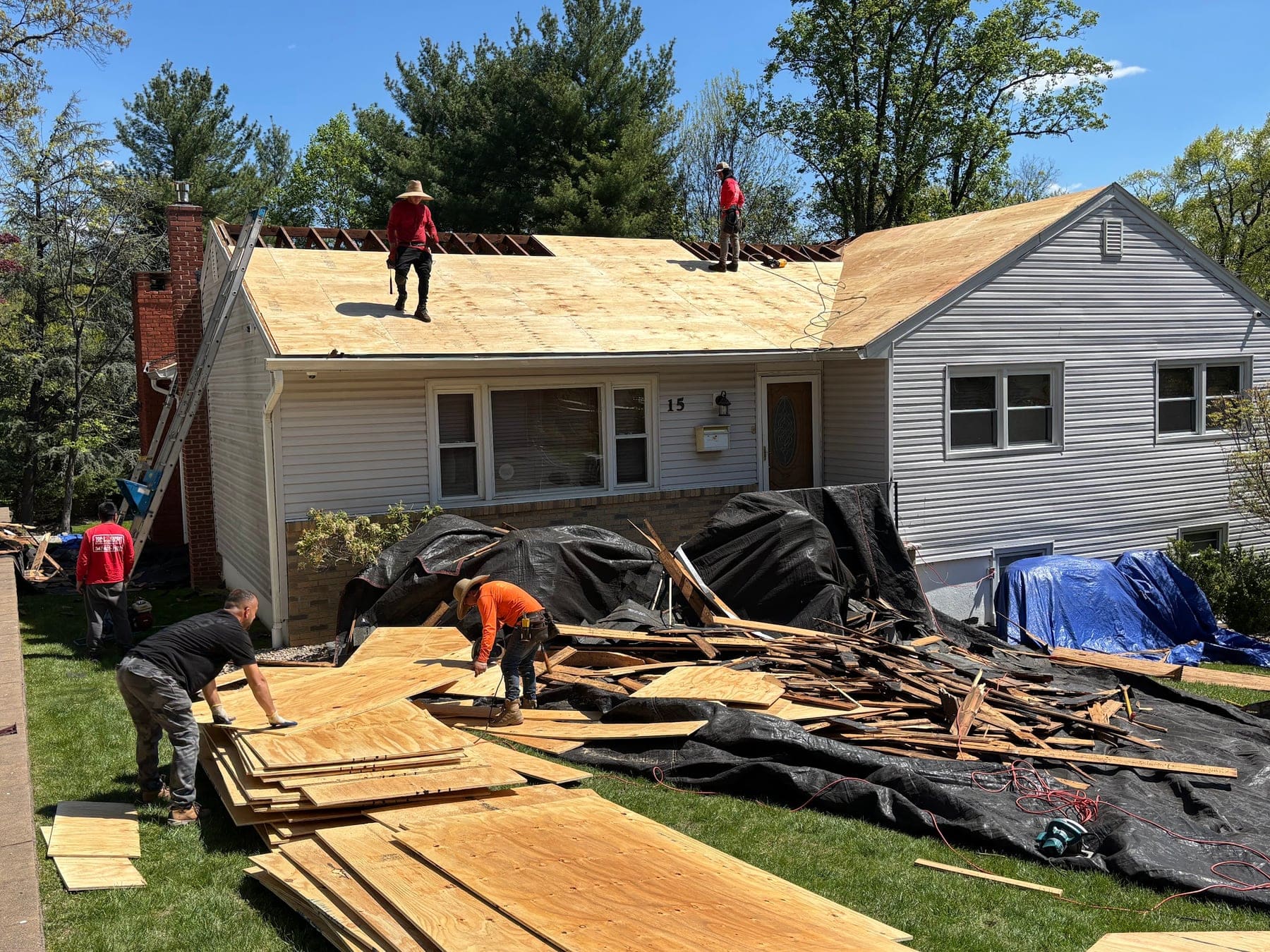
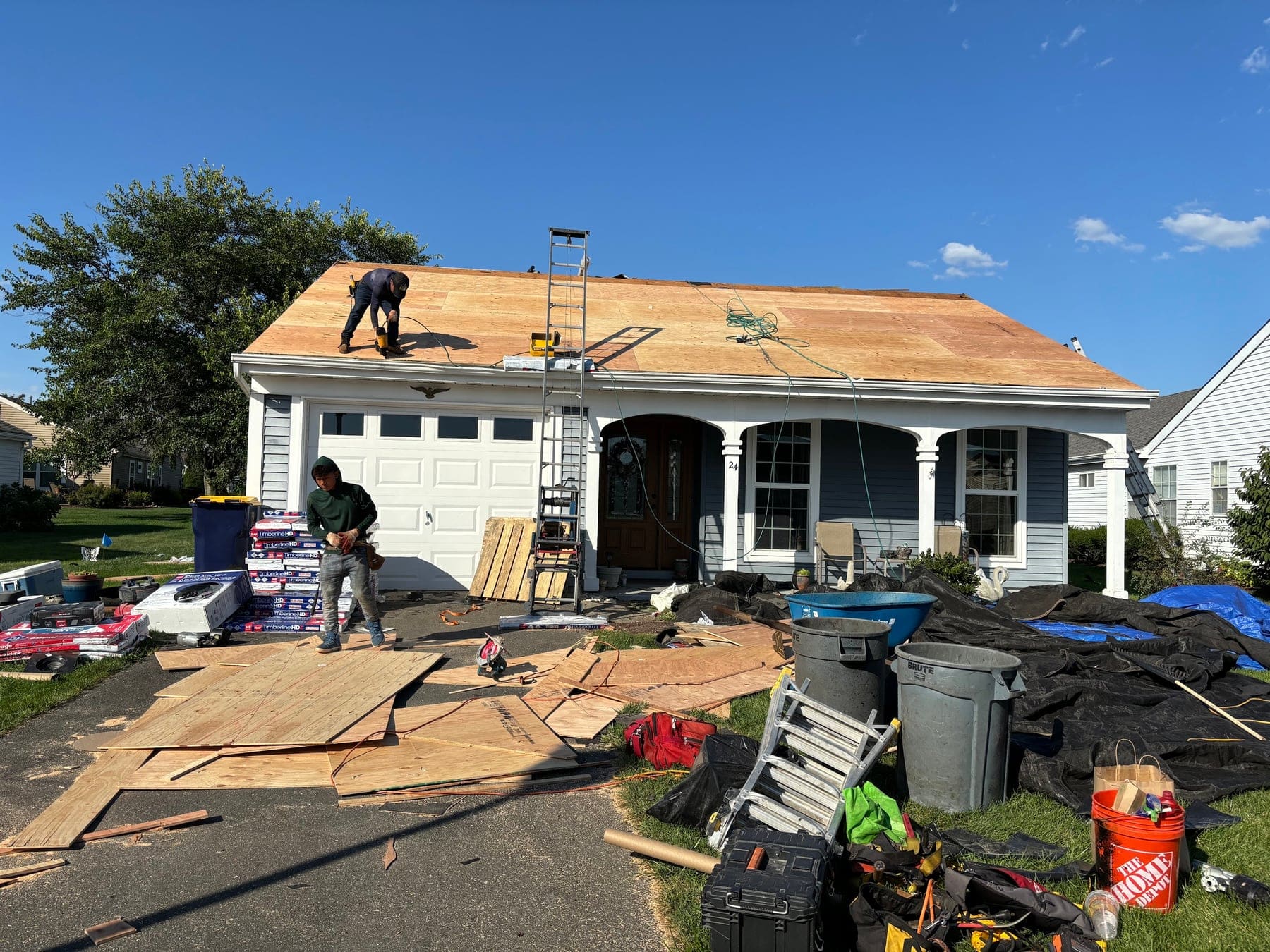
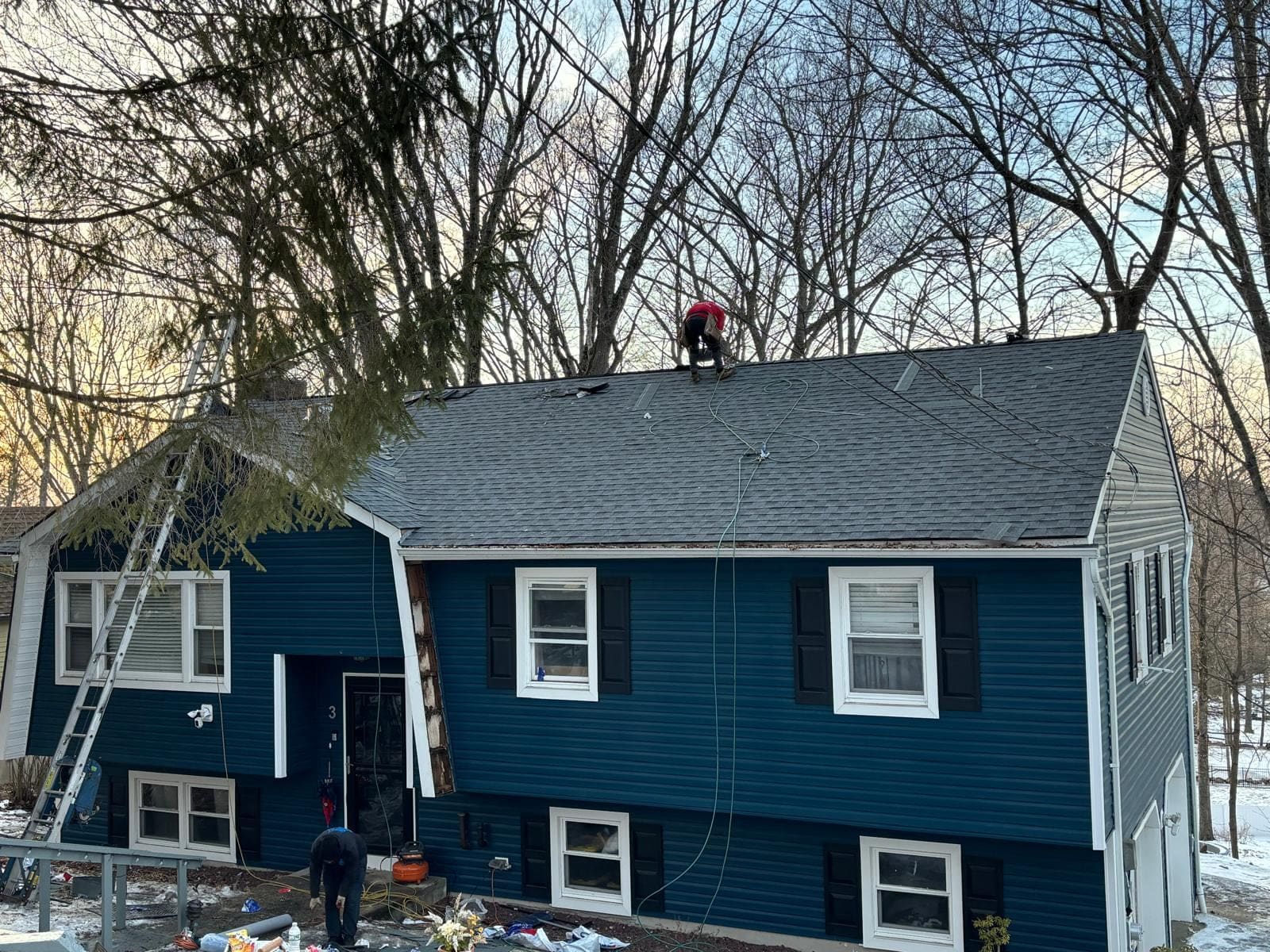
Replacing a roof on a Roselle foursquare or Dutch colonial means tearing off what are often several layers, repairing plank decking and rebuilding every hip, valley, dormer and chimney detail. Hipped roofs have more edges and fewer simple planes than a gable, so careful layout and good hip and ridge work make a visible difference.
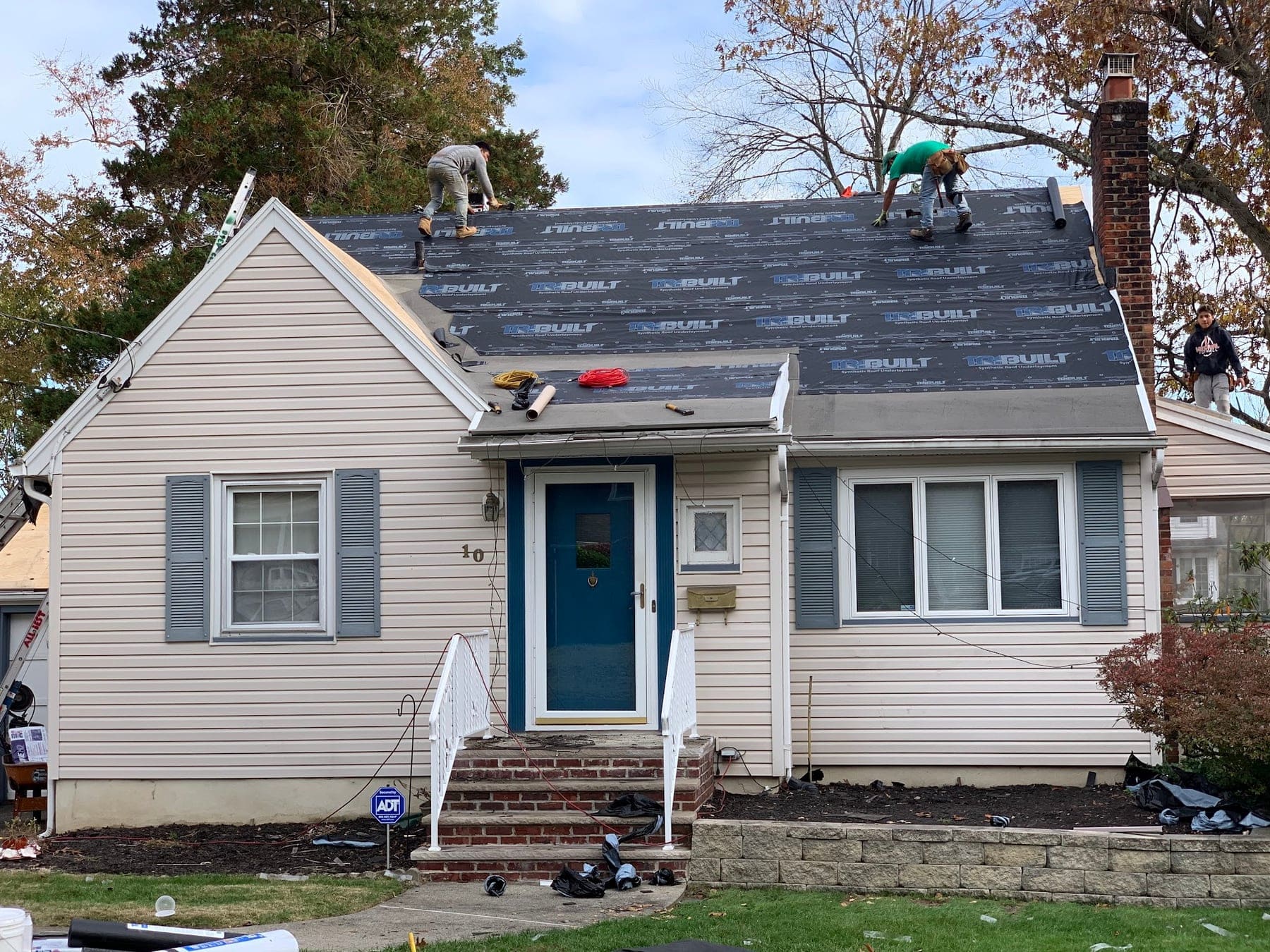
We install architectural asphalt shingles on the pitched roofs of the borough's homes and two-families, and single-ply membrane on porches, rear additions and commercial and apartment buildings. Porch roofs are often replaced along with the main roof so the wall junction can be rebuilt properly.
Hipped roofs usually lack gable ends for ventilation, so we plan intake and exhaust that work with the shape, using ridge and hip vents or other approaches as the framing allows.
Roselle housing
Much of Roselle was built between about 1900 and the 1950s. American foursquares with hipped roofs and dormers, gable-front colonials, Dutch colonials and bungalows dominate the older streets, with capes and ranches from the post-war years filling other sections. Two-families and small apartment buildings appear throughout, and the commercial streets have low flat-roofed buildings.
Weather & exposure
Roselle is flat and low, with mature street trees over many blocks and moderate wind exposure. Nor'easters bring wind-driven rain, hipped roofs collect leaves along their hip lines and in dormer valleys, and north eaves form ice dams in cold stretches. Freeze-thaw cycles work on the brick chimneys that serve nearly every older home.
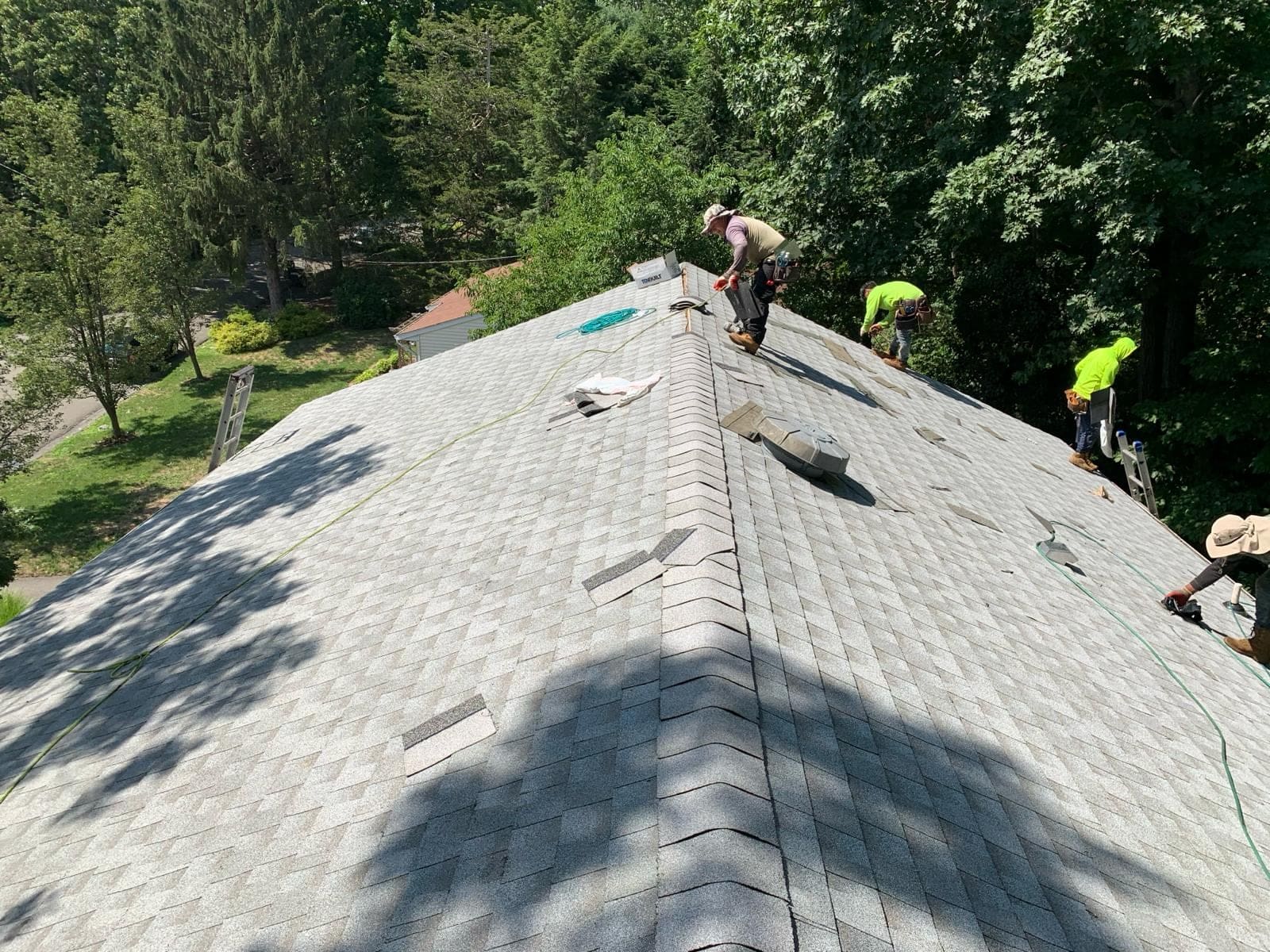
When replacement is the right call in Roselle
Replacement is warranted when shingles are curling or brittle, when there are multiple layers or when leaks keep appearing. Coordinate chimney repointing, gutters and porch roofs with the main roof so nothing is disturbed afterward.
Ask any contractor what is included: tear-off, deck repair, ice and water protection at eaves and valleys, new flashing, ventilation and the porch roof.